


Verónica Romero works as a home-cleaner, sharing a crowded apartment in suburban Washington, DC with extended family from her native village near Sololá, on Guatemala’s scenic Lake Atitlán. Many residents on her block are also Guatemalans from that same corner of Sololá, and still others live in similar apartment compounds nearby.
Which gives a young man thousands of miles away a ready-made clientele for his thriving business. Miguel Chavez Xitamul makes food deliveries from Sololá to former neighbors now living in the United States. Chavez, who goes by the nickname Myke (pronounced “Mike”), launched Myke Express to join hundreds of such courier services that have sprung up between the two countries serving an expatriate US population demographers estimate now surpasses 3 million.
On a recent afternoon, Romero was taking delivery of a 20-pound load of Sololá delicacies her mother had packed just the day before—three roasted roosters wrapped in tinfoil along with plastic bags filled with moist corn dough she would mold into chicken-stuffed tamales. It’s enough for a family fiesta that, even with Myke’s fee ($240 in cash), would be cheaper than splurging for her entire brood at a restaurant.
But it’s not about cost. It’s about taste. “This is from my mother,” she said, a catch in her voice as her eyes welled up with emotion. “My mother, who chose the chickens and plucked each bird and cooked them for me!”
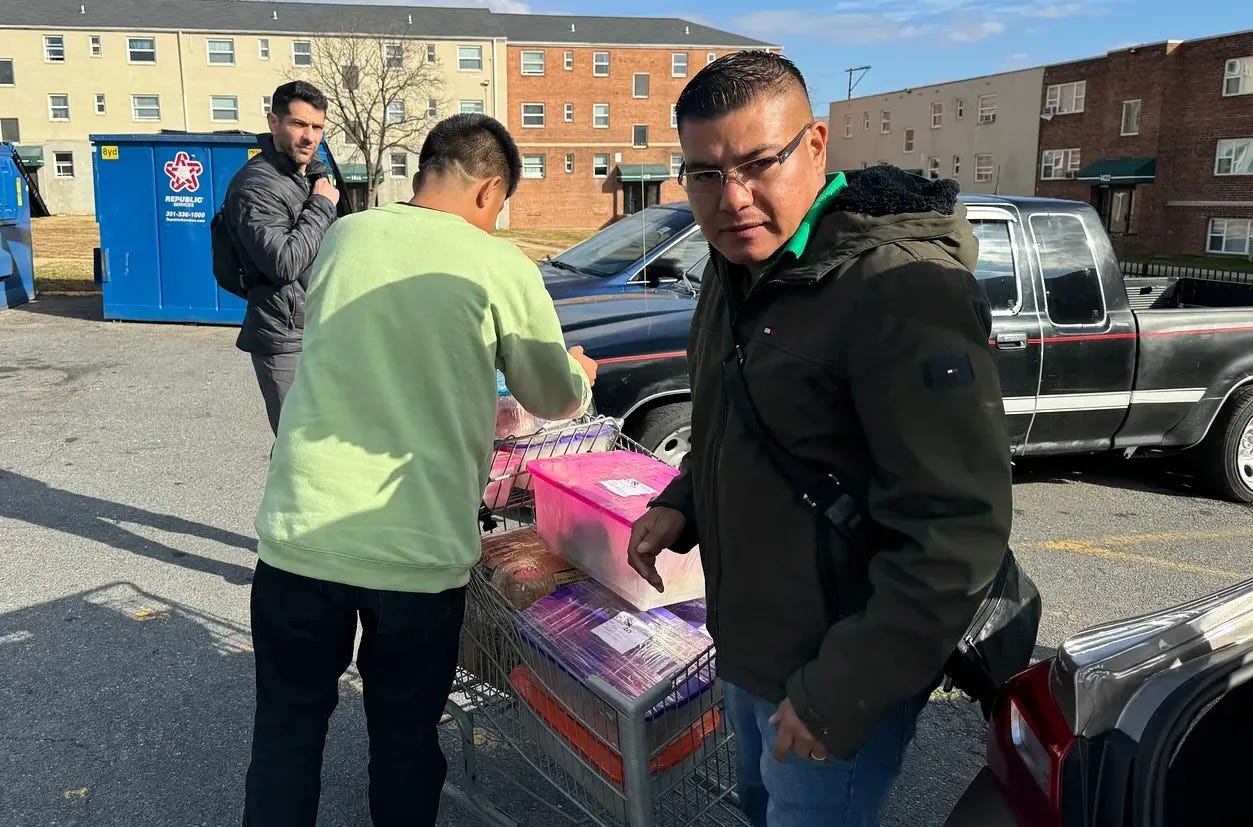
For Myke, it was business as usual. Taking a red-eye flight from Guatemala’s capital to Dulles International Airport, he arrived the same morning bearing packages of food and other gifts for 45 Guatemalan customers. He would take packages from some of them back to Guatemala City on his return flight later that evening: power tools, electronics, video games and auto parts.
Archipelagos of transplanted villages often pop up wherever there’s an uptick in immigration, drawing newcomers toward a particular city or industry or simply a neighborhood where older family members and former neighbors have relocated.
Sociologists and anthropologists in Guatemala call the phenomenon “comunidades de Espejo” (“mirror communities”)—clusters of barrios in the US that “mirror” the proximity residents shared with each other in their original “sender” villages.
Migration specialist Pedro Pablo Solares has identified dozens of such places through interviews with over 25,000 immigrant Guatemalans since 2009. His research focuses on American towns with poultry processing facilities. One is Seymour, Indiana, an egg-processing center that draws its workforce from the municipality of San Sebastián Coatán in Huehuetenango. Another is Georgetown, Delaware, where most Perdue Farms workers hail from Tacaná, near the Mexican border.
If you know where to look, it’s fairly easy to locate both the sender towns in Guatemala and the mirror communities they’re feeding in the US. Start with signs like this one in Joyabaj del Quiché in Central Guatemala’s Mayan highlands:
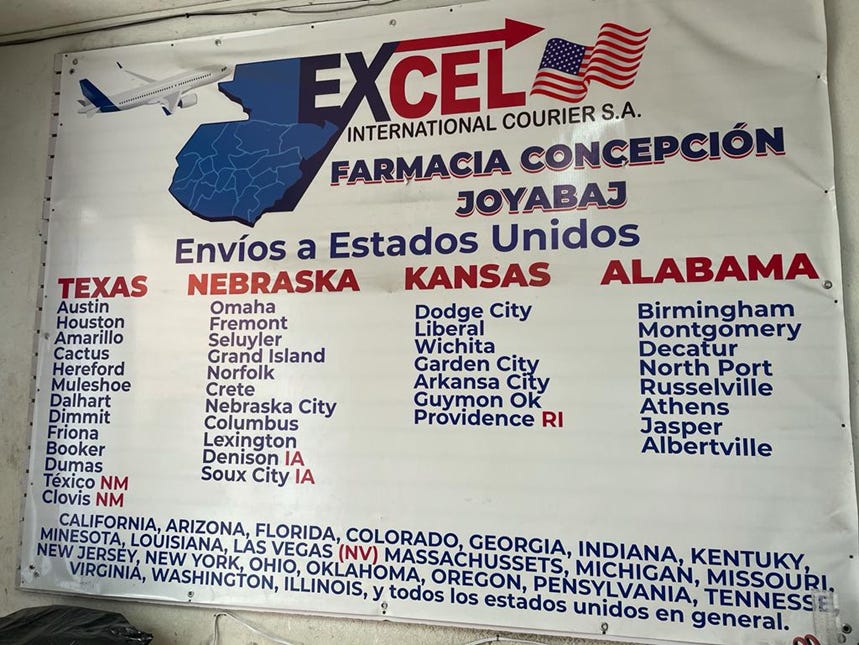
In bustling towns like Joyabaj del Quiché, pharmacies and freight expediters list the US towns occupied by the region’s migrants. Dozens of destinations are listed everywhere—on paper flyers, painted on adobe walls and taped to lamp posts. Some shops employ touts to walk the streets with microphones and bullhorns, advertising their services in Spanish and several Mayan dialects.
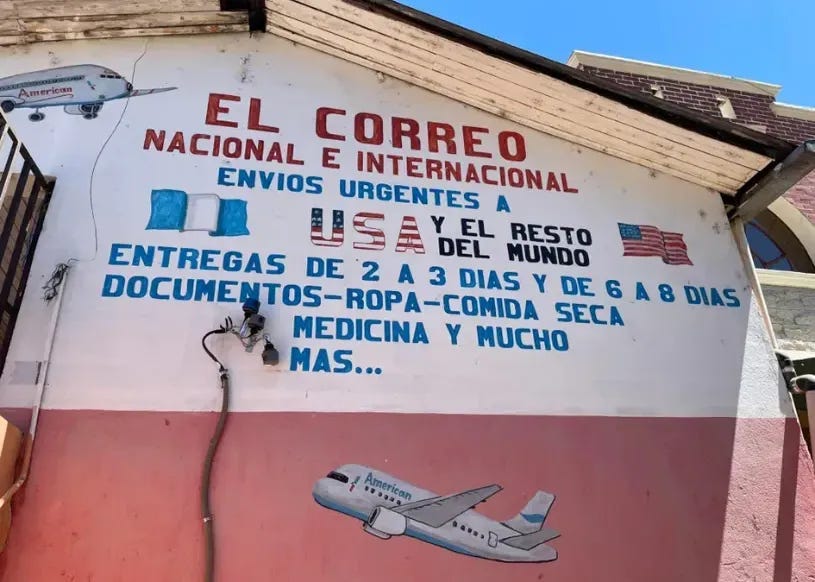
In San Miguel Ixtahuacán, near Guatemala’s border with México, a business calls itself El Correo (literally “the Post Office”) and specializes, as advertised, in “urgent” direct-to-the-US shipments of documents, clothing, food, medicine and “mucho mas…” Regular delivery can take up to a week, the sign indicates, although El Correo offers rush orders within two to three days.
Such family-owned shops have catered to the growing demand for fresh-cooked meals for years. Most charge $30 for the first pound of cargo and $10 for each additional pound. Besides food, shipments often include baby pictures, replacement drivers’ licenses, school diplomas, over-the-counter antibiotics and traditional Mayan clothing worn for religious and civic fiestas.
Eduardo Ponce, a retired Guatemalan army sergeant, opened his Encomiendas San Marcos shop in 2020. He’s noticed that his neighbors frequently send parcels to Lynn, Massachusetts and Georgetown, Delaware. “We’re basically consolidators for DHL,” he said. The global carrier picks up his neighbors’ offerings weekly for processing and shipping to Miami. After clearing US customs, DHL moves them to their US destination.
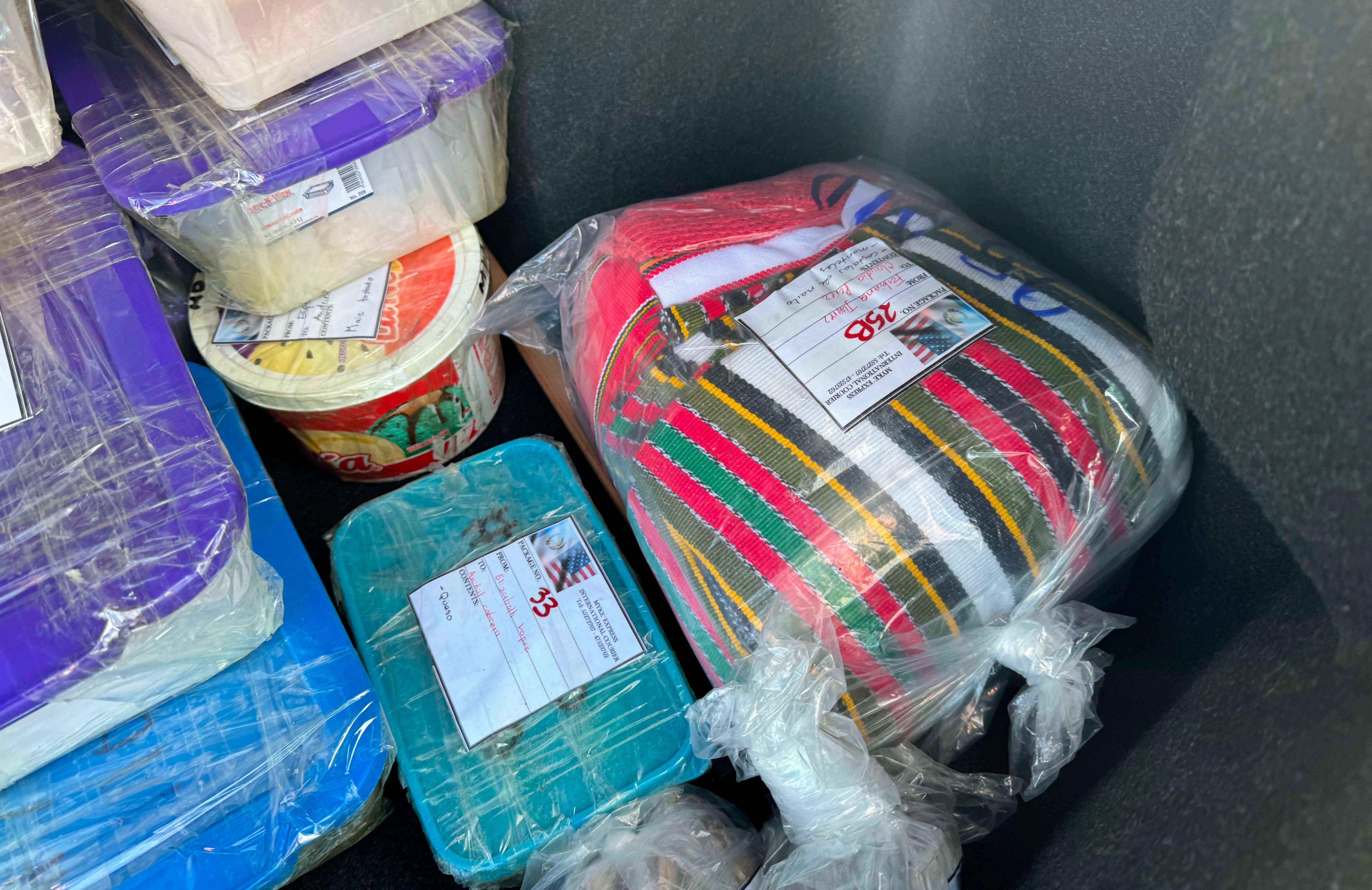
Several years ago, DHL reported it was shipping around 100 of these “family-to-family” packages daily, adding that 90 percent weighed less than five pounds. Each package is inspected to avoid contraband; customers are warned not to send narcotics.
Some Guatemalan couriers such as Palex Express manage their own US distribution, relying on circuit drivers to sort parcels by city or neighborhood, often leaving them for clients to retrieve at grocery stores or restaurants frequented by expats. Palex general manager Pablo Argueta says he averages some 300 packages a week.
The Covid pandemic seems to have turbocharged this business: as fewer people traveled, fewer food packages were arriving in suitcases. Families started switching to consolidators who booked space with commercial cargo handlers.
Manuel Orozco, an economist at the Washington, DC think-tank InterAmerican Dialogue, estimates what he terms “nostalgic” trade to Latino emigrés now tops $4 billion annually. He calls the spread of family-to-family shipment services a “lagging indicator” tracking a stealth migration from Guatemala that continues despite Washington’s current immigration policies.
Still, the crackdown on unauthorized immigrants has made it harder for bespoke couriers like Myke Chavez. He’s stopped flying into several US airports where he previously reached customers on his 24-hour visits. US Customs inspectors also reject some foods now, he says. This year, he expects to complete half the more than 40 delivery trips he made in 2024.
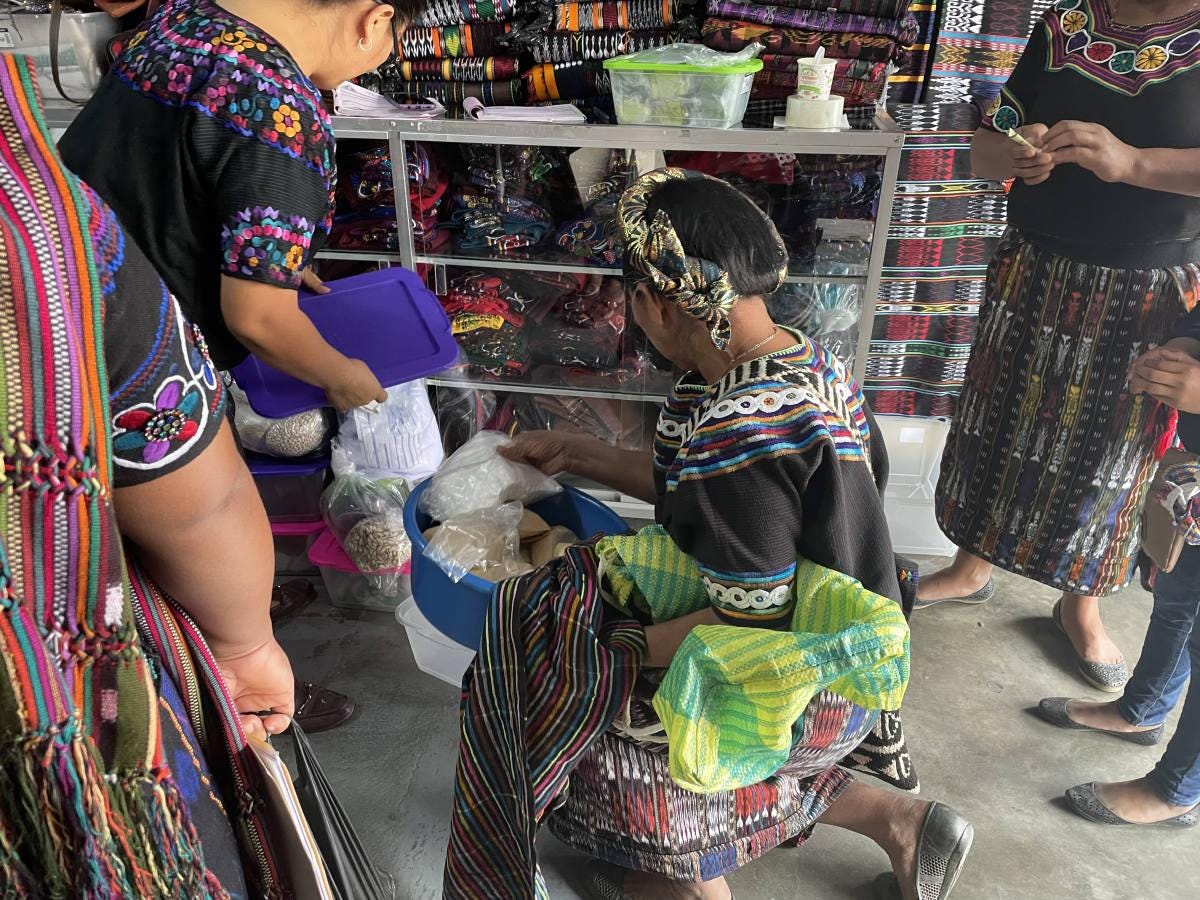
On a recent market day in Joyabaj, Guatemala, a line of grandmothers in traditional Mayan clothing stretched past the entrance of the Envios Xolabaj 2 shop near the central bus terminal.
They brought freshly baked bread and blocks of homemade cheese wrapped in green banana leaves, which they packed in clear plastic containers provided by the shipper to allow inspection by US Customs.
One woman was sending her care package to her sons in Dodge City, Kansas. Her bread wouldn’t taste fresh after the 72-hour trip north, she conceded, but she wasn’t deterred. “It’s what they miss,” she said softly.
August’s arrival marks the start of tamale season, when villagers harvest corn from backyard plots. Children and spouses working in the United States eagerly wait for an aroma that traces back generations, if not centuries, from lands worked by families who now depend on someone earning a living abroad.
Hector Orozco, a Palex driver in the US, knows that scent well from eager hands ripping open packages. “They’re willing to pay for that authentic taste,” he said. “It’s the taste of home.”
Joel Millman is a journalist and community organizer based in Philadelphia. He covered immigration and Latin America for almost 30 years, mainly for The Wall Street Journal, before working as a press officer for the UN’s International Organization for Migration in Geneva. His interests include refugee protection and resettlement and assisting US communities as they pursue successful integration of migrants in their midst. He was a fellow of the Institute of Current World Affairs in Central America from 1987 to 1989.
Joel,
Thank you for "A Movable Feast: One Tamale at a Time.." Lynn was mentioned in your piece which is where we are working with the Guatemalans and their cuchubales/condina. The article also mentioned Solola where we have done savings group work before.
I will be starting my Columbia class Finance for the World's Poorest September through early September and if you are in NYC you could give a talk or we could meet up for a meal.
Jeff