


From his nonprofit office in Kinshasha, Emmanuel Umpula is observing a proliferation of development projects in the global race for the minerals central to the green transition from fossil fuels.
He’s the executive director of African Natural Resources Watch (AFREWATCH) in the Democratic Republic of the Congo (DRC), where major deposits of copper, cobalt and coltan are being mined for use in electric cars, wind turbines and artificial intelligence data centers. Most of the critical raw materials are exported to China as well as the United States and European Union.
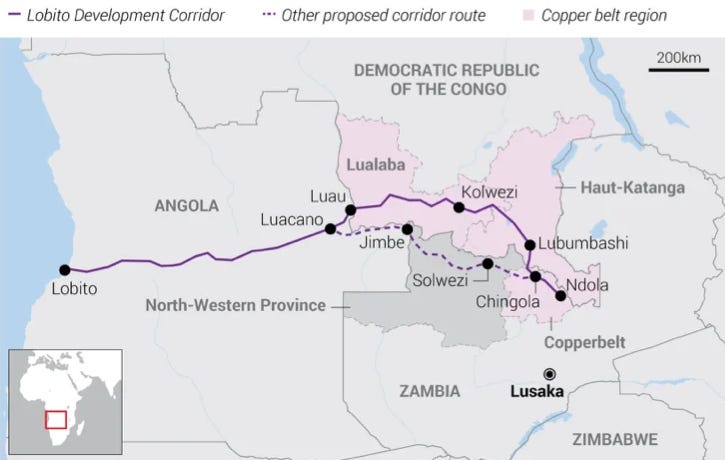
The exports travel along some 1,430 miles, starting from Zambia’s copper mines to the DRC’s Katanga cobalt and coltan mining region, across Angola to the country’s port of Lobito on the Atlantic Ocean. But the supply chain along the so-called Lobito Corridor relies on infrastructure that includes a railway line that’s more than 100 years old.
With European politicians calling for economic security on the continent by reducing dependence on China—which obtains the lion’s share of critical raw materials today—the megaproject to renovate the route and create economic development is set to bring major changes to the area. It’s far from clear how they will affect local communities.
“There are more questions than answers,” Umpala told me. The environmental effects on the region’s forest and inevitable displacement of local people top his concerns. “Some communities are already impacted, and we are trying to represent them,” he said.
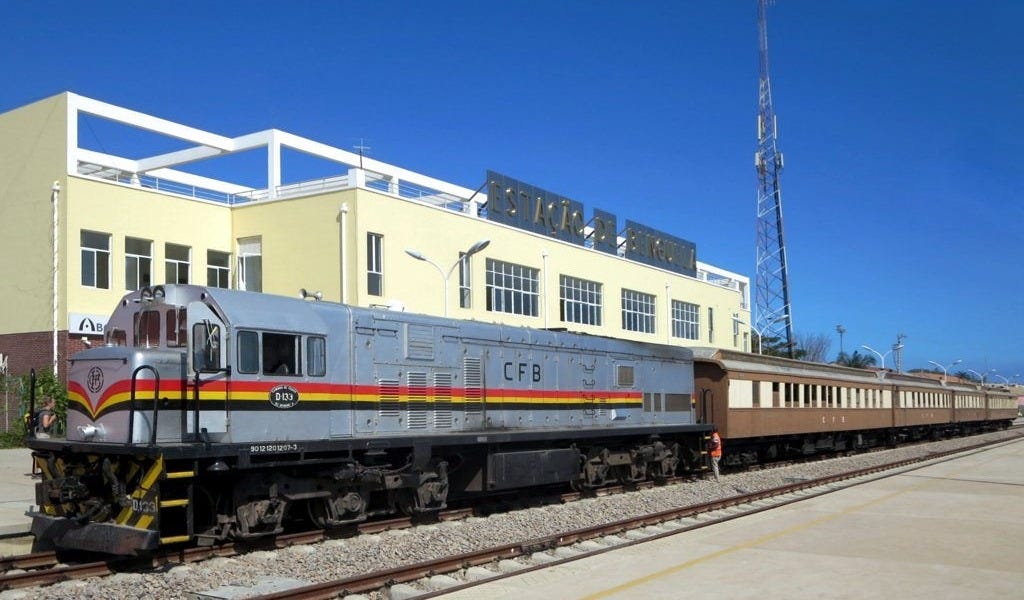
The next phase in the project is renovating Angola’s aging rail line. First built under Portuguese rule in the early 20th century, the 800-mile-long Benguela railroad has transported valuable raw materials destined for Europe and the United States. The Lobito Atlantic Railway Project has different proposed uses beyond shipping raw ores, including the parallel DRC-Zambia battery enrichment project.
Expanding and rebranding the entire rail corridor across Southern Africa will provide a major test case of whether mineral-rich countries can partner globally to use their mineral endowments to the benefit of all their citizens. Can American and European investment this time contribute to sustainable local development as well as a just, long-term energy transition in Africa? The outcome is far from certain.
Major investment
The Lobito Atlantic Railway Project launched with a landmark investors’ conference in Washington, DC in December. In addition to the signing of a US–DRC strategic partnership agreement, a US-Congo minerals-for-security deal, and the DRC–Rwanda “Washington Accords” peace deal, the meetings also promoted the refurbishment of a reliable railway connection to Angola’s coast for the critical minerals mined in the DRC and Zambia.
The international investment agreement came after the Lobito Atlantic Railway company—a joint venture between the commodities supply chain firm Trafigura, civil construction firm Mota-Engil and railway operator Vecturis—obtained a 30-year concession to run the route in 2023, with an additional 20 years if they get other companies to invest.
The project’s total value is now approaching $7 billion, with approximately $2.3 billion coming from the EU effort, which involves the European Commission, European Investment Bank, EU member states and their development agencies, along with private-sector investment.
Despite the White House’s break from its closest allies, the EU has managed to find rare consensus with the United States over the Lobito Corridor. The US International Development Finance Corporation pledged $553 million. And more than $4 billion will come from the United States in “blended finance” instruments from public-private partnerships between government and mining businesses.
Banks and companies working through the African Development Bank and the Africa Finance Corporation are also investing, with EU guarantees. The Development Bank of Southern Africa, owned by the South African government, committed $200 million.
Just transition?
When South Africa concluded its G20 presidency in 2025, it championed financial support for the Lobito project as part of a “just energy transition.” President Cyril Ramaphosa urged for the export of critical raw materials to be an engine of inclusive growth and sustainable development.
“As minerals extraction accelerates to match the needs of the energy transition, it is crucial to ensure that the countries and local communities endowed with these resources are the ones to benefit the most,” he told a summit of G20 leaders in Johannesburg.
But rhetoric about the geopolitical competition for critical raw materials often remains abstract. For people living around the Lobito Corridor, it doesn’t necessarily mean the project will help provide what they need most: jobs, food for families and education.
Developments like the railway can boost local economies by providing training and work and strengthening local institutions, but they can just as easily reinforce existing inequalities and prompt conflict. The project will have huge ripple effects, inevitably stoking local tensions over new economic opportunities, together with the risk of armed conflict in a fragile state.
Lobito Corridor geopolitics
The original Benguela Railway began construction in 1902 with British financial backing, Portuguese land concessions and Belgian mining interests along a path in neighboring Congo Free State, then the private property of Belgium’s King Leopold II. It created a highly profitable extraction pipeline directly to Western industry but fell into ruin during the 27-year Angolan civil war following independence in 1975.
In 2006, China launched a project to extensively renovate the railway in exchange for $2 billion of Angolan crude oil. Almost 20 years later, the railway again needs repairs and upgrades to compete with other such corridors to the East, such as a new Chinese transport corridor from the DRC and Zambia to Tanzania and the Indian Ocean, which reduces China’s reliance on Atlantic-facing routes like Lobito.
Beijing’s continued dominance of mineral extraction in the region seriously worries Western governments: Some 80 percent of the DRC’s copper mines are Chinese-owned, while China mines 85 percent of the DRC’s cobalt and other rare earth minerals. EU Commission President Ursula von der Leyen has called the Lobito Corridor critical for transporting “essential raw materials that are vital for our strategic industries,” saying the project would be “a strategic investment for both Europe and our African partners.”
EU officials have also touted “secondary effects” for local residents, including “strengthening key agricultural value chains” and logistics platforms along the corridor. Umpula and other civil society activists remain worried about the lack of any clear plans, however. “They say they need Congo to make more value at the local level,” he said, “but at the same time, the railway is taking minerals out of the country.”
Still, he believes there’s room to engage EU policymakers about local needs because they may be listening more closely to African voices than officials under Chinese President Xi Jinping and US President Donald Trump. “Now the good news is that we can work with the European Union to get answers, not just the Chinese and the USA.”
Economic security?
The EU is backing the Lobito Corridor as one of the biggest projects under its “Global Gateway” initiative, which aims to mobilize a total of more than 400 billion euros of investment from EU countries by 2027, and financing from development agencies and banks.
After the Trump Administration’s destruction of USAID helped usher in a new era of donor cutbacks and transactionalism for international development, the EU also began to pivot away from the traditional disbursement of grants to building new financial partnerships with the private sector while still vowing to promote good governance.
The railway initiative promises to create “links, not dependencies” and strengthen “the competitiveness and security of global supply chains” while prioritizing sectors central to European plans for so-called strategic autonomy: transport, energy, digital infrastructure and raw materials.
Although Europe’s infrastructure investment is aimed at exerting geopolitical influence as an alternative to China’s Belt and Road Initiative, the EU says its Lobito Corridor financing also reflects its support for democracy, sustainability, good governance and transparency in Africa.
But European civil society groups worry that such transactional arrangements advancing the EU’s competitive agenda may be prioritized over fairer and more equal partnerships with non-European countries. CONCORD, a confederation of more than 2,600 European development NGOs, has questioned the local benefits the project will bring. And the public finance watchdog Counter-Balance published a report about the Lobito Corridor it titled “Europe’s neocolonial vision for plundering Africa.”

Local concerns
On top of the exploitation of resources, local concerns focus on land degradation and destruction of traditional livelihoods. Many critical minerals come from the Miombo woodlands, a vast forested area spanning central Africa from Angola to Tanzania, reaching as far south as Mozambique. The forest is home to 34 percent of the world’s cobalt reserves and 10 percent of its copper, AFREWATCH says.
Using satellite images and field observations across the copper belt of Congo’s Katanga Province’s and DRC-portion of the Lobito Corridor, the group estimates that some 123,000 acres of Miombo forest disappeared between 2000 and 2024 from a total of 290,300 acres in the study zone. That represents 58 percent of the forest cover within the 12 largest mining companies’ concessions.
Emmanuel Umpula, the AFREWATCH director, worries Congolese communities affected by the project simply won’t be consulted. “Will the EU make sure companies handle or manage cases when people need to be relocated and compensated for loss of land?” he said. “What if there are some who say no to the project? How will the company react? Kick them out?”
Transparency is key
Besides the prominent European and Singapore-based logistics companies overseeing the project, Umpala wants Congo’s private sector to have access to lucrative contracts. But without more accountability on the part of governments and companies involved, he says, the economic gains will be captured by Western countries along with Congo’s elites.
The EU must be willing to check corporate and government actors who break promises of good governance, transparency and bringing benefits to locals. That will depend on greater transparency and the effectiveness of civil society in both Europe and Africa working together to help guarantee channels for local people to give feedback and participate meaningfully in decisions about the implementation of the Lobito Corridor.
Casey Kelso is a senior advocacy and policy adviser for international civil society organizations in Europe. He was an ICWA fellow in Southern Africa from 1991 to 1994. Read AFREWATCH’s latest report on the Lobito Corridor here.
Poking the bear here. This is a good piece and you indeed front what many would fear to bring out albeit other have over the years fronted around why DRC will never settle politically and remains largely war torn.