

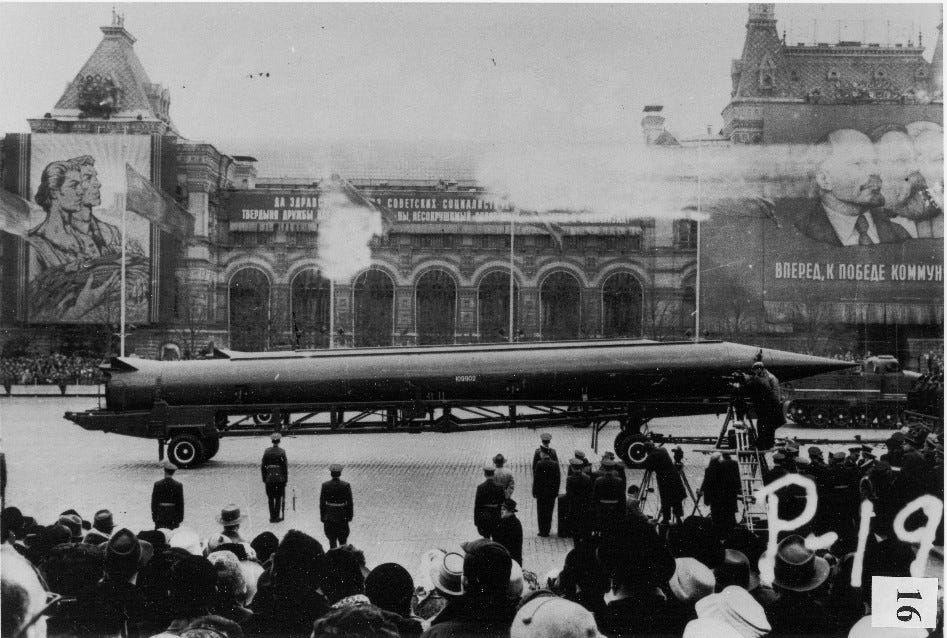
On October 28, 1962, a Sunday of crushing tension, the Soviet leader Nikita Khrushchev sent an urgent letter to President John Kennedy reluctantly agreeing to “dismantle the arms, which you describe as offensive, and crate and return them to the Soviet Union.” With those carefully chosen words, each an unintended admission of a colossal blunder, Khrushchev brought the Cuban missile crisis to a sudden close. The danger of a nuclear war between the United States and the Soviet Union, the world’s two superpowers, slipped into history.
I was at the time CBS’s bureau chief in Moscow. I’d met and covered Khrushchev since 1956. I thought I understood him and his policies. Because I was very tall, he would playfully refer to me as “Peter the Great,” the early 18th-century tsar who stood 6’7”. The comparison was always good for a laugh; it was always good for my reporting, too. His security detail, recognizing my “link” to Russian royalty, would allow me to get close enough to Khrushchev to discuss such disparate issues as Berlin, which exasperated him, and basketball, which excited him. An occasional exclusive might emerge from such Q and As.
Berlin was Khrushchev’s true obsession. He would often rant and rave about the division of the city, a troubling leftover from World War II, but derive little satisfaction. Frustrated, he would threaten to sign a separate peace treaty with East Germany, as though he thought such a pact would frighten the Western powers into pulling their troops out of Berlin.
I spent hours every morning reading the Soviet press, searching in that haystack of Marxist gibberish for a glistening needle of insight into Khrushchev’s thinking. Like most Moscow correspondents, I was hunting for the big story. Finally, in early September, I thought I saw the needle on the front page of Pravda. It was the return of the old theme of “American aggression” against “fraternal Cuba,” but this time with a special fury. If it again dominated the front page of the country’s most important newspaper, it would surely be quick to spark similar placement in every newspaper and broadcast in the communist world. For the first time since the Bay of Pigs disaster of April 1961, Cuba was again back in the news. But why? What did Khrushchev have in mind?
At this moment, the specially nurtured art of Kremlinology resurfaced in every embassy, newsroom and dinner table in Moscow. Overnight, everyone became an expert in Soviet policy. Everyone had a theory. I was no exception. Based on what I’d been reading, hearing and seeing, I thought Khrushchev might be considering a change in his global strategy, shifting maybe from defensive to offensive. He must have known such a change would be tricky and dangerous but still worth trying. Khrushchev was, after all, a gambler.
By way of Cuba, he might have thought he could finally settle the lingering Berlin dilemma. If he decided to substantially increase his arms shipments to Castro’s Cuba, and possibly include nuclear-tipped missiles, I speculated, he might be able to tip the balance of power in the Caribbean in Moscow’s favor. And, alarmed by this sudden show of Soviet power, Kennedy might then consider changing the American position on Berlin, leading to the evacuation of Western troops from the divided German capital. That was Khrushchev’s ultimate policy objective. He saw the playing of his nuclear card as a way of underscoring his determination to change the frustrating Berlin deadlock. He never intended to use a nuclear weapon. In fact, the very thought terrified him. He was always warning his more adventurous colleagues: “The living will envy the dead.”
Until October 22, a gloomy if historic Monday, few in Moscow knew that Khrushchev had indeed switched his strategy from defensive to offensive. Except for a small circle of key advisers, we were all in the dark. It was still a secret, and Russians are good at keeping secrets. Quietly, months before, his Cuban gamble had been activated. Thousands of troops were moved from the Russian heartland to ports in the Black Sea, then through the Dardanelles, across the Mediterranean and the Atlantic Ocean before arriving in Cuba, 90 miles from Florida—and very few people knew anything about it.
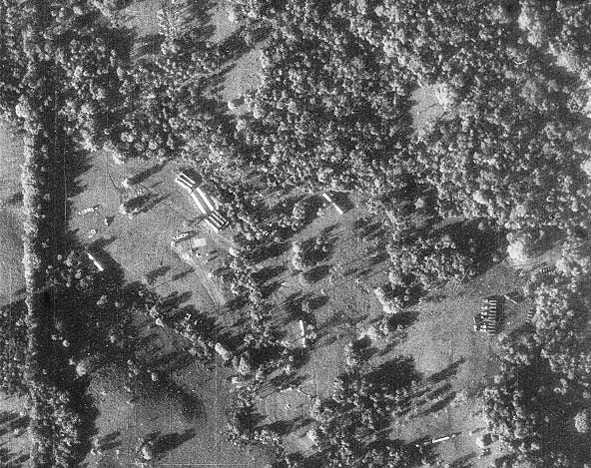
As late as October 14, McGeorge Bundy, a key presidential adviser, told a nationwide TV audience that there was neither “present evidence” nor a “present likelihood” of a growing Soviet threat in the Caribbean. But, two days later, on October 16, an American spy plane, flying a routine reconnaissance mission over Cuba, accidentally spotted the construction of Soviet missile bases, and Khrushchev’s Cuban gamble, built on secrecy and deception, was finally exposed. He was caught in the bright light of discovery, Kennedy in the bright light of reality, and senior officials in the Kremlin and the White House suddenly faced the horror of a possible nuclear war.
From October 16 to October 22, around a large oval table with his closest and most trusted aides and advisers, Kennedy, considered “weak,” “untested” and “inexperienced” by Russian officials, rolled through a range of responses to Khrushchev’s reckless challenge. One general proposed an immediate air bombardment of Cuba. A senior diplomat urged a negotiated solution. A Cabinet official suggested a summit with Khrushchev. The hours and days passed in top secret deliberations. Kennedy realized he had little time. Action of some sort was deemed necessary.
Over the October 20-21 weekend, Kennedy reached a decision, the most consequential of his presidency.
From October 22, when he announced his decision, until October 28, when Khrushchev responded with his stunning admission, the world shivered under a blanket of unprecedented worry. Seven days, each carving its own definition of nuclear diplomacy, passed before a solution emerged. For an American journalist in Moscow, this week-long crisis was a mix of discovery, thrill and deep anxiety.
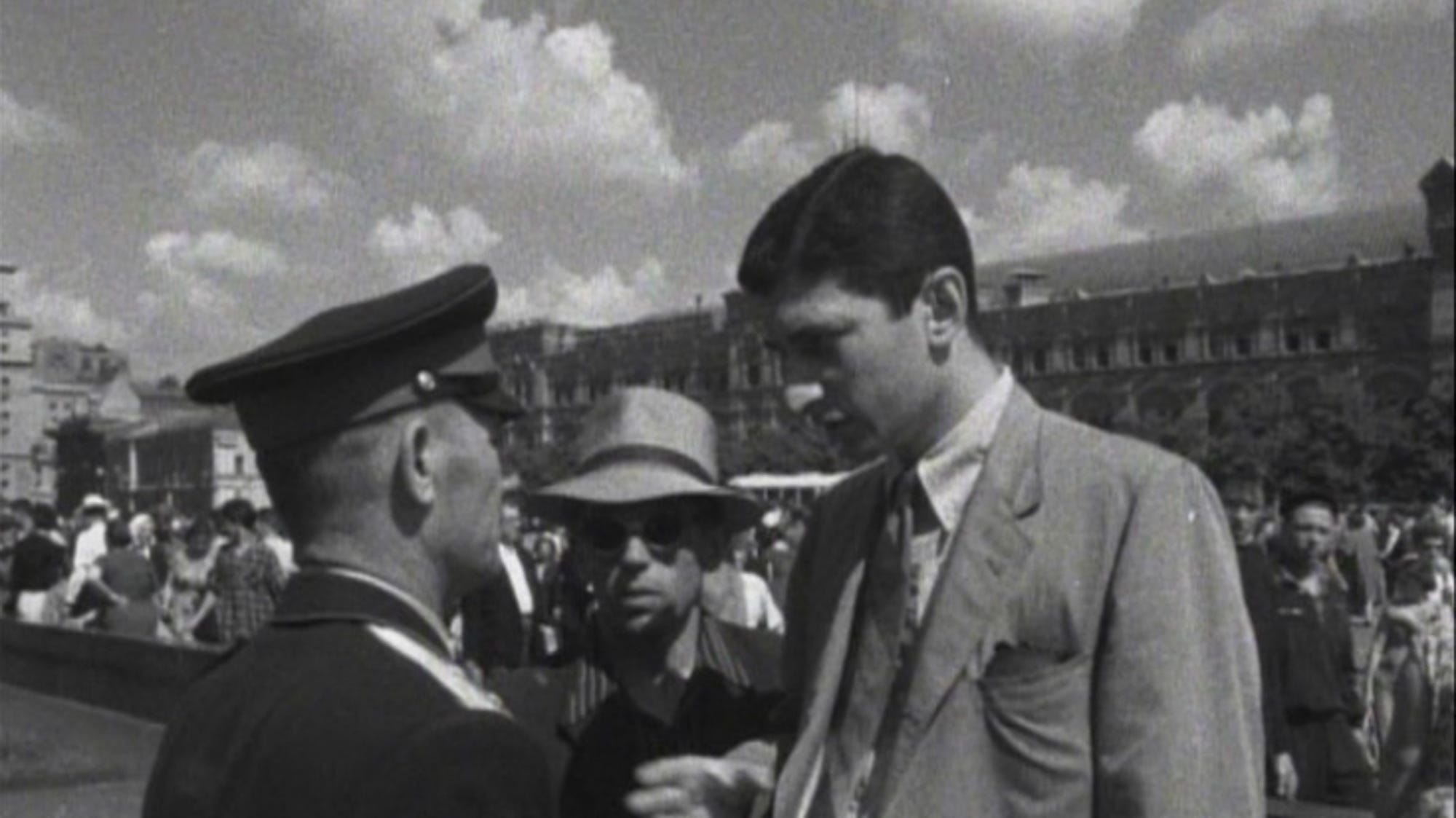
Monday, October 22: After a mid-afternoon broadcast, focusing on an interesting Pravda critique concerning “rising American aggression” around the world, I stopped at the CBS office for a quick look at the Soviet TASS news agency ticker, a stop I usually made before dinner. The office was conveniently located down the hall from my small, three-room home-away-from-home in a new apartment house that was already falling apart, typical of many new residential buildings in downtown Moscow. Doors were slipping off their hinges, windows loosely fitted to allow the winter winds to race from one tiny room to another. A TASS story from Washington caught my eye. It spoke of an “unusually busy” round of talks among top US officials and Congressmen. The topic was not mentioned, which struck me as odd. The same news item was broadcast on Moscow Radio at 6 p.m. Again, no mention of a topic.
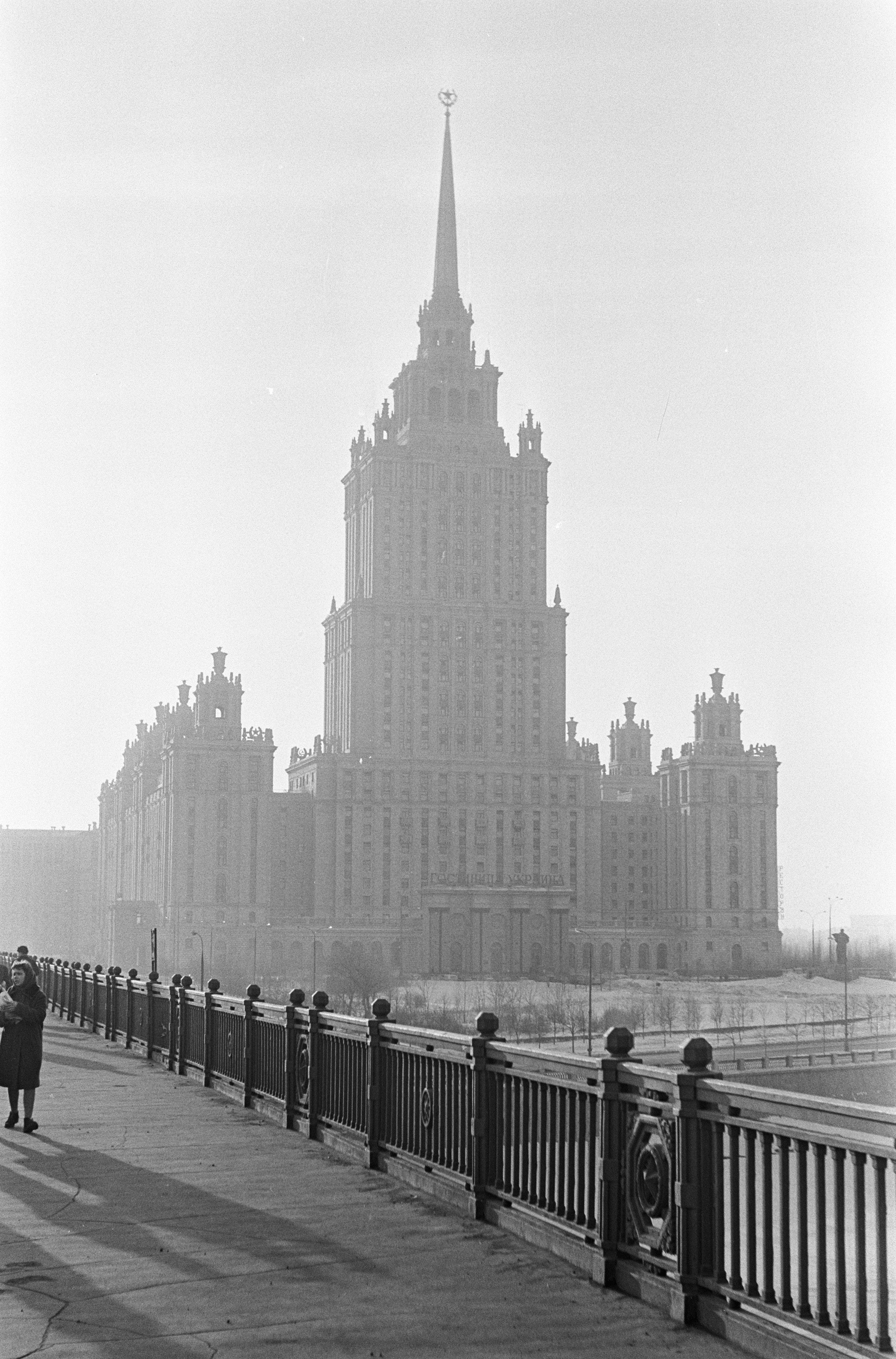
After dinner, my curiosity aroused, I walked across the broad, dark and relatively empty Kutuzovsky Prospekt to the kiosk in the lobby of the Ukraina Hotel, one of seven jagged skyscrapers Stalin built in central Moscow. I purchased a copy of Izvestia, the evening newspaper. The minute I saw the front page, I knew Cuba had just leapfrogged over Berlin as the Kremlin’s Number One concern. Izvestia usually featured long, boring reports about Soviet industry; but on this Monday, it was absorbed with two stories about Cuba. One was headlined: “What is Washington Up To?” Based on speculation in US newspapers, it zeroed in on “an American invasion of Cuba.” Invasion? Scary word, for sure, I thought. The other story was called “Suspicious Maneuvers.” It said “45 American military ships and up to 20,000 troops” had been moved to the southern tip of Florida. A radio in the hotel lobby echoed the Izvestia stories, drawing a crowd. It zeroed in on “new provocations hatched against Cuba,” adding, “anything can now be expected from the Pentagon.”
I hurried back to the office, thinking a serious crisis was brewing in the Caribbean. I was right. Waiting for me was a message from Blair Clark, the CBS vice-president for news, my boss. “Please call soonest,” it read. I did, but it still took more than an hour to get through to New York, which, I had to admit, was fast by Moscow standards. The anxiety in Blair’s voice was eloquent testimony to the anxious times. He told me the White House had asked for “air time.” An unidentified “national security interest” was given as the reason. 7 p.m. was the time. CBS’s White House correspondent Robert Pierpoint had learned “Cuba” was the problem. Blair stressed CBS was likely to be on air for much of the night, and he wanted my reporting, live, from Moscow. We set up an open telephone line from CBS headquarters in New York to my Mosow office, hardly ideal in terms of quality but acceptable in a crisis. I was able, on that line, to listen to Kennedy’s speech at 7 p.m., which was 3 a.m. (Tuesday) Moscow time, and to use it to do my broadcasts. There was an eight-hour time difference between the two cities.
Kennedy, sounding unrattled, wasted few words before getting to his main point. The Soviet Union had secretly transported troops and missiles to Cuba, he disclosed. That was unacceptable. He announced an immediate naval blockade of Cuba, usually regarded as an act of war, demanded the withdrawal of Soviet missiles and troops and bluntly warned that a Soviet attack on the United States, presumably from Cuba, would be met by an all-out American counterattack on the USSR. For the first time in the nuclear age, war between two nuclear powers seemed possible, hovering like a black cloud over the near horizon.
Blair wanted me to quickly do a broadcast on the Soviet reaction to Kennedy’s speech. An impossible assignment, as it turned out. It was 3:30 in the morning in Moscow. Most Soviet officials were asleep, and the few on duty had no authority on their own to compose an official response. The Foreign Ministry was taking no calls. TASS was not yet offering an analysis, or conveying a reactionn that could be interpreted as official. The streets were dark and empty, meaning no man-in-the-street interviewing was possible. Morning newspapers were not yet fully composed, printed and distributed. A formal Soviet reaction would have to wait.
What to do? I resorted to an old reliable in journalism, the telephone. I called a few usually well-informed diplomats and journalists. Everyone seemed to agree, first, that Kennedy had sounded “surprisingly tough,” and, second, that Khrushchev had not expected that response. When the two leaders met in Vienna in June 1961, Khrushchev left with the strong impression that Kennedy was both “weak” and “inexperienced.” Several months later, when Khrushchev, after calculating the odds, built the Berlin Wall, Kennedy objected rhetorically but did nothing. Khrushchev was not surprised. When he began plotting his Cuban adventure, he assumed Kennedy would look the other way. But this time he did not. His sharp response to Khrushchev was unexpected. Chto delat? the Russians asked. What to do?
On the CBS Evening News with anchor Walter Cronkite, a much later CBS news special on television and, in between, on a number of radio reports, although I cited no official Soviet sources, I broadcast several reports, based on what I termed “informed Moscow opinion,” that Khrushchev had not expected Kennedy’s activist reaction, that he now had to readjust his Cuba strategy and finally that he’d opened the Kremlin door to a possible political challenge. I believed that, in public anyhow, Khrushchev would now assume a more cautious approach to the Cuba crisis, a step back from the overt belligerence he’d shown to this point.
On CBS’s last newscast on Monday evening, starting at 11:30 p.m. (my 7:30 a.m. Tuesday), Cronkite and I compared our experiences in Moscow during a time of crisis, concluding that not much had changed. The same feelings of isolation. The same difficulty with reliable information. The same problem getting an open line to New York. Cronkite had been a Moscow correspondent for the United Press after World War II.
By the time I returned to the apartment my wife, Mady, and I considered “God’s little acre” in Moscow’s general madness, it was too late for a nap. It was already 8:30 a.m., and there was much to do.
Tuesday, October 23: Most Americans by this time had already learned about the new Cuban crisis. They knew about the Kennedy speech, the blockade of Cuba, the secret shipments of Soviet troops and missiles, the danger of war. It was very different in Moscow, where Russians, waking up, had no idea that, during the night, their world had changed. They had never been informed that Khrushchev had sent thousands of troops and missiles to Cuba. Their morning newspapers and broadcasts were filled with routine propaganda about “American aggression against Cuba,” but nothing about Kennedy’s speech, the blockade or the sudden, new threat of war.
By mid-day, after 14 hours of no-news silence, TASS and Moscow Radio finally informed the Soviet people that Kennedy had “imposed a blockade” of Cuba and “American aggression” had to be stopped. Nothing more was offered in the official press, but I thought it probable that angry, anti-American demonstrations would soon be popping up in many cities.
At 2 p.m., I went to the American Embassy, one likely target. Marine guards blocked the main entrance to the massive building, which served as both office and home to a number of American diplomats. I had to show my ID, which was unusual but understandable in the circumstances. I spotted an embassy spokesman briefing a small group of American reporters near the garage in the rear of the embassy, far from the listening devices the Soviets had planted in the building years before. I joined them. The spokesman told us that a Foreign Ministry emissary had earlier hand-delivered a protest note to Ambassador Foy Kohler, new to his posting but a hardened veteran of many other Soviet-American encounters. The note, he said, condemned the Cuban blockade as a “cynical and provocative act” that could lead to war. It also said the Soviet
Union had called for an emergency meeting of the UN Security Council.
“What does Kohler think of the note?” a reporter asked.
“Coulda been a lot worse,” the spokesman said, quickly adding, “that’s on background,” meaning we couldn’t quote him or refer to Kohler but we could use the essence of his comment.
There were two other official statements, neither allowing Kohler to take a deep breath and relax. Both were carried on TASS and picked up by Moscow Radio, ensuring national exposure. In one statement, Defense Minister Rodion Malinovsky canceled all leaves for military personnel, raised “combat readiness” for all troops and stopped the planned discharging of servicemen in strategic positions, such as rocketry, anti-aircraft defense and submarine operations. In the other statement, Marshal Andrei Grechko, the Soviet commander of the Warsaw Pact, summoned all senior officers to an emergency meeting in Moscow. Both statements ignited diplomatic and journalistic speculation that a possible split might be developing in the Kremlin, the military favoring a stronger reaction to the Kennedy speech, the diplomats supporting Khrushchev and UN negotiations.
Izvestia, appearing in kiosks throughout Moscow, defiantly rolled up its sleeves and denounced Kennedy’s blockade as a “cynical, irresponsible provocation” that could easily lead to a world war. In big, black headlines, the government newspaper roared “USA Plays Recklessly with Fire,” adding “Peoples of the World Indignantly Condemn American Aggressors.”
Although the headlines were frightening and the rhetoric fierce, I concluded one radio report early Tuesday evening with my own judgment that “behind the bluster, there was little evidence that the Russians intended to push this crisis over the brink.” In another report, I expressed my belief that Khrushchev did not want to see the Cuba crisis “spin out of control,” stumbling toward steeper increases in military spending at a time of acute domestic shortages.
Late that night, in an analysis for the Cronkite Evening News, I described the Russian people as “baffled” and “disturbed” by the Cuba crisis but decidedly against its descending into war. I could find no one, I said, who considered Cuba so crucial to Soviet interests that it would be worth a war with America. Berlin perhaps, but not Cuba. Proof lay in two Soviet signals that evening impossible to miss. Kohler hosted an embassy party honoring the visiting New York City Ballet, which was opening a three-week tour of the Soviet Union. A dozen Russians attended, artists, diplomats, officials. They all seemed delighted to be toasting American dancers and drinking scotch whiskey to their giggling delight. If anyone discussed Cuba, I didn’t hear it. More significant, Khrushchev, Mrs. Khrushchev and four members of the Politburo, all looking relaxed, showed up at the Bolshoi Theater to honor the visiting American opera star Jerome Hines, who was there to sing the lead role in the Russian classic Boris Godunov, and to do so in the Russian language. Khrushchev, obviously in good humor, led four standing ovations for Hines’s spectacular performance and then went backstage to congratulate the American opera star in person.
In my concluding broadcast on Tuesday night, I stressed that in my opinion Khrushchev was trying to say, in his way, that his Cuba gamble was a mistake. He was personally congratulating a visiting American opera star. His timing was crucial. Twenty-four hours after Kennedy had publicly blasted Khrushchev’s historic blunder, embarrassing him and demanding he pull his missiles and troops out of Cuba, Khrushchev did not double down on his blunder, as other Soviet leaders might have done; he quickly signaled he wanted to ease the crisis and establish better relations with the United States.
Blair was listening to my analysis in the control room. When I finished, he congratulated my “courage.” The word puzzled me. Blair explained that the other Moscow reporters were not digging into Khrushchev’s strategy. None, he thought, had underscored the importance I ascribed to Khrushchev’s appearance at the Bolshoi. They reported the fact but not its probable meaning. The world was hurtling toward a nuclear war, or so it seemed, and Khrushchev was taking four hours on a Tuesday evening to enjoy an American’s rendition of Boris Godunov. There had to be another reason. Khrushchev was, with his appearance, in effect, screaming at Kennedy, let’s find a way out of this dangerous mess.
Wednesday, October 24: An early morning cable from Blair read, “If you agree, this may be a good time for Mady to go shopping in Copenhagen.” That would have been a strange suggestion for him to make at this time if it were not for the fact that he was deliberately using code language. If Blair believed, following a confidential talk with his former Harvard roommate, John Kennedy, now president, that the situation in Moscow was getting to be truly dangerous, he’d innocently suggest in a cable that Mady “go shopping.” Blair and I had agreed to the code before I left for Moscow in May 1960.
Now, as tensions between the superpowers rose by the hour, he had apparently concluded after talking to Kennedy that it was time to invoke our code language. What Blair did not know was that Mady and I had earlier discussed the code and concluded that if she were to leave for any reason, I would, too. But since both of us believed, Kennedy notwithstanding, that Khrushchev was gambling, was caught and was now desperately searching for a peaceful way out of the crisis, there was no need for either of us to leave Moscow. We’d see it through, fairly confident that, in one way or another, the crisis would end, not in warfare but in Khrushchev’s public humiliation.
One way to end the crisis was summitry, in those days the magic formula for solving any diplomatic problem. Inevitably, as it turned out, that was proposed on the third day of the crisis, and Khrushchev instantly accepted. The proposal came from Bertrand Russell, the renowned British philosopher. In a cable to Khrushchev, he suggested a summit with Kennedy might be the preferred path for “de-escalating the crisis.” Khrushchev responded in two ways. In a confidential cable, he offered an enthusiastic yes, but in public, he took a step back, describing the idea as “useful” and adding, “we shall do everything in our power to stop war from breaking out… We shall not be reckless.”
Khrushchev’s embrace of summitry was given widespread national attention. Russell’s proposal was immediately reported by TASS, repeated three times on Moscow Radio, twice on television and front-paged in all Soviet newspapers. Khrushchev wanted his people to know there was a way out of war, a prospect that had begun to alarm them.
Still, as the crisis lumbered toward a showdown, one thing many Russians did not know was that at 10 a.m. EST on Wednesday morning, Kennedy’s blockade of Cuba was to go into effect. It was a decisive moment in the Caribbean confrontation. Would Russian ships ignore the blockade and continue delivering arms to Cuba? Or would they stop and not challenge the blockade? President Kennedy’s brother, Robert, later described the grim feeling at the White House: “The danger and concern that we all felt hung like a cloud over us all.” But at the last minute, knowing he could wait no longer, Khrushchev secretly ordered the Russian ships to stop, another signal to Kennedy that he was continuing to look for a way out of the crisis. He did not want to fight.
While Soviet newspapers reported street and factory demonstrations all over the country, it was only a matter of time before one would erupt in front of the American Embassy on Tchaikovsky Boulevard in downtown Moscow. At exactly 3 p.m., a mass of teenagers from nearby secondary schools suddenly appeared, carrying professional-looking signs, reading “American Aggression Against Cuba” and shouting “Viva Kuba!’ and “Kuba—Da; Yanki—Nyet.” They were supposed to look angry. One young man threw an ink bottle at the embassy, breaking a window, screaming “Yanki—Nyet!” He saw me shooting film of him and his friends, and he might have imagined he’d soon be starring in a newsreel. He approached me, his face softening into a smile.
“A question, please?” he asked.
“Yes, of course.”
“You are an American, right?”
“Yes.”
“Have you ever driven a Chevrolet?”
I burst into laughter. That was not the first time a Russian had asked me about Chevrolets. It was clearly the most popular foreign car in the Soviet Union. When I told him that I had not only driven a Chevrolet, I owned one, a blue convertible, he looked amazed, as if he’d just seen someone from Mars.
“Hey guys!” he shouted to his demonstrating buddies. “This man owns a Chevrolet!” Their Cuba-inspired anger seemed suddenly to melt as they gathered around me, firing one question after another about American cars and movies. I tried to answer every one, but I was also trying to shoot film and record this fascinating mix of anti-American anger and pro-American curiosity. It wasn’t easy, but it was revealing.
Khrushchev had to work hard all day balancing summitry with business. Somehow, he found the time for a three-hour meeting with a visiting American businessman, William Knox, chair of the Westinghouse Electric International Company. They discussed trade possibilities, Khrushchev telling Knox he truly preferred “peaceful coexistence” with the United States. But, he stressed, if the US invaded Cuba, there would be war and “we will all meet in Hell.” Khrushchev hoped he could stimulate a groundswell of enthusiasm for the summit Russell had proposed, one that would end the Cuba crisis and open a path to a Berlin solution.
Much of what I learned on Wednesday I reported in a series of radio broadcasts and two television appearances. For the Cronkite news program, I put special emphasis on Khrushchev’s rush toward summitry as a possible pathway to peace, mentioning the Russell proposal and the Knox meeting but ending with my conversation with the demonstrating pro-Cuba students. “Walter,” I said, “there was no real anger there.” The young people were simply more absorbed with American cars and movies than they were angry with American policy toward Cuba. I noted, however, that one student, who left our conversation with a smile on his face, returned a few minutes later with a frown. “Don’t get me wrong,” he sputtered unpersuasively. “I still oppose American aggression.”
When I returned to our apartment after a brief stop in the CBS office to check the TASS ticker, I found an inspiring cable from CBS president Richard Salant, sent to all CBS reporters covering the Cuban crisis. He mixed high praise for our “professionalism” with a word of caution about “contrived drama.” He insisted that “rumor” be defined as rumor and our broadcasts be based on “facts.” Most satisfying was his concluding message: “I would rather be beaten by the competition than to contribute to pressing the panic button or to disseminate information, which proves to be inaccurate.” In so many words, Salant was telling us the country was on the edge of war and that it was our responsibility as journalists to cover events carefully and accurately.
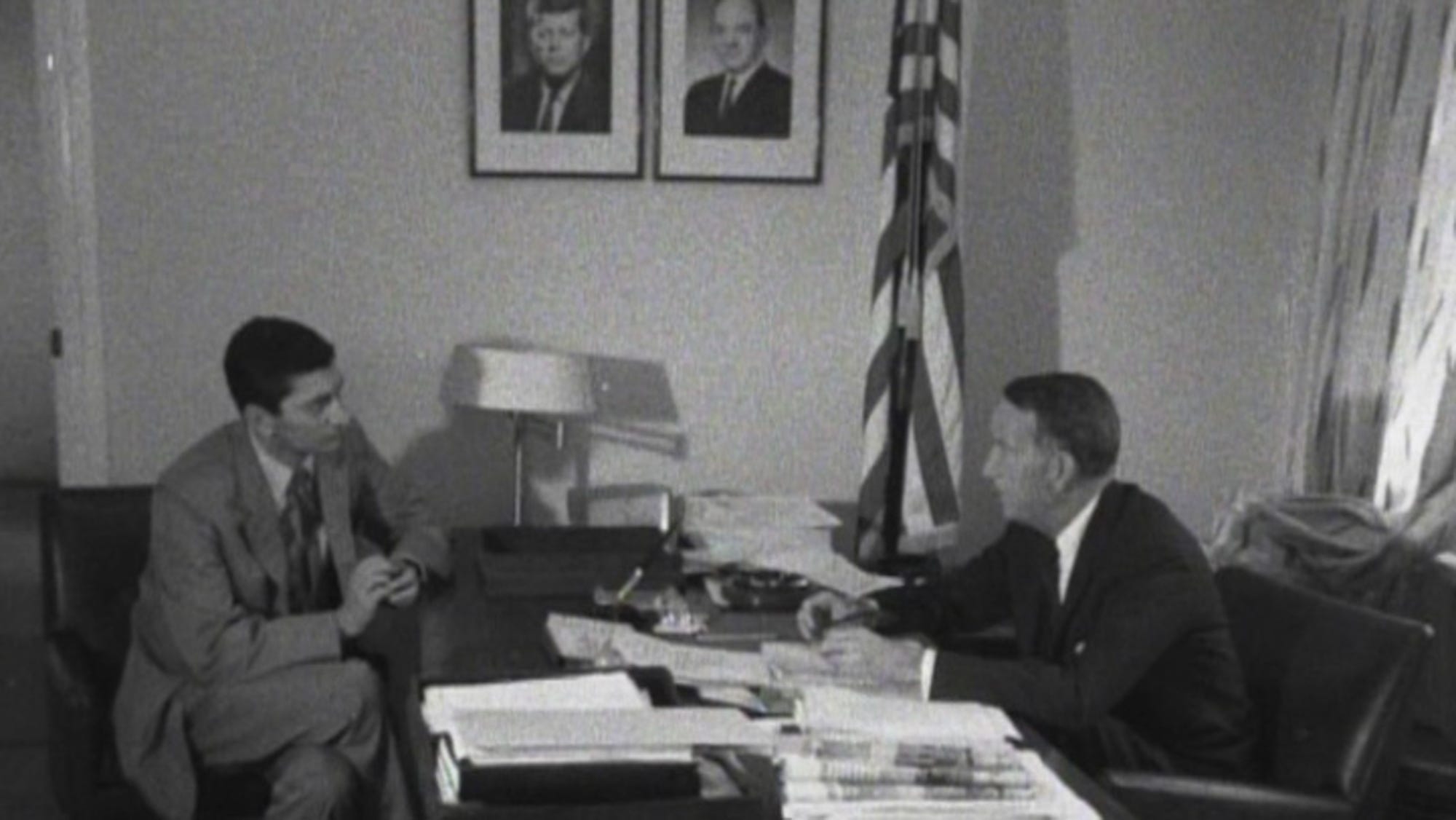
Thursday, October 25: On the fourth day of the crisis, I heard open criticism of Khrushchev for the first time. Rarely did one hear criticism of a Soviet leader.
At the central market, which I frequented as much to talk and listen as to buy, I asked a middle-aged butcher about the Cuba crisis. “Do you think there’ll be war?”
He shook his head. “No, Cuba is far away, not important.”
I had heard that answer before. Cuba was not Berlin, he seemed to be saying. “But,” I continued, “who knows? Khrushchev could make a mistake.”
The butcher, clearly unafraid, snapped, “Yes, he could make a mistake. What did he think? That the American president was a fool? No, he was.”
At the Central Telegraph, located a few blocks from the Kremlin up the city’s main avenue Gorki Street, where I usually broadcast my reports, a producer for Moscow TV whispered, “China has now said, even in public, that Khrushchev misjudged Kennedy. Even people here are saying the same thing. Bad mistake.” Usually when I asked him a question, he’d find a way of avoiding an answer. Not this time.
Khrushchev, an adroit politician, must have sensed he was in trouble. On Tuesday, he had ordered Soviet ships not to challenge Kennedy’s blockade, a signal of compromise. That night, he had attended the Bolshoi performance of an American opera star, another signal of compromise. He was hoping that by Wednesday, Kennedy would have responded positively. He was wrong. That day, Khrushchev had quickly approved the Russell suggestion for a summit, another signal of compromise, and Thursday’s Pravda pressed summitry even more, as if it were a surefire cure for cancer. In one of my early broadcasts, I noted, “a policy decision has already been taken to ‘jaw’ rather than ‘war.’” But still Kennedy refused to budge. Khrushchev’s missiles would first have to be removed from Cuba.
The columnist Walter Lippmann had an idea. In a newspaper piece, he proposed a simple symmetrical swap: Khrushchev would pull his missiles out of Cuba and Kennedy would pull his out of Turkey, ironically the same ones that months earlier had inspired Khrushchev to plant his own missiles in Cuba, triggering the current crisis. For a brief time, the Lippmann swap played an active role in negotiating a possible solution. But there remained one problem: Kennedy would not change his Monday night demand that Khrushchev must first remove “all offensive weapons” from Cuba.
Anti-American demonstrations continued all day, a noisy backdrop to the deadlocked negotiation. Hundreds of angry students returned to the American Embassy, many carrying large placards reading “Shame on American Imperialism.” Others threw ink bottles at the first and second floors of the building, smashing a few windows but apparently to little effect. If they were trying to intimidate the Americans inside the embassy, they failed. I overheard one secretary say to another, “Look at those youngsters. Aren’t they adorable?”
That night, at exactly 10:46 pm, Moscow Radio broke into a Tchaikovsky symphony with a TASS news bulletin. Such a break-in, I was told, had never before happened in the Soviet Union. The report quoted U Thant, the UN secretary-general, as proposing a two-to-three week moratorium on both the American blockade of Cuba and Soviet arms shipments to Cuba, during which a Khrushchev/Kennedy summit would begin. The U Thant proposal was read in full on Moscow Radio and immediately followed by a Khrushchev acceptance. “I received your appeal,” the Soviet leader declared, “and I agree. It corresponds to the interests of peace. I welcome your initiative and share your concerns. I also consider the situation in the Caribbean to be dangerous.”
In my analysis for the Cronkite newscast, I tried to explain Khrushchev’s strategy. His “unqualified acceptance” of U Thant’s proposal would lead to a summit with Kennedy, he hoped, at which “the whole question of overseas bases in Turkey and Cuba, plus the unfinished business of Berlin” would be discussed and resolved. “The Cuban crisis,” I went on, “has given Khrushchev his chance for a summit on Berlin—a kind of last chance for an agreement before plunging ahead with his separate peace treaty with East Germany.” I believed that Khrushchev’s “Great Russian nationalism” would never allow him to wander too far afield from what he saw as the historic threat posed by Germany. Whether a Teutonic or a Nazi threat, it was always, in Khrushchev’s mind, a German threat, and that fashioned his strategic policy during the Cuban crisis.
Friday, October 26: “Reliable diplomatic sources” was the description I used for my friends at different embassies who were especially helpful that day. They had all been receiving sobering diplomatic reports from colleagues in Washington that Kennedy was being pushed toward action against Cuba on the coming weekend, by Monday at the latest. The Soviet Embassy spoke of “massive buildups of military forces in southern Florida.” Reporters known to be close to the White House were being advised of an “imminent invasion of Cuba.” Congressional sources said Kennedy was under “phenomenal pressure to bomb Cuba.”
The bottom line was that Khrushchev was fast running out of time. He had to act. His options were few. One wild idea was he could move against West Berlin before Kennedy moved against Cuba. Or he could fire his missiles, now installed in Cuba, against the United States, igniting a nuclear war. Or he could agree to Kennedy’s demand and start withdrawing his arms and troops from Cuba, a capitulation that could only be translated as a stunning political and diplomatic defeat. Again, chto delat?
What my diplomatic friends and a few Soviet sources could not tell me (they probably did not know) was that on Friday evening, Khrushchev had sent another letter to Kennedy, cleared by the Politburo, in which he took a big step toward accepting Kennedy’s demand to pull his “offensive weapons” out of Cuba. This letter, in tone and substance, hinted that Khrushchev was finally ready for a realistic deal.
What I knew for a fact was that Soviet press commentary had softened. By Friday evening, the front page of Izvestia, which had been loaded with venomous anti-American propaganda all week, was now once again focused on Soviet industrial production, its normal fare. It was another Khrushchev signal. Moscow Radio mentioned Cuba, but in a routine way. There was nothing about “American aggression.”
I remembered the anti-American demonstration I’d seen earlier in the day in front of the US Embassy. I had a feeling that maybe it had been brought to a close. To be sure, I got into my car and drove there. Tchaikovsky Boulevard was crowded with cars but no demonstrators.
Something about the Cuban crisis had definitely changed.
In my Cronkite analysis, I was able to report that the Russians “quite deliberately tonight have eased up on their anti-American attacks.” I mentioned the front page of Izvestia, the end of the demonstration, the routinely dull hourly reports on Moscow Radio. I concluded that the Cuban crisis was still dangerous, but peace in the Caribbean no longer seemed to be hanging by a thread. A mistake could still be made but, for the first time all week, Moscow seemed to be taking a deep breath. It was feeling a sense of relief, I said.
During my before-bedtime stop at the office, I noticed an item on TASS that, I felt, had to be reported. The defense newspaper Red Star boasted that the “main strike force” of the Soviet military was still its “long-range accuracy, its missiles able to deliver 50 and 60 megaton warheads to any spot on Earth with perfect accuracy.” Red Star added that, given the “global tension,” another way of saying the Cuban missile crisis, Soviet rocket troops have been instructed to “raise their combat readiness.” Maybe the paper had not yet got the last word from the Kremlin, I thought, relax.
Saturday, October 27: “Black Saturday,” it was called. The warm, cautious optimism of Friday yielded overnight to a chilly, aggressive atmosphere. The diplomatic mood was again grim—and for good reason.
In the late morning, TASS reported a near military encounter in the Far East between American and Soviet aircraft. An American U-2 spy plane had strayed into Soviet air space near the Bering Sea while on a “routine air sampling mission,” as a Pentagon spokesman put it. Because tensions were already at Alpine levels, Russian jets zoomed into action, ready to take down the American intruder. In a protective mode, American warplanes quickly flew in tight formation toward a likely scramble with the Russians above the Bering Sea. But, at the last minute, the U-2, the cause of the problem, turned and fled the scene. No shots were fired, and the episode flared into insignificance, recognized as such by both sides.
Early in the afternoon, another American U-2 plane was spotted over a freshly built Soviet missile site in Cuba. A Russian officer, believing he did not have to check with anyone, decided to attack the U-2 using a surface-to-air missile. Seconds later, the plane was knocked out of the sky. The pilot, Major Rudolph Anderson, was presumed killed. The news shocked senior officials in both Washington and Moscow, jarring evidence the crisis might be slipping out of their control.
Later that afternoon, there was further evidence. Khrushchev received a letter from Cuba’s inflammable Fidel Castro urging the Soviet leader to launch a preemptive nuclear attack on the United States. Assuming war between the superpowers was inevitable anyway, Castro believed it was time for the communist world to roll the dice and attack first, which was exactly what Khrushchev had been pledged to avoid as a matter of national policy. He had already stated that the USSR would not launch a preemptive nuclear attack.
Khrushchev waited a few days before answering Castro but immediately drafted another letter to Kennedy. Although this one, unlike Friday’s, was cool and formal in tone, cleared by the Politburo, it contained a major Khrushchev concession—he would “remove from Cuba the means (weapons) you regard as offensive.” If he had gone no further, Kennedy would have been thrilled. A deal would indeed be at hand. But Khrushchev did go further, stating that any agreement between the two countries would also have to include a Kennedy commitment to “remove its analogous means from Turkey,” meaning the American missiles that had initially sparked his gamble to ferry missiles to Cuba.
Khrushchev thought the Cuba-Turkey swap was a good idea. Kennedy thought it only complicated their negotiation because it involved a NATO ally. In planning his answer, Kennedy made a key decision: He ignored Khrushchev’s Saturday letter, which mentioned Turkey explicitly, and focused on his Friday letter, which was more conciliatory. Kennedy wrote that when Khrushchev removed “all weapon systems in Cuba capable of offensive use,” the United States would “promptly remove the quarantine measures now in effect” and “give assurances against an invasion of Cuba,” a key Khrushchev demand.
I was eager to hear Foy Kohler’s take on the running exchange of letters between the two leaders. I called for an interview and learned he was soon to brief all resident American reporters. I drove to the embassy. As I approached, I found myself enveloped in a huge anti-American demonstration. I parked and walked the rest of the way through hundreds of passionate demonstrators, more than a thousand, I estimated, certainly the largest, noisiest of the week. Clearly to avoid a diplomatic incident, to stop the angry, sign-carrying demonstrators from storming the embassy, dozens of school buses blocked the entryway, and gobs of soldiers and policemen succeeded in putting a little distance between the demonstrators and the embassy. But the demonstrators threw bottles of black, red and blue ink at the building’s walls, at the same time screaming “Hands Off Cuba!” “Shame on American Aggression!” and “Down with War!” Unlike the student demonstrators, these older protesters, probably factory workers, seemed genuinely hostile.
Not known to them while they vented their anger at “American Aggression” in the Caribbean, Khrushchev was desperately trying to strike a deal with the “American aggressors.” Against the noisy backdrop of the demonstrations, Moscow Radio startled listeners by broadcasting the full text of the latest Khrushchev letter to Kennedy, the first time all week they learned definitively that the Soviet leader had shipped troops and missiles to Cuba, igniting the crisis. They’d heard vague whispers of troop and missile shipments but nothing specific. Now here was Khrushchev himself agreeing to “withdraw offensive missiles from Cuba,” if the US pulled its missiles out of Turkey.
“Turkey borders on us,” he explained. “Don’t we have rights, too?”
In Moscow on that confusing Saturday night, most Russians did not know whether they were closer to a negotiated deal than a nuclear war. During my last broadcast on Saturday night, Blair told me that “those who know in Washington,” presumably his former Harvard roommate, feared Sunday would see the start of a war between the USSR and America, and if not Sunday, then Monday morning. “The odds are no better than 50-50,” he said.
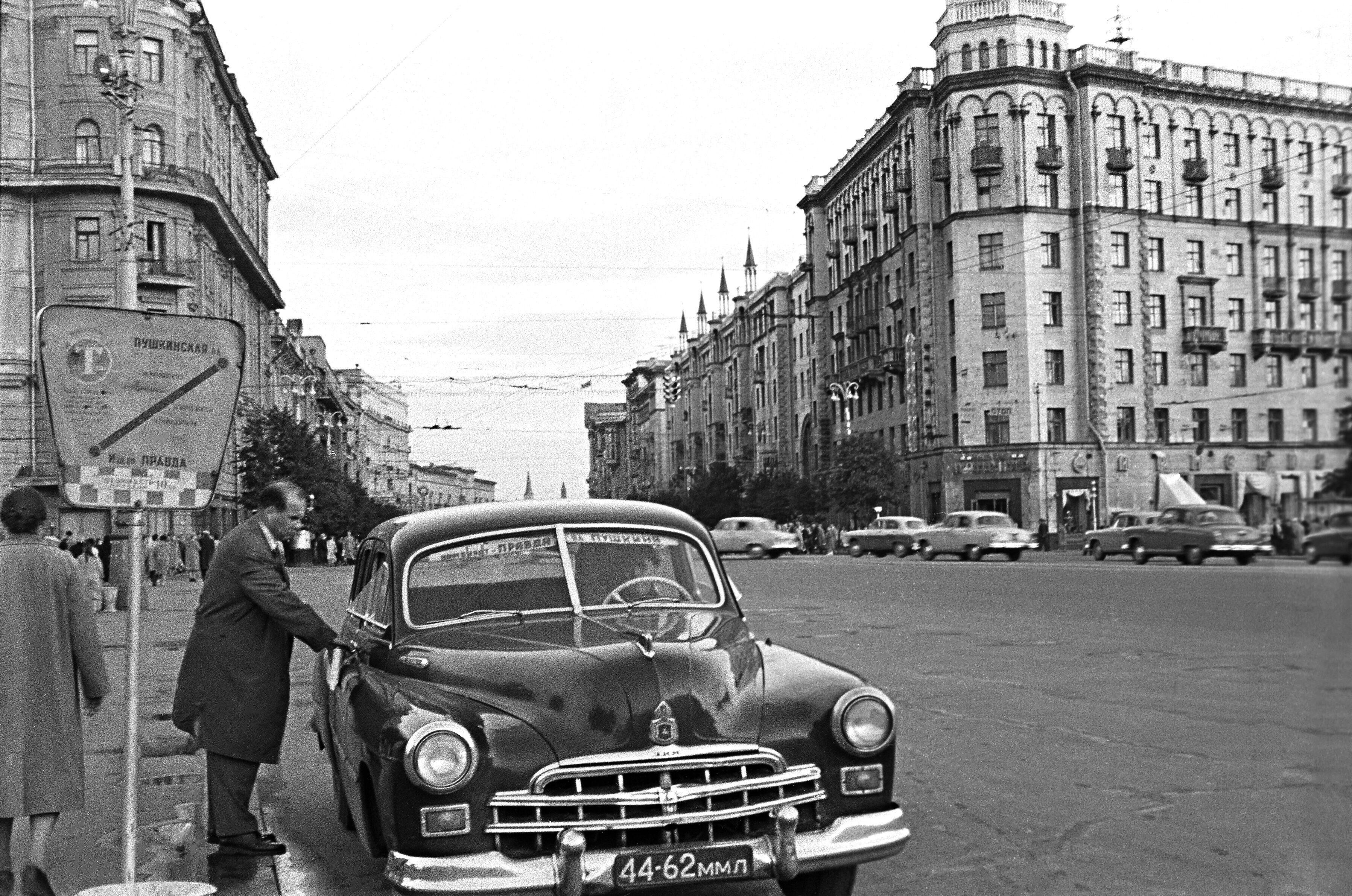
Sunday, October 28: I returned to the central marketplace. Had the public mood changed? My favorite butcher still did not feel Cuba was worth a war with America. “Berlin, yes,” he repeated, “but not Cuba.” Most Russians were more concerned about the rising cost of consumer goods, especially butter and beef. Higher prices had become a serious domestic problem. “Cuba,” muttered one Russian, pointing a finger to the sky, “Cuba’s their business, not mine,” meaning Khrushchev, the Politburo, the Kremlin.
I enjoyed my talks with these Russians; they seemed so much more realistic about life than the bureaucrats who governed them. After spending an hour or so listening to them, I realized, not for the first time, that there was a lot more to covering Russia than hustling after Khrushchev and reading Pravda.
My first broadcast on this special Sunday mixed my impressions of everyday Russians with my reading of the Soviet press, which usually reflected the Kremlin line. This time, it was not clear, perhaps because no one, including Khrushchev, knew what might happen. Would he really sue for peace and pull his missiles out of Cuba? That seemed to be the thrust of his recent exchange with Kennedy. Or would he still insist on a Turkey-Cuba missile swap, as he wrote on Saturday? That seemed to make sense. Or might he now be trapped in a Kremlin power struggle between conservatives who felt Moscow should not back down even though risking war with the US, and pragmatists who supported Khrushchev and were prepared, with reluctance, to withdraw Soviet missiles from Cuba? Who, after all, would wittingly risk a nuclear war? Only a madman, Khrushchev argued, perhaps thinking of Castro.
For much of the week, I had used my office telephone for broadcasts, but in the last few days, I shifted back to the Central Telegraph, thinking it might give me a better chance to learn something new from other reporters. On this Sunday, though, the place was oddly empty. I finished my scheduled broadcast at 3:15 p.m. Moscow time. As I stepped out of the broadcast booth, I noticed an agitated Moscow Radio reporter arguing with a telegraph clerk about a 5 p.m. broadcast. At one point, I thought I heard him say “Levitan,” but I wasn’t sure. Yuri Levitan was Russia’s most esteemed newscaster. His voice was heard only when historic news was broadcast to the Soviet people.
I deliberately bumped into the reporter as he was rushing out of the office. “Excuse me,” I said. “I heard you say Levitan might be on the 5 p.m. news?” I was stretching what I had actually heard.
“I don’t know,” he replied.
“But it’s possible Levitan might be doing the 5 p.m. news?” I was again stretching the fragment I thought I knew.
“I don’t know, honest,” he said in a hushed voice. “Really I don’t know.”
“I understand, but you do know Levitan will deliver the 5 p.m. news?”
The reporter, looking nervously from side to side, finally nodded and fled.
I knew I had very little, but enough, I thought, to share a hunch with Blair—if Levitan was being asked to deliver the news at 5 p.m., it had to be bulletin news: Khrushchev had decided either to withdraw Soviet missiles from Cuba with no Turkey connection, a Khrushchev capitulation, or he had decided to defy Kennedy, opening the door to a possible nuclear conflict.
I immediately booked a call to New York. For the next 40 minutes, I paced from one end of the Central Telegraph to another, hoping no other reporter would arrive to place a call or do a broadcast. No one did, and shortly after 4 p.m., a disembodied voice declared, “Kalb, CBS, Booth One!” Blair was on the other end.
“I may have something,” I said excitedly, “but I’m not sure.”
“Like what?” he asked.
“Well, I think there may be a special 5 p.m. broadcast and a famous Russian newscaster will be doing it, Yuri Levitan. He’s the one who usually announces big things, like war and peace, a change in government. But again, I’m not sure.”
“Yes, I know, but what do you think?”
“I think if it’s really Levitan, that’s big, and it could be Cuba. Look, if I’m wrong, CBS wasted money, and you wasted time. But if I’m right…”
I didn’t finish the sentence. “Go for it,” Blair interrupted. “5 p.m., your time. Set up two lines, from you to here. One line for the broadcast, whatever it is, and the other line for you. Hurry!”
I ordered two lines. What Blair had in mind was he’d tape the 5 p.m. broadcast on one line and use the other for my translation and report. I realized I was both excited and anxious, excited about the moment, anxious to get it right. I needed a walk, and Red Square was the perfect destination, a short walk down Gorki Street, busy with people and restaurants, past the National Hotel, my favorite place for blini and caviar, and then to my right the Kremlin, once a fortress against invading Mongols, today the heart of the Soviet government, to my left the crowded GUM department store, and, straight ahead, blocking my view of the Moscow River, the spectacular St. Basil’s Cathedral, another witness to many stages of Russian history. If I’d happened to look back, I’d have seen the old History Museum, where years before I did my PhD research on Sergei Uvarov, the mid-19th-century classicist, who famously defined Russian conservatism with the three words, “Orthodoxy, Autocracy and Nationalism.”
At 4:45 p.m., I rushed back to the Central Telegraph and prepared for a broadcast of staggering importance…or of no particular importance. I did not know. At 4:55 p.m., a telegraph clerk announced, “Kalb, CBS, Booth A.” I grabbed my typewriter, my radio, a pad of paper and a pen and hustled to the poorly lit booth furnished with nothing more than a small round table, a microphone and a chair. I closed the door tightly, wanting no one else to hear, although I was certain the state censors were listening. At 4:58 p.m., a light on the microphone stand turned red. “Hello, New York. This is Kalb in Moscow. Hearing me?”
“This is Blair, Marvin. Know anything more?”
“No,” I replied. Seconds of embarrassing dead air passed. We’ll all know soon enough, I thought.
We checked the sound level, first my level, “One, two, three, four, five,” then the radio.
At exactly 5 p.m., I heard an exceptionally compelling voice on Moscow Radio, not quite as resonant as Edward R. Murrow’s but gripping in its magnetic pull. “Dear Mr. President,” Yuri Levitan’s voice exploded in the studio quiet. “That’s Levitan,” I whispered into the second line, thrilled that my hunch had proven right, and I started translating what had to be Khrushchev’s latest letter to Kennedy. It had to be about Cuba. “I regard with great understanding your concern…with the fact that the weapons you described as offensive are formidable weapons indeed.” Pausing, I turned back to the second line. “Khrushchev is implying the weapons are in fact nuclear.”
I continued my translation. “In order to eliminate…the conflict which endangers the cause of peace…, the Soviet government, in addition to earlier instructions on the discontinuation of further work on weapons construction sites, has given a new order to dismantle the arms which you describe as offensive, and to crate and return them to the Soviet Union.”
I screamed. “He caved! I think he just caved.”
Blair interjected, “Can we put out a bulletin?”
“Yes, yes! Khrushchev just caved.”
I wanted quickly to get back to the Khrushchev letter. Might there be a Turkey complication? Would he agree to UN inspection of the dismantling of the nuclear weapons? I translated as carefully as I could. There was no mention of Turkey. None. No mention of Berlin either. Khrushchev had also agreed to UN inspection, assuming Castro would go along but not really knowing.
I then did what I think was the first network report from Moscow on Khrushchev’s crucially vital concession to Kennedy, effectively ending the Cuba crisis. “Premier Khrushchev bowed to President Kennedy’s demands today to stop the construction of Russian offensive rocket bases in Cuba, dismantle those bases and ship them back to Russia,” I said. “He made this major concession without any apparent strings… He said he now assumed the president would not invade Cuba. He said nothing about Turkey.”
Following the radio bulletin, CBS broadcast a TV special anchored by David Schoenbrun in Washington. He announced Khrushchev’s acceptance of Kennedy’s demands for ending the Cuban missile crisis, in this way snuffing out the probability of a major war between the United States and the Soviet Union. Schoenbrun then turned to me for an analysis. I said that, in my opinion, Khrushchev had “caved” to Kennedy. He had not mentioned Turkey or Berlin, which I considered significant. By “capitulating” to Kennedy, Khrushchev had “weakened” his political position in the Kremlin, raising the possibility of a change in leadership. With this opening, Schoenbrun quoted the CBS correspondent Robert Pierpoint as reporting that a “power struggle” had erupted in the Kremlin.
“Possibly,” I reacted, “Khrushchev’s political position has surely been weakened. And now a power struggle may follow. Whether, as a result, he loses his top position, that we don’t yet know.”
I learned later that during a commercial break, the presidential spokesman Pierre Salinger had telephoned Schoenbrun. Kennedy was “upset,” he complained, that I had used the verb “caved,” and he wanted Schoenbrun to tell me not to use it again. The president apparently felt the Cuban situation was still “very dangerous,” with Khrushchev in a tough, vulnerable spot, and there was no point in cornering and hurting him unnecessarily. Schoenbrun conveyed Kennedy’s criticism of my verb usage after the broadcast. Although overall I agreed with Kennedy’s thinking, I still felt “caved” was a proper description for Khrushchev’s actions, and if I thought it appropriate to use it again, I would. It was not for a president to be my editor.
For a few precious seconds, CBS News enjoyed the professional pleasure of being first with a historic scoop. Khrushchev had indeed agreed to pull his missiles out of Cuba but in the process had paid a huge price. In Moscow, one did not have to be the American ambassador or the CBS correspondent to know that he had suffered a severe setback in the Kremlin hierarchy. Pravda, of course, admitted no such thing. Quite the contrary, Khrushchev was described as a cool leader under fire, fiercely determined to avoid war and at the same time defend communism and Cuba—the sort of leader the Soviet people needed and admired.
Two years later, in October 1964, Khrushchev was unceremoniously booted out of power, utterly disgraced, his failure in Cuba uppermost on the minds of those who replaced him.
Marvin Kalb, who worked for CBS News for 24 years, is now the Murrow professor emeritus at Harvard and author of 18 books, most recently A Different Russia: Khrushchev and Kennedy on a Collision Course.