


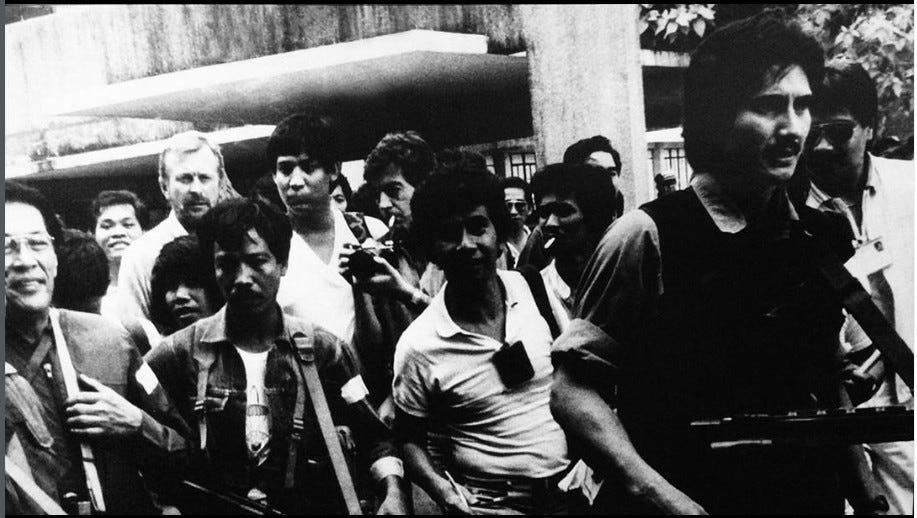
Erik Guyot is the founder and managing partner of Cross Pacific Partners, a financial research firm based in Taiwan, and a director at the Asian Technology Absolute Return Fund, managed by RAYS Capital Partners in Hong Kong. He previously worked as a financial journalist covering Taiwan, China and Hong Kong, including as lead reporter on Hong Kong business for The Wall Street Journal. He was an ICWA fellow from 1987 to 1989, reporting on US economic and security assistance to the Philippines and Thailand.
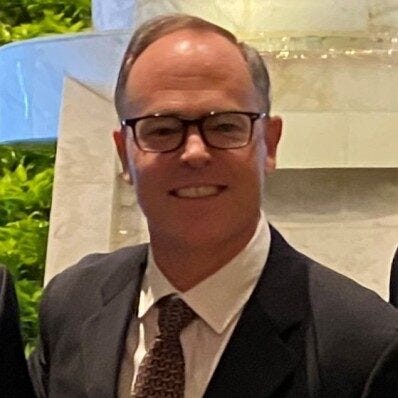
In 1987, Erik was planning a trip north of Manila to interview a Filipino colonel named Gregorio “Gringo” Honasan, when he learned the officer was actually in the Philippine capital, there to help lead a planned coup against President Corazon Aquino—the country’s first female leader who had toppled the longtime dictator Ferdinand Marcos in the famed People Power Revolution the previous year. Honasan was later granted amnesty by President Fidel Ramos and successfully ran for the Senate in 1995. He was re-elected in 2001 and 2007.
Manila (September 1987) — I was going to report to you about the military training program for Philippine officers in the US and how, according to the US manual, it “encourages military professionalism.” But events took another twist last Friday.
Earlier, I learned from Americans how their part of the program worked. I had also set up a trip north to the Philippine Military Academy, and later to the army training center at Fort Magsaysay, to see, among others, Colonel Gregorio “Gringo” Honasan. Instead, he brought 800 men down to Manila for a coup. And when I arrived at Camp Aguinaldo, military headquarters, for an appointment with the chief of personnel, his office and the entire headquarters building were engulfed in the fire set by Colonel Honasan’s mutinous troops.
Rumors of a coup attempt had drifted around for a while, and I had brushed off hints from an officer that my interviews on Friday might not occur. So I was still startled when I was awoken before dawn by what seemed like every radio in the neighborhood blaring the government’s assurance that everything was okay. I hopped in a cab and rushed out to the government TV station, Channel 4. Arriving at the station in a quiet residential neighborhood, I found large crowds of spectators clustered around the compound. Occasional shots were a reminder that earlier in the day, a New Zealand correspondent had been killed. This was one coup not worth dying for, so I decided against following others into the sprawling compound.
It wasn’t surprising that the coup seemed to follow the script from February 1986 [People Power Revolution]: Grab the television stations, attempt to wrest airpower and take Camp Aguinaldo as main base. Both military revolts were spearheaded by Colonel Honasan and his classmates from the Philippine Military Academy. (Their patron, former Defense Minister [Ponce] Enrile, remained silent and out of sight.) On one television station, a young spokesman for the rebels read their statement that they were willing to give up their lives in this moment of service to the people. Their bottom line was that “the military structure is ineffective in dealing with the communist menace,” and they called for General Ramos [the future president who was then military chief of staff] to step down.
It was “not a war of bullets, but a psychological war,” one Philippine officer, who was deciding which side to join, told me. As the afternoon wore on, the rebels still seemed to be winning. Senators and congressmen made statements denouncing the coup from the presidential palace; their congressional offices had earlier been captured. Conspicuously absent from the airwaves were the president, [or] Ramos, or any military officer from the government’s side.
Finally at 3:30, President Aquino went on the air. Speaking in what seemed a relatively calm voice, she said, “There will be no terms. I have nothing to say to those traitors.” In Tagalog [Filipino], she added that rebel troops had fired upon her only son, wounding him and killing his three bodyguards, and later sprayed innocent civilians with automatic rifle fire.
I arrived at Camp Aguinaldo during the final offensive to retake the camp at 5:30, but not in time for my interview with the head of personnel. The old wood and plaster general headquarters building was an inferno after the rebels had set it afire to flush out loyal troops in the building. Moments later, vintage T-28 “Tora Tora” propeller airplanes fired rockets at the rebels attacking general headquarters. Impressive as the combined artillery and rocket fire was, it produced relatively few rebel casualties—five dead and two wounded out of the force of about 800. Many government soldiers tended to fire up in the air. Yet, it was significant that, unlike in previous coup attempts, the military was willing to fire upon renegade soldiers.
Despite the clatter of machine guns, crowds of spectators surged toward the action, only to flee when the firing was too intense. Many who lived near the camp said they liked Gringo Honasan; those who came from further away cheered the government tanks when they rumbled past.
After the firing had died down, I joined most of the foreign press corps near one of the front gates along the highway. A Marine amphibious tracked vehicle had broken down a gate in leading part of the assault on the camp. It was now just a matter of time: Many rebels had surrendered, and television stations had also been retaken. I asked a Marine sergeant what he thought of Honasan. Instead of condemning his opponent, he replied that Honasan was “magaling,” or skillful. As evening fell, the firing slacked off and small groups of Marines further infiltrated the camp.
By Saturday morning, it was all over. Colonel Honasan had escaped by helicopter, the rebels had surrendered, and General Ramos led a walking tour of the camp. It was a time for kudos all around. Ramos pointed to his charred office in general headquarters where [Deputy Chief of Staff] General [Eduardo] Ermita had fought off the rebels, noted the small craters where the six rockets fired by the planes had struck, and recommended the Marine colonel who led the operation for promotion to general. In one afternoon, Ramos had laid to rest months of criticism of weak and vacillating leadership.
Ramos had sharp words for Honasan, calling him a “traitor” and a “big liar” and saying that he might be shot if he resisted arrest. Yet, despite the tough stance, it seems unlikely that the military really wants to throw the book at the hero of the February revolution.
Until now, the government has been reluctant to put the squeeze on mutinous, corrupt or incompetent soldiers for fear of further widening the rift between the military and civilian government as well as within the military itself. But it can be done. After some hesitation, Aquino has unsheathed the sword of war against the insurgents. One hopes that the coup and the wounding of her son will provide the will to take a rolling pin to the reprobates in the ranks.