


Karina Piser is a freelance journalist in Paris. As an ICWA fellow in France from 2017 to 2019, she examined Islam, secularism and national identity. She went on to cover social issues and human rights for The Atlantic, The Washington Post, Foreign Policy, The New York Times and other publications. She’s received reporting grants from the Social Science Research Council (Abe Fellowship for Journalists), the Economic Hardship Reporting Project, Save the Children and the Food & Environment Reporting Network. She previously worked as an editor at World Politics Review. Karina holds a master’s degree in international security, human rights and humanitarian action from Sciences Po in Paris and a bachelor’s from the University of California, Davis.
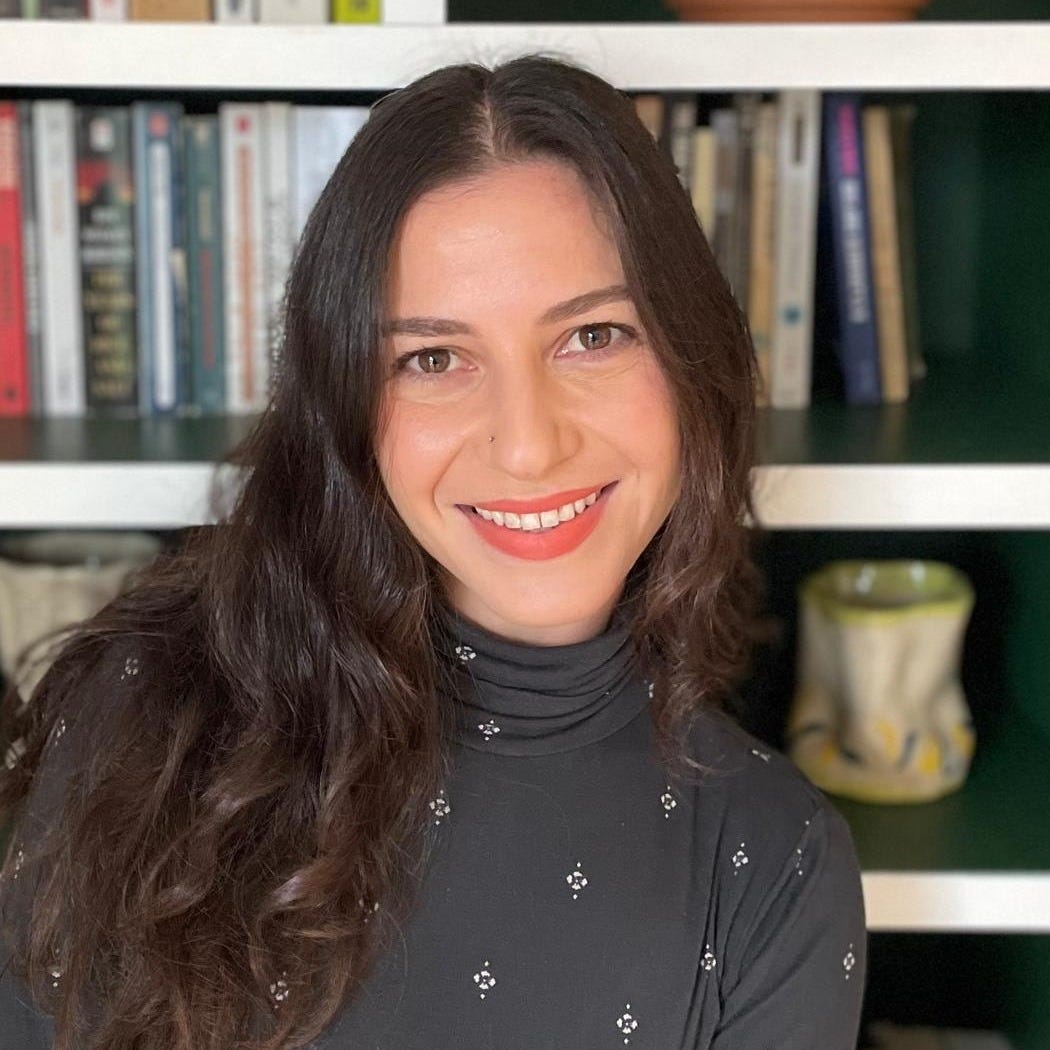
In this excerpt from a dispatch in June 2018, Karina discusses the French government’s efforts to combat radicalization that often missed the mark by focusing on the tenets of Islam. Radicalization, she writes, is more a response to discrimination, about young people in search of a mission and identity.
Paris (June 2018) — Although government officials often describe terrorism in religious terms and focus on Islam’s ostensible aspects—headscarves and burkas, or public prayers—analysts, sociologists and practitioners alike warn against overemphasizing the religious dimension of radicalization. Still, public opinion—echoing the official line, or perhaps inspiring it—remains fixated on the notion that Salafism, a literalist reading of the Quran that seeks to return to Islam’s roots, and imams who preach its teachings, are the roots of extremist visions of Islam that inspire violence.
“Religion is the tree that hides the forest,” an intelligence official who works as a liaison between the Interior and Justice ministries and has decades of experience in the penitentiary system, told me in a phone interview. “Average French people, as soon as they hear Allah Akhbar, they think it’s violent—even though, for Muslims in general, it’s something positive,” she said, speaking on condition of anonymity. “The public sees only” the religious terms that “become a veneer” for violence, she added. Underneath are young people in search of a mission, an identity.
Elyamine Settoul, a sociologist specializing in criminology and radicalization, agrees. “When we see who ends up going to [join militant groups in] Syria from France, the social factor is glaring—75 percent come from low-income areas,” he said. “We can’t ignore the role of discrimination against French Muslims,” he went on, noting as an example that all qualifications being equal, job applicants with names presumed to be Muslim or North African are four times less likely to be hired than their white counterparts, according to a much-cited 2015 study. In other statistics, black and Arab young men are stopped 20 times more often than the rest of the population, and are regularly subjected to the French equivalent of stop-and-frisk. And among the more than 36,000 mayors of French “communes,” roughly the equivalent of a township, fewer than 10 are of Arab origin.
Islamist groups and recruiters for the Islamic State “capitalize on that discrimination to influence young people,” Settoul explained, “using it to strengthen their narrative that the Republic failed, that its promises are a lie.” Instead, they offer “a real sense of belonging, a dignified identity.”
But even as scholars and practitioners have insisted on the social or personal drivers of radicalization that often have little to do with religiosity, the government seems fixated on Islam itself. The Interior Ministry official I spoke to complained about that apparent misreading: “I’m sorry, but sometimes when I hear [Interior Minister Gérard] Collomb talk, he says things that seem to undo all of the work we’ve been doing on the ground for years, that we do on a daily basis.” That, the official told me, is likely a function of “political choices of the moment that are made under pressure from public opinion,” at the expense of expertise—or that are often influenced by “mediatized experts who lack necessary knowledge of the field.”
The “moderate Islam” to which Collomb referred in his interview with [broadcaster Jean-Jacques] Bourdin is a central element of [President Emmanuel] Macron’s initiative to “reorganize Islam in France,” which he announced in February. That’s not a novel undertaking; governments since the 1980s have endeavored to create structures that would adequately represent France’s diverse Muslim communities. Yet those attempts to foster a sort of national Islam—transforming Islam in France to a centralized Islam of France—have drawn on state links to French Muslims’ countries of origin.
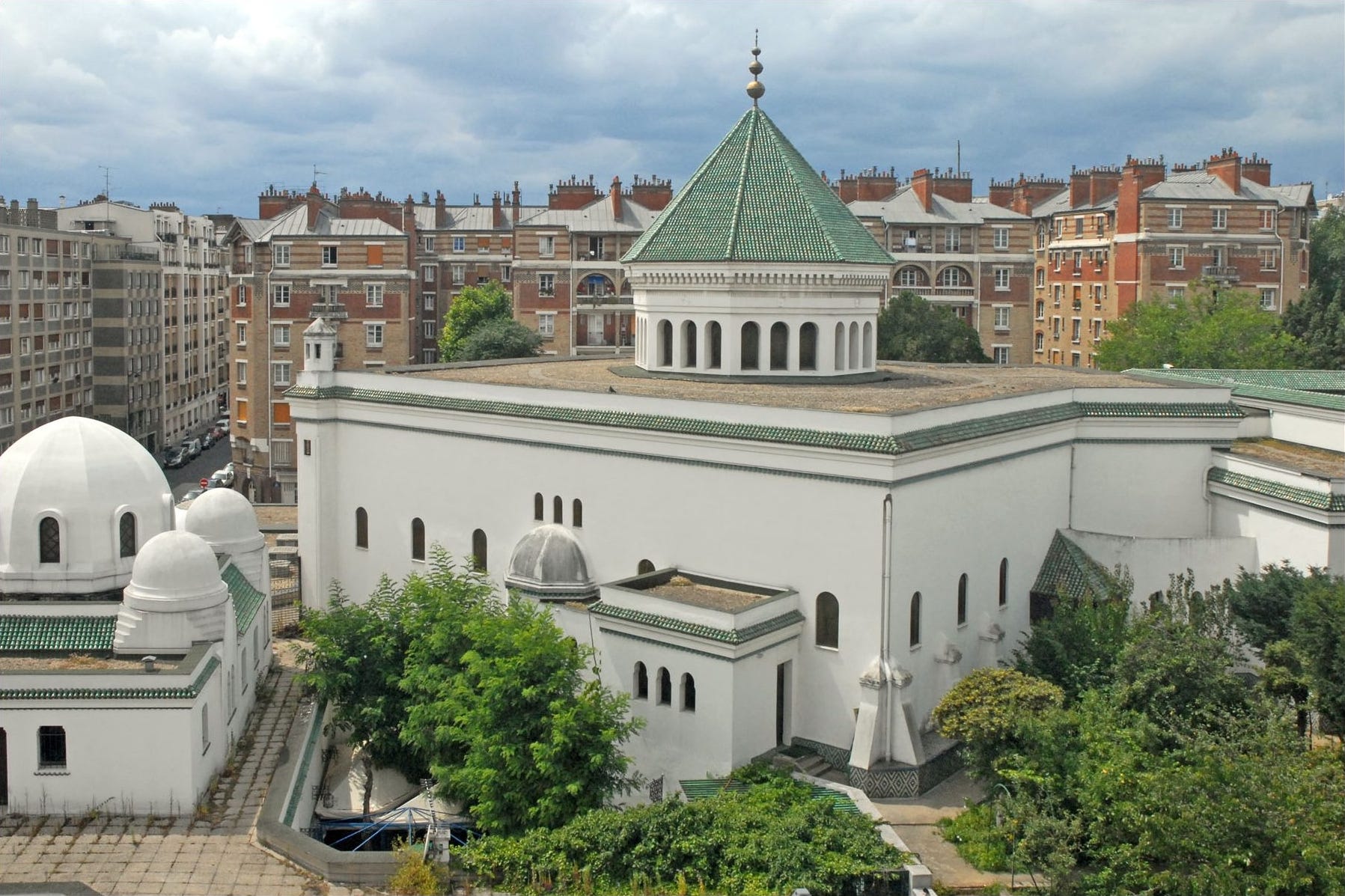
Algeria, for one, is a primary financial backer of the Grande Mosquée in Paris. In 2015, then-President François Hollande signed a deal with the Moroccan monarchy to send French imams to a training institute in Rabat. And the leadership structure of the French Council of the Muslim Faith—a major representative body that then-Interior Minister Nicolas Sarkozy created in 2003—disproportionately represents individuals and entities tied to Algeria, Morocco, Turkey, Saudi Arabia and Qatar. According to a 2016 survey, only a third of French Muslims even know what it is, and critics denounce its opacity. The past two generations of French Muslims—who were born and raised in France—have little attachment to those countries.
Macron, for his part, has pledged to break with foreign influence. Although the details remain vague, his idea is to create a national Islam, in culture and theology—by, for example, creating a new generation of imams “made in France,” and limiting foreign financing of mosques in France. But in an apparent departure from that commitment, his government recently invited 300 foreign imams, primarily from Algeria and Morocco, for the month of Ramadan.
For Olivier Roy, a scholar of Islam at the European University Institute in Florence, the focus on Islam’s religious elements—mosques, imams and Salafism—misses the point. “If radicals came from mosques, it would make sense to control mosques, to control the curriculum of what imams preach. But radicals don’t come from mosques,” he told me in a phone interview.
“And we know it. They know it. We have the statistics. It’s absurd,” he added, frustrated, “to think that we can replace a Salafi imam with a ‘moderate’ one to fight jihadism. First, it would be unconstitutional, second, it would violate religious freedom”—which laïcité [the state policy of secularism] guarantees—“and third, it’s completely irrelevant.”