


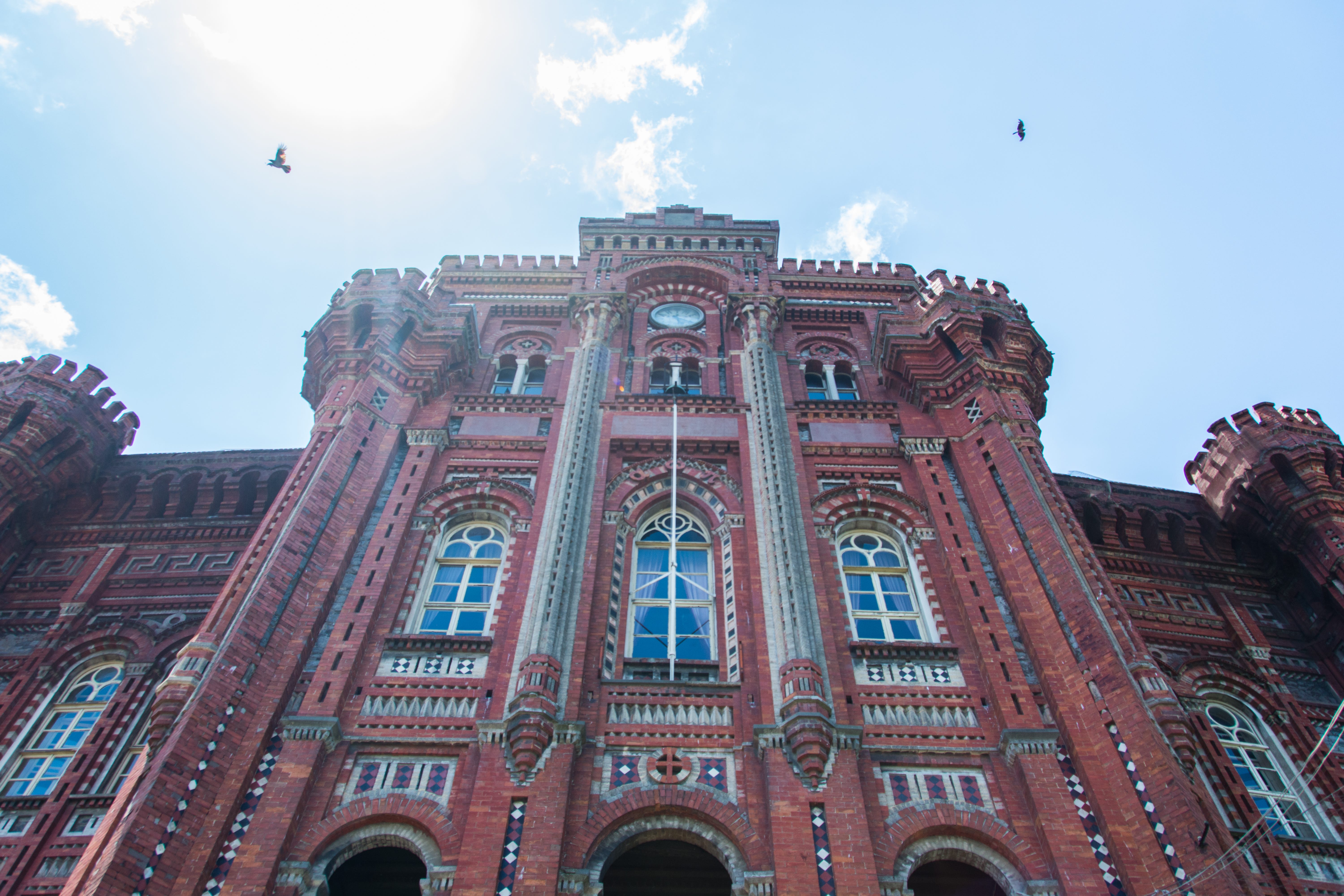
When you take the ferry from Istanbul’s Eminönü waterfront at the base of the Bosphorus up the Golden Horn inlet, it’s impossible to miss the Phanar Greek Orthodox College high up on your left. Known officially as the Özel Fener Rum Ortaokulu ve Lisesi, nicknamed the “Red Castle” by the Turks and “Great School of the Nation” by the Greeks, the neo-Gothic high school overlooks the hills of the traditionally Greek Fener neighborhood, one of the city’s most historic.
But the building has been empty since last fall, forced to close to undergo seismic renovations. Because the school foundation lacks the over 10 million euros ($11.5 million) needed to fund the work amid declining enrollment, the landmark structure’s fate is unclear.
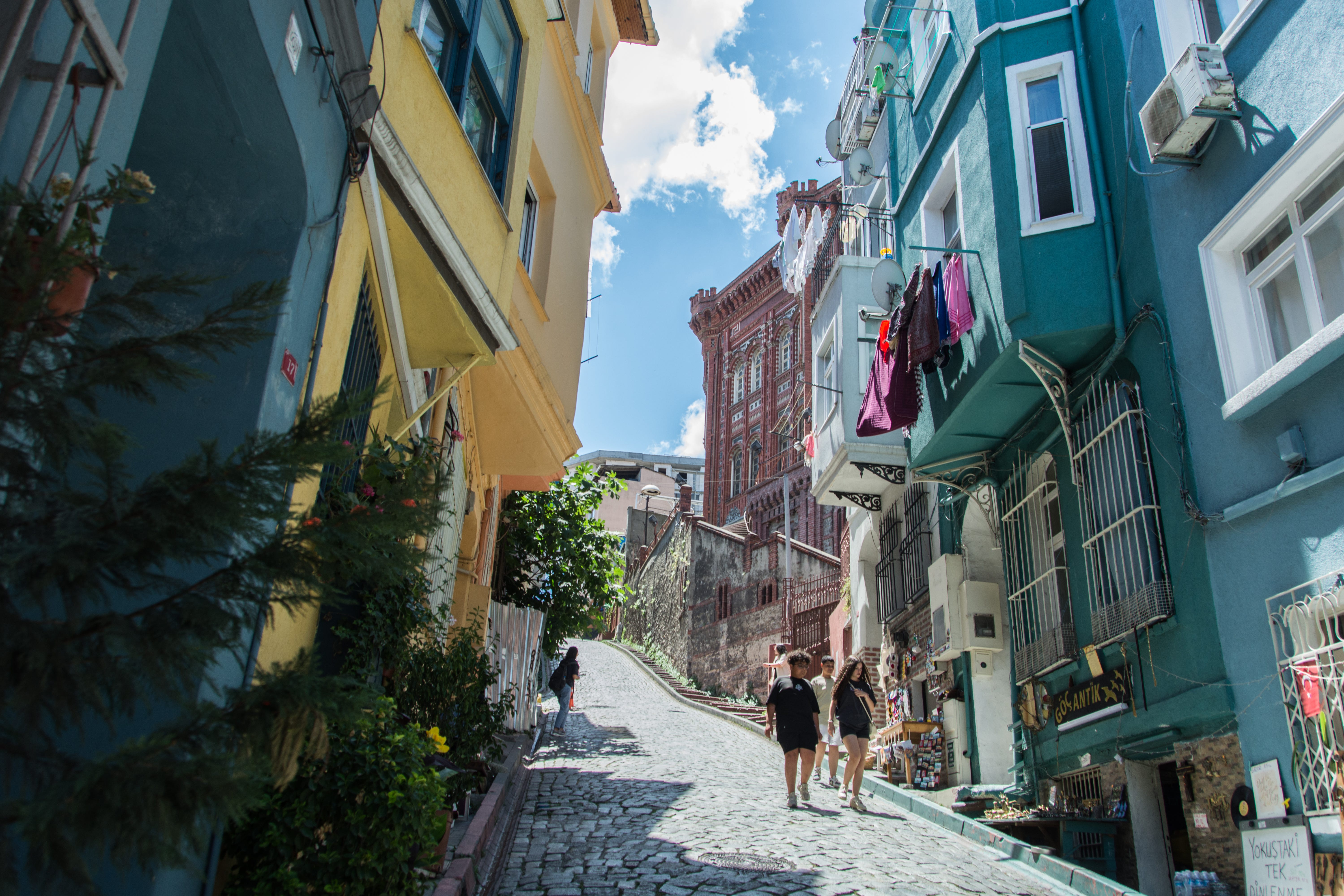
I took the boat on a recent morning when the school was still open. From the dock at the base of the hill, I walked up a steep, stone-paved alley.
The building’s fortress-like architecture attracts visitors from around the world, although most were only able to admire from the outside. Its red bricks, which earned its Turkish nickname, were imported from Marseille, and its large dome once housed an astronomical observatory with a telescope.
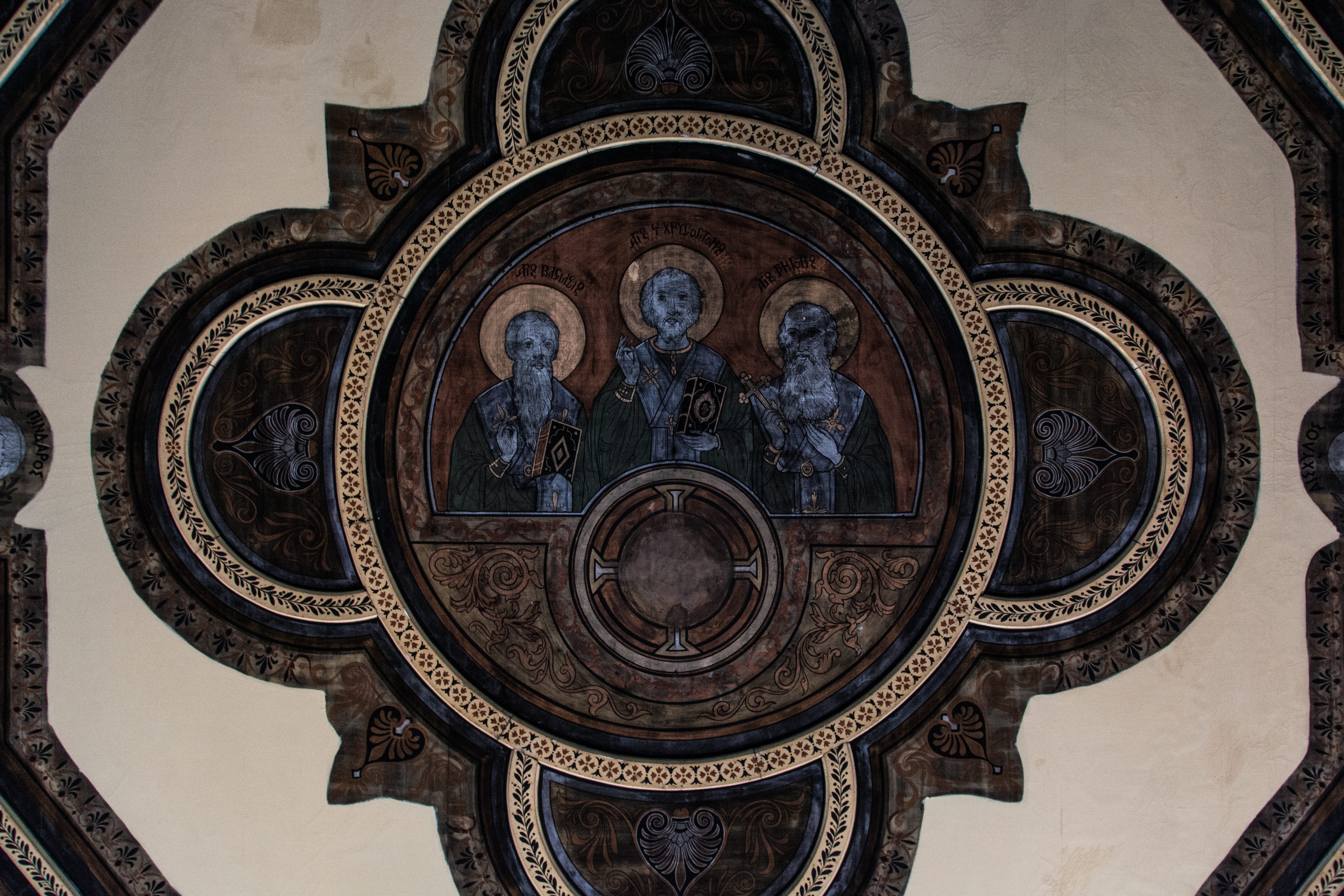
The school opened in another building in 1454, just a year after the fall of Constantinople, established by Ecumenical Patriarch Gennadios Scholarios, who appointed the Thessalonian scholar Mathaios Kamariotis as its first director. It served as the premier academy for the city’s Greek elite for centuries. Changing locations several times, it moved to its current home, designed by the Greek architect Konstantinos Dimadis, in 1882.
The school celebrated its 570th anniversary in November 2024, the oldest surviving and most prominent Greek educational institution still in operation, kept alive by the Rūm, or Istanbul Greeks.


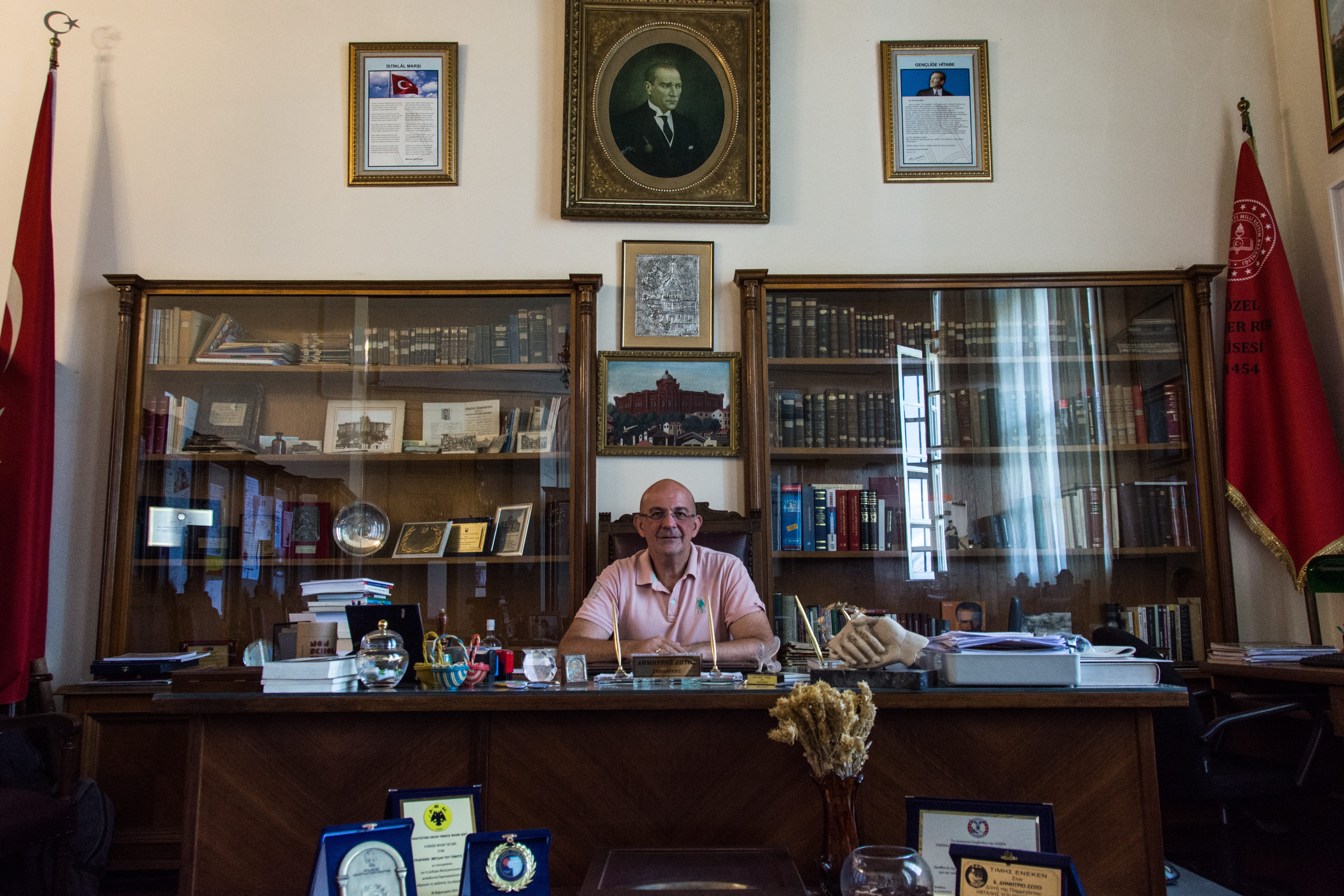
The principal Dimitris Zotos was waiting for me at his desk, surrounded by books. On one side stood the Turkish flag, on the other, the school’s flag. Behind him hung a panoramic photograph of the building with a portrait of the founder of modern Turkey, Mustafa Kemal Atatürk, above.
Besides serving as principal, Zotos has also taught mathematics for nearly 30 years. He was born and raised in the city.
“We Greeks are privileged; we are people with a rich heritage,” he said. “The concepts of democracy, philosophy, science: We must be proud to have them and the many people who carried them all the way to the present day.”
Classes were already out for summer when I visited, which allowed me to wander the airy hallways and empty classrooms. Some 450 to 500 students had attended in the early 1950s. But only 38 children between the ages of 11 and 18 celebrated the end of the 2024 school year. Eight graduated.
Today, the aging Rūm community numbers no more than 2,000, having steadily shrunk due to emigration and declining birth rates, from some 110,000 Greeks in the 1920s. The city’s other remaining Greek schools are now also almost empty.
“What will happen next, I really don’t know,” Zotos told me. “What can a school principal do about demographics?”
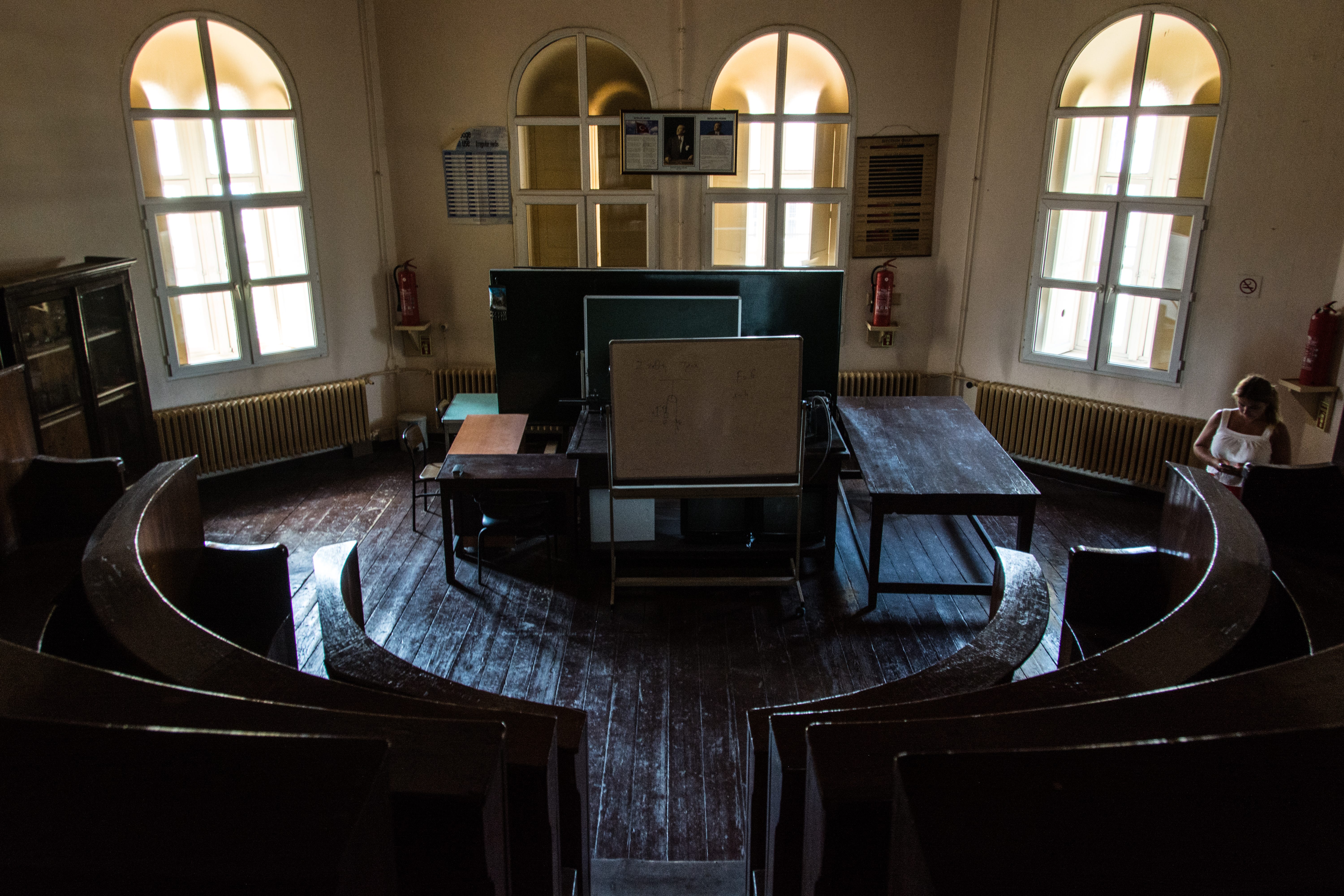
The Turkish Education Ministry ordered the Red Castle’s temporary closure in September after earthquake resistance testing revealed the building needs structural reinforcement and maintenance work to meet seismic safety standards. Classes have moved to a Greek primary school near central Taksim Square until the work is completed.
It’s not clear when the historic building will be able to reopen.
Demetrios Ioannou is an independent journalist and documentary photographer. He is based between Istanbul and his native city of Athens. He covers a wide range of stories in the region, including travel, culture, food, social issues and breaking news. His work has appeared in local and international publications including The New York Times, National Geographic, The Economist, BBC Travel, NPR, Politico Europe and The Daily Beast.
