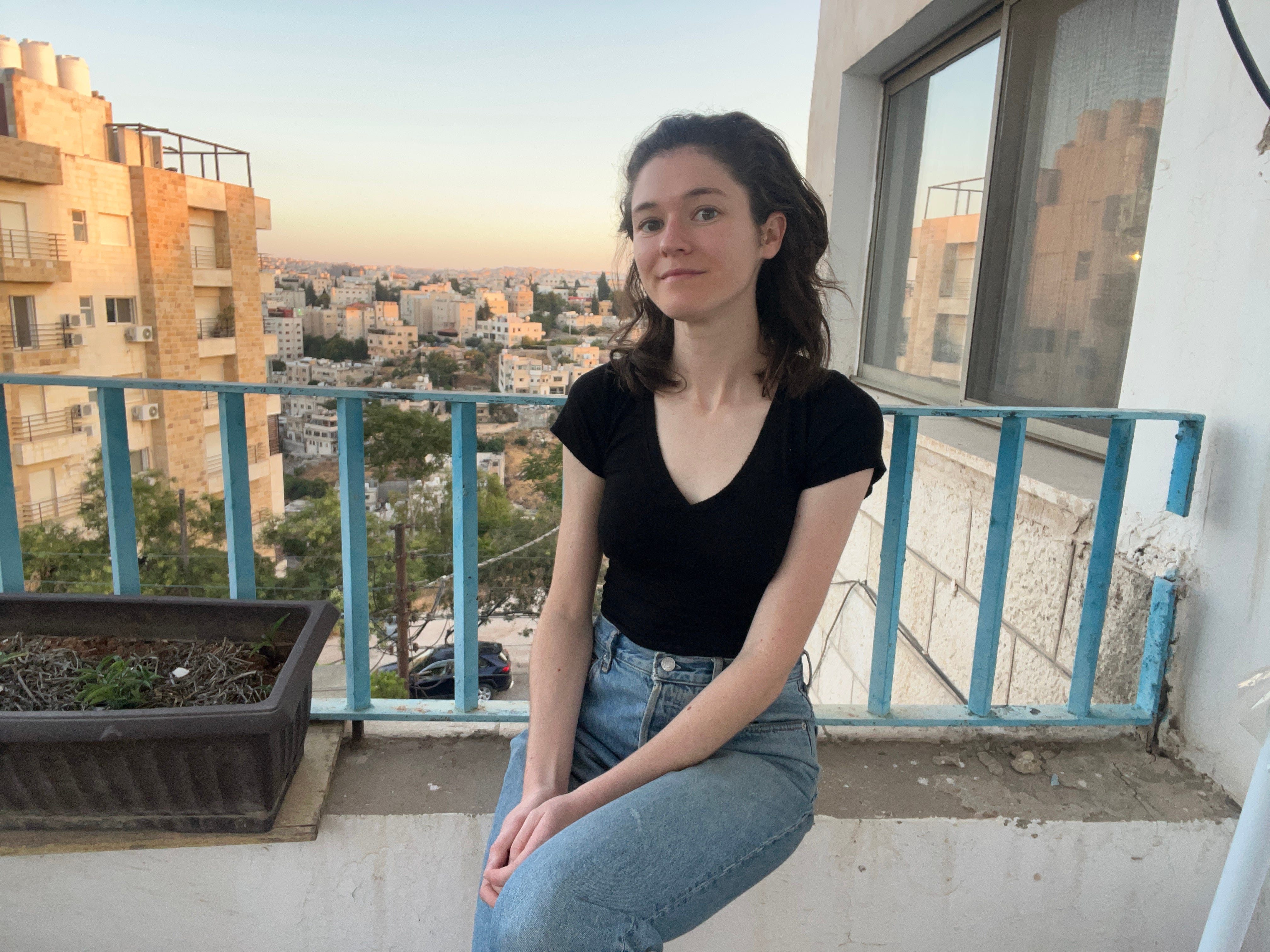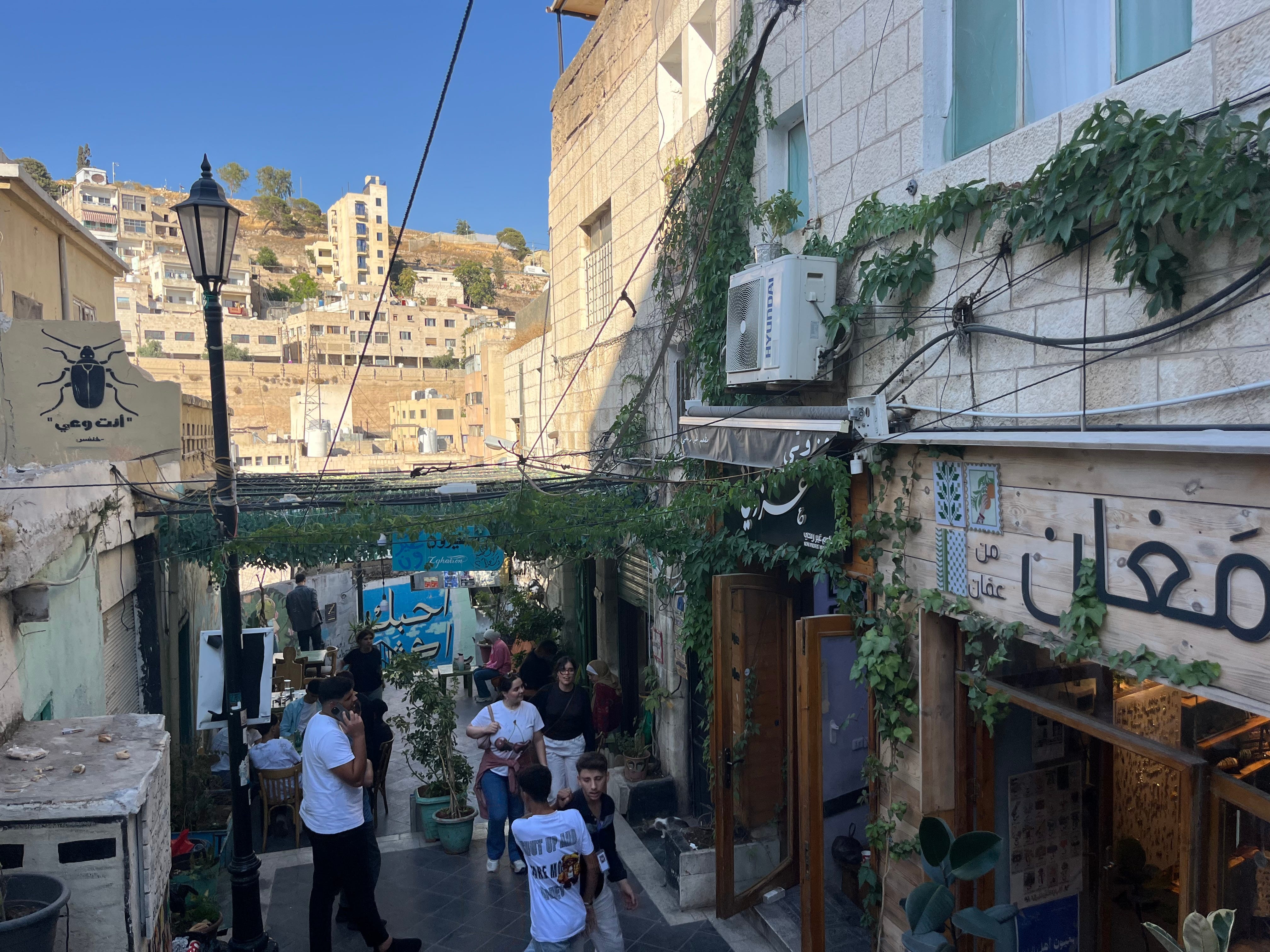
Waking up every morning for the past two weeks, I’ve checked the news to see if Iranian missiles have hit Jordan. The wail of air raid sirens has echoed over the capital Amman’s rooftops several times, although I’m not sure what kind of action I’m supposed to take when they go off; no specific places are designated as shelters and everyone just ignores them.
Listening out my window during one of those moments, I could still hear the blaring of car horns and snatches of Arabic pop music from traffic on the road below, the sounds of a normal summer afternoon. The military has intercepted most of the missiles but every now and then they hit their targets—US military installations in the east and south of the country.
I landed in Amman earlier this month to begin my two-year Institute of Current World Affairs fellowship examining grassroots solutions to economic collapse, environmental degradation and other intertwined crises. The breakout of the US-Israeli war on Iran in February and subsequent Israeli attacks on Lebanon forced me to pivot from my original plan to be based in Beirut. Despite Jordan’s proximity to the regional conflict, this country maintains relatively good relationships with its neighbors, threading a tight needle between the United States, Iran, Israel and Saudi Arabia.
The airstrikes began a week after I arrived. Despite a June 2026 “memorandum of understanding” and ongoing peace talks, the US and Iran disagreed on a major point: who would control shipping in the Strait of Hormuz. Iran attempted to direct oil tankers into a pre-approved route and targeted them with drones when they did not comply. Washington declared the MOU “over” and began bombing Iranian cities and military sites, killing 55 people since July 7, at least some of whom were civilians. In response, Iran has again begun targeting US military assets around the Middle East, including in Bahrain, Kuwait, Qatar, the United Arab Emirates and Iraq.
Jordan hosts roughly 4,000 US troops, along with planes and weapons, at several military bases in the desert. The Iranians had also targeted those sites in March and June but July represented a significant escalation. Three US soldiers died last week in an attack on the Muwaffaq Salti Air Base in the eastern desert; video circulated online afterward, showing a massive fireball shooting into the night sky. Two days later, a ballistic missile attack targeted the international airport in the southern Red Sea port city of Aqaba, where Iran said US military planes are based.
The US government has been vague about what any of this means. On July 9, as air raid sirens sounded during the middle of the day, an email from the State Department announcing that “missiles, drones, or rockets are in Jordanian airspace” directed me to “seek overhead cover and shelter in place immediately.” (Later, videos of Jordanian air defenses intercepting the missiles spread on social media.) However, subsequent attacks haven’t elicited similar warnings.
In the meantime, Jordanians are going ahead with life as usual, assuming by now that civilian infrastructure will not be targeted after previous outbreaks of war in the last few years. My Arabic tutor, who is Syrian, told me she gets panicked calls from relatives in Syria asking her what’s going on and whether she’s okay. She shrugged. “I tell them everything is fine, there’s nothing to worry about.” It’s a reversal of the situation just a few years ago, when she feared for the lives of her family members in Syria during the country’s 14-year civil war.
Jordan insists it does not host US military bases but simply allows American soldiers to use its territory for joint operations. “US forces in Jordan are present under a defense cooperation agreement that fully respects Jordanian sovereignty and operates within the framework of joint efforts to combat terrorism,” Foreign Minister Ayman Safadi said at the Aspen Security Forum last week. The distinction is mostly semantic. The government hasn’t openly spoken out against the United States for starting the war but it has criticized Iran for the strikes on its territory, while emphasizing its commitment to a “strategic alliance” with Washington.
But in a country where public dissent against the monarchy is tightly restricted, it’s hard to get a handle on how ordinary people actually feel. Iran has directly appealed to the Jordanian people, saying it does not view the country with hostility and urging its citizens to demand the removal of US military forces from its territory. And on Wednesday, more than 100 prominent public figures released a statement urging the same, warning that the country risks being dragged into a larger regional conflict. “Jordan is not a party to this war,” they said. The statement was signed by former ministers, members of parliament, scholars, lawyers, writers, trade unionists, retired military officers and tribal leaders.
What’s clear is that the document reflects an undercurrent of developing resentment, even though no one I spoke to actually expects it to result in any disentanglement from the US military. An economist told me that despite the illusion of autonomy, Jordan has no choice but to follow America’s lead. The economy heavily relies on support from US-based financial institutions such as the IMF and World Bank as well as direct US aid to the tune of $1.4 billion per year. “Money is a weapon the US uses to pressure Jordan,” the economist told me, asking that I not attribute his name to any statements that might appear critical of the military. (Others have written about how those policies uphold autocracy in Jordan.)
The general outward nonchalance I’ve seen among many Jordanians might also mask a deeper sense of unease. The war has led to the loss of thousands of jobs, particularly in the tourism sector and among those working in the Gulf who have been forced to return home. The cost of food and fuel is rising, and without government subsidies for bread and other staples, people would take to the streets, the economist assured me.
“People are afraid for the future,” he said. “We are in a period of war.”
Journalist and ICWA fellow Diana Kruzman is based in Jordan, Egypt and Lebanon, where she’s investigating how communities are adapting to crisis, and reporting on wider developments in the Middle East.