


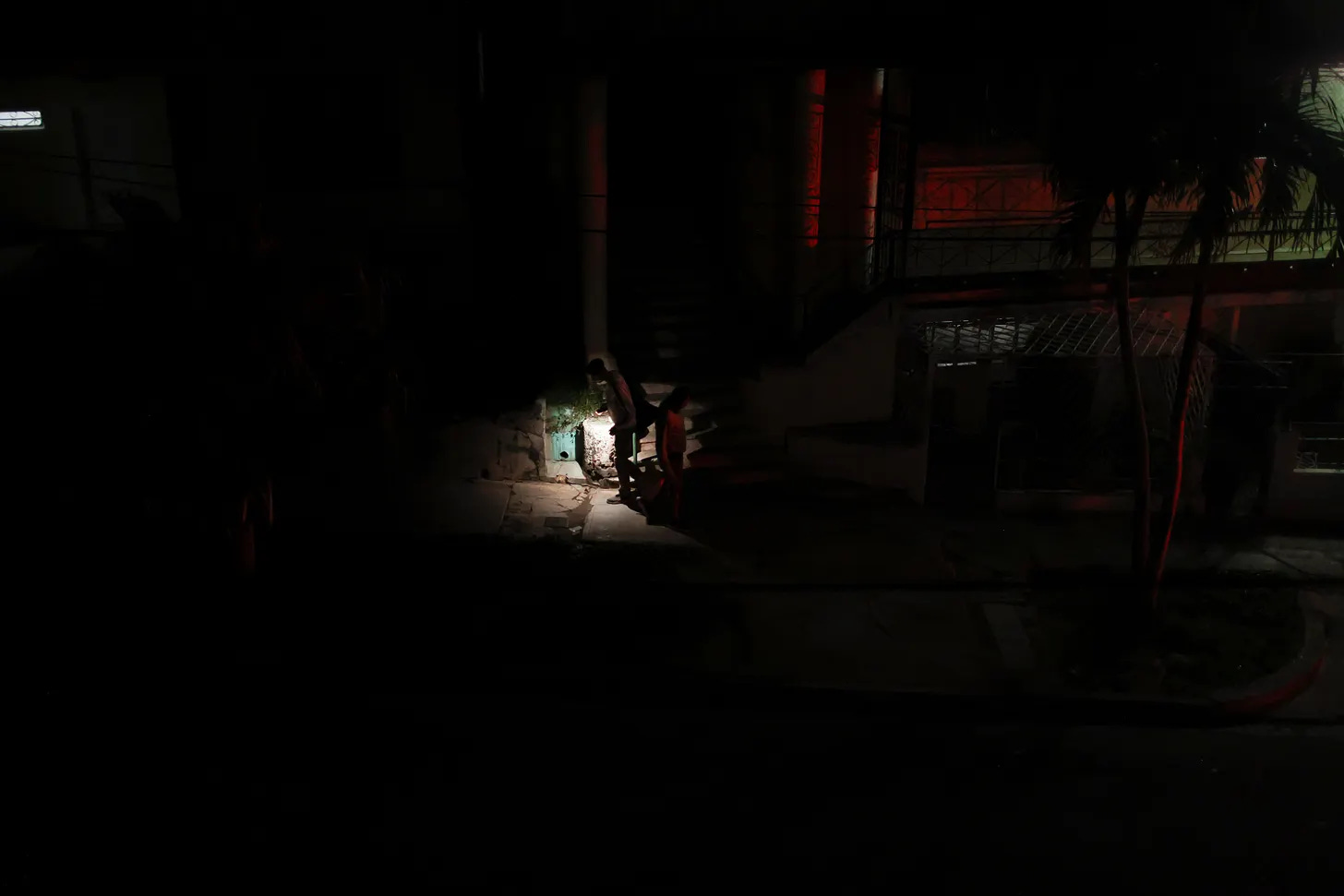
When the lights suddenly go out in Havana’s middle-class Vedado district, no one reacts. In a neighborhood bar, a couple keeps chatting in the dark around a white plastic table. The bartender continues serving beers to the few remaining customers by the light of a rechargeable lantern.
Darkness has become routine here.
The country has been grappling with the worst energy crisis in its history since the beginning of the year, exacerbated by a US oil blockade and tightening economic sanctions. Power outages sometimes lasting days at a time are making life increasingly difficult for those trying to carry on.
Tropical nights with no fans mean sleeping well is nearly impossible. Food spoils. Water delivery is faltering. Public transport has largely collapsed, forcing many to get around on foot as gasoline prices climb to $10 per liter ($38 a gallon).
Amid the extreme hardship, some believe the country is approaching a turning point.
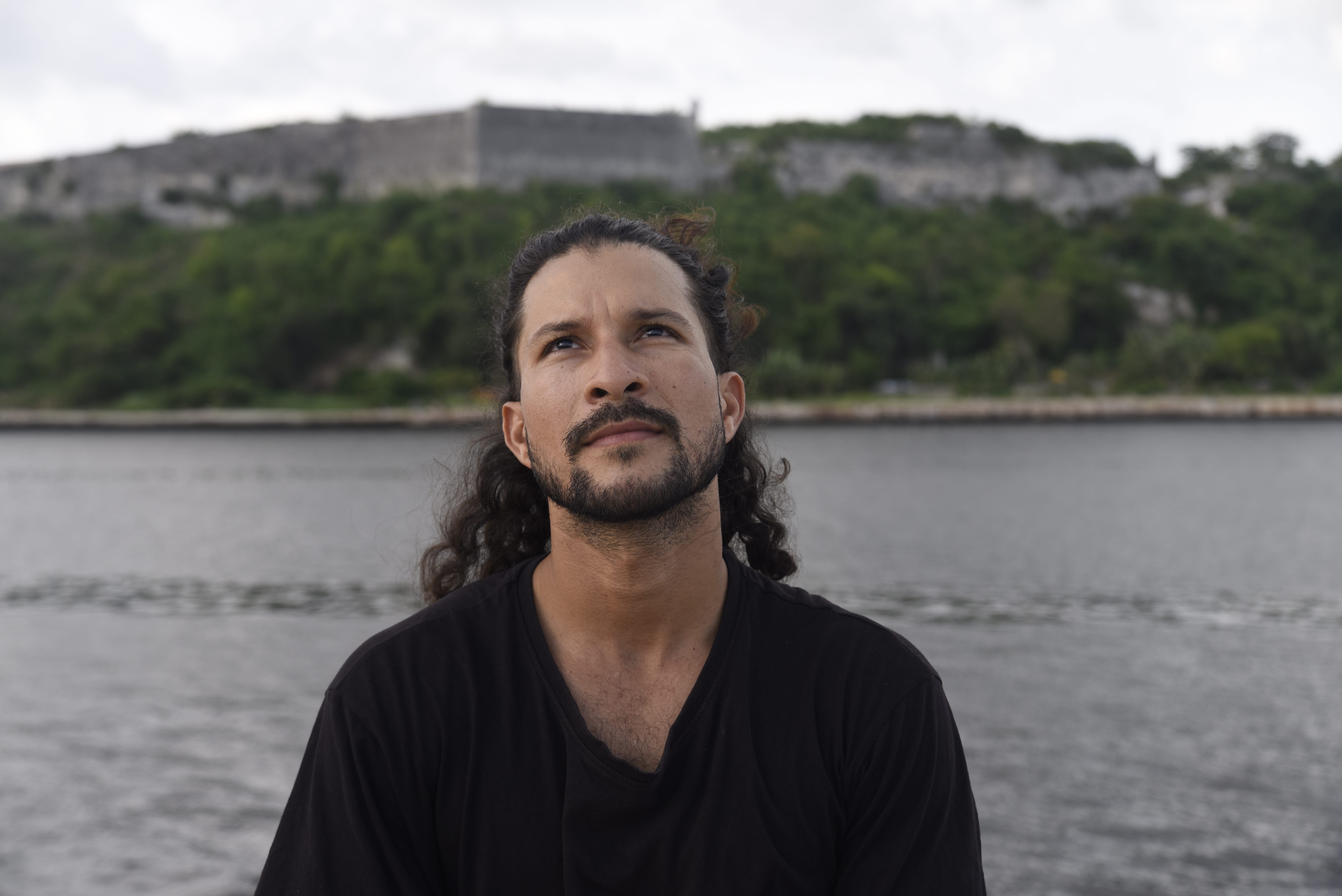
“I feel I am living through a transcendent moment in the history of my country,” said a young journalist named Frangel de la Torre Núñez in the darkened bar under a canopy of palms casting even deeper shade.
“Many of my friends have left to look for a better future elsewhere,” he added. “My determination to stay comes from my belief that something profound is happening here and I wouldn’t be able to tell the story if I didn’t live through it myself.”
More Cubans are leaving than at any other point in their country’s history.
The scale of the exodus is difficult to determine, not least because the government has released no official figures. According to a recent study, however, nearly 2 million Cubans have left since 2021.
In the early 2010s, the population stood at 11.3 million people. Thanks to multiple crises—from failed economic reforms that eroded already meager salaries to worsening medicine shortages and a collapsing health care system—that number has fallen to under 9 million.
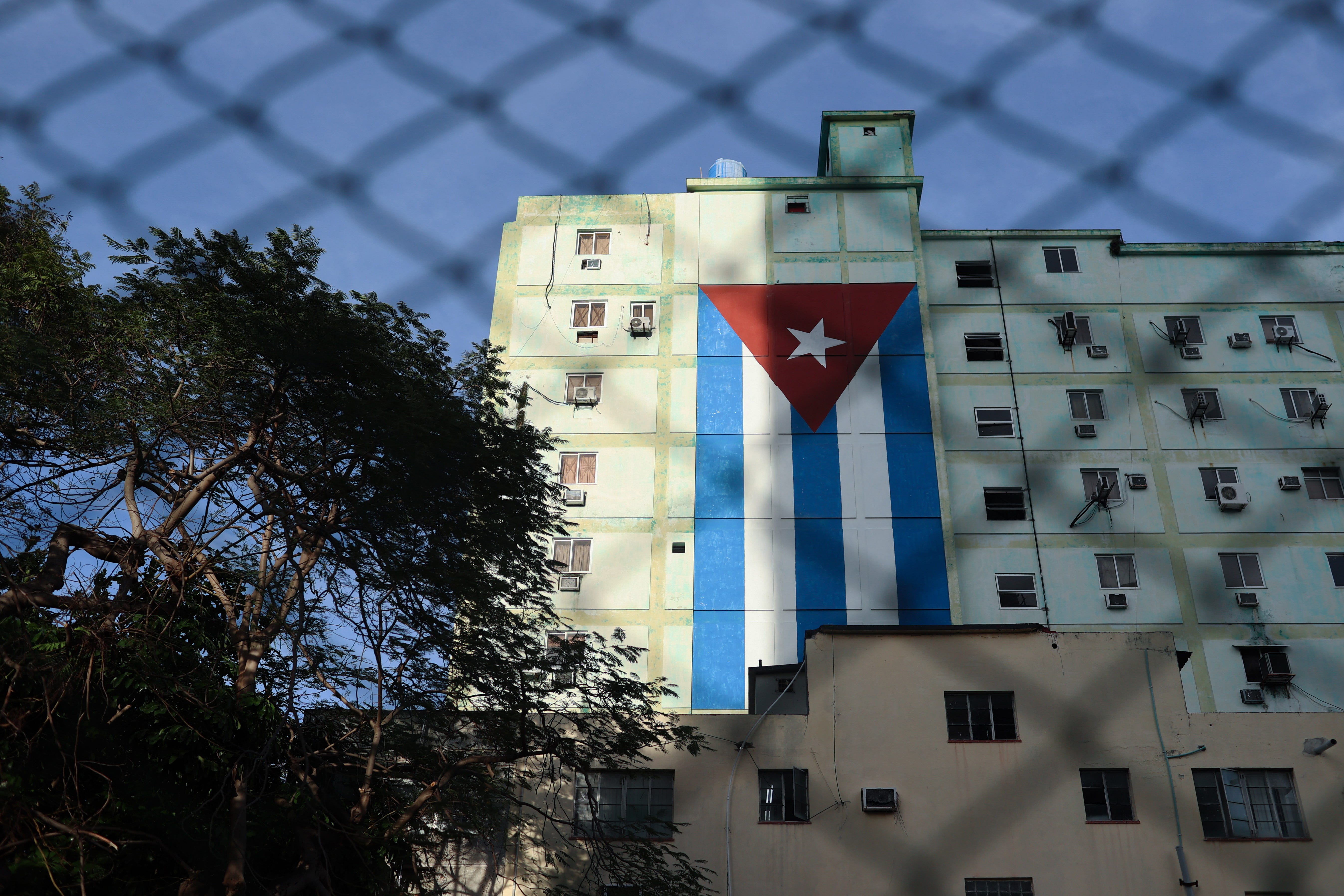
The decline isn’t being driven by emigration alone. Cuba is also undergoing a demographic shift with deaths now outnumbering births. Those leaving are disproportionately young—and increasingly female—accounting for 56 percent of migrants. The departure of many women of reproductive age is quickening falling birth rates.
Even Cuba’s National Office of Statistics acknowledged the island is experiencing accelerated aging, with over 25 percent of the population now over 60.
Many elderly stay because they lack opportunities to leave or feel overwhelmed by the prospect of beginning a new life abroad. But Elvia, who’s in her 70s and asked that her real name be withheld, has another reason.
“Cuba is too charismatic a place to leave,” she said, sitting in a wooden rocking chair in her kitchen, where the white paint is peeling and images of Cuba’s saints look down from the walls.
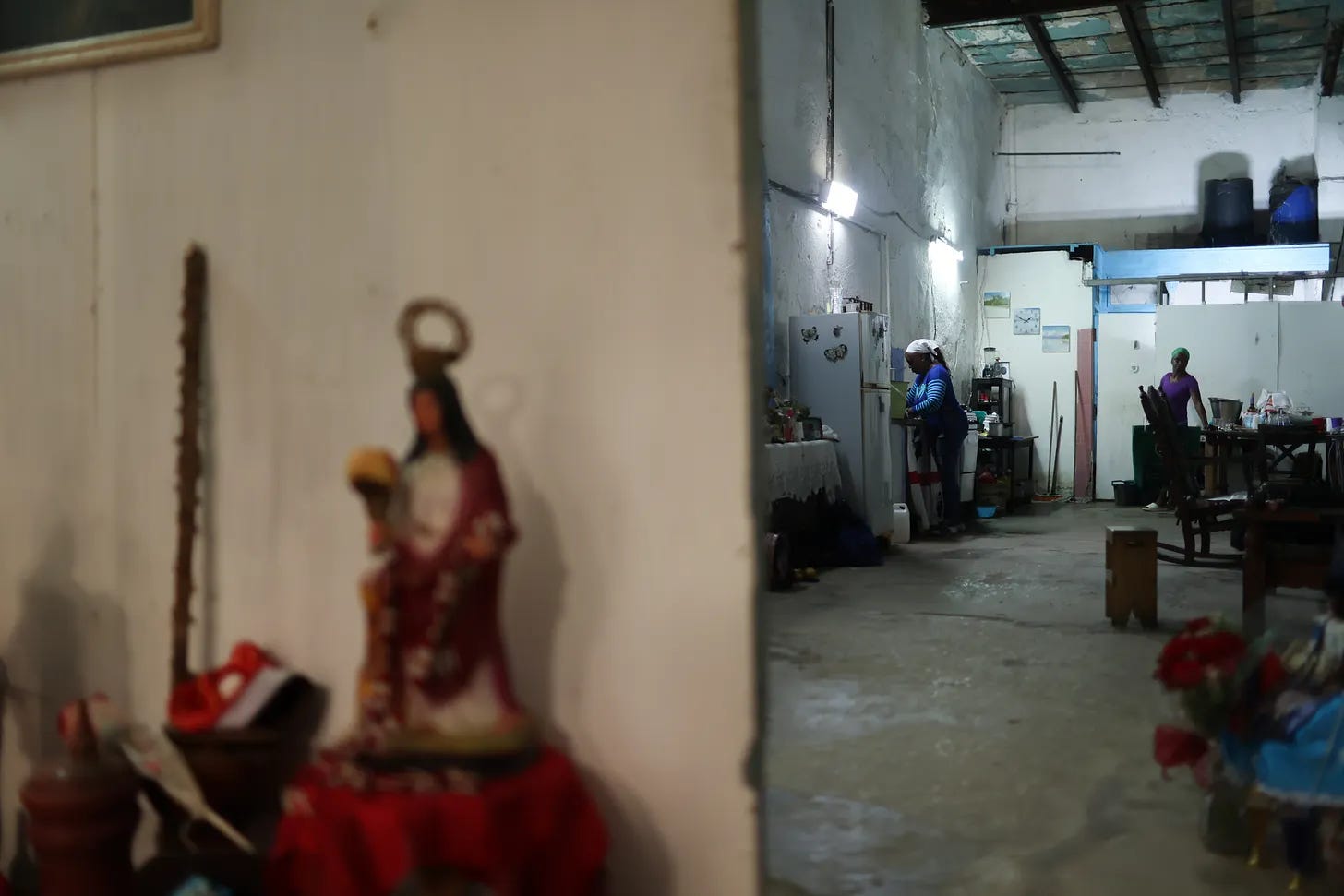
Elvia is a Santería priest and has a daughter in Italy who has tried to persuade her to join her. “I feel I manage well with the money my daughter sends from abroad,” she said. “It is enough for me and allows me to devote myself to my calling as a spiritual practitioner.”
Santería is a syncretic religion that blends African beliefs with Roman Catholicism. It was developed in Cuba in the 19th century.
Living in a small apartment in central Havana, Elvia says she helps support her elderly neighbors by donating chickens used in religious ceremonies.
Núñez, the journalist, who writes for OnCuba News and whose reporting focuses on marginalized communities, says those hardest hit by Cuba’s deepening crises are pensioners with no relatives abroad.
“The number of elderly people begging on the streets has skyrocketed,” he said. “Every day when I walk through the city, around 30 people stop me to ask for money. It feels deeply sad and reflects a complete failure of government policy.”
Although criticism of the authorities is tightly controlled and can carry serious consequences, Núñez says he’s not afraid to speak out.
Political repression has grown along with deteriorating living conditions. The crackdown intensified after July 2021, when large crowds took to the streets in spontaneous demonstrations demanding improved living conditions.
The authorities suppressed the protests with force, and hundreds of participants remain in prison. Cuba currently holds a record number of political prisoners—1,207 in total—according to the Spanish organization Prisoners Defenders. People have been imprisoned even over critical social media posts.
Journalists have been especially singled out, with independent media outlets and critical voices forced to leave the island. “Journalism inside and outside Cuba is deeply polarized,” Núñez said, adding that he hasn’t been targeted so far. “In my reporting, I always try to tell the truth by navigating somewhere in between.”
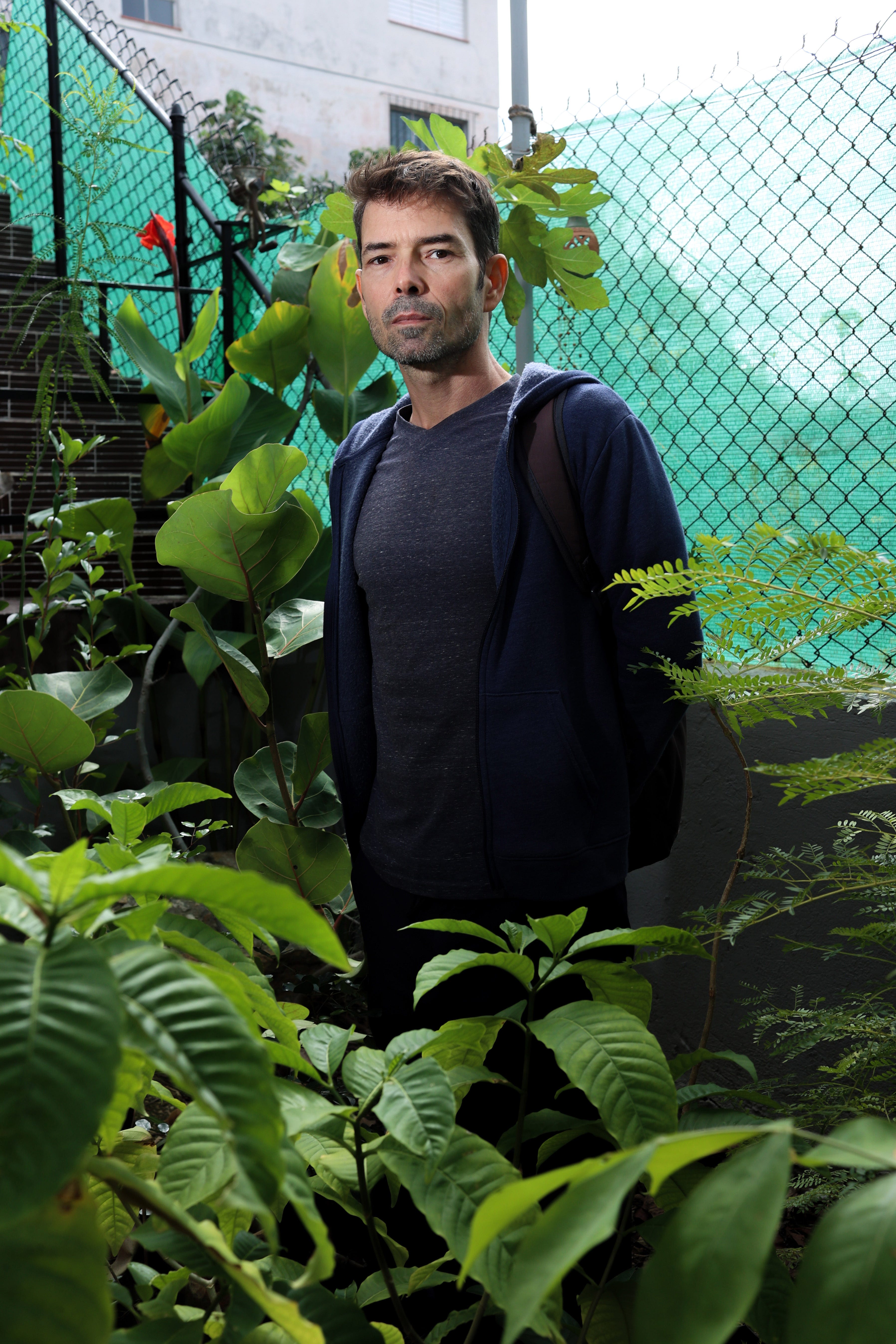
Juan Carlos Sáenz de Calahorra, a literary editor and cinematographer, has had a different experience.
He previously worked as an editor of an independent media outlet whose editorial team was forced to leave last year after receiving funding from abroad.
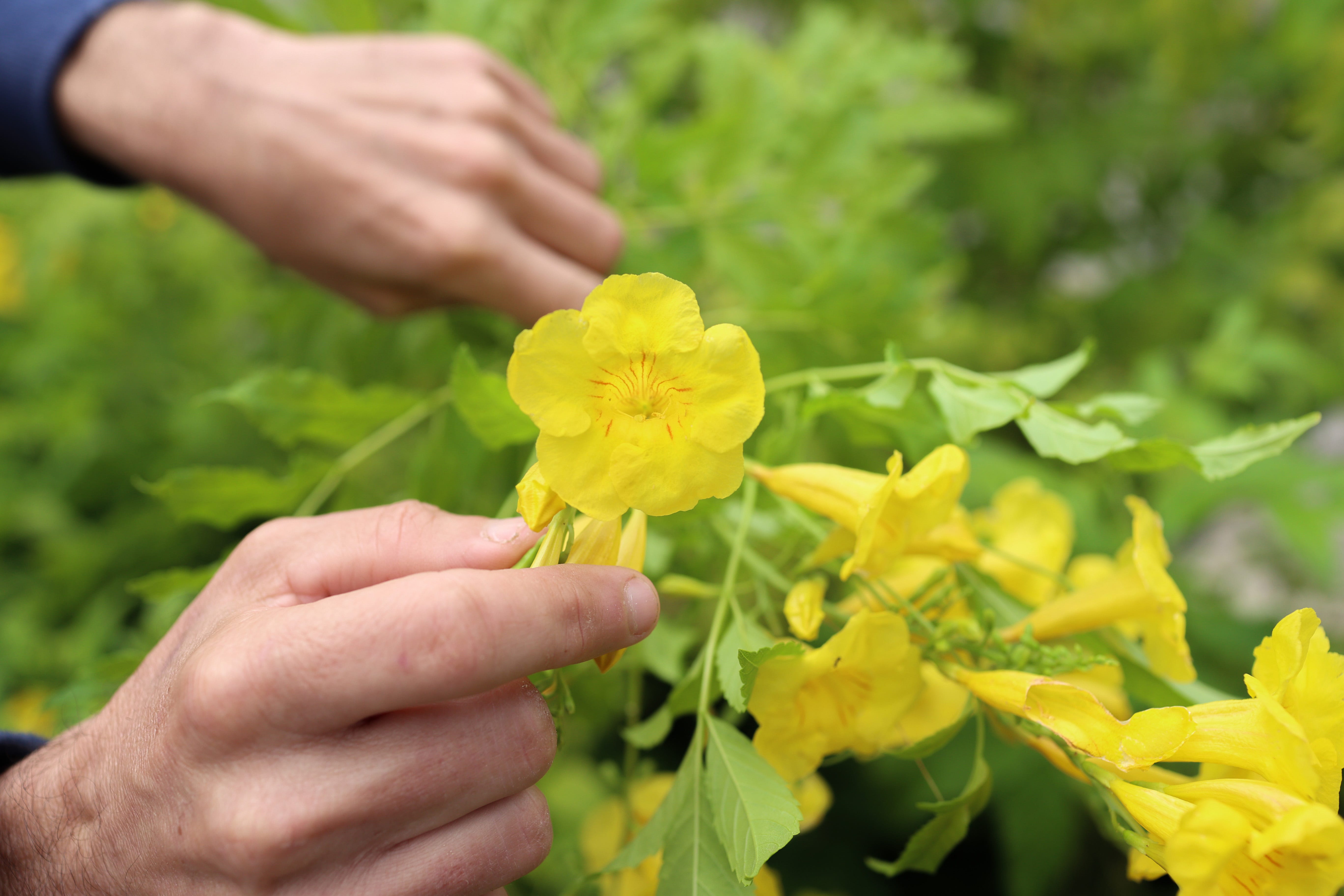
Sáenz de Calahorra decided to stay because of a passion outside his former profession—the conservation of Cuba’s native plants. “During the pandemic, I spent a lot of time walking around the city, and I started asking myself where the plants growing here came from,” he said.
Cuba is listed among the world’s islands with the richest biodiversity, with endemic flora and fauna accounting for nearly half of native species. But some 50 percent of the country’s native flora is threatened today, according to the most recent figures from Cuba’s National Botanic Garden in 2016.
The country’s colonial elite introduced many foreign plant species in the late 19th century because they were considered more fashionable than the native flora, Sáenz de Calahorra says. “That has harmed the city because native trees and plants are better adapted to the Caribbean climate,” he said. “They have developed resistance to hurricanes, provide shade and can help reduce flooding.”
Sáenz de Calahorra helped found the Nativa micro-nursery network, dedicated to cultivating native species and contributing to climate resilience. Volunteers collect seeds and establish small community nurseries across the city. They also visit schools, teaching planting techniques and the importance of preserving native species.
“The government has no real interest in doing this work, or the incentives fail. And the few specialists we had have left,” Sáenz de Calahorra said. “My idea is to inspire children so that they learn to value and celebrate the diversity of flora and fauna we have in Cuba.”
With no end in sight to the US oil embargo, speculation about the future is intensifying.
The latest oil shipment from Russia now exhausted, fuel reserves are running out. The tourism sector—long the country’s key source of foreign currency—has collapsed.
US President Donald Trump has repeatedly suggested the island could become the next target of US intervention.
Neither Núñez nor Elvia believe that will happen, however. “Trump will not come to Cuba,” Elvia said. “We don’t have anything that interests him, like oil in Venezuela.”
But Núñez believes any meaningful change can come only from inside the country’s power structure. After the last crackdown against protests, “there won’t be a social uprising,” he said.
“It is sad to say but I believe the transition will only come from within the Communist Party itself.”
This article has been partially supported by the Pulitzer Center.
Anna Heikkinen is a Finnish journalist and researcher specializing in climate and environmental issues, extractive industries and human rights in Latin America and the Caribbean. Her reporting has appeared in major Finnish newspapers and magazines, as well as in international media outlets such as The Guardian and Ojo-Público.
Good piece of journalism on how Cubans are living through the current crisis. Thanks!