


After earning a bachelor’s degree in European studies at Yale in 1943, Richard H. Nolte served as a US Navy pilot in World War II. He then returned to Yale and earned a master’s in international relations, followed by a Rhodes scholarship. At Oxford, he began studying Arabic, Arab history and Islamic law. Dick’s ICWA fellowship sent him to Beirut in 1951, where he and his wife lived four years. He followed his fellowship with a turn as Middle East specialist for ICWA’s sister organization, the American Universities Field Staff.
Dick became ICWA’s second executive director in 1959, remaining with the institute until 1978. He expanded ICWA’s traditional field of study in diplomacy and journalism to award fellowships in music, health and other disciplines. His interest in the Middle East remained active, leading to publishing his 1963 book The Modern Middle East.
In 1967, President Lyndon Johnson appointed Dick to be US ambassador in Egypt. He reached Cairo in May, but two hours before he was to present his diplomatic credentials to President Gamal Nasser, the Six-Day War broke out. Nasser refused to approve his accreditation, so Dick’s first and only job in Cairo was to help evacuate American citizens stranded in Egypt before he himself was expelled from the country on June 10. In a September 1967 article, The Washington Post described Dick’s tenure as “one of the shortest and most hectic diplomatic careers on record.” (The Americans Dick helped evacuate from Egypt were shipped onward to Greece, where fellow ICWA alumnus Phillips Talbot received them as US ambassador.)
Dick served as chairman of the American Geographical Society from 1988 to 1996, and was a member of the Near East Foundation, the World Academy of Art and Science and the Council on Foreign Relations.
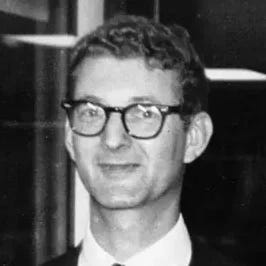
In this action-packed nailbiter of a dispatch from Suk-al-Gharb in Lebanon, Dick describes the surprising role the US military came to play during the 1952 Hajj, or pilgrimage to Mecca.
Lebanon (September 1952) — To Muhammad, the Prophet of Allah, it was commanded: “And proclaim unto mankind the pilgrimage. They will come unto thee on foot and on every land camel; they will come from every deep ravine, that they may witness things that are of benefit to them, and mention the name of Allah on appointed days… That (is the command). And who so magnifieth the sacred things of Allah, it will be well for him in the sight of his Lord...” (Qur’an, II, 27–0).
This and related Qur’anic passages, together with many detailed reports of how the Prophet himself performed the pilgrimage, form the basis upon which rests the Hajj, the Muslim pilgrimage.
In time past, pilgrims from north and east used to go down in great Hajj caravans from Damascus and Baghdad; but with the completion of the Hejazi railway to Medina from Damascus, the caravans had had their day.
About two months ago, the acting director of civil aviation in Lebanon and the manager of Beirut’s big new international airport realized that they were faced with a number of problems raised by the imminence of this year’s Hajj. There would be the problem of accommodating the pilgrims at the still incomplete new airport. With great energy, the acting director, Edouard Debbas (he has four US degrees in engineering, an American accent and the American enthusiasm for doing challenging things quickly and well), and his airport manager converted a hangar to house the pilgrims and provide for their needs.
Toward the middle of August, the tide of pilgrims intending to fly began to rise. And for the first two or three days, all was well.
But then suddenly, Beirut was full of pilgrims. They were camped along the sidewalks. Mosques were packed with them, and the airport was a camping ground for additional thousands. Instead of a thousand or so pilgrims, 7,000 had poured into Beirut, all of them expecting to fly to Jedda and most of them with tickets in hand.
Mr. Debbas then went to the minister of foreign affairs with the suggestion that he appeal to the American minister, Harold B. Minor.
To his lasting credit, the latter seized on the idea and straightaway called the State Department, describing the situation, recommending in strong terms that help be sent, but realizing that it would probably be impossible.
At the airport on Sunday, Debbas was again confronted with anxious pilgrims; only three days remained before the noon deadline on 27 August, by which time all intending pilgrims were required to be in Jedda. “Shall we go home?” was the question.
And then in the afternoon, 13 big C-54 transports materialized out of the western sky and the Beirut airport was suddenly full of American pilots and aircrews. Seven of the planes came down from Germany, the rest from Wheelus Field near Tripoli, Libya. Later, another C-54, a maintenance plane, arrived from Orly Field near Paris.
After some initial confusion, the big airlift ran like clockwork. Every hour, a C-54 took off and swung southward for the 10-hour round trip… Besides the maintenance men, 25 operations and traffic control men came down to Beirut, and 26 flight crews of seven men each. During the first 36 hours, while the originally contemplated 1,500 were being taken out, the crews were getting seven-hour rests between flights; later, in the interests of maintenance requirements and flight safety, the respite time was raised to 12 hours.
The last American flight got off at 5:22 a.m. Friday… In four days and a bit, American planes had carried 3,763 pilgrims in 75 flights. The three local airlines, in something over two weeks of operation, had carried a roughly similar figure—in about 170 flights. Every person holding a ticket for Jedda got his ride; thanks to the last-minute intervention of MATS men and planes, many hundreds of people were spared a crushing disappointment.
After the disastrous blow to Arab respect and liking for America delivered in the form of US support for Israel in 1948 and since, “Operation Hajj” has succeeded more than all our loans and Point IVs and protestations of friendship put together in helping to reverse the tide of Arab ill-will. It was a gesture that seemed to proceed from a human concern for people in difficulty who were considered worthy of concern for no other reason than that they were people in difficulty. Arabs and Muslims have lived too long as the implied inferiors of Westerners not to appreciate the change. It was a gesture that (in contrast to Point IV or governmental loans) could not easily be misinterpreted as conscience money for the wrong done in Palestine or as part of an imperialist plot against Arab independence.
No doubt the gesture of Kashani, the militant anti-Western leader of the Iranian Parliament, in kissing the cheeks of pilot Al Beasley and his copilot in gratitude for the trip to Jedda is not to be given very much weight in the scale of US-Persian relations; and the statement of the mufti of Lebanon no doubt exaggerated the case when he called the American effort a “turning point in American relations with the Arab world.” Nor can the view of a Turkish newspaper correspondent, a pilgrim, be taken to herald the millennium in US-Muslim relations. His cable to the president and the prime minister of Turkey read, in part: “The Beirut-Jedda air-bridge constitutes real international cooperation. At no time in history has so much help been offered from so far away and for such a large number of people and in such a noble cause. Muslims the whole world over, and this year’s pilgrims in particular, will not forget this gesture.”