


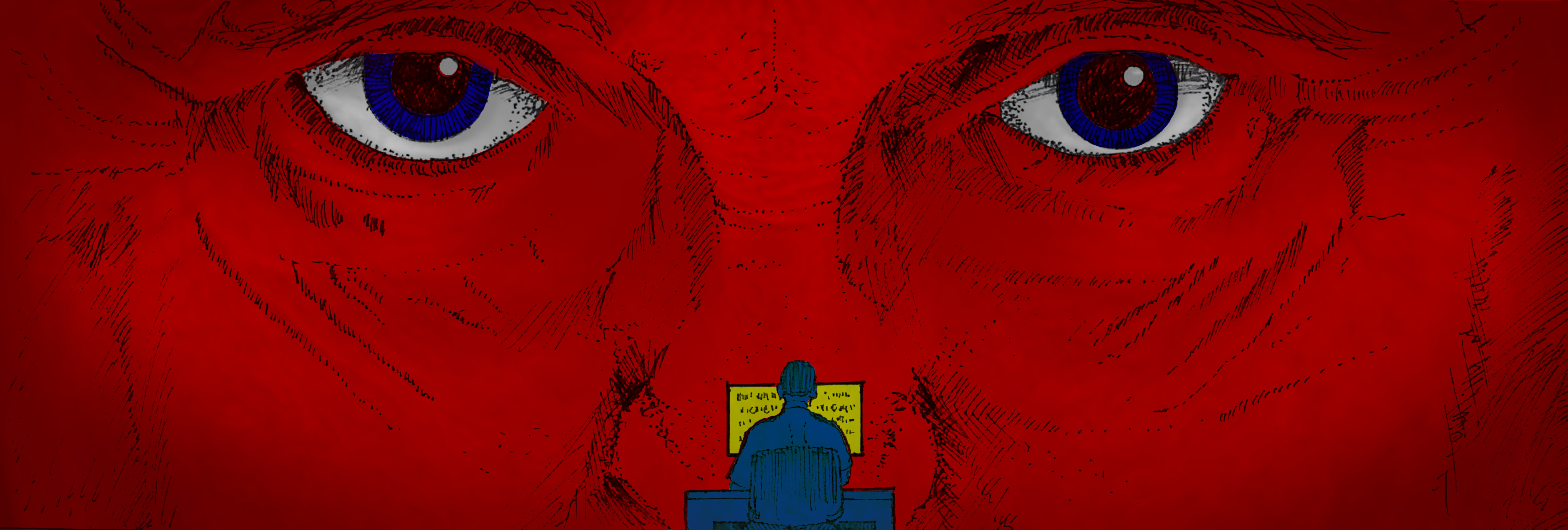
The call to action was Russian President Vladimir Putin’s launching his full-scale invasion of Ukraine on February 24, 2022. But a movement to use the power of theater for social and political activism had been gathering speed for some time for what I call the Worldwide Ukrainian Play Readings.
Take your pick of initiating dates and events: Putin engineering his crude return to the presidency for a third term in 2012; the beginning of the Maidan uprising in Kyiv in late 2013; and the historic mess of early 2014—the Maidan revolution and crassly manipulated Winter Olympics in Sochi in February, Russia’s annexation of Crimea in March, and appearance in April of Russia’s so-called “little green men,” in fact badly disguised mercenaries conducting a Kremlin-coordinated military occupation of the Donetsk and Luhansk regions of eastern Ukraine.
I was a culture reporter for The Moscow Times at the time, and it was overwhelming to watch. Few of us foreigners living in Russia were able to respond adequately to the momentous shifts. As a journalist, I focused on topics that enabled me to illuminate the turmoil, knowing full well that my columns were a paltry response. At the same time, I found myself increasingly isolated from the creative community of which I had been a part for over 25 years.
It was disheartening to witness major Russian theater practitioners eagerly jumping onto the “Crimea is ours!” bandwagon. The Oscar-winning film director Nikita Mikhalkov’s outburst of “I love that man!” about Putin in 2014 stands out as a model of sycophancy during that period.
Matters took an even more alarming turn in July 2021, when Putin published a 7,000-word essay titled “On the Historical Unity of Russians and Ukrainians” on the main Kremlin website. Long-reaching plans were afoot, and the president was giving them historical underpinnings in advance. His pseudo-scholarly treatise employed the offensive, long-abandoned tsarist reference to Ukraine as “Little Russia” and Ukrainians as “Little Russians.” He declared the notion of an independent Ukraine bogus while taking offense at any suggestion that “the Ukrainians are the true Slavs and the Russians, the Muscovites, are not.”
My wife Oksana Mysina and I had already left Russia for Crete by then, realizing in late 2018 that there would be no more cultural oxygen left in Moscow either for her, a prominent independent actor, or me, a journalist, translator and writer.
So when the Belarusian writer Andrei Kureichik approached me in September 2020 with a request to translate and promote Insulted. Belarus, his play about the events of the failed mass protest movement that took place after President Alyaksandr Lukashanka’s rigged election earlier that summer in Minsk, I thought: “Here is something I can do.”
In fact, I had no idea how much I would actually accomplish, with much help from others around the world. Five years ago, I couldn’t have foreseen that, over the next few years, the Insulted. Belarus Worldwide Play Reading project would enable us to organize some 300 events—readings, productions, installations, films, symposia, book publications—in 36 countries and 24 languages. Most people in the world at that time knew little or nothing about Belarus and its problems. To some degree, we changed that, at least insofar as we can trust the conclusions of the University of Illinois scholar Valleri Robinson in her 2024 book, Belarusian Theatre and the 2020 Pro-Democracy Protests: Documenting the Resistance.
“Freedman and Kureichik’s Worldwide Reading Project generated a remarkable and powerful network of theater artists and scholars,” she wrote, ensuring that “events surrounding the 2020 presidential election in Belarus are not forgotten. [It] testifies to the power and potential of art workers to work together to resist autocracy.” That was the prelude to what would come to be known as the Worldwide Ukrainian Play Readings (WUPR).
When Putin sent tanks from the Novi Yarylovychi crossing on Ukraine’s border with Belarus down the M01 highway toward Kyiv, I already had a method for employing drama as a form of social and political activism. I had a committed international community ready to respond, and, most important, a vast number of Ukrainian writers eager to lend their services.
I began learning about them after contacting my old friend Maksym Kurochkin, a playwright and co-founder of the Theater of Playwrights in Kyiv. Within days, my inbox was filling with texts from dozens of writers. Most were for one-off public readings. Some were in Russian, and I was able to translate them immediately and place them with theaters in Britain, the United States, Hong Kong, Finland, Germany, Slovakia and elsewhere. But most of the texts reaching me were in Ukrainian, a language I could read only with some help, and which I had never dared translate professionally.
Chance played a decisive role when my wife and I encouraged a family of her relatives to leave the Ukrainian city of Dnipro as the war began and join us on Crete. In Oksana’s cousin Nataliia Bratus, I had the perfect partner to establish an intensive translation process. Virtually all the texts were short; Nataliia and I often polished off two to four in an afternoon’s session.
The project depended on the generosity of my longtime colleague Philip Arnoult of the Center for International Theatre Development (CITD) in New York. He pledged $15,000 to distribute among 15 writers to get them working as quickly as possible. For the most part, whatever our Ukrainian partners could write, we could get onto a stage somewhere. Philip soon doubled the grant, later adding more financial aid to support the Theater of Playwrights in difficult times. When Philip died in the summer of 2024, WUPR became an official CITD project.
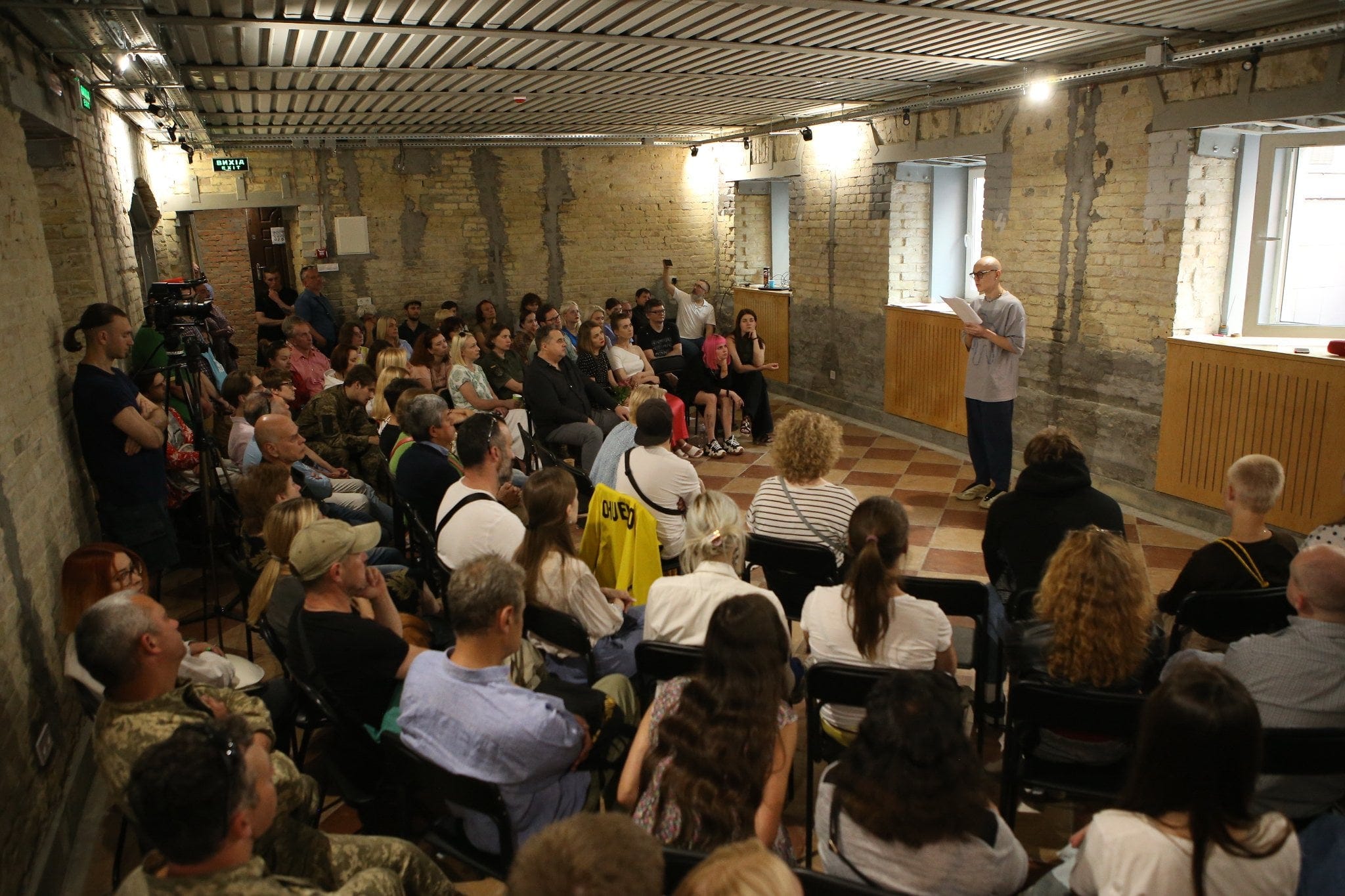
To date, roughly three-and-a-half years later, we’ve organized 800 events involving Ukrainian dramatic texts in 34 countries and 19 languages. We offer 200 discrete texts written by 75 writers, of whom Olena Astasieva (performed 120 times), Andriy Bondarenko (110), Natalka Vorozhbyt (65) and Liudmyla Tymoshenko (60) have been the most popular. In addition to the public readings, we’ve facilitated the production of more than 20 full-length plays, six films (one feature, five shorts) and the running of several festivals. We also published an award-winning anthology titled A Dictionary of Emotions in a Time of War: 20 Short Works by Ukrainian Playwrights.
I don’t have an exact count of the money we’ve raised for Ukrainian charities but guess it’s around $700,000.
The emotional and psychological impact of the messages carried in the texts outweighs even those impressive numbers. WUPR has opened people’s eyes and even changed the way they think, judging by the responses of the project’s audiences and participants.
“The statistics of this project demonstrate incredible numbers in the history of Ukrainian drama,” Anastasiia Gaishenets, a leading Ukrainian theater journalist, wrote about the project on the LB.ua website in 2023. “Our drama has never been translated and read so much.”
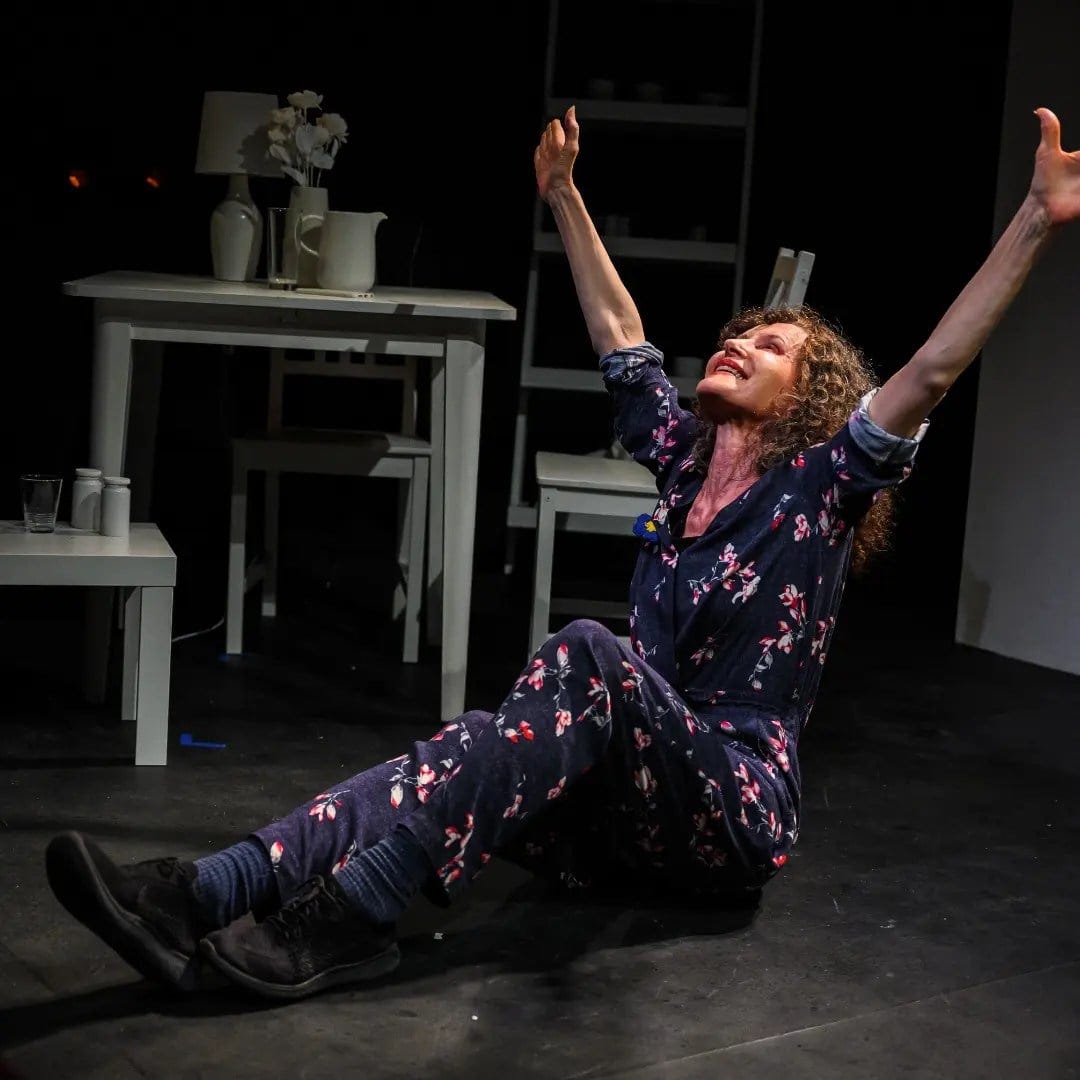
Giving a five-star review to the UK premiere of Neda Nejdana’s Pussycat in Memory of Darkness, at the Finborough Theatre in September 2022, Mariam Mathew wrote, “Never was I so clear on the impact of the political decisions of 2014.”
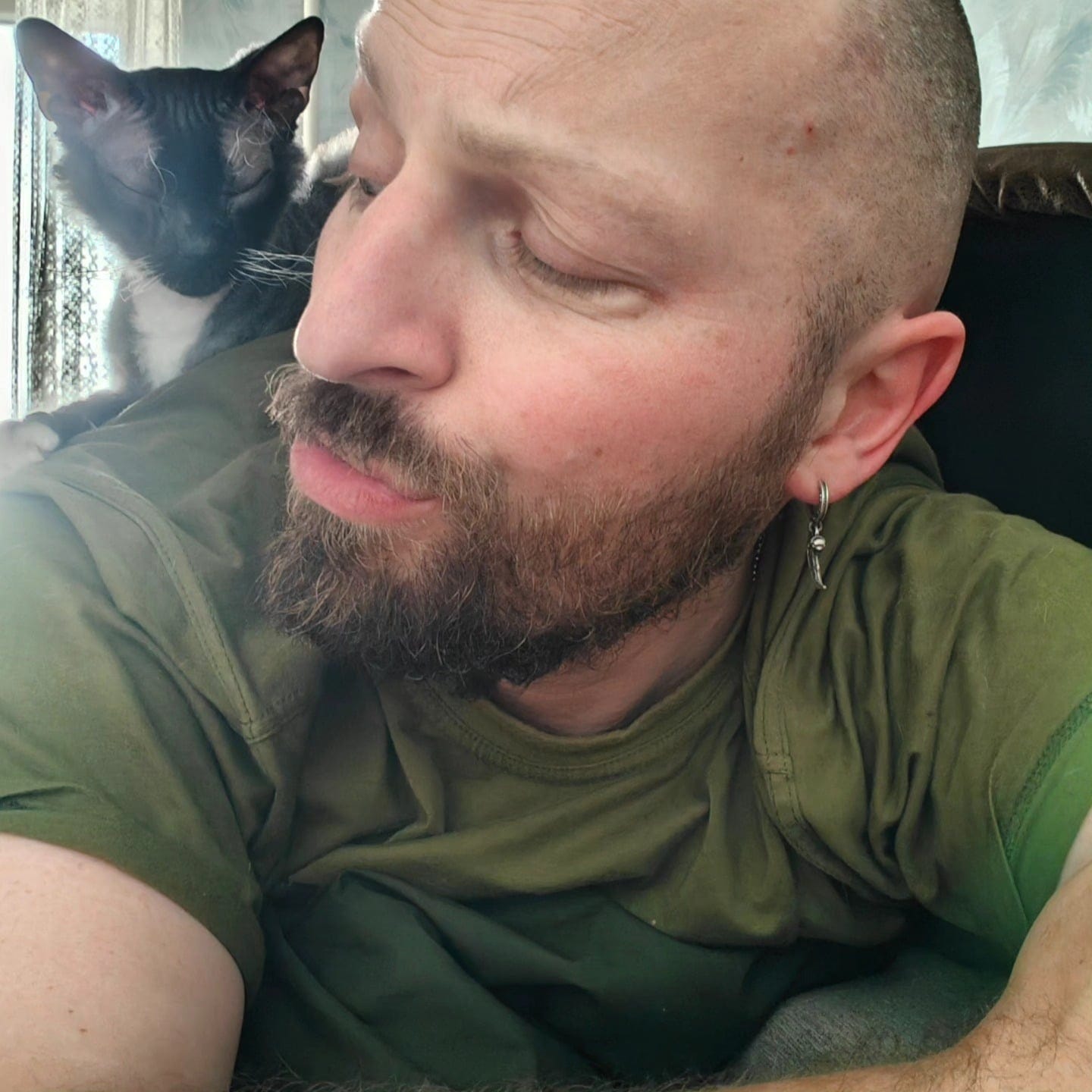
A 2025 reading of Oleksandr Zhuhan’s New York, Donetsk, Ukraine: 100° F was especially moving. While serving in the Ukrainian military on the eastern front, Zhuhan was able—from the trenches—to watch a livestream of his work being performed by the Voyage Theater Company at the 53rd Street branch of the New York Public Library. A short while later, he sent me an email.
“Yesterday was a hard day and night for Ukraine—and for our unit in particular,” Zhuhan wrote, “[But] for a moment, I was reminded why we fight. Watching the performance left me in deep reflection—about how we write war from within the war, how fragile and complex this task is. And also about the power of theater: how it helps those untouched by war to feel its presence, its weight, through the words and silences of Ukrainian playwrights.”
John Freedman has written and edited 15 books on Ukrainian, Belarusian and Russian theater. He is currently the Ukraine Program director for the Center for International Theatre Development and was the theater critic for The Moscow Times from 1992 to 2015.
