


Willy Foote is the founder and CEO of Root Capital, a nonprofit social enterprise that supports small-scale sustainable agricultural businesses in Africa, Asia and Latin America, disbursing more than $2 billion to reach more than 2 million farmers and employees to date. A member of the Council on Foreign Relations and Young Presidents’ Organization, he serves on the Governing Council of Catalyst 2030 and the Strategic Advisory Council of the Erb Institute for Global Sustainable Enterprise at the University of Michigan. Willy studied the impact of free-market reforms on Mexico’s people, society and politics as an ICWA fellow from 1995 to 1997.

In this excerpt from a 1996 dispatch, Willy looks into a garbage crisis in Morelia, a city in central Mexico. Accompanying private collectors who face fierce and dangerous competition, visiting a hospital to learn about infectious garbage and a company that wanted to privatize garbage systems across the country, he investigates the issue’s complexity. The political significance rises to the national level in a country where the PRI—Partido Revolucionario Institucional (Institutional Revolutionary Party)—effectively ran a decades-long one-party state.
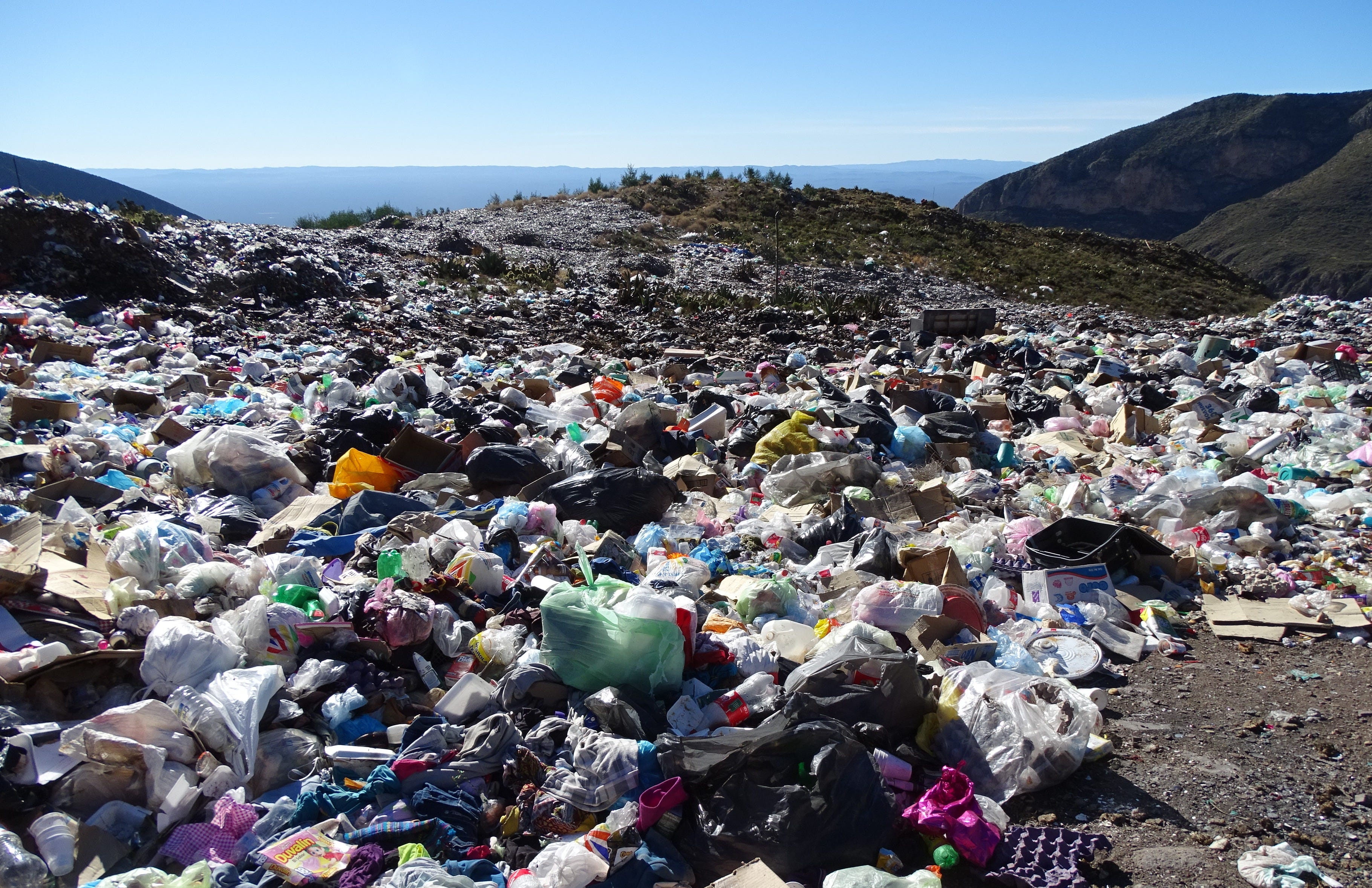
MORELIA, Mexico (February 1996) — The best view of Morelia’s landfill is from the top of one of two yellow municipal bulldozers parked on the dump’s southern edge and used to spread trash around all day. From here one can look north across the flat-bed pudding of the 44-acre landfill toward the shimmering gray Sierra Madre mountains. A mile away in the opposite direction, a red-clay-colored cliff—part of a quarry—juts into a swirl of blue sky and clouds.
On our arrival, the clearing in the center was a beehive of activity. Forty or so people labored, surrounded by towering piles of clean cardboard, sparkling green bottles, a crayon rainbow of tin cans. From the vantage point of two mangy dogs dozing beside the bulldozer, the far-off stick figures must have resembled army ants carrying huge loads overhead and up wooden planks, dumping recyclables into one of five modern tipper trucks.
Later I learned this to be the final phase of the pepenadores’ (garbage pickers) work. The trash loads they lugged, already selected and separated, are trucked straight from the dump to the buyers. Aluminum goes to Mexico City and to Guadalajara foundries; glass is used by local artisans and sold to the transnational Mexican glass company, Vidriera Mexicana in Mexico City; paper is used locally for pressboard and for roofing materials; and beverage containers (glass and PET plastic) go back to the bottler.
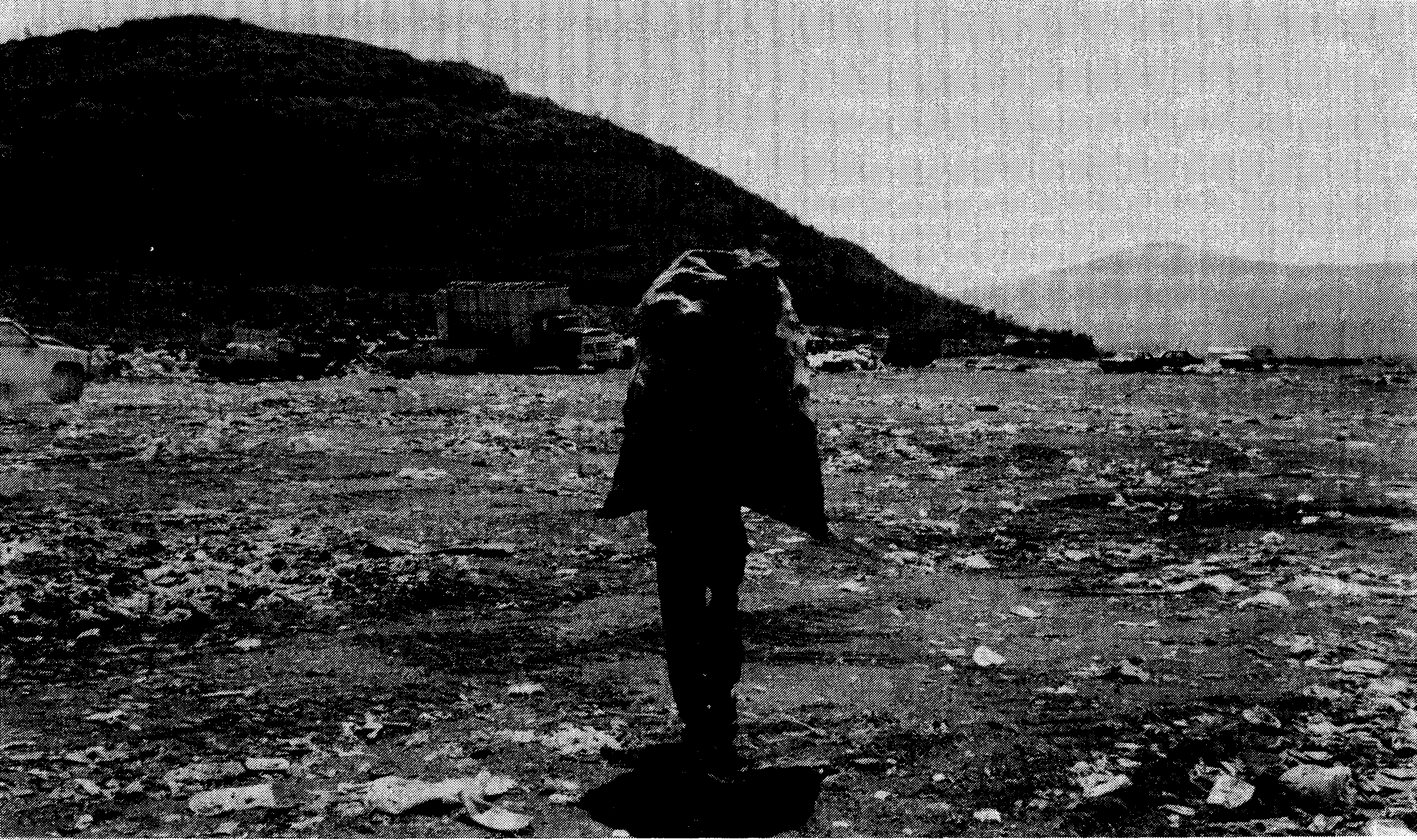
The pepenadores’ work begins on the eastern border of the dump, along a half-mile swollen lip of rubbish. That’s where the Fausto brothers parked their Ford. The stench socked my nostrils as I opened the passenger door. No sooner had Carlos [Carlos Fausto Gutierrez, Willy’s guide and a garbage collector] killed the engine than people emerged from the craters of surrounding garbage, as though plodding the surface of some trash-made moon. But the children, parents and grandparents wore no protective suits as they pushed through Morelia’s bowels; rather, they dressed in sneakers, long pants, T-shirts, no gloves and bandannas covering their noses. Wading toward us along a nearby garbage shoal, a teenage boy jumped onto the truck.
“We can’t touch the trash now,” said Carlos, crossing his arms in indignation behind his pickup. Soon a trim, middle-aged man arrived, and the two pepenadores manually unloaded our garbage, plucking out bottles and tin cans as they went, stuffing them into a burlap sack. They never said hello, never asked for permission. Noticing the general lack of cordiality, I asked Juan [Carlos’s younger brother] why they couldn’t share the recyclables. He replied, very calmly, “because we’re at war.”
Who exactly are his adversaries? A total of 300 pepenadores who work Morelia’s garbage dump (80 at a time), all of whom belong to Antorcha Campesina, a violent peasant organization connected with the PRI. Mexico’s most notorious grupo de choque (roughly translated as “attack group”), Antorcha carries out much of the PRI’s dirty work, having reportedly formed death squads in the past in several states. Their mortal enemies are the rank and file of the PRD, Mexico’s leftist opposition party. The Fausto brothers belong to a PRD-affiliated union of garbage collectors.
Dump battles flared in the summer of 1995. Sparking one incident, Carlos and three union buddies brazenly defied the pepenadores’ trash-picking monopoly, repeatedly separating tin cans inside the landfill. One morning last August, approximately 80 Antorcha members armed with sticks and machetes surrounded Carlos’s truck, smashing his windshield and his friend’s face. Within minutes, 30 PRD union trucks came to the rescue, forming a rolling phalanx across the landfill. Antorcha withdrew, and Carlos carried his wounded friend away without further violence. That same day, however, the then-PRI municipal government impounded his truck. The mayor had enforced the recycling ban in the first place to placate Antorcha leaders, according to Carlos. Eventually, he got his car back. He hasn’t touched a can since (that is, while inside the dump).
Hoisting the burlap sack of recyclable spoils overhead, the Antorcha teenager walked away from our Ford toward the busy clearing in the center. The fumes of baking garbage between us made him and the view beyond appear fuzzy and dreamlike: Antorcha’s bottle-lined alleys glimmered like jewelry on display; great hills of Sprite and Campbell’s soup cans glinted like old Spanish silver; cardboard stacks cut neat pathways toward the tipper trucks, whose engines roared like circus lions.
I turned back toward Carlos as he admired a new semi-trailer that Antorcha had bought last November. Opening the driver side door, he paused and pointed toward the human ants climbing distant planks. “This is a good system, this landfill,” he said, as if acknowledging Antorcha’s achievements despite their conflicts. “Nothing’s wasted here, not even bones.”