


I well remember my personal confirmation the country had fundamentally changed. I was the NPR correspondent in Moscow, returning to Russia from Washington with my family. After disembarking our plane, we’d finally navigated the long, malleable queues to reach Sheremetyevo Airport’s border control, a miserable experience that had remained virtually unchanged since the days of communism 18 years earlier. After my wife and infant son had been cleared through one of the booths ahead of me, I stepped up.
A young female officer in uniform studied my passport, sternly considered my face, consulted her ancient computer, repeated her deliberations—all par for the course, the usual welcome back to the former USSR. Then, without a word, she pushed a button on her desk and two hulking goons materialized, one of them barking that my entry to the country had been barred and I would return to Washington on the next plane, no explanation necessary.
It was the fall of 2007, a little more than a month ahead of parliamentary elections. Although President Vladimir Putin had been dismantling the country’s democratic institutions in his methodical drive to consolidate power since taking office eight years earlier, the atmosphere felt especially tense.
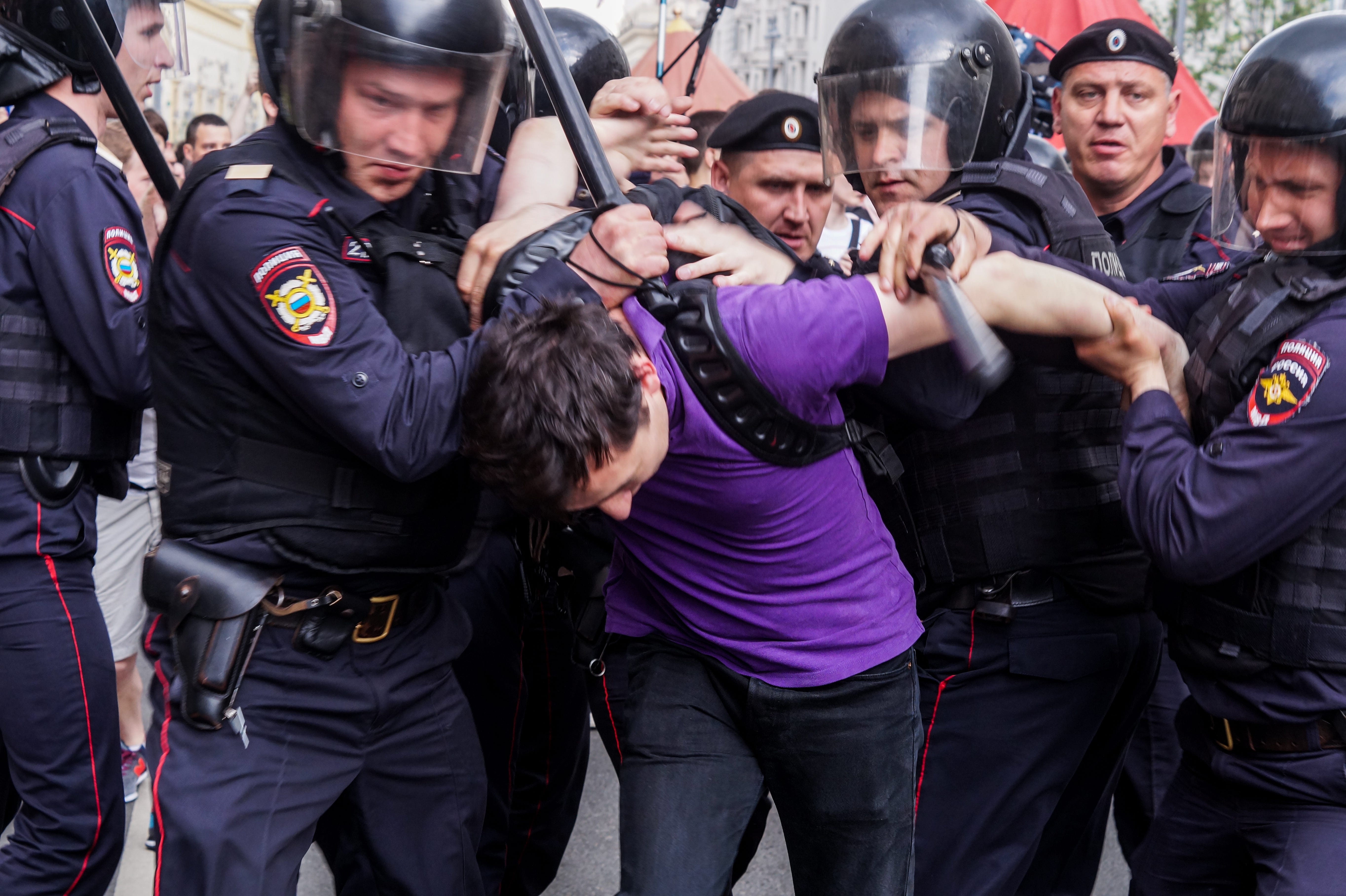
His two-term limit was fast expiring, with a presidential election looming the following spring. Thousands of riot police and soldiers were cracking down on even the tiniest protest that would otherwise have gone unnoticed. Earlier in the year, Putin had shocked Western countries at the Munich Security Conference by rejecting what he called the US-dominated “unipolar” world in angry rhetoric that laid bare his appetite for confrontation.
Foreign election observers and journalists were being barred from Russia ahead of the elections and now it was my turn. As my frantic calls to the US Embassy and NPR headquarters steadily drained my phone battery, I tried to work out which of my pieces could have landed me on the persona non grata list, but it was a mug’s game—many would have qualified.
It was my good luck that the US ambassador at the time was Bill Burns, the future CIA director whose measure of Putin’s Russia was as incisive as his diplomatic skills were prodigious. After four hours, I was allowed into the country just before the doors on the return flight to Washington were shut. Russia wasn’t yet fully closed.
Still, the elections in 2007 were the first to be fully, incontrovertibly fixed, with some regions reporting an incredible 90-plus percent of voter turnout and a vast majority of ballots cast for the ruling United Russia Party.
It came as no great surprise. Moscow pundits had expected the opposition’s rout (no independent parties had been allowed to qualify for seats even in the previous elections of 2003). I and many other journalists had been reporting during the campaign about tenacious opposition candidates being harassed, arrested and assaulted. Nevertheless, the results delivered a tremendous shock in the capital.
Until the worst expectations had actually become reality, hope had remained, however fanciful, that the elections would matter to some degree, never mind the heaps of denial about the myriad signs indicating otherwise. Now there was no denying, and in gloomy gatherings of the capital’s liberal intelligentsia, the feeling reigned that it was too late to do anything about it. A veteran pollster and leading commentator named Georgy Satarov announced that there was “no more public opinion in Russia!”
Public opinion still existed, of course. United Russia would have almost certainly dominated in a free and fair vote, thanks to Putin’s popularity. But Satarov’s anger was only partly directed at the electorate; what he really meant was that his job was now superfluous because public opinion no longer mattered to the authorities. Any last remnants of democracy had been snuffed out, Putin’s administrative control was paramount.
Whether or not the president was counting on it, that kind of hopelessness was a crucial factor in his success. He exploited the sense of inevitability to the fullest, relying on his Mafia don’s swagger, crude self-assuredness and blatantly false black-is-white rhetoric carefully calculated to help crush any meaningful public discussion, let alone debate, not to mention dissent.
Putin never looked back. The following year, Russia invaded neighboring Georgia, irrevocably breaking with the West, which had spent a decade and a half trying to integrate Moscow into its multinational organizations, however ham-fistedly.
No one back then could have predicted Putin’s destruction of Ukraine, partly aimed at entrenching his ever-more repressive neo-Stalinist regime at home. But it reflects the logic of dictatorial regimes—they must inexorably ratchet up repression in order to enforce growing impunity for their mounting crimes, and increase confrontation with perceived enemies at home and abroad to justify their illegitimate rule.
My experience in Russia feels like a cautionary tale given the interference already taking place ahead of pivotal elections in leading Western countries. If it’s a prelude to a new era of authoritarianism, it will be important to continue doing everything reasonably possible to resist the demise of liberal democracy and not let demoralization become another tool of tyranny.
Gregory Feifer is executive director of the Institute of Current World Affairs in Washington. A former NPR Moscow bureau chief and author of Russians: The People Behind the Power, he is writing a book about the Russian politician Boris Nemtsov.