


Ever since Russia launched its full-scale invasion of Ukraine in February 2022, I’ve been asked whether the country will fall apart and when.
I fully understand why Ukrainians would want their enemy to break up. An authoritarian state with persistent imperial aspirations that’s failed to reckon with its colonial past remains a threat to the world.
But my answer remains the same: Not only is the Russian Federation’s collapse unlikely but also undesirable. It would almost certainly result in a patchwork of small, probably feuding and largely nonviable statelets, unleashing an unstable mess across Eurasia that would bolster neither Ukraine’s security nor the European Union’s.
In the future, an engaged citizenry under a new generation of political reformers could establish Russia as a real federation (despite its formal name, Russia has never been a full-fledged federation)—with power divided between the center and far-flung regions—and, for the first time, try to build a stable, working state structure from below.
But for now, as President Vladimir Putin continues consolidating power and suppressing federalism, minimizing regional political representation and destroying peaceful mechanisms for reform, the danger of instability is mounting.
Control over minorities
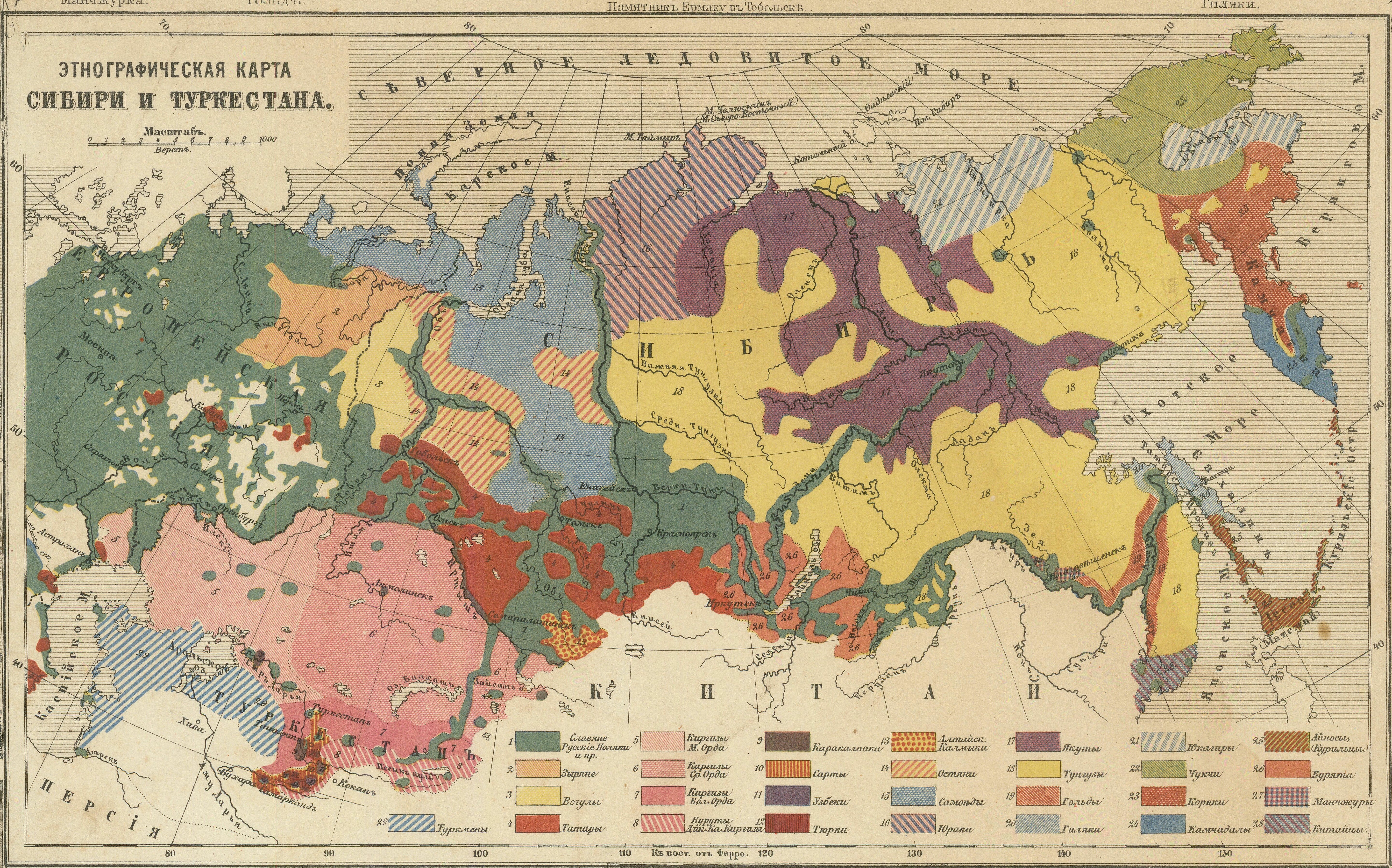
Russia is the world’s largest country by territory, covering an eighth of the Earth’s landmass. It’s home to over 190 ethnic groups and includes more than two dozen so-called national republics. Its peoples practice Orthodox Christianity, Islam, Buddhism, Judaism and paganism. And there are atheists, of course, although not as many as under communism, when practicing religion was banned.
Those groups include 47 Indigenous small-numbered peoples, a distinct category of populations smaller than 50,000 people (the Udege, Shor, Nenets, Dolgan, Yukaghir, Evenk and Itelmen among them). The Selkups, for one—who live in western Siberia and number some 3,500—are viewed as a threat: The prominent Selkup rights activist Darya Yegereva was arrested in December 2025 and is currently facing up to 20 years in prison on trumped-up terrorism charges.
Due to the small size of their populations, Indigenous small-numbered peoples can’t reasonably claim independence. With a combined number of 315,000 (about 0.2 percent of Russia’s population), they will continue to find themselves at a disadvantage regardless of how events unfold.
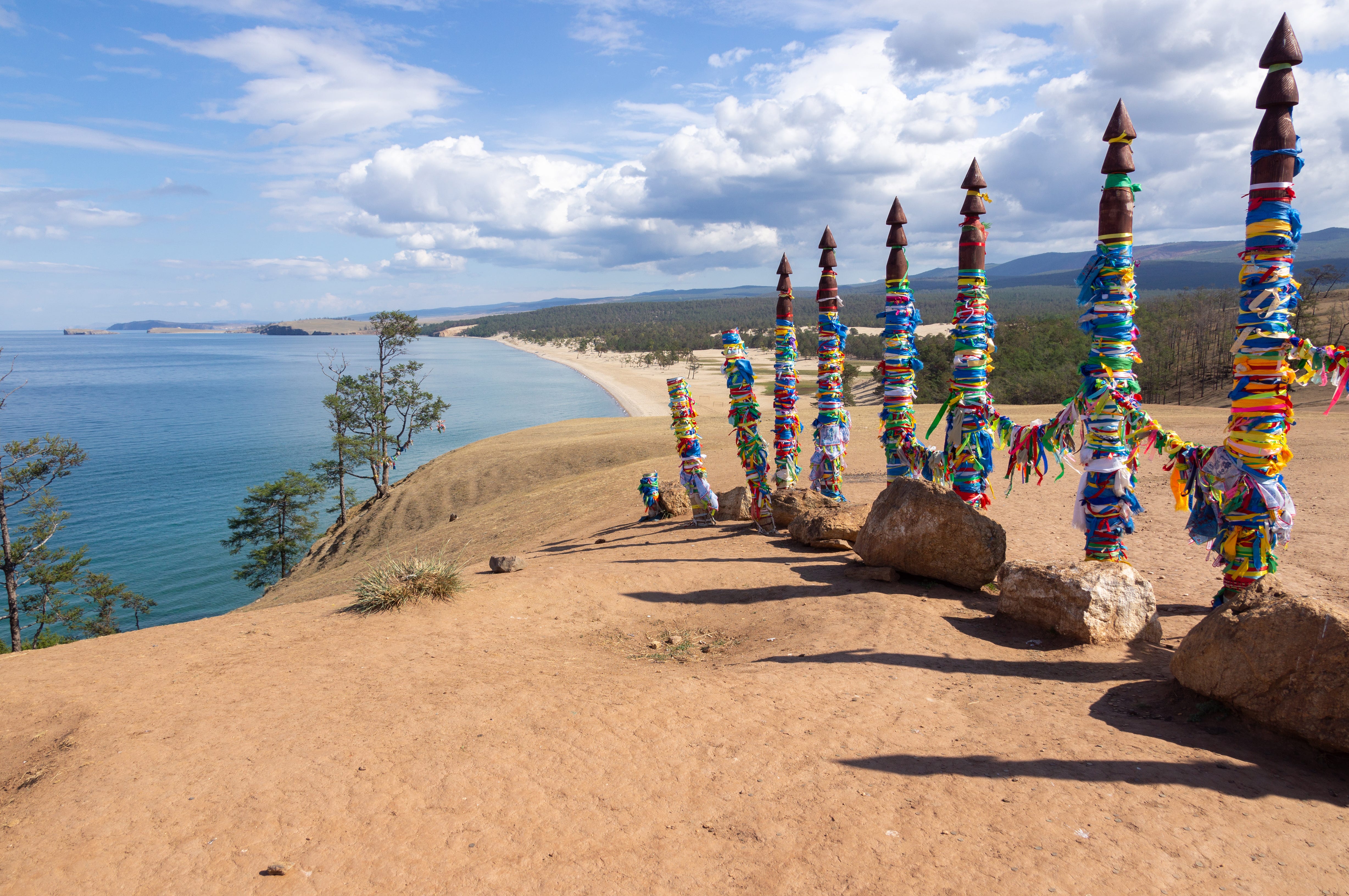
The Buryats, on the other hand, with a population of approximately half-a-million people in Russia, are an example of larger Indigenous groups. The Republic of Buryatia in eastern Siberia, where I was born—home of Lake Baikal, the world’s deepest freshwater body—is a center of Buddhism. In such regions, the Kremlin maintains control partly by ensuring no functioning Indigenous-language bureaucracy can exist. All institutions from schools to courts operate in Russian. Even though Buryatia’s constitution requires the head of the republic to be proficient in both Russian and Buryat, the current leader, Alexei Tsydenov, doesn’t actually speak Buryat. In Dagestan, a large republic in Russia’s North Caucasus inhabited by dozens of different ethnic groups, Russian serves as the language of interethnic communication.
Language means control. In 2018, the authorities reclassified the study of Indigenous languages in schools as an elective subject. In Buryatia, only 19 percent of ethnic Buryat schoolchildren study Buryat as their native language. Although the regional government ostensibly mandates a choice between Russian and Buryat languages, all news and official documents are available only in Russian.
‘Seventy-five times more likely to die’
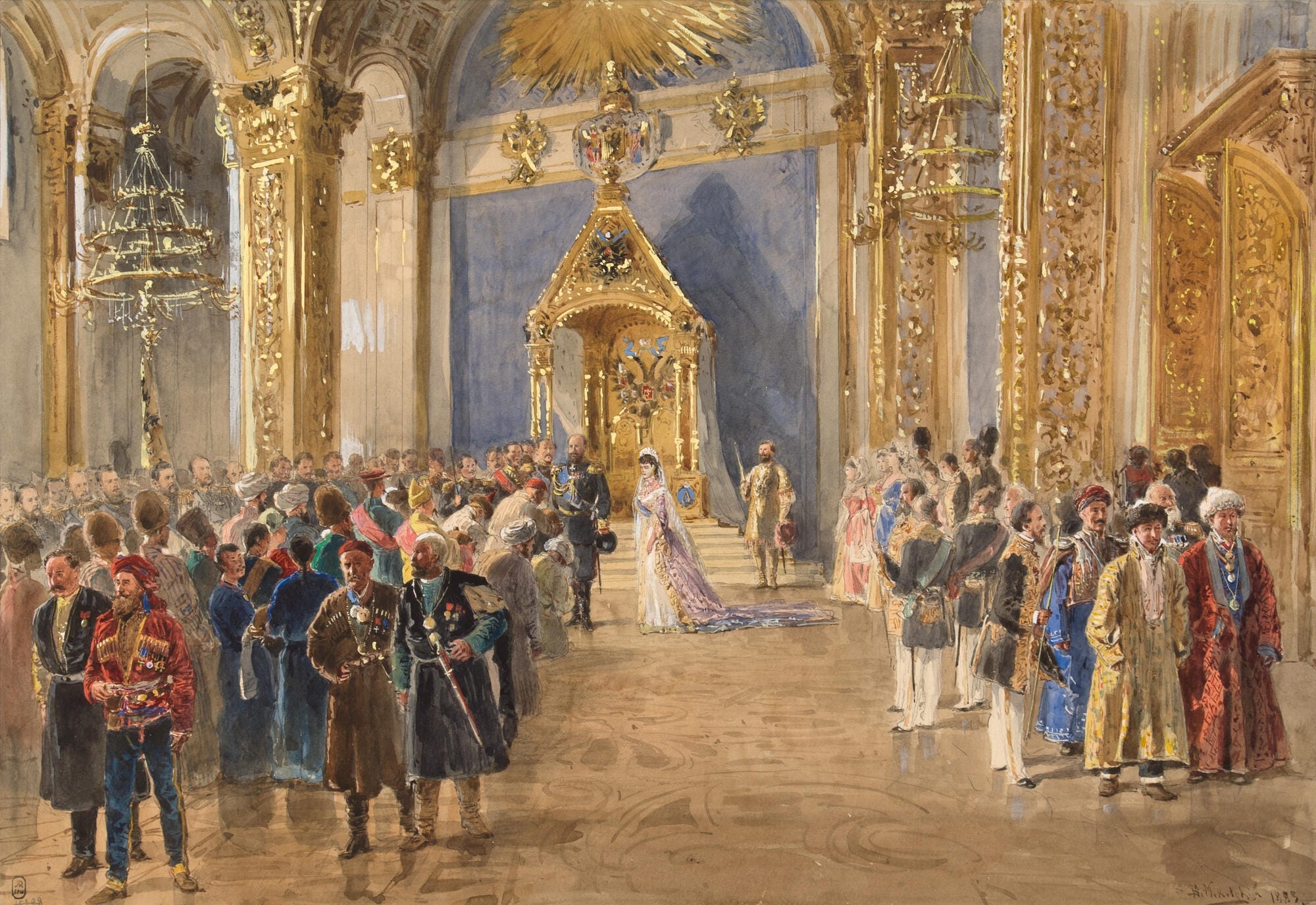
When it comes to the attitudes of minority groups inside Russia, the reality is considerably complicated by a dominant culture that champions the “rights of the strong,” where an all-encompassing “imperial virus” extends to all citizens—including members of Indigenous nations that have suffered greatly under Russian colonialism.
A handful of ethnic Indigenous officials in high places did much to help facilitate the full-scale invasion of Ukraine in 2022, including then-Defense Minister Sergei Shoigu (an ethnic Tuvan) and Valery Petrov, the chief military prosecutor (an ethnic Buryat). Central Bank Governor Elvira Nabiullina is an ethnic Tatar who’s been important for helping sustain the war effort.
Indigenous people from impoverished regions are also among those most actively recruited to fight in the war. Some 5,447 men from Buryatia have died in the conflict as of November 2026, based on publicly available data (the actual figure is almost certainly higher). In Buryatia’s capital Ulan-Ude, space for burial plots is running out.
A man from Buryatia is approximately 75 times more likely to die in the war than a resident of Moscow, researchers say. Other non-Russian nationalities are similarly over-represented among Russia’s troops in Ukraine and those returning in coffins.
Signing up presents an opportunity to escape the region’s widespread poverty. Military recruiters also exploit feelings of grievance and inferiority by offering conscripts a chance to prove their value defending “Great Russia.”
On returning from Ukraine, veterans are given preference for employment, along with political and educational opportunities in their home republics. Still, many end up going to war under duress, either forcibly mobilized or coerced into signing a contract with the Defense Ministry.
The many overlapping or conflicting loyalties and identities mean any precipitous collapse of Russia would likely become a bloody, destructive affair that would split families apart.
The colonial legacy in Buryatia
During the Soviet era, Buryat lands were divided into five parts to ensure Buryats would remain ethnic minorities in each. Today, the Buryat people live in three regions: the Irkutsk Oblast, Republic of Buryatia and Zabaikalsky Krai.
In Buryatia, the ethnic breakdown is around 30 percent Buryat and 70 percent Russian. In Irkutsk, where the Buryat population is significantly smaller (just over 3 percent), Buryats regularly face racial discrimination.
Ethnic tensions are fanned by the fact that many Russians don’t know their country’s history and never had to reckon with its colonial past. Most ethnic Russians in Irkutsk region don’t realize they’re living on the historical lands of the Buryat people. In Russian historiography, the forced annexation of Siberia is typically referred to as “development” or “voluntary incorporation.”
According to the official narrative, Slavic Russians brought civilization to “backward” peoples. At the same time, it’s important to understand that modern-day Russians, Ukrainians and others living in Buryatia aren’t necessarily the descendants of colonizers. Many of their ancestors were forcibly exiled to Siberia under the tsars and the Soviets.
Imagine a referendum on Buryatia’s independence. What’s the likelihood members of the local ethnic Russian population would support such a move? And if they were denied a vote—as radical Buryat nationalists propose—how would that square with international law? How many countries would even recognize a precipitous breakup of Russia?
Romantics in Buryatia sometimes cast wistful glances toward Mongolia, with which the Buryats share historical and cultural ties. The USSR even had a Buryat-Mongolian republic in the 1920s and ’30s.
Today, however, Mongolia—sandwiched between dictatorships in Russia and China—is primarily focused on preserving its independence rather than absorbing more people, while striving to not antagonize the Kremlin.
There’s also a significant linguistic challenge: Although Buryats and Mongolians share a common language, many Buryats no longer know it after a century of Russification and now prefer to speak Russian. In the West, young Mongolians and Buryats communicate in English.
‘Sometimes blood gets spilled’
Although Moscow constantly struggles to suppress them, provincial border disputes persist across the country. The territorial conflict between the North Caucasus republics North Ossetia and Ingushetia may be the most visible.
The entire mountainous North Caucasus is characterized by an unstable combination of high population density and scarcity of land for habitation and agriculture. Historically, Moscow has considered Orthodox Christian Ossetia, surrounded by Muslim neighbors, its outpost in the Caucasus. That helps explain the large number of military units stationed in the republic (like Buryatia, also a border region).
In autumn 1992, a year after the Soviet collapse, armed conflict broke out between Ossetians (backed by the army and police) and neighboring Ingush stemming from a long-standing dispute over North Ossetia’s Prigorodny District. Although casualty figures vary, most estimates say over 400 Ingush died (with 208 missing) along with more than 100 Ossetians (with 37 missing). The clashes were halted by the deployment of federal troops.
The Soviet dictator Josef Stalin’s nationalities policy was a main cause. Operation Chechevitsa, the forcible transfer of almost 500,000 Chechens and Ingush mainly to Kazakhstan and Kyrgyzstan in Central Asia, began on February 23, 1944. Falsely accused of collaborating with Nazi Germany, at least a quarter perished during the journey and 13 years of exile. In 2004, the European Parliament recognized the deportation as genocide.
Following the deportation, the Chechen-Ingush Republic was abolished and its Prigorodny District transferred to the North Ossetian Autonomous Soviet Socialist Republic. It remains part of North Ossetia today.
The immediate causes of the 1992 conflict have yet to be resolved, and tension between the Ossetians and Ingush runs high to this day. The Kremlin may be reluctant to resolve the issue through a border revision for fear of setting a precedent that could destabilize other parts of Russia.
Few proponents of Russia’s immediate breakup can say what should be done about the Prigorodny District and similar disputes. When I asked a prominent Putin critic who advocates the country’s disintegration, he casually replied, “Sometimes blood gets spilled.”
Artificially separated
Another two North Caucasus republics, Kabardino-Balkaria and Karachay-Cherkessia, were also established during the early Soviet years, when Vladimir Lenin’s new Bolshevik regime sought to delimit principalities and other territories previously ruled by the old Russian empire into new states under national lines that could be more easily controlled.
Like the Chechens and Ingush, the Kabardians and Circassians (or Cherkess) are kindred peoples, as are the Balkars and Karachays. The Kremlin artificially separated them in order to suppress their national identities.
As a result, conflicts continue flaring up to this day within Kabardino-Balkaria and Karachay-Cherkessia. As recently as 2018, unrest broke out in Kabardino-Balkaria in connection with the anniversary of the 1708 Battle of Kanzhal, which remains a subject of interethnic dispute. It began when Kabardians marking the 310th anniversary of their victory set out to ascend Mount Kanzhal on horseback. Residents of a Balkar village called Kendelen blocked their path. Police intervened, using force and tear gas.
Kremlin propaganda
For centuries, the specter of violent uprising has informed the collective psyche in Russia, reinforcing belief in a strong ruler. After the 1917 Bolshevik Revolution ushered in 70 years of communism followed by a decade of chaotic reform and economic crisis, people still tend to fear drastic change. In Buryatia, most want to see evolutionary progress toward improved living standards, democratic institutions, independent courts, cultural autonomy and infrastructure investment.
At the same time, discussions abroad about Russia’s potential breakup and decolonization—sometimes hosted by Western organizations—have bolstered a key longtime argument of Putin’s propaganda machine: that the West is seeking to dismantle Russia to gain control of its natural resources. Translating “decolonization” into “disintegration” or “destruction” has been easy for the Kremlin, encouraging the vast majority of Russian citizens to look to the Kremlin to prevent chaos.
Unfortunately, radical separatists from various Russian republics call themselves “decolonial activists;” they tend to be the most vocal in expressing their views, making it difficult for other perspectives to get a fair hearing.
The Kremlin is also working to marginalize various ethnic movements by infiltrating them. In one recent example, a resident of New York named Nomma Zarubina who took part in conferences posing as a radical advocate of an independent “United States of Siberia” turned out to be an agent of Putin’s Federal Security Service. She’s currently serving a 14-month prison sentence in the United States.
But the Kremlin doesn’t need to go to such lengths. A speculative map of states that could theoretically emerge from present-day Russia prepared for the Free Nations of Post-Russia Forum in Prague in 2022 was a veritable gift, sparing Moscow the need to fabricate stories about the West’s supposed machinations of dominating Russia.
“The participants divided the country into 34 states that, according to their vision, are to emerge following the disappearance of Russia,” the pro-Putin Chechen leader Ramzan Kadyrov said at the time. “I have told my followers hundreds of times about the plans of the West and the US to dismantle Russia.”
Such rhetoric helps lump together radical separatists with proponents of re-federalization seeking a peaceful, negotiated rebalancing of the relationship between Moscow and the regions.
Searching for new political horizons
As I’ve argued, colonized peoples inside Russia aren’t necessarily free of imperial resentments and mentalities. That’s why it’s crucial to engage with residents of the regions—to understand their lives, take their aspirations into consideration and foster education.
That’s precisely the work of the Angry Chuvashia (Serditaya Chuvashia) project in the Republic of Chuvashia, where activists opposed to the Putin regime have created the region’s most popular political Telegram channel, with 122,000 subscribers.
Likewise, my own organization, the Free Buryatia Foundation, advocates a looser federation. It’s become one of the most broadly supported pro-democratic groups in Buryatia, where organizations like ours also work to enable residents not to participate in the aggression against Ukraine. We’ve helped local soldiers terminate their contracts with the Defense Ministry, organized the evacuation of men to Mongolia during the country’s 2022 mobilization and publicly stood against conscription, for which we’ve been sanctioned by the Kremlin.
Simply discussing federalism and decentralization is prohibited. Any proposal aimed at addressing the Kremlin’s administrative dominance over the regions carries the threat of criminal prosecution. But inadvertently or not, Putin is planting a time bomb under the country within its current borders: When moderates are silenced, radicals step in.
Among the Russian exile community, views are currently defined by two extremes: “decolonialists” who advocate for Russia’s immediate breakup, and conservatives convinced the country must preserve its post-Communist 1991 borders at any cost.
Wouldn’t the rights and interests of all nationalities ultimately be better protected by a future robust, balanced federation than a contentious and possibly violent fragmentation? Ultimately, Russia’s constitutional structure must be determined through legitimate democratic processes—neither imposed by Moscow nor designed in the West.
To embark on a path toward true federalism, Russia’s people and leaders must come to terms with the colonial past and abandon their presidential system of government. There’s no clear path for the difficult process, and if future leaders can’t make life attractive enough, citizens must be able to exercise their right to peaceful self-determination and choose a different path using legal, internationally recognized mechanisms to secede. If Russia does eventually split, it must be done in a well-considered way that avoids bloodshed.
I well understand the skepticism that Russia can become a real federation with power sensibly divided between Moscow and the regions. There’s no guarantee even a remade democracy wouldn’t revert to an imperialist path; Russia’s past provides little reason to believe otherwise, reinforced by the attitudes of even many Russian pro-democracy figures in exile, who tend to hold deeply Moscow-centric views and look down on the provinces.
Still, one way or another, Russian imperialism will come to an end—just like every other empire before it.
Aleksandra Garmazhapova is an investigative journalist and the founder and president of the Free Buryatia Foundation. In November 2023, a Russian court sentenced her in absentia to seven years in prison for allegedly disseminating “fake news” about Russia’s aggression in Ukraine. In March 2026, she was sentenced in absentia to an additional 10 months in prison for failing to comply with “foreign agent” regulations.