


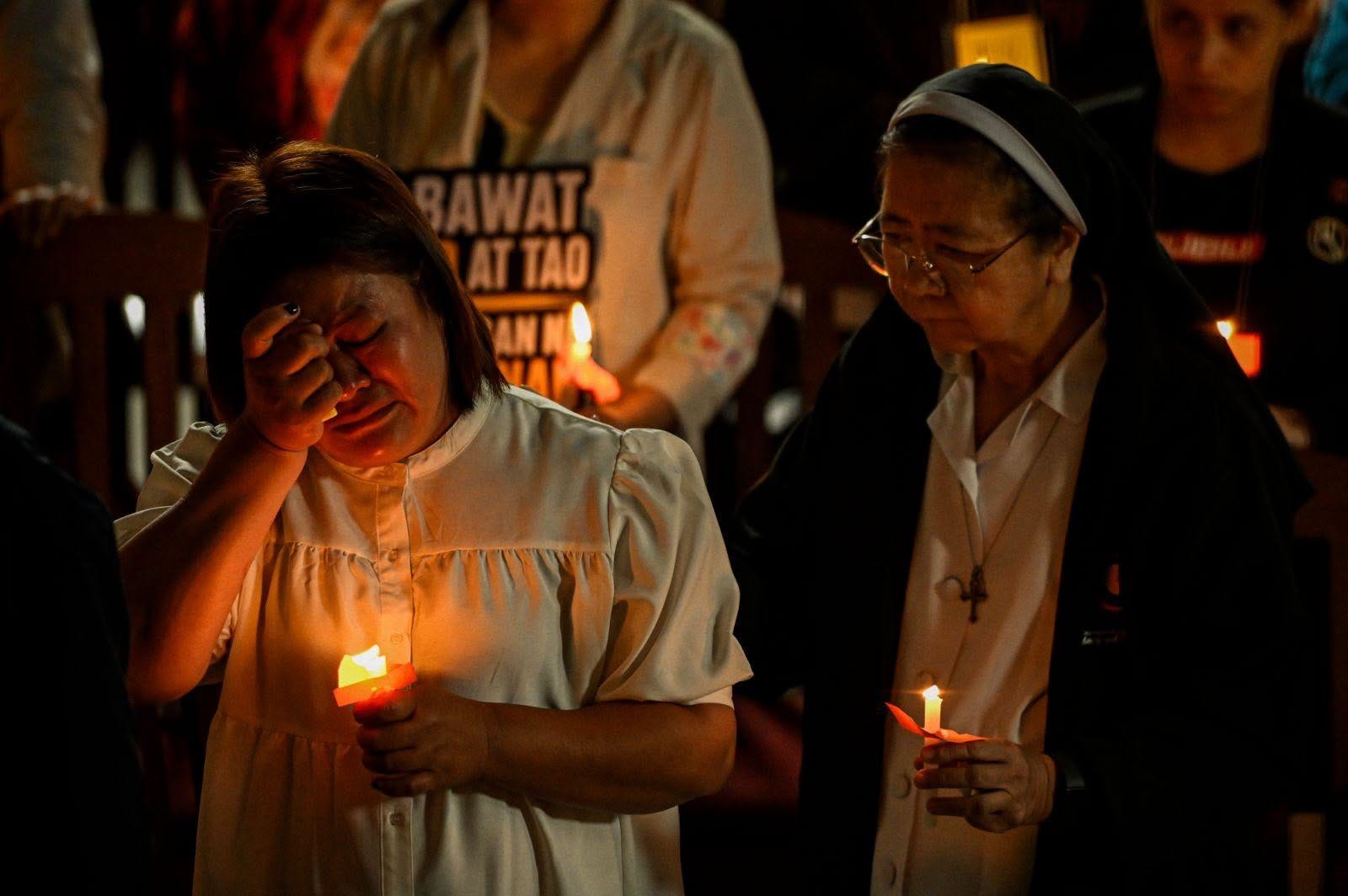
MANILA — Luzviminda Siapo was working overseas in Kuwait in 2017 when her son Raymart was killed in their neighborhood of Navotas City, part of this sprawling capital. He was a victim of the country’s “war on drugs” that resulted in thousands of deaths in urban poor communities across the Philippines.
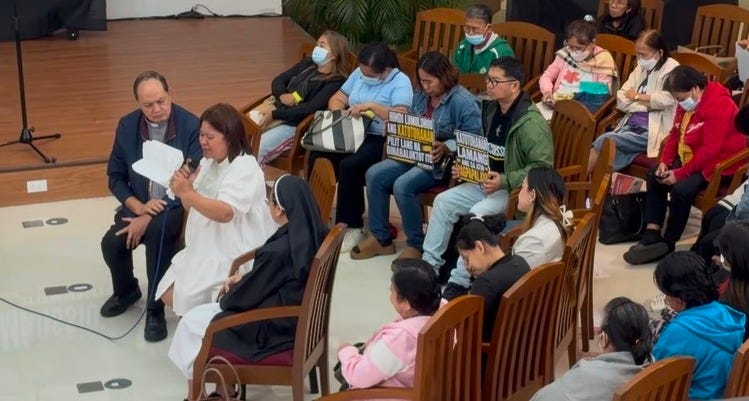
Plain-faced and dressed in a simple white shift dress, she was describing Raymart’s murder in testimony before the Philippines Truth and Reconciliation Commission at the Pope Pius Center, a religious facility in Manila. Flanked by Cardinal Pablo David and a nun named Sister May Cano, she sat in the center of the hall’s wide atrium, with sunshine from a large skylight illuminating her and a crowd of widows and mothers of more victims sitting behind her.
Affectionately called Nanay Luz (Mother Luz) by the commission’s panel members, she was sometimes overcome by emotion and would sob through her words. But her voice remained clear and unrelenting over two hours. Behind her, Raymart’s younger siblings, Isabela and Cyrus, alternately cried and excused themselves from the room as their mother recounted the pain of hearing about Raymart’s death.
It was August 14 and Siapo’s testimony marked the first of many scheduled Truth and Reconciliation Commission “truth-telling” sessions that would present the stories of families of extrajudicial killing victims, corroborated with forensic and other documentary evidence, as part of the commission’s goal to construct a comprehensive record of the war on drugs.
Truth commissions have been organized by both government and non-governmental groups in a number of post-conflict and post-colonial societies, including South Africa, Canada, Uganda, Argentina, Norway, Chile, Nepal and Ireland. They’ve operated with varying degrees of success; South Africa’s post-apartheid commission and Argentina’s post-junta commission (which eventually led to prosecution of documented war crimes) were prime examples that contributed to repairing and reckoning in their societies.
Multiple attempts have been made in the Philippines to form state-sanctioned truth commissions that would address past abuses, one struck down by the Supreme Court as unconstitutional (Biraogo v. Truth Commission, 2010). But this latest iteration would be the first non-government attempt at addressing the crimes committed during the administration of former President Rodrigo Duterte and his war on drugs from 2016 to 2022.
With the historical context within the Philippines, and global patterns of post-conflict truth commissions in regions like Latin America in mind, I wanted to discover just how the commission would seek to achieve its highly ambitious goal of publicly presenting hundreds of testimonies of both victims and perpetrators over the next two years—a major challenge given the fact that many victims still live in fear for their lives while the perpetrators, many of them active duty police, roam free. The outcome is far from certain.
Formed in May 2026, the Truth and Reconciliation Commission is primarily organized by the Catholic Church, with Cardinal Pablo David—one of the Church’s most outspoken critics of Duterte’s drug war—presiding. Other organizing members include the commission’s chair, Raul Pangalangan, a former judge of the International Criminal Court, and Raquel Fortun, one of only two forensic pathologists in all the Philippines, a doctor who’s autopsied and analyzed the bodies of numerous victims of the war on drugs.
In preparation for the first hearing with Nanay Luz, Fortun, Pangalangan and other commissioners exhumed Raymart’s remains from his burial site in a private cemetery for examination. The day before the exhumation, I met Pangalangan at the University of the Philippines, entering his office through a large wooden door atop which “Dean Raul Pangalangan” is still labeled in gold lettering, a relic of his six-year tenure as the head of the law school.
Years before becoming an ICC judge and a law school dean, Pangalangan was a student activist at the university, the main seat of progressivism in the Philippines. “I was raised in the student-run anti-Marcos movement,” he told me of the period of martial law under President Ferdinand Marcos, Sr. “At that time, if you held a public rally, you would surely be attacked by the riot police. There was no way there would be a peaceful dispersal.”
As a law student, Pangalangan became interested in international justice, a niche field at a time when the subject, along with human rights, wasn’t taken seriously by the local legal community. “It was seen as all political, all about politics between states and an open-ended debate about ideology,” he said. But Pangalangan found it useful and relevant to address the unrest in his own country when it was recovering from dictatorship under a new constitution in 1987.
Now, as a former judge of an international tribunal, Pangalangan brings a legal perspective to the commission’s implementation, even as it works outside the government and any formal judicial proceedings. It is important that Pangalangan has been able to help contour the boundaries of what the commission might attempt or accomplish with reference to the principles that bind the ICC at its seat in The Hague, where Duterte is now on trial.
The ICC is ruled by the principle of complementarity, which limits the court’s jurisdiction by dictating that it can only prosecute crimes not already being sufficiently investigated and prosecuted by national governments. If the current commission were to be organized by the Philippine government rather than civil society, it would call into question the propriety and legality of the parallel ICC trial against Duterte. Furthermore, if the commission had any “teeth” or prosecutorial powers, it would give Duterte substantial grounds to have his case dismissed under the rule of ne bis in idem, or double jeopardy (the rule against prosecuting a defendant for the same crime twice).
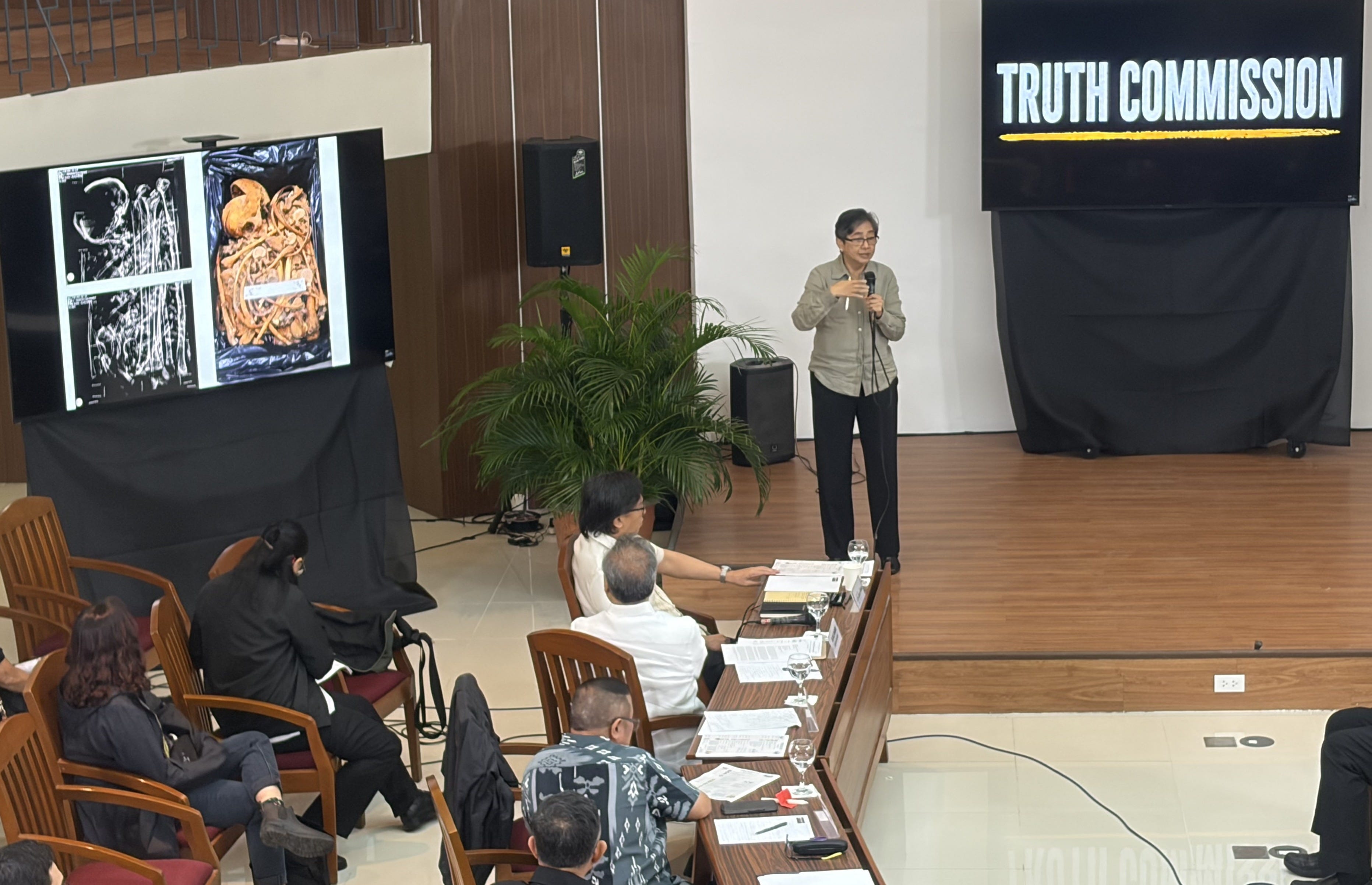
But the lack of enforcement power has presented its own challenges for justifying and legitimizing the commission’s objectives as well as getting public support. “As Filipinos, we’re a very practical people,” Pangalangan said. “So people ask, ‘Can the commission punish anyone? Can you give reparations to the victims?’” The answer is no, and the commission’s focus on giving victims a public platform for sharing their stories is also not always a satisfying alternative. “People would say ‘Malayo sa bituka’ (It’s far from your intestines),” Pangalangan said. That’s to say the harm to victims since the drug war isn’t such a big deal, so why all the fuss around a public hearing?
Crucially, the formal practice of truth-telling—the opportunity to fully recount the murders of relatives and the ongoing, painful aftermath—is central to the commission and also informed by Pangalangan’s experiences as an ICC judge. Under the Rome Statute, which governs the court, victim participation in the legal proceedings is an important part of the court’s mission and vision of justice, along with providing reparations for victims.
The Rome Statute outlines that victims have an explicit legal right to share their “views and concerns” through their own lawyers in the proceedings and, when defendants are found guilty, receive compensation and rehabilitation. “At the ICC, victims take an active part in proceedings, they take ownership of it,” Pangalangan said. “They are not passive recipients of justice passed down by the court.” The commission’s victim-centric framework is meant to emulate that.
Over the course of the August 14 hearing, I witnessed the impact of that approach. As Nanay Luz told her story, those in the semicircle of seats behind her nodded and murmured: families, mothers, children and old women, all victims who experienced their own losses during the war on drugs. When she cried, they wiped their own tears or consoled her two children.
The hours of Nanay Luz’s truth-telling were both deeply personal and a collective experience. The others actively participated through their presence and the solidarity it built with Luz, their community and any victims watching the public broadcast who might be emboldened to come forward and participate in future sessions.
“This country is so divided,” Pangalangan said. “Even as accounts of drug war killings have made the news, many look the other way. It’s time we confront it.” With enough engagement, he told me, the commission could help restore a sense of nationhood and a “shared moral universe” for the country healing from the wounds of a decade of violence.
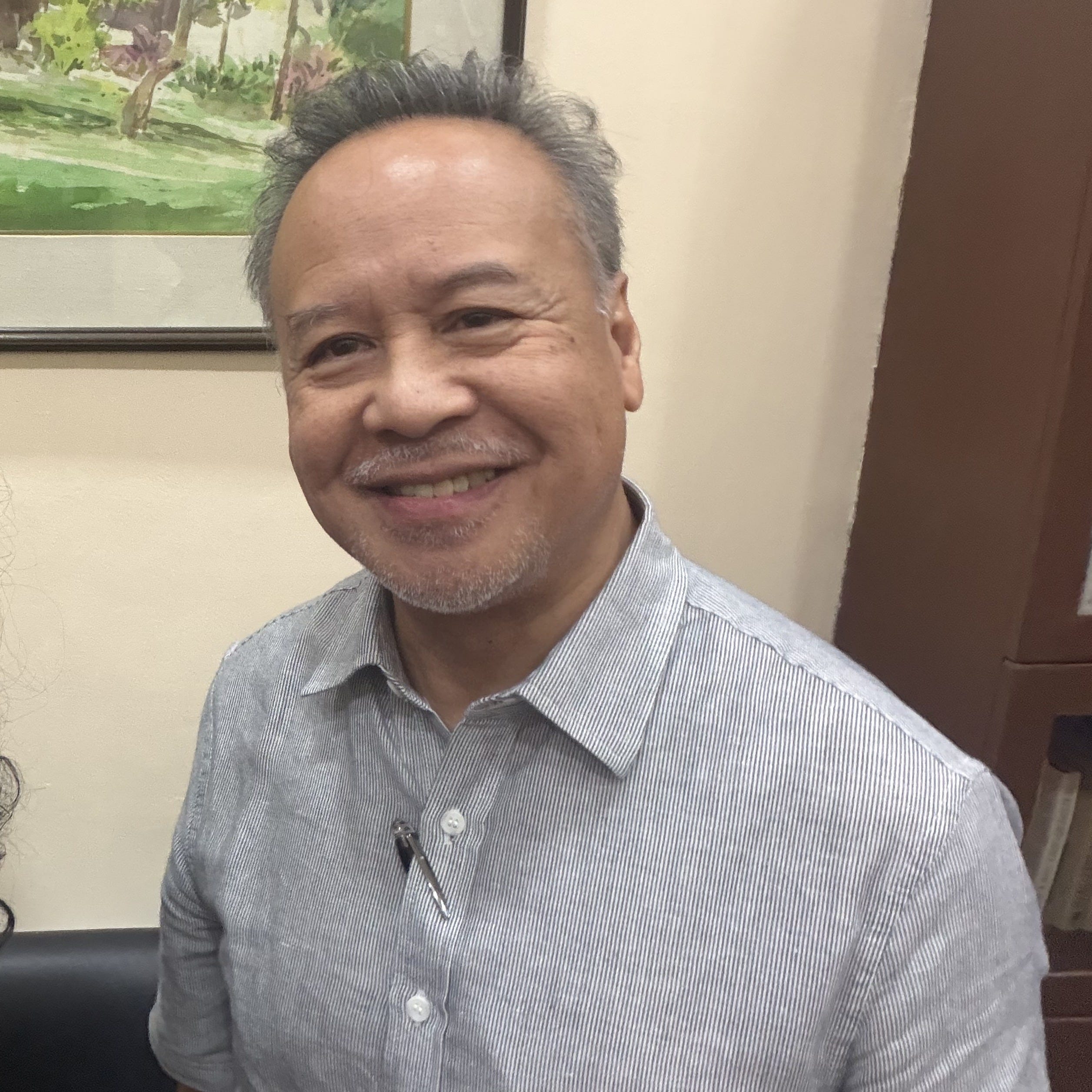
“I forewent my retirement for this,” Carlos Conde said jokingly as we discussed the commission over Zoom one rainy morning. A veteran journalist and former Manila correspondent for The New York Times, he has investigated extrajudicial killings and human rights violations in the Philippines for decades.
Now he oversees the commission’s documentation and fact-finding work, drawing on his 14-year background at Human Rights Watch reporting on the drug war, its impact on children and the patterns of early extrajudicial killings in Davao City, where Duterte was mayor, on the island of Mindanao. The crackdown later served as the notorious “Davao model” Duterte eventually expanded nationwide.
“I joined the commission because it felt like a good complement to what the ICC is doing,” Conde told me. The court is also limited by its temporal jurisdiction (it can only prosecute crimes committed from November 2011 to March 2019) and by the number of victims it can realistically engage. “The ICC trial alone will not be enough to address the need of thousands of victims to speak out and share their stories,” he said. Conde, too, hopes the commission will ultimately help legitimize the ICC’s proceedings in the eyes of the wider Filipino public.
The commission has ambitious plans to complete the truth-telling sessions within two years of its launch in May 2026. “We don’t want to be saddled with ‘mission creep,’” Conde said. Many of the victims have been waiting for some kind of resolution or closure since 2016. The expedited timeline has another reason: the likelihood that Sara Duterte, the current vice president and daughter of the imprisoned president, will run for and win the next presidential election in 2028. “We’re expecting a vengeful presidency,” Conde said.
The public truth-telling sessions also serve analytical purposes. Conde plans to coordinate the data collected from the thousands of cases and the hundreds of testimonies in order to address the lack of a single standardized number of victims extrajudicially killed during Duterte’s drug war. The hope is that the data will also help the ICC or Philippine agencies provide reparations for those who come forward.
The commissioners have examined the successes and failures of previous truth and reconciliation processes in Guatemala, South Africa and other countries, hoping to glean lessons. “It’s fueled our conscious effort to manage expectations regarding what the Philippine commission can accomplish,” Conde said. Although limited in some ways as a non-governmental body, the commission is also unrestricted by statute or legal procedure, which helps build trust and legitimacy and encourages victims to share their accounts. “For this population to be able to speak publicly about the violence they faced from police and vigilantes, it’s unprecedented,” Conde told me. “So we consider it a success by our own standards.”
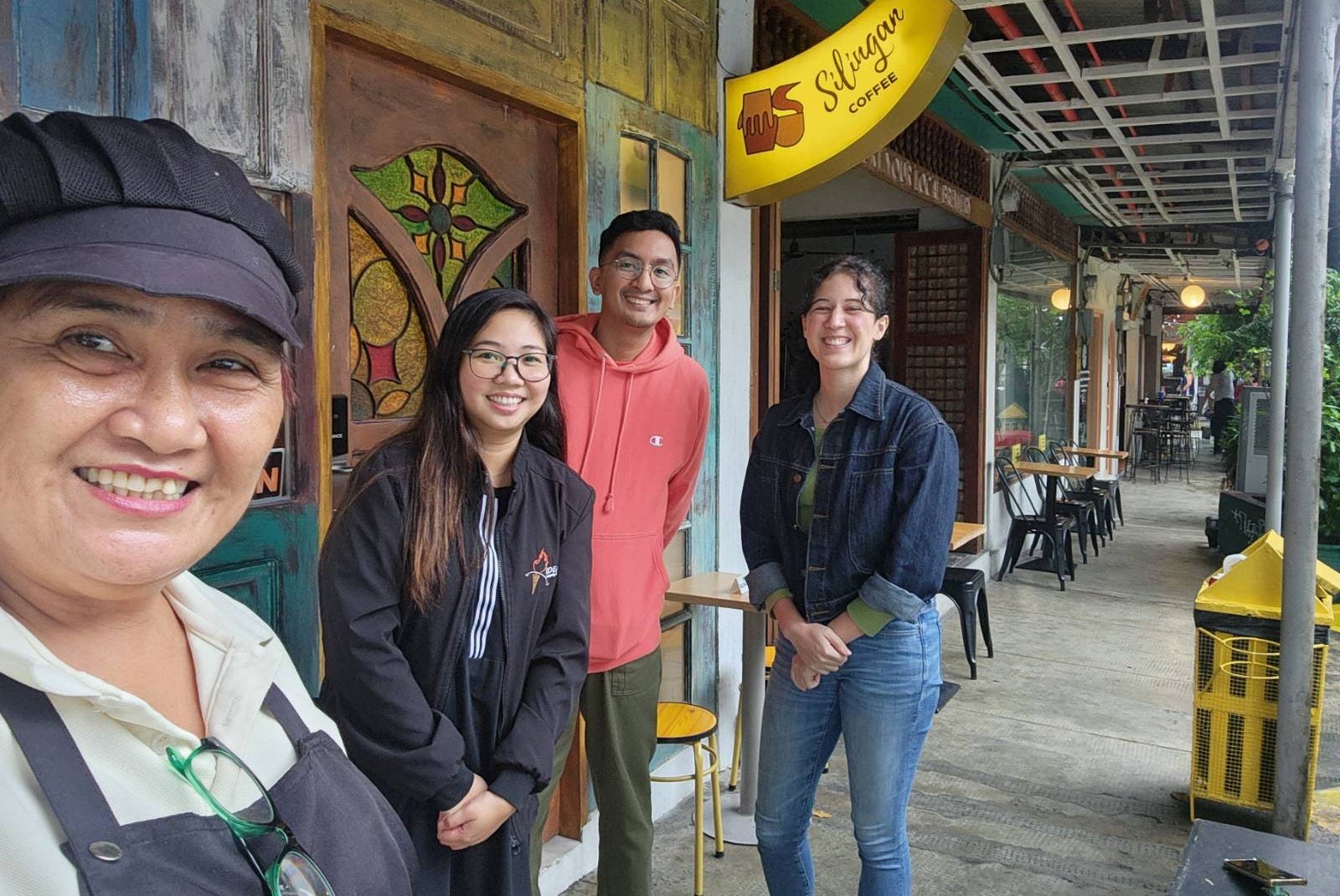
Civil society groups also have high hopes the commission will deliver on many of its promises and disrupt over a decade of impunity and stigmatization. Some are providing documented cases and consulting with the commissioners to help ensure the process remains victim-centered. I met Ansheline Bacudio, a lawyer working for one of the groups—a legal services organization named IDEALS—in Quezon City in August, when floodwaters covering Manila’s roads had receded after Typhoon Maymay. We stopped for drinks at Silingan Coffee, a cafe run by a collective of people affected by extrajudicial killings that showcases art and writing protesting the drug war and supporting the ICC investigation.
IDEALS has been working on the frontlines of the drug war, providing legal aid to victims’ families and documenting over 900 cases since 2016. Bacudio and other lawyers often responded to reports of extrajudicial killings within hours in order to secure documents, evidence and witness testimonies. Previously, she explained, IDEALS had partnered with the Philippines Commission on Human Rights, an official body, in order to provide documented cases, clients and data for further government action. None was taken.
Now working with a civil society-led commission, Bacudio is more optimistic, especially about the truth-telling aspect and its potential to humanize the families of extrajudicial killing victims. “It’s not really about the drug war, there was no drug war itself,” she told me. “It was a campaign against the most poor, and those people—normal human people—are at the heart of it.” Now, she added, “there is no justice without truth, just as there is no justice without accountability.”
Part of the commission’s work is to analyze the systematic nature of the violence, identifying patterns and commonalities in the killings. Bacudio hopes that evidence will prompt the Justice Department to investigate and prosecute mid- and low-level perpetrators, especially among the ranks of the Philippine National Police.
But there are concerns about exactly how a non-governmental body can guarantee the safety of victim participants in the public hearings. “When a witness testifies at the commission, listing names or identifying specific perpetrators, they could be subject to libel, cyber libel and other criminal charges,” Bacudio told me. “Not to mention retaliation by online troll armies watching the broadcasts.” Without protection that would come with direct government involvement, the commission will have to step carefully and mitigate the risks faced by victims who are vulnerable to legal challenges, harassment and retaliatory violence.
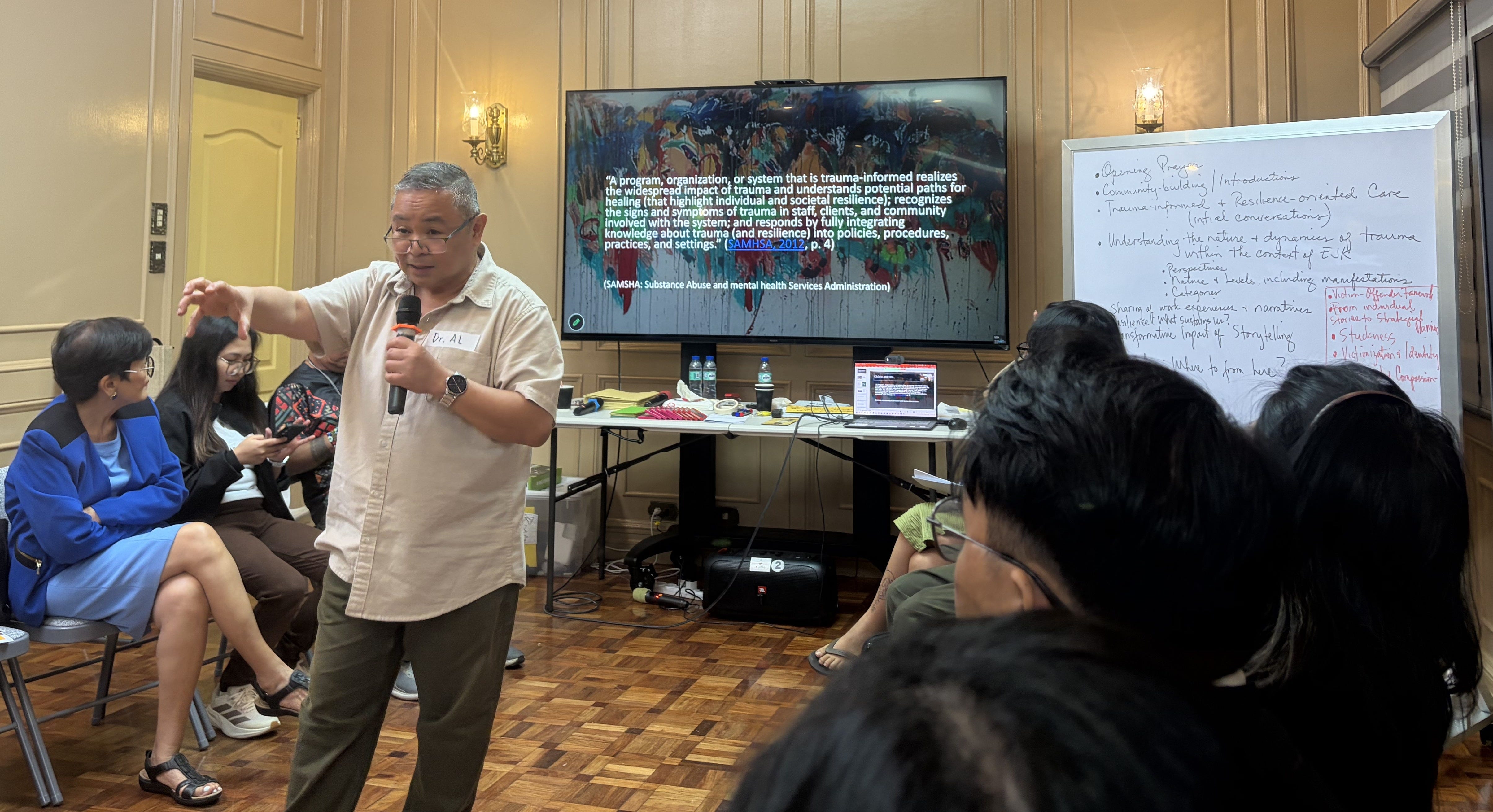
When he talks, Al Fuertes moves with his entire body, gesticulating and commanding the room with a resonant, preacher-like voice. He is one of the commissioners whom I first met at a workshop before the first truth-telling hearing. Starting at 8 a.m., the all-day event was aimed at helping civil society advocates engage victims of human rights violations with cultural and trauma-informed sensitivity. As I watched Fuertes lead the collaborative session, I eyed the canteen of coffee provided for the breakfast, wondering how many cups it would take me, a night owl, to match his natural exuberance.
A professor at George Mason University in Virginia, Fuertes specializes in conflict analysis, resolution and peacebuilding, working with post-conflict groups around the world to support healing from the trauma inflicted by military and civil conflicts. For almost 20 years, he has worked with former perpetrators and survivors of the Rwandan genocide as well as Karen refugee communities along the Thailand-Myanmar border.
“Any attempt to establish a truth and reconciliation commission is reflective of the culture of the society or people involved,” Fuertes told me. “There must first be an acknowledgement of a harm or disruption, they have to confess, as a nation, that they have been fragmented by conflict.” Only then, he explained, can the pathway for collective healing open.
Trained as a theologian, Fuertes draws on the Philippines’ theology of struggle—similar but distinct from the popularized Latin American liberation theology—which posits that clergy should actively work with the public to resist colonialism and other forms of oppression. The explicitly anti-colonial lens guides Fuertes in integrating victim-centric practices into the commission’s hearings and procedures.
“Part of my approach to trauma healing focuses on helping victims of human rights violations become the authors and narrators of their stories, rather than have human rights advocates act as outside experts telling the victims about what happened to them,” he said. Otherwise the commission would become simply an exercise in extracting stories from victims for its own ends, he added.
The commission will also call on former members of law enforcement to testify. “While they may be perpetrators of the killings, and directly pulled the trigger, they also have their own stories to share,” Conde said.
The South African process, which facilitated face-to-face dialogue between state agents of apartheid and its victims, has provided a prime model. “If meeting the other, confronting the other, is part of the victims’ healing,” Fuertes said, “then the commission wants to facilitate that kind of restorative justice.” Meetings called “victim-offender conferencing” may also benefit the wider public by advancing understanding about why and how the drug war killings were perpetrated.
Whether such confrontations are appropriate will be decided case by case. Families of extrajudicial killing victims have expressed different ideas about what they view as appropriate reparations and “justice” in their consultations with the commission. “Healing is subjective,” Fuertes told me. “What is healing for you and your family might be different from another family of victims.”
When the commission was announced in May, the Philippine National Police said it would cooperate with the effort to publish a report about the testimonies and corroborating evidence, providing government documents and police reports. The National Police Commission, which supervises the force, has also expressed public support for the commission.
The presentation of “truth” coming from the perpetrators highlights the commission’s dual role of seeking both truth and reconciliation. Reconciliation is distinct from forgiveness, Fuertes emphasized. “There are prerequisites to reconciliation: confession, repentance, commitment to non-repetition and reparations,” he told me. The process requires that the other side be present and active in the process. “Reconciliation doesn’t require forgiveness,” Fuertes said. “But it may certainly help.”
In her August 14 testimony, Nanay Luz mentioned her need for forgiveness, moving on and putting faith in God that justice would be served, particularly now that Duterte was on trial. Her narrative was steeped in the sense that Raymart’s murder was a sort of betrayal: Both she and her son had voted for Duterte in the 2016 presidential campaign.
In 2017, a few months after Raymart was killed, Nanay Luz spoke to reporters about the grief and anger with which she was grappling while mourning her son. She described thoughts of avenging the murder by entering the police station with bombs strapped to her chest.
That was absent from her public testimony on August 14. Perhaps the omission was intentional. In the current political climate, especially under the anti-terrorism law Duterte enacted in 2020, publicly expressing that kind of sentiment about the state agents who killed her son could do more harm than good. Nevertheless, her raw, gripping earlier admission of anger and desire for revenge illustrates just how deeply the war on drugs has ruptured the social fabric—and just how hard the commission will have to work to achieve true societal reconciliation.
Toni Morrison’s Beloved fictionalizes the historical account of Margaret Garner, a formerly enslaved woman who, upon the imminent capture of her family by slave-hunters, kills her own daughter rather than consign her to return to a life of slavery. Many of Morrison’s works engage with the legacy of slavery in America to show how the generational trauma of experiencing enslavement and, later, structural racism is passed down like living memories through the suffering of the Black community.
To date, neither the US federal government nor any state has ever created anything like a truth commission to comprehensively document and confront the centuries-long impact of slavery and Jim Crow on the descendants of slaves.
After Beloved was published, an interviewer asked Morrison whether she thought it possible for someone to forgive her or himself even after doing “something absolutely terrible.”
Morrison responded:
Yes, it’s called grace… But you have to go through the fire first. You have to experience the full fall, and the complete self-loathing, in order to come around to something like the forgiving of oneself. It’s when you skip responsibility, when you use a substitute emotion like guilt—which is of no use to anyone—but if you feel the real thing which is shame, hatred, humiliation and self-loathing: that is the door. And if you get through that, then you can forgive yourself.
It’s uncomfortable to acknowledge one’s own failures, both for an individual person and an entire nation. Once revealed, truth can be devastating. There’s a risk that, under a precarious “peace,” opening decades-old wounds will inflame political tensions rather than heal them.
Several attempts at establishing truth commissions have already failed in the Philippines. To confront the war on drugs, as I’ve indicated, significant barriers must be overcome in order to realize the possibility of reconciling victims and perpetrators. Not least, those who testify must step into the spotlight and the historical record at great personal risk.
There are clear limitations to what civil society can accomplish to help achieve long-term change without state involvement and amid a background of widespread support for the former president. But in the absence of any serious alternative, the Philippine Truth and Reconciliation Commission will now attempt to go through the fire.
Editor’s note: This is a version of a dispatch for the Institute of Current World Affairs published here.
Sabrina Ochoa is a lawyer and Institute of Current World Affairs fellow specializing in international law and human rights. Based in the Philippines and The Hague, she is investigating the impact of the International Criminal Court’s prosecution of crimes against humanity committed during the Philippines’ “war on drugs,” with a focus on the victims of atrocity crimes and their communities.