


Reviewed in this article:
The Traveler: One Man’s Quest for Humanity from the South Seas to Revolutionary Paris
Knopf, June 2026
by Andrea Wulf
Picture the crew that circled the globe with Captain James Cook. A 17-year-old German boy with a face pitted by smallpox probably isn’t the image that springs to mind. But in the summer of 1772, that boy joined the British explorer’s second circumnavigation of the globe. The young George Forster served as assistant to his father, the expedition’s naturalist Johann Reinhold. He had no formal education and no obvious claim on the world’s attention. On the ship’s return three years later, however, he became one of Europe’s most renowned travelers and, before long, among its most celebrated minds.
The historian Andrea Wulf’s new book The Traveler is a spirited bid to restore Forster to his since-vanished fame. She’s well-suited to the task: Few writers make historical recovery feel so much like revelation. Her earlier books resurrected intellectual worlds modern readers tend to know only in fragments. Among them, Alexander von Humboldt’s ecological vision in The Invention of Nature and the unruly early movement of German Romanticism in Magnificent Rebels.
Forster belongs to both stories. He invited Humboldt—15 years his junior—to see nature not as a collection of separate parts but a single living web, and he helped prepare the ground for Romanticism’s distrust of cold reason. But Forster is difficult to pin down. Wulf introduces him as a naturalist, ethnographer, humanist, travel writer, translator, teacher, political journalist and revolutionary—as if less a single neglected intellectual than an entire shelf of them. Wulf seeks to make the various callings cohere in one man and leave the reader wondering how the world ever managed to forget him.
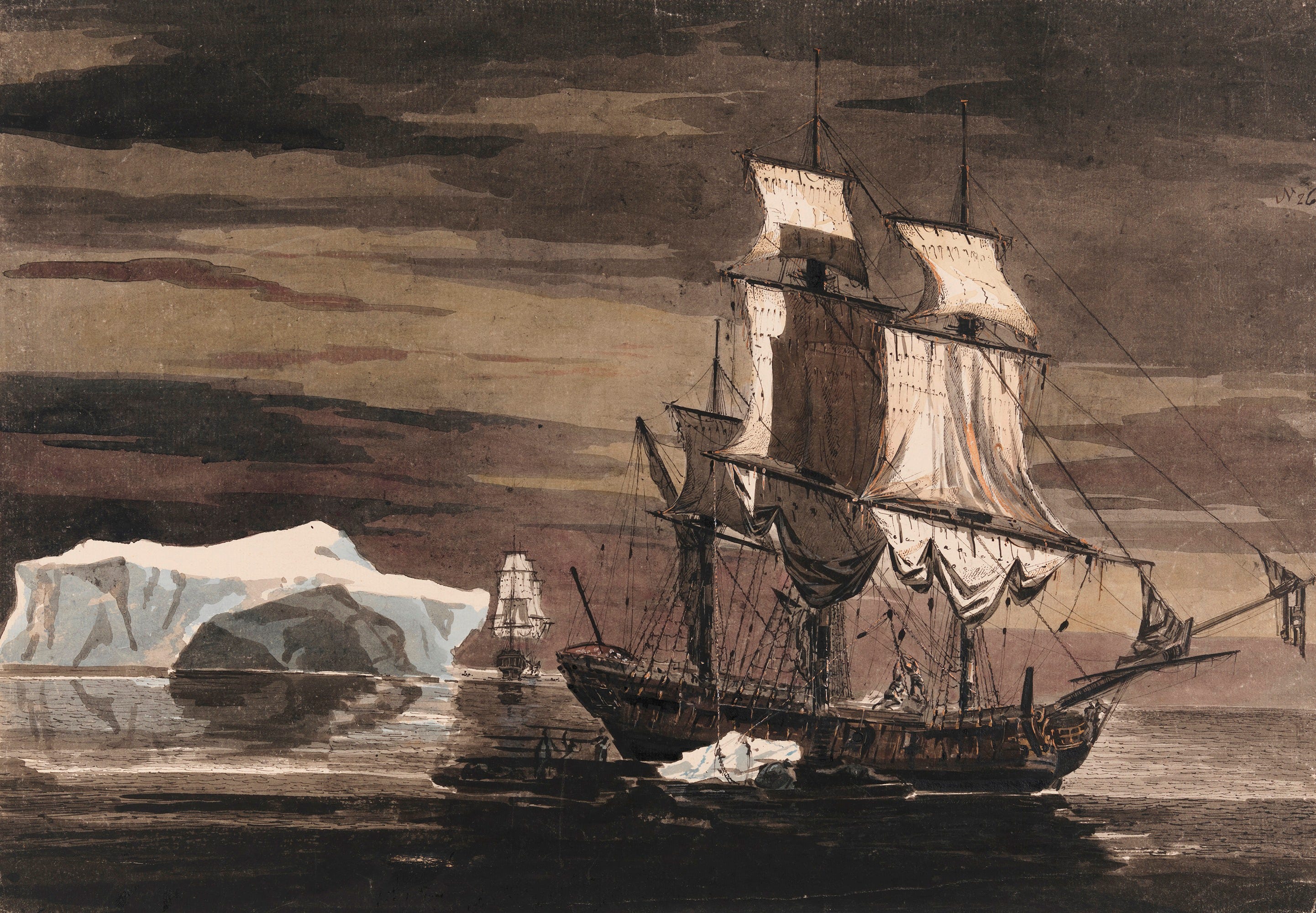
The voyage dominates the first of the book’s four parts, a central formative experience. Cook’s ship Resolution sailed from Antarctic ice to Pacific islands. Wulf traveled in Forster’s wake researching the book, giving her passages the patina of firsthand reporting. She paints vivid scenes: rigging stiffened by ice, blue glaciers rising above the mast, Easter Island’s statues suggesting a history the Europeans couldn’t read.
Forster sketched birds and plants, learned words from islanders, studied their clothing, music, communities. He witnessed social arrangements that made Europe’s hierarchies appear neither natural nor inevitable. The German’s moral journey was even more important, however. While Cook’s expedition carried instruments, specimen jars and imperial ambition, the boy noticed what the official language of discovery concealed. He saw sailors treat their hosts’ hospitality as a sign of submission and trade in ways that destabilized island communities. The people receiving the British, Forster believed, had every right to regard them as invaders.
In his book about the journey, A Voyage Round the World, published in 1777, he condemns brutality toward Indigenous people, invoking the “general rights of mankind”—a phrase whose breadth was startling in a Europe busy arranging humanity into racial ladders.
It’s tempting to make Forster seem a man from the future, and Wulf often succumbs. He opposed slavery, attacked empire, admired educated women and insisted that practical observation mattered more than inherited theory. When Immanuel Kant constructed racial categories from Königsberg, Forster answered with the authority of someone who had met the people under discussion. In Wulf’s take on Forster, his global perspective made European Enlightenment philosophy look provincial. But his achievement wasn’t in holding 21st-century opinions ahead of time, the author says. It was that as his experiences repeatedly unsettled him, he allowed himself to be changed.
Why was Forster able to escape prejudices that informed more famous thinkers? Wulf offers possibilities. His travels began early: At age 10, he accompanied his father across Russia and saw German settlers under corrupt tsarist rule along the Volga. That early sight of the gulf between a ruler’s promises and his subjects’ misery may have left him with a durable distrust of political power. His scant formal schooling may have spared him from intellectual conformity. He belonged to no nation and grew up with a domineering father. Perhaps that sharpened his sympathy for outsiders and the oppressed. Although such explanations are plausible, they describe a collection of influences rather than present a fully drawn portrait of character formation.
The weakness is easy to miss, however, because Wulf propels the book’s remaining three parts with the same headlong energy as in her account of Cook’s voyage. Forster’s Voyage made his name across Europe and honors followed—a fellowship with the Royal Society in London in 1777, a chair in natural history in Kassel back in Germany, and another at the university in Vilnius on the far edge of the Polish-Lithuanian world. But the man who had crossed the Pacific chafed in lecture halls. He moved from post to post until, in 1788, he came to rest as a librarian in the German town of Mainz. Then the French Revolution arrived at his door.
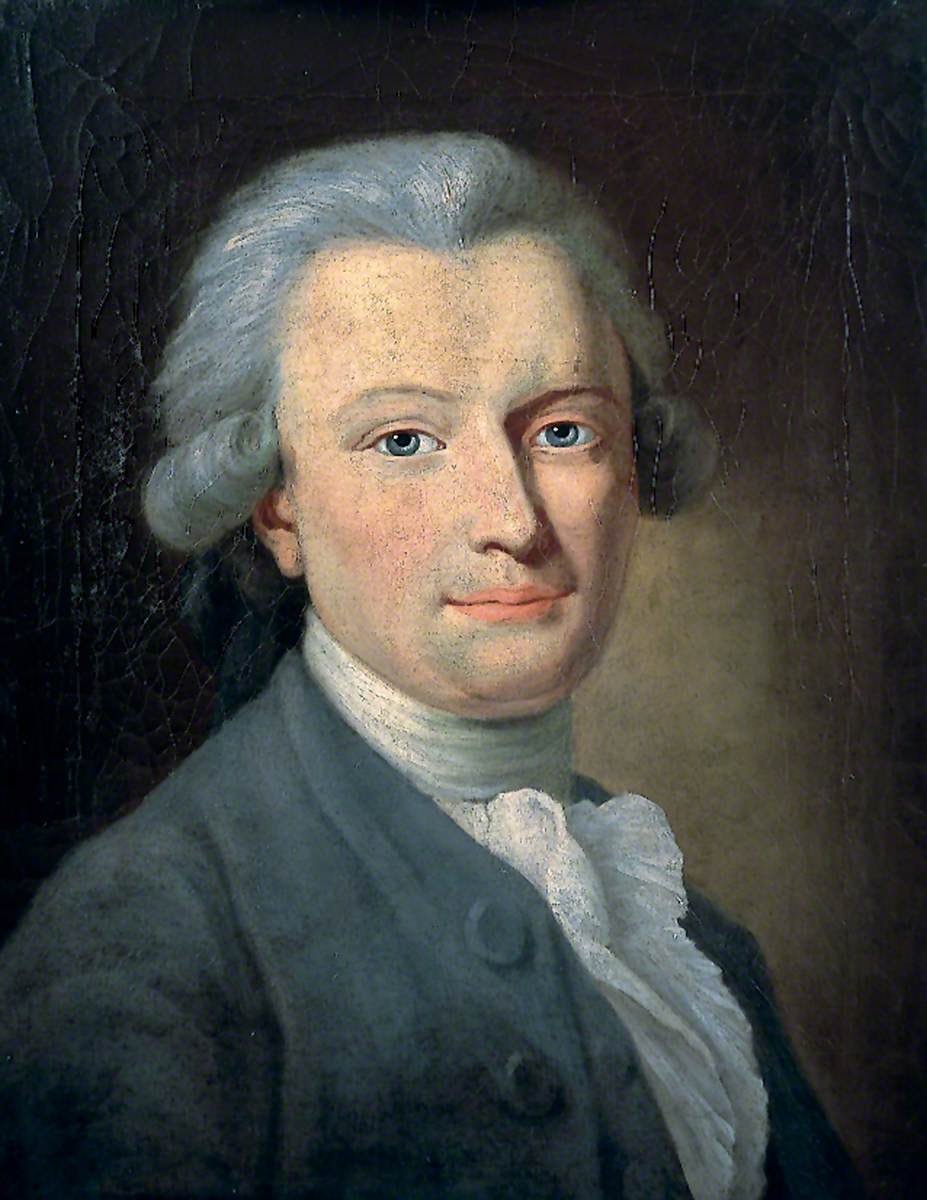
When French troops took Mainz in 1792, Forster gave himself to it entirely, becoming the vice president of the provisional French government. In that role, he helped found the Republic of Mainz, the first democratic state on German soil. Energized by the events, he traveled as a delegate to Paris—and deeper into the Revolution.
In the political upheaval, the German saw a new world in which no king stood above the law and inherited privilege gave way to universal freedom. Even as the Revolution turned on its own and thousands were sent to the guillotine once reserved for aristocrats, Forster’s faith in the cause did not waver. Wulf presents his loyalty during Robespierre’s Reign of Terror as the tragic excess of an otherwise noble constancy. Protagonist and biographer both avert their eyes from the possibility that steadfastness may have been complicity by another name.
Ultimately, Wulf misses a chance to probe Forster’s character more deeply. The seeming contradiction between his reverence for human life and readiness to condone killing in the name of liberty makes him complex and compelling. Her biography would have been stronger had it examined the fracture more deeply.
After Forster died in Paris in January 1794, not yet 40, his reputation faded in the English-speaking world. The Traveler makes a case that the omission has impoverished our picture of the Enlightenment. Forster understood that travel could be conquest but also correction: a way of discovering that the real world exceeds the theories about it. Although Wulf’s portrait occasionally veers into too much veneration, she’s recovered a figure whose main conviction speaks to the present, seeing difference not as a limit of our common humanity but evidence of its breadth.
Anna Gielas is a research associate at Oxford University’s Emerging Threats Group. She earned her PhD in the History of Science from the University of St. Andrews, has published more than a dozen peer-reviewed academic articles on special operations forces and the integration of emerging technologies into the armed forces, and held fellowships at Harvard University and the University of Cambridge.