


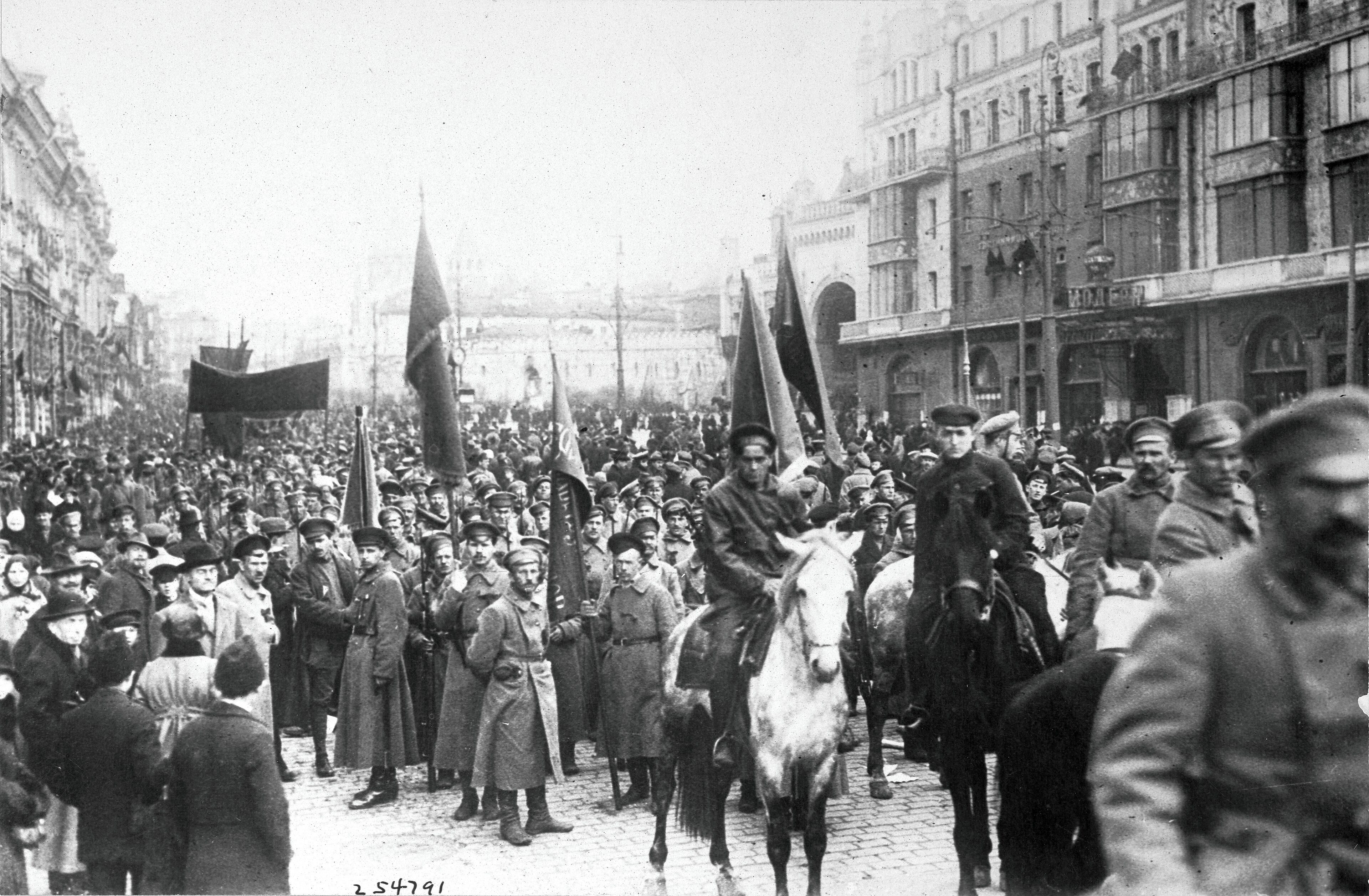
Editor’s introduction: A century ago, Russia and the rest of the neonatal Soviet Union were emerging from a decade of world war, revolution, civil war, foreign intervention and famine that left millions dead, and many more displaced and traumatized. After the October 1917 Bolshevik coup d’etat, the region was engulfed in violent conflict that pitted the Reds (Bolsheviks) against the Whites (a motley movement of monarchists, tsarist officers and other right-leaning forces mainly led by Admiral Alexander Kolchak). Fighting raged from the Baltic states and Poland all the way east to the Pacific Ocean. By the time it concluded in 1922, as many as 12 million people, mostly civilians, are believed to have been killed.
The USSR was proclaimed in late 1922, when the idealism that was part of the revolutionary period was succumbing to authoritarianism, political terror and, with Vladimir Lenin’s death in 1924, the rise of the dictator Josef Stalin. Some of the most probing insights into the complexities of those transitions came from the Siberian novelist Vladimir Zazubrin (1895-1937), according to the writer and critic Dmitry Bykov.
Bykov—one of contemporary Russia’s leading literary lights and author of biographies of Boris Pasternak, Vladimir Mayakovsky, Maxim Gorky and the Soviet bard Bulat Okudzhava—argues that Zazubrin’s contribution is vital to our understanding of the early Soviet period. But his writing has largely been forgotten. Although popular in his time before he was swallowed by Stalin’s Great Terror in 1937, Zazubrin is so obscure today, there’s not even a page about him in the English version of Wikipedia. He was “posthumously rehabilitated” in 1957.
1
Vladimir Lenin and Maxim Gorky, two similarly prolific Russian writers of the first half of the 20th century, agreed on many things and yet often quarreled. Despite his notorious sins, the Bolshevik leader had a developed taste for literature; Gorky, the leading Soviet writer, on the contrary—notwithstanding his widely lauded humanism—was less mature. The difference was particularly evident in their assessment of Vladimir Zazubrin (1895-1937), Siberia’s best writer, the greatest Russian chronicler of sexualized violence from whom readers and critics at the time expected brilliant success.
Lenin described Zazubrin’s Two Worlds (1921), a contestant for the first Soviet novel—which deals with the civil war that followed the Bolshevik Revolution—as: “A very frightening, scary book; not a novel, of course, but a good, much needed book.” During a time of brutal violence, a “much needed” book could only be distressing in his calculus if it were to be objective about the time.
A radical innovator in politics, Lenin happened to have a remarkably traditional, even conservative understanding of literature; he wanted it to be realistic and useful. According to the novelist Tariq Ali, classicism was so deeply rooted in Lenin that it blocked him from appreciating many of the exciting new developments in art and literature that preceded and accompanied the Revolution.
Two Worlds reads like a succession of gruesome scenes that stirred the imagination of the 22-year-old Zazubrin during the war. Sadomasochistic episodes predominate. He is especially careful describing public executions, abuse of women and ubiquitous torture that makes the revolutionary Reds and counter-revolutionary Whites indistinguishable from one another. In one scene, he describes a shootout between a father and son on opposing sides during a brief let-up in skirmishes:
A broad-shouldered non-commissioned officer with a black beard slapped his side with his hand.
“Spiridon, you scoundrel, is that you?”
In an instant, Spirka recognized his father.
“It’s me, Dad, it’s me!”
The Reds and Whites, their eyes blazing with curiosity, looked on at the father and son.
“So, this means the little boy has raised a hand against his father? Eh? You’re a volunteer, aren’t you, cub?”
“I am, Daddy!”
“I left him at home, thought he’d help his mother with the household, but just look at what he’s done—he’s gone against his father!”
“I haven’t gone against you, Daddy—it’s you who flew at me, at the whole people, together with the officer scum, signed up as their flunky!”
The father exploded: “Don’t you dare talk back to me, lackey! Come over here this minute! Drop your rifle!”
Spirka laughed, patting himself below the belly: “Why don’t you get some of this instead, Daddy? Ho-ho-ho!”
“Ha-ha-ha! Good job letting your father have it like that, Spirka!” the Reds cackled.
The black-bearded man was choking with rage: “I’ll curse you, Spiridon, come to your senses!”
“We don’t give a damn about your curse, Daddy!”
The father raised his hand high: “You’re no son of mine anymore! Cursed you are, cursed forever...”
“You ain’t gonna shoot your daddy, though, Spirka—feel sorry for him, I reckon.”
Blood rushed to Spiridon’s face. He remembered how his father always brought him gingerbread from the market, remembered how he often carried him in his arms as a boy, taught him to ride a horse, saw him and the other kids off to the horses’ night grazing.
“He’s a volunteer for the bourgeois, he’s no father to me. He cursed me. No father means no father.”
For some reason, Spiridon tried to justify himself mentally in advance. The son quickly pulled the bolt, knelt down and fired. The bullet knocked his father’s cap right off. The father raised his rifle with trembling hands and responded to his son. The Reds and Whites silently watched the struggle. Completely confused, the black-bearded man was shooting without aiming, the rifle dancing around in his hands.
“Sonny,” he muttered, chambering a cartridge, “sonny, is that what you call sonny...”
Spiridon’s fourth bullet tore open his father’s side. The non-commissioned officer cried out, curled up on the ground. Medics ran to the wounded man.
“Be cursed, you patricide. A patricide is cursed, cursed, hrflfrihrrr...”
Isaac Babel’s “A Letter,” a better-known short story that deals with a similar conflict, appeared two years later. I don’t think it’s much better. For Zazubrin, the Revolution isn’t a political or social process, much less an economic one, but biological, smacking above all of perverted eroticism.
Sadomasochism is an exceptionally powerful narcotic from which it’s difficult to break free. Sexualized violence in particular is the central theme in Russian writing about the Civil War. Later, the torture conveyor belt of the Great Terror in the 1930s is otherwise difficult to explain in rational terms: Since investigating authorities could put anything they wanted into suspects’ interrogation records, they didn’t actually need them to confess. Nevertheless, torture appears to have been the principal occupation as well as secret pleasure of the secret police (at various times named the NKVD, KGB and today FSB). There was no pragmatic logic to its ongoing violence, inflicted with particular zeal on women and adolescents.
The orgiastic, ritualistic and maniacal nature of the country’s secret police is most fully and convincingly reflected in The March (1979) by W. S. Kuniczak—in my view, the finest novel about World War II. The KGB’s outrage on its publication was so intense that it attempted to discredit the author—a Pole who fled the 1939 invasion of his country and became an American citizen in the 1950s—by accusing him of being a covert agent. Later, they effectively banned him altogether: The Polish translation of The March appeared only in 2023; the Russian one will be published this autumn—abroad, of course.)
Reading Zazubrin, Lenin seems to have sensed something subterraneanly truthful in his attitude. Gorky, on the other hand, became angry. Discussing Zazubrin’s story “The Dormitory” in a letter to the author, he wrote: “[T]he reader draws a pessimistic and unfair conclusion: Under Soviet rule, sexual disarray is exacerbated by congested living conditions...” Then: “In your descriptions, you fall into the most vicious ‘Zolaism’ [i.e., discredited naturalism in the manner of Emile Zola]—vomit, snot, sweat, chamber pots, etc. What is that for?... You write badly and care little for precision, for clarity. Also, there’s too much ‘blackness’ in the story.”
In fact, Gorky was a fine one to talk. In emigration abroad before the Revolution, prior to taking up the Party line and becoming known as the father of Socialist Realism—the accepted Soviet literary style—he wrote “The Watchman” (1922), a story with enough filth and depravity to make Zazubrin seem tame. Gorky’s famous essay “On the Russian Peasantry” (1922) also brims with examples of sickening brutality not unlike Zazubrin’s. Intended for the Western reader, it was never published in the USSR. In post-Soviet Russia, it appeared only in 2023 in the specialized Literary Studies Journal.
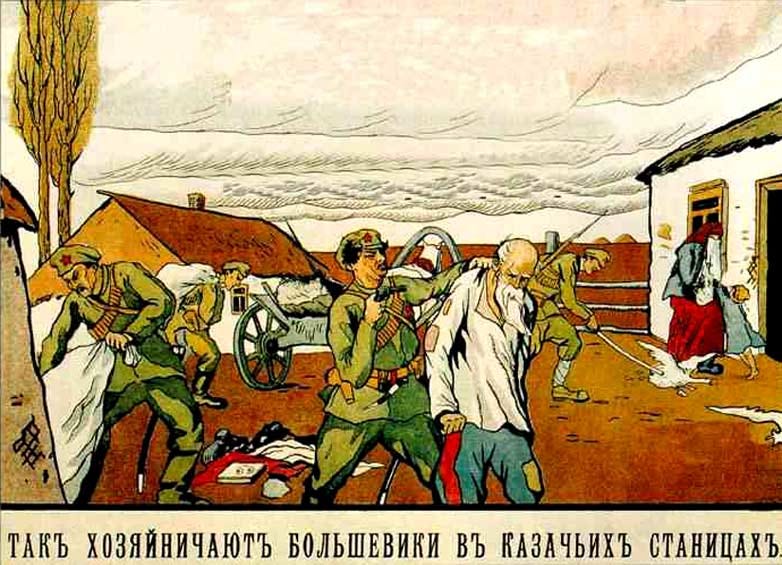
2
In 1925, Zazubrin wrote a nonfiction booklet titled By Untraveled Roads, about an airplane trip across Siberia he had joined as a reporter for the literary journal Sibirskie ogni. The purpose was to spread Communist propaganda among the peasantry and raise money for aircraft construction.
Zazubrin had his own agenda, however. He wanted to see the place his idol Dostoevsky had briefly visited in the 1850s, when he was imprisoned in Siberia for four years. Even more important, Zazubrin was gathering material for what he intended to become his second novel but ended up in a story called “The Sliver.”
Written in 1923, it remained unpublished until 1989 because of its ideological ambivalence and the terrifying intensity with which Zazubrin describes how the Cheka, the early Soviet secret police, disposed of perceived enemies of the Revolution. He was especially interested in the story of Grigory Rogov, a pro-Soviet leader of Siberian partisan fighters, about whom he spoke to a veteran named Filipp Volkov:
Volkov trembles, cries, grinds his teeth, beats his chest with his fist.
“Believe me or not, dear Comrade Zazubrin, I was in Yakutsk together with Vladimir Ilyich [Lenin], I was. [His fellow Bolshevik leader Mikhail] Kalinin, he was there, too. Oh, what a head Lenin has! He takes three steps around the room and there, he makes up his mind. Kalinin, he takes three days to do as much thinking as Lenin does. Believe it or not, dear comrade, politics took me from the Baltic Fleet to Yakutsk for penal labor. Me, I got there in the year seven, and Lenin arrived after me.” (I was told the same thing, word for word, by another Rogov man, Kopylov Vasily, who passed himself off as an electrician from the Putilov factory and a Party member since 1906.)
“Believe it or not, this is where those rods, those whips remain—right there.”
Hysterically, Volkov bares his back.
“Here, dear comrade, is what they did to us. And Kolchak’s men [loyal to White leader Admiral Alexander Kolchak], they cut off my wife’s breast. Well, of course, I was dousing them with gasoline and was burning them alive by the prison. This prison in the fortress, I burned it down with my own hands. As for the policemen Milyaev and Petrov, we sawed them up, my wife and I, and I keep that saw. Ah, dear comrade, I look at it sometimes—that, I say, was my power! I look at it and I kiss it.”
I ask to buy this saw for the Novonikolaevsk museum. Volkov agrees.
3
Grigory Rogov is a fairly well-known historical character of the civil war. Born in 1883 in the central Siberian village Zhulaniha, he had six children—equal numbers of boys and girls—and a relatively small household. He worked as a contractor in church construction and traded in liquor, fought in the Russo-Japanese War (1904-1905) and later, during World War I, rose to the rank of non-commissioned officer in a railway battalion. He was awarded three crosses of St. George, a military honor for courage.
After the February Revolution of 1917 [which overthrew the tsar and established a provisional government until the Bolsheviks seized power that fall], Rogov joined the Socialist Revolutionary Party; after the October uprising, he sided with the Bolsheviks. (He seems to have instinctively chosen parties and directions that enabled him to indulge his sadistic inclinations.) In 1918, when the Red Army was forced from the city of Biysk in the Altai region of western Siberia, signaling the temporary end of Soviet power there, Rogov established an underground partisan detachment of peasant anarchists. His reputation was of a brute who rejected any kind of discipline. The group grew; by autumn, when Kolchak declared himself Russia’s supreme ruler, it numbered more than 10,000 men.
The following June, an attempt was made to “Bolshevize” his detachment, or bring it under Communist control; Rogov and those remaining loyal moved to the small town of Kuznetsk southeast of Moscow, where they proceeded to carry out a massacre that was to become the main object of Zazubrin’s interest. He describes it in By Untraveled Roads:
Of the 4,000 inhabitants of Kuznetsk, 2,000 fell on its streets. They did not die in battle. They were simply led out of their houses, unarmed, then stripped and hacked to death with sabers right there at the gates. Especially “eminent” ones, and “persons of spiritual rank” were killed in the cathedral.
Rare was a woman or girl in Kuznetsk who escaped vicious rape.
People were chopped up, so to speak, “according to their class.”
To wit: soft hands—chop, a ring on a finger or traces of one—chop, a [Bolshevik political] commissar—chop.
A contractor in church construction under the tsar, a non-commissioned officer and a holder of a Cross of Saint George in the German war, Rogov became “red,” became a “revolutionary” during the Revolution. This “red revolutionary” pillaged, burned down churches, razed entire villages to the ground with fire and sword, plundered cities.
Rogov always tortured those who were executed—chopped hands and legs off living people, cut off their genitals, burned them alive. A curious detail: Files from local archives were almost always used as the fuel for bonfires (the most valuable Kuznetsk archive perished in flames).
But for all the straightforward primitiveness of the “class approach” to people, unimaginable confusion governed the head of this “revolutionary.” Thus, he didn’t burn, didn’t touch a single church that he himself had built. When joining with regular troops, he began to exterminate our commanders and commissars. His motives, of course, were the simplest: commissar means boss, boss means oppressor—chop.
By December 1919, Rogov had become a complete maniac; at that stage of his descent, Kuznetsk fell to the Bolsheviks. According to the prominent Russian physician Lev Shcheglov, who examined the connection between social and sexual Russian histories, the main goal—and ultimate delight—of every true maniac is self-destruction. (What can a superman strive for if not murdering a superman?)
Rogov’s final path was all-but predetermined: When the Soviet authorities began to correct what they called “excesses” in official language, they acted no less cruelly and violently. He understood he could not surrender: The Volkov couple’s sawing seemed it would be child’s play compared to what would be in store for him. He reasonably chose to shoot himself on July 3, 1920.
4
“The Sliver” immortalized Zazubrin. In 1992, the story was brought to the screen by the director Alexander Rogozhkin in a movie titled The Chekist. It speculates about what drives violence—not unlike Pier Paolo Pasolini’s controversial film Salò, through which the director appears to explore fascism’s sadistic blood lust. But the purpose may be closer to what, according to the composer Alexander Goldenweiser, Leo Tolstoy said about The Pit, a novel by Alexander Kuprin centered on prostitution: “[I]n exposing, he enjoys, and this cannot be hidden from a person of taste.” The pages of “The Sliver” almost physically exude the smell of fresh blood and raw meat. Reading it becomes a guilty pleasure, and the reader may feel antipathy toward the author, who clearly knows more about Russia, himself and even this very reader than is good for them all.
For Zazubrin, the Revolution’s violent underside overshadowed every other topic. It should be noted in all fairness that the point of the Revolution wasn’t actually to achieve social justice as stated but have a bloody feast and arrange, after long years of dull and boring timelessness, a banquet of the basest, most executioner-minded instincts.
Instead of its stated aim of destroying the old order and building a new one, something that fascinated and captivated Lenin, the Revolution focused on collateral executions, rape, public hangings and other erotic sadism. Exactly what had taken place during the French Revolution 130 years earlier. The Jacobins were also crazy about public executions and completely neglected the economy, diplomacy and agriculture. But honestly, how can one fight the addiction of sadomasochism with agronomy, however fruitful it may be?
I remember from my Soviet Young Pioneer childhood an article in the principal Communist youth newspaper, Komsomolskaya pravda, about a group of schoolchildren playing Gestapo. The author naively asks why they wouldn’t play with stuffed animals instead. Well, precisely because they were getting such a kick out beating a classmate. There’s no doubt that the next Russian revolution, when it comes, will also be accompanied by civil war because of the eternal passions and forces in Russian society. That war will also be accompanied by sadism with no impunity.
It was telling last September when many thousands of Russians in and outside the country took to social media to discuss the mastectomy of one of President Vladimir Putin’s biggest propagandists, the Russia Today editor Margarita Simonyan. Describing her own diagnosis, Simonyan referenced Nazis severing the breasts of young Soviet female fighters. That image is embedded in the Russian subconsciousness. In that sense, the saw used to dismember Kolchak’s supporters was the worthiest exhibit in the museum of the Russian Revolution, whose heart of darkness was Rogov’s Kuznetsk.
Zazubrin’s sexualized violence eventually contributed to his downfall. “The Dormitory,” where Gorky saw “Zolaism,” exposed him to a dangerous dressing-down. In 1923, the proletarian critic G. Lelevich accused him, characteristically of those times, along political, not literary lines:
We have not yet had such a shameful, disgusting, slobbering lampoon on the Revolution, on the Communist Party. This syphilitic delirium of a man who managed to turn the local organization of the RCP [Russian Communist Party] into some kind of continuous brothel... The reader, after reading this dirty story, is left with the nightmarish impression that the Revolution, that the Party has rotted to the core, and one must flee from this refuge of lepers.
Cursed and forbidden by the authorities, Zazubrin was forced in the early 1930s to write about industrial production. How can such a topic be of interest to someone so seriously poisoned by the times, who evoked the executions of naked beauties that fill “The Sliver?”
Although Zazubrin tried resisting, he eventually accepted the doctrine of Socialist Realism. He wrote a novel about collectivization in Siberia, approved by Gorky and other official critics. It was inevitably inferior to his earlier work despite his craftsmanship. At the height of the Great Terror in 1937, Zazubrin was arrested and shot; so were G. Lelevich, the critic’s father and, later, his son. Indeed, almost all writers, theorists and Party figures who had been of any importance in the ’20s were shot in the ’30s.
Is it possible to find a way out of this meat grinder? It’s still grinding. The author of this essay has been declared a “foreign agent” by the current authorities, as well as an extremist and terrorist. He has been prosecuted for discussing the shelling of civilians in Ukraine’s Kharkiv in a radio interview, and sentenced in absentia to seven years in prison. In 2019, he was poisoned on a plane. He’s been able to write all this only because he left Russia, jumping off the merry-go-round just in time.
In Kuznetsk, they try not to remember the violence of December 1919. A rare article in the local newspaper Kuznetsky rabochiy from 2021 reads:
The victims of the massacre were buried in the old Kuznetsk cemetery. And it is now...destroyed. In its place, the abandoned Garden of Aluminum Workers stands empty. The swings and carousels have disappeared; people do not make merry.
Lenin and Gorky may have had their differences, but they did agree on some things. Among them was a conviction that the world and its people could and should be remade by whatever means necessary. If violence was needed, it had to be used.
That attitude, very much in vogue in Russia, is spreading around the globe. The Revolution’s sadomasochistic horrors are far more relevant than we might believe them to be.
Dmitry Bykov is a US-based Russian poet, writer and literary critic who has written biographies of Boris Pasternak, Bulat Okudzhava and Maxim Gorky.