


Ten years ago this month, I stood beneath the US Capitol dome listening to a Cameroonian activist describe the high personal cost of being visibly gay in the capital Yaoundé. The event was part of a daylong conference on the geopolitics of LGBTQ+ rights convened by the Institute of Current World Affairs to mark the return of its fellow Robbie Corey-Boulet. Currently the Reuters bureau chief for West and Central Africa, he had just finished two years based in Cameroon and Côte d’Ivoire studying how sexual orientation and gender identity were lived and contested in West Africa. He’d asked me to moderate a panel on Africa, my first engagement with the institute whose board I now have the privilege of chairing.
I remember the day in fragments. Photographer Misha Friedman’s images, commissioned by the Pulitzer Center on Crisis Reporting, a nonprofit that supports breakthrough journalism, hung behind the speakers: a Russian couple in a sparse apartment, a Jamaican activist in profile, the brutal arithmetic of queer life rendered in light and shadow. Voices from Jamaica, Zimbabwe, Nigeria, Russia, India, China, Colombia and Cameroon traded notes on what strategies had worked and what didn’t. At lunch, we ate outside with activists and diplomats from the Danish embassy, and I remember thinking with a clarity that now feels almost embarrassing that things would only get better, everywhere.
There were reasons to be more circumspect, however, for anyone willing to hear them. Some activists at the conference warned of hidden risks in a US-led approach to promoting LGBTQ+ rights. Ten years later, those dangers have materialized. What comes next will require a fundamentally different geopolitical imagination to help build a transnational movement that will be less dependent on a single patron.
In 2016, US political will had coalesced behind the movement. The Democrats were in power and determined to make LGBTQ+ rights both a wedge issue in domestic politics and a signature element of American soft power. Barack Obama was in his final months in the White House. Ambassador Randy Berry, who delivered the keynote that day, was serving as the first US special envoy for the human rights of LGBTI persons, traveling the world to push back against the criminalization of same-sex relationships.
The combination of a Democratic administration treating the advancement of queer rights as a moral signature and the institutional weight of the United Nations, where I had just started working, opened a window for fast-paced, coordinated global advancements. A month after the conference, the UN Human Rights Council established the mandate of its first-ever independent expert on sexual orientation and gender identity. Ban Ki-moon, a strong ally, was the UN Secretary-General. Samantha Power, a champion of the issue, was US ambassador to the UN, effectively running the UN LGBTI Core Group, a coalition of member states that had pledged to support LGBTQ and intersex rights.
Multinational corporations were moving in parallel. Encouraged by the White House and the United Nations, they had leaned on Uganda over its 2014 anti-homosexuality bill, and in April 2016, 180 CEOs mobilized against North Carolina’s HB2 law, which barred transgender people from using public bathrooms corresponding to their gender identities. A year later, I would help launch the UN Standards of Conduct for Business, urging the private sector to fulfill its responsibilities but also “act in the public sphere.” Money, multilateral institutions and human rights language all seemed to be moving in the same direction.
But the day had its dissenting notes, and they have aged better than the optimism of the time.
Robbie himself—whose fellowship would inform his book Love Falls on Us: A Story of American Ideas and African LGBT Lives—warned against the disruptive force of Western templates imposed on existing communities. The Indian activist Tushar Malik echoed the same concern. The American narrative, he said, too often amounted to: “You must change your laws, you are regressive and you need to come to the better side of the world.” That’s why, he added, “it is seen as neocolonialism.” Andras Simonyi, Hungary’s former ambassador to Washington and a forceful ally, was still blunter. Affirming LGBTQ+ rights, he said, “should not be seen as an American endeavor because the United States cannot and should not do it alone.” If the movement were seen as US-led, he warned, it could become tangled in anti-American sentiment.
The scholar Amy Lind described that dynamic in a 2010 paper, “Development, Global Governance and Sexual Subjectivities.” The globalized backlash against sexual and gender rights, she wrote, was inseparable from “ongoing struggles concerning post-colonial nation-building” and “critiques of the US as empire and the accompanying notion of our world as unipolar.” In other words, the more emancipatory politics would travel under an American flag, the more reliably they would summon opposition.
In retrospect, the structural risk was even greater than the conference acknowledged. LGBTQ+ progress had come to rest on a narrow coalition—the international human rights framework, the US Democratic Party and a cohort of multinational corporations—an arrangement that was hard to question at the time because it came with cash, access and political weight. The 2021–2022 Global Resources Report documented roughly $1 billion in resources flowing to LGBTQ+ organizations and causes worldwide; most of it traced back, directly or indirectly, to the same handful of Western governments and foundations. Seventeen of the top 20 foundation funders were based in the United States.
The backlash of the past decade—from Uganda and Senegal to Hungary, Russia and dozens of American statehouses—demonstrated how fragile that progress became whenever it could be framed as foreign pressure or tied to the electoral fortunes of one American party. Uganda’s 2023 Anti-Homosexuality Act, Russia’s 2023 designation of the international LGBTQ+ movement as an extremist organization and Hungary’s 2025 constitutional amendment effectively banning Pride were all defended at home in those terms.
Ten years after the ICWA conference, the model came to a screeching halt.
In 2025, after American LGBTQ+ leaders had largely aligned with candidate Donald Trump’s opponent during the presidential campaign, his second administration abruptly disengaged from international LGBTQ+ work. The Global Equality Fund, a public-private vehicle that had bankrolled local activists in some of the world’s toughest places, was effectively dismantled. USAID evaporated. The UN Free & Equal campaign saw its budget reduced to a vestige. The State Department’s special envoy position was eliminated. The United States left the UN LGBTI Core Group. The corporate sector—the same one that had once threatened to pull jobs out of North Carolina—read the political winds and went silent, retreating from Pride sponsorships and rolling back internal diversity programs at speed hoping to secure seats at Mar-a-Lago. Within months, the funding and political architecture that had sustained a generation of global queer organizing were either gone or unrecognizable.
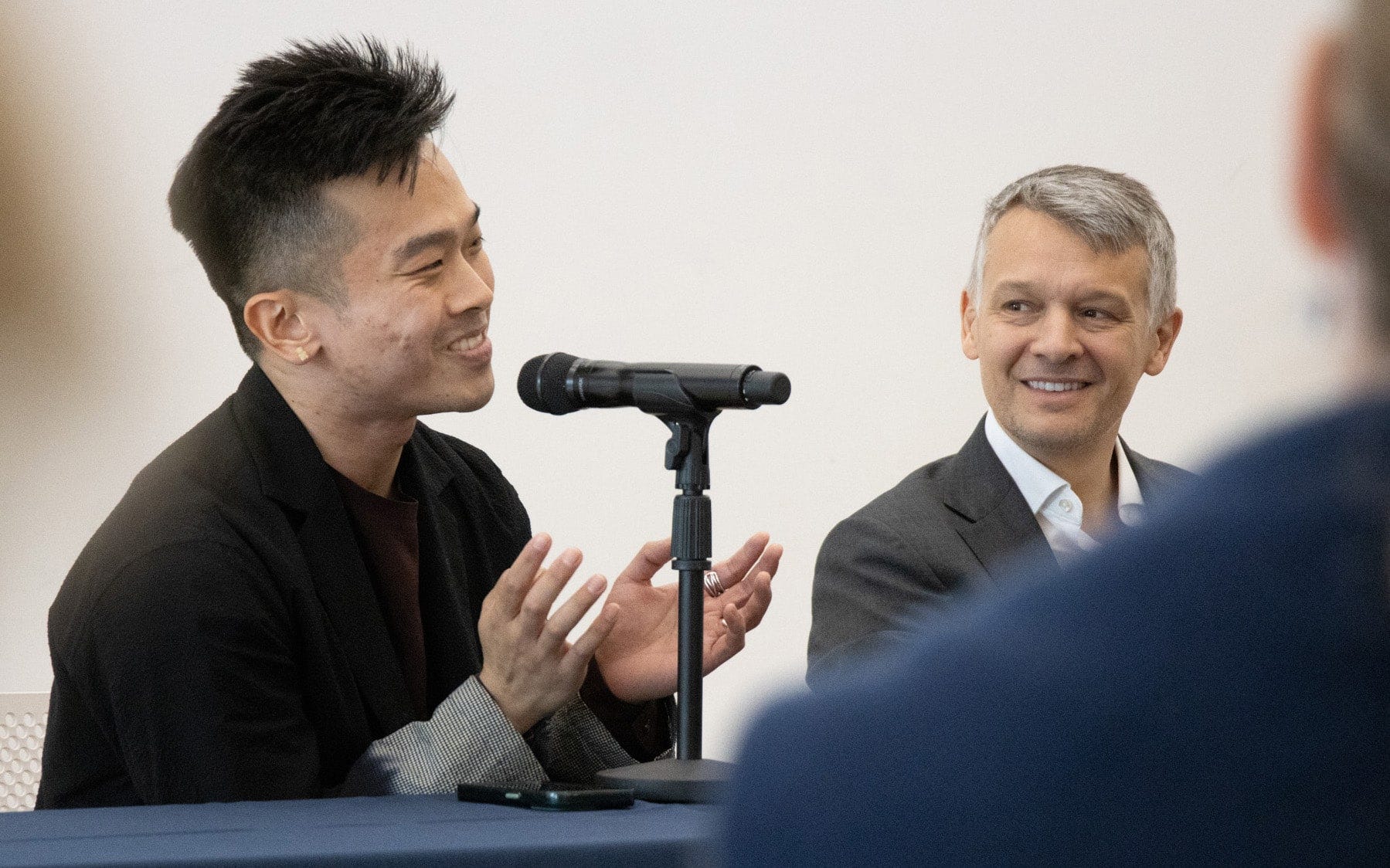
Edric Huang, ICWA’s David Mixner LGBTQ+ fellow in Taiwan from 2023 to 2025—who examined queer communities on the island and in Singapore, Nepal and Japan—reported that Trump’s halt to foreign aid assistance was instantly felt by LGBTQ+ groups across the region, and part of a larger wave of overseas development cuts by conservative governments.
Now the conversation among movement leaders is no longer about whether the old model can be repaired. The harder question is what will replace it.
What is emerging, slowly, is a different geopolitical map for queer liberation, adapted to a multipolar world in which the United States will no longer dominate the international order or reliably champion human rights abroad. The United Nations and other multilateral institutions now speak more softly on those issues. Corporations increasingly insist their only obligation is shareholder value. The old assumption that progress naturally flows from liberal democracy and Western institutions no longer holds.
But what the movement has left behind to date is also new. After several decades of growth, LGBTQ+ communities in some parts of the world possess greater numbers, wealth, visibility and political experience than at any earlier point in their history. Homosexuality was officially and permanently decriminalized in India in 2018. Mexico completed nationwide marriage equality in 2022. Thailand’s marriage equality law took effect in January 2025, the first such measure in Southeast Asia. Constitutional challenges to recognition are advancing in Japan. The center of the movement’s demographic and political weight has been shifting south and east for years; the events of 2025, as Edric’s fellowship demonstrated, made the shift visible.
That redistribution has begun to reshape the language of LGBTQ+ politics. Although the rhetoric of human rights remains indispensable, it has lost much of its persuasive force in many parts of the world. Anti-LGBTQ+ movements have spent a decade caricaturing it as a Western dialect, and the characterization has stuck. Where progress is being made, activists are increasingly making the case for inclusion in the vocabularies their own societies already use: constitutional dignity in India, family stability and economic productivity in much of Latin America, religious mercy and decolonization in parts of Africa and the Muslim world. Western pressure is no longer central to those arguments; in many places, it is now simply counterproductive.
The case is also being made by a wider cast of actors than the human rights pipeline used to recognize. Anti-LGBTQ+ movements understood years ago that they operate most effectively as a disciplined transnational network, exporting legislation (Uganda’s 2023 statute explicitly drew from Russian and American templates), narratives and culture war strategies across borders. Outside a handful of Western countries, the LGBTQ+ side has rarely matched that coordination. But the early outlines of a response are visible in newer formations: investor coalitions, regional philanthropic networks emerging across Latin America and Africa, and a generation of LGBTQ+ writers, showrunners and digital creators in Mumbai, Lagos, São Paulo and Bangkok whose reach now rivals that of any state broadcaster. A television drama in India, a Brazilian telenovela or an AI chatbot’s default tone on a question about gender now shape public attitudes with a speed no diplomatic communiqué could match.
If the past decade marked the high-water mark of a Western-led model of global LGBTQ+ advocacy, what is taking shape now may prove more durable: a movement that no longer waits for a political or geopolitical patron, no longer borrows its legitimacy from outside powers and no longer assumes history naturally bends in its favor. The pace will be slower, the alliances more complex and the leading voices less familiar. But the promise is long-lasting, context-specific LGBTQ+ power.
Fabrice Houdart is board chair of the Institute of Current World Affairs. From 2016 to 2019, he served as a human rights officer at the United Nations, where he co-authored the UN Standards of Conduct for Business in Tackling Discrimination Against LGBTI People. In 2022, he founded PRISM: the Association of LGBTQ+ Corporate Directors, and in 2024, he co-founded Koppa, the LGBTI+ economic power lab. He writes a weekly Wednesday Substack on LGBTQ+ geopolitics.
Hello! 😉
I recently wrote a personal article reflecting on growing up gay in the age of dating apps, and how platforms like Grindr shaped my relationship with intimacy, validation and emotional connection.
If you have a few minutes to read it, I’d genuinely love to hear your thoughts or experiences as well.
See you around!