


Editor’s note: This is an excerpt from the forthcoming second edition of Jean-Benoit Nadeau and Julie Barlow’s Sixty Million Frenchmen Can’t Be Wrong: The Je Ne Sais Quoi of Being French (with permission from the publisher, Sourcebooks, LLC, © Jean Benoit Nadeau and Julie Barlow, 2026).
For years, we were convinced some kind of curse brought about a massive protest, riot or strike every time we visited France. In 1999, a group of French farmers famously drove a tractor through the chain-link fence of a McDonald’s restaurant in Millau and proceeded to strip the restaurant of its roof tiles, pipes and other removable parts. The farmers, who called their activity a “symbolic dismantling,” were protesting a surtax the US government had slapped on Roquefort cheese—and the World Trade Organization in general, which they accused of helping corporations take control of the world’s food supply. The whole thing turned into an international media circus when the farmers’ leader, José Bové, was arrested and thrown in jail and The New York Times dubbed him France’s “anti-globalization hero.”
Two days before we returned to France for a book tour in 2005, two teenagers in the Paris suburb of Clichy-sous-Bois were electrocuted when they were hiding from the police in an electrical substation. It was never clear what offense, if any, the youngsters had committed, but their deaths became a catalyst for the simmering resentment of France’s immigrant populations over police harassment and youth unemployment. Riots followed in Toulouse, Lille, Strasbourg, Marseille and Lyon. Across the country, almost 3,000 people were arrested, more than 10,000 cars set on fire and over 200 public buildings damaged or destroyed before President Jacques Chirac declared a three-month state of emergency.
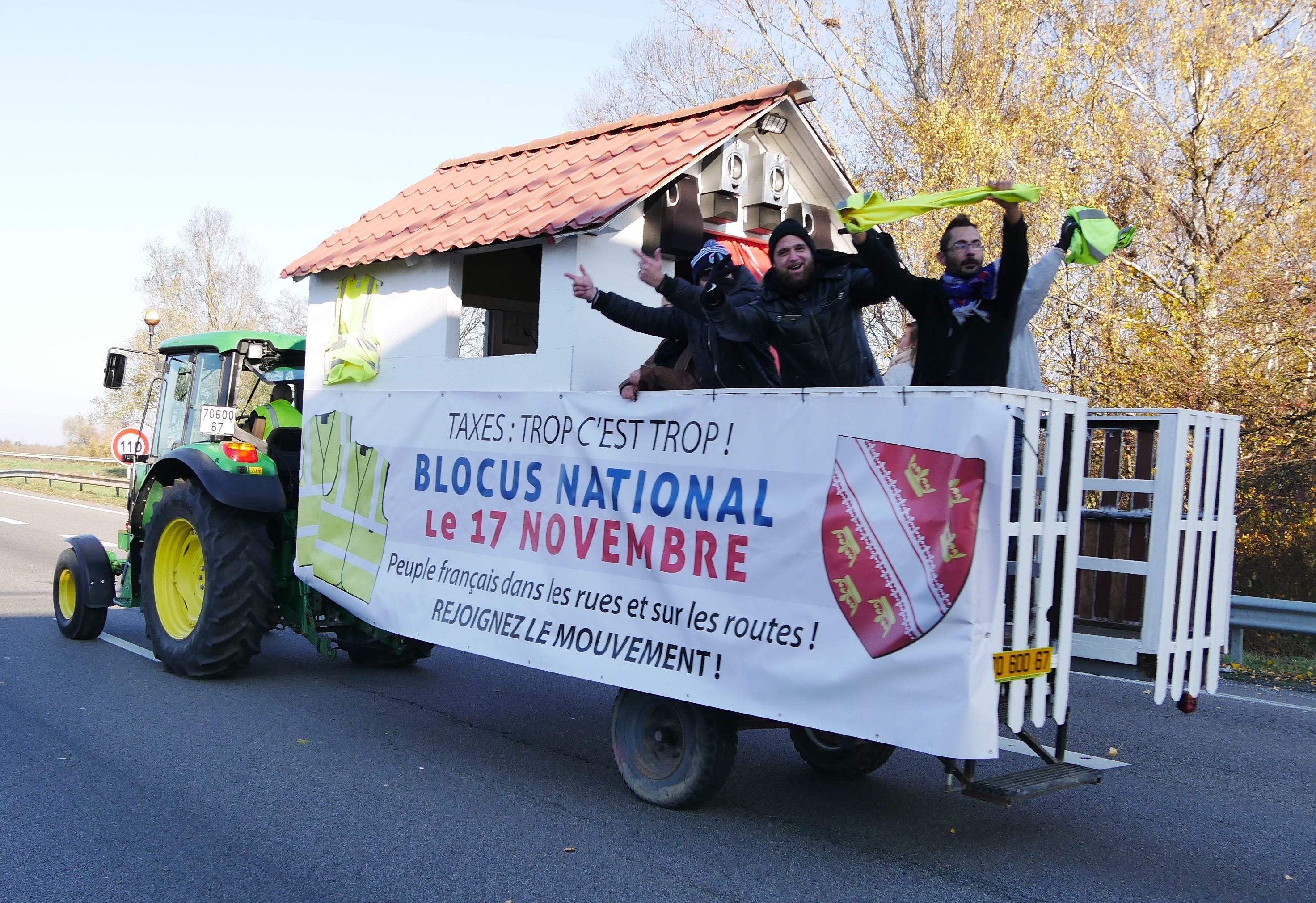
On a trip to Paris at the end of 2018, we landed in the middle of yet another countrywide protest. This time it was the Gilets jaunes (Yellow vests) protests, named for the fluorescent yellow high-visibility vests the protesters donned. Every Saturday across France, up to a million people blocked streets and roundabouts to protest the government’s decision to introduce a carbon tax. The protesters objected to the tax on the basis that it would cause a spike in gas prices, but the discontent obviously went deeper than fuel prices. Analysts in France were confounded by the movement, which began as neither right-wing nor left-wing and had no identifiable leaders.
It was the start of middle-class populist discontent in France: Protesters were mostly workers from outside Paris whose beefs included the government’s intention to reduce speed limits on country roads. Their ire was focused directly on Paris, considered the headquarters of France’s elite. They accused the capital of ignoring the needs of working and middle-class French elsewhere in the country.
When we came back to France in January 2024, we thought we had come full circle from our first experience with protests: Another farmer’s protest broke out shortly after we arrived. This time, it was not the left-wing peasant sheep milk farmers of 1999 but France’s largest farmers’ union, the FNSEA, that was leading the charge. Its members were busy parking tractors the size of Paris studio apartments on highways across the country to protest the norms compliqués (complicated environmental standards) that resulted from France’s signing the European Union’s Green Deal.
Going for the jugular
If the mystique of the French Revolution and [student demonstrations of] May 1968 turned protesting into a cultural activity in France, the reason the French take to the streets so frequently is more mundane: Centralization plays a great role in sparking protests, demonstrations and strikes. It also, paradoxically, makes these protests more effective.
In the case of protests, this can all be summed up in one idea: In a rigid, centralized democracy, street protest is one of the few legitimate powers citizens have to curb the system. In other words, protesting is just part of the choreography of power in France.
The fact that France has one government and one capital makes protesting easier and more effective. The streets of Paris are not just a conduit for transport; they are a political forum. All roads and railroads in France lead to Paris. That means protesters can easily go for the jugular; as we saw in 2024, a couple of well-placed trucks could easily block the capital city, paralyzing air and ground transport across the country in the process.
Because centralization in Paris raises the stakes of protest this way, the French government has created something of a fortress around the city. All roads within a 37-mile radius of the capital were built to accommodate tanks in case of an invasion or insurrection. (The last time tanks drove on these highways was in 1961: France was on the verge of civil war over the question of Algeria’s independence, and 60 tanks were brought in to guard the National Assembly. But the potential is there today.) More important, the government has organized the police accordingly. Over 10 percent of France’s police force is made up of Compagnie républicaine de sécurité (CRS; Republican Security Corps, general reserve of the French National Police). Typically, they are called in cases of urban violence but they also act as surveillance to prevent tense situations from spinning out of control.
Since Paris is the political, economic and intellectual center of France—and headquarters of the national press and most foreign press bureaus—the city guarantees immediate visibility to any protest. It’s not the way things work in federations like the United States or Canada, where power is split between the federal government and either 50 states and 10 provinces, as well as thousands of lower jurisdictions. In North America, political and economic powers are rarely concentrated in the same city. Teachers who go on strike in Quebec would have to choose between the province’s capital, Quebec, or its largest city and economic power, Montreal.
Centralization also makes it easier to protest effectively. There may be plenty of manifs (short for manifestations, demonstrations) across France at any time, but in a way, they are still somehow in Paris. The reason is that the state is present everywhere in France via préfectures. These institutions are literally local offices of the state that carry out the activities of almost all of France’s ministries. On a trip to Marseilles, we took a boat to visit an offshore castle outside the city. In front of the préfecture, near the port of Marseille, a crowd of 500 were protesting public housing shortages when we left. When we returned, a whole new crowd of protesters had replaced them: 500 bikers denouncing a law that made driving 50 kilometers over the speed limit a criminal offense.
Letting farmers off the hook
Football playbooks aside, revolutionary mystique means protesters in France enjoy relative impunity. No group benefits more from this leniency than French farmers, who have added sympathy in a country that idealizes its peasant roots. France’s farmers get away with a lot. In January 2024, when Paris was on the brink of a complete blockade, France’s minister of the interior warned the French police to exercise “extreme moderation” in repressing the protests because the population was so sympathetic toward the farmers.
The techniques of French farmers’ unions, both left and right-wing, range from pelleting shopping malls with apples to spraying pig manure on supermarkets and prefectures and setting pallets of wine on fire. They rarely pay for damages. Back in 1999, when we talked to the farmers who destroyed a McDonald’s restaurant in southwest France, they expressed surprise over being arrested; they felt they had done “little” damage (estimates were about $200,000) and had assumed the French would sympathize (which they did, but the police arrested them anyway). There was a definitive shift in France’s protest culture starting in 2012. Historically, protesting has been associated with France’s Left. That year was the beginning of the Manif pour tous (Protest for all), right-wing populist protesters who were opposed to same-sex marriage. In January 2013, they organized a huge protest that gathered a million people at Paris’s Place d’Italie. The trend continued with the Gilet jaunes protests in 2018, which consisted mostly of right-leaning suburban French demanding the government roll back environmental and other “progressive” policies that, according to them, only favored France’s urban elite.
Yet many features of French protests have remained intact over the decades and will likely remain so for decades to come. When, in 2023, President Emmanuel Macron announced reforms to pensions that would raise the retirement age from 62 to 64, more than a million people from working, middle, and even upper-middle classes joined together and took to the streets to protest. The protests lasted six months.
While these events were extraordinary, there is no doubt that France’s culture of protest is fed by a general irreverence for the law. The average French man or woman considers the law less absolute than a set of principles that can be ignored if circumstances call for it. Activities like driving fast, running a red light, driving a motorcycle the wrong way on a one-way street or parking on the sidewalk all fall into this category. Few French get indignant about what they consider small infractions. Entire French ministries have been known to ignore the law when it suits them.
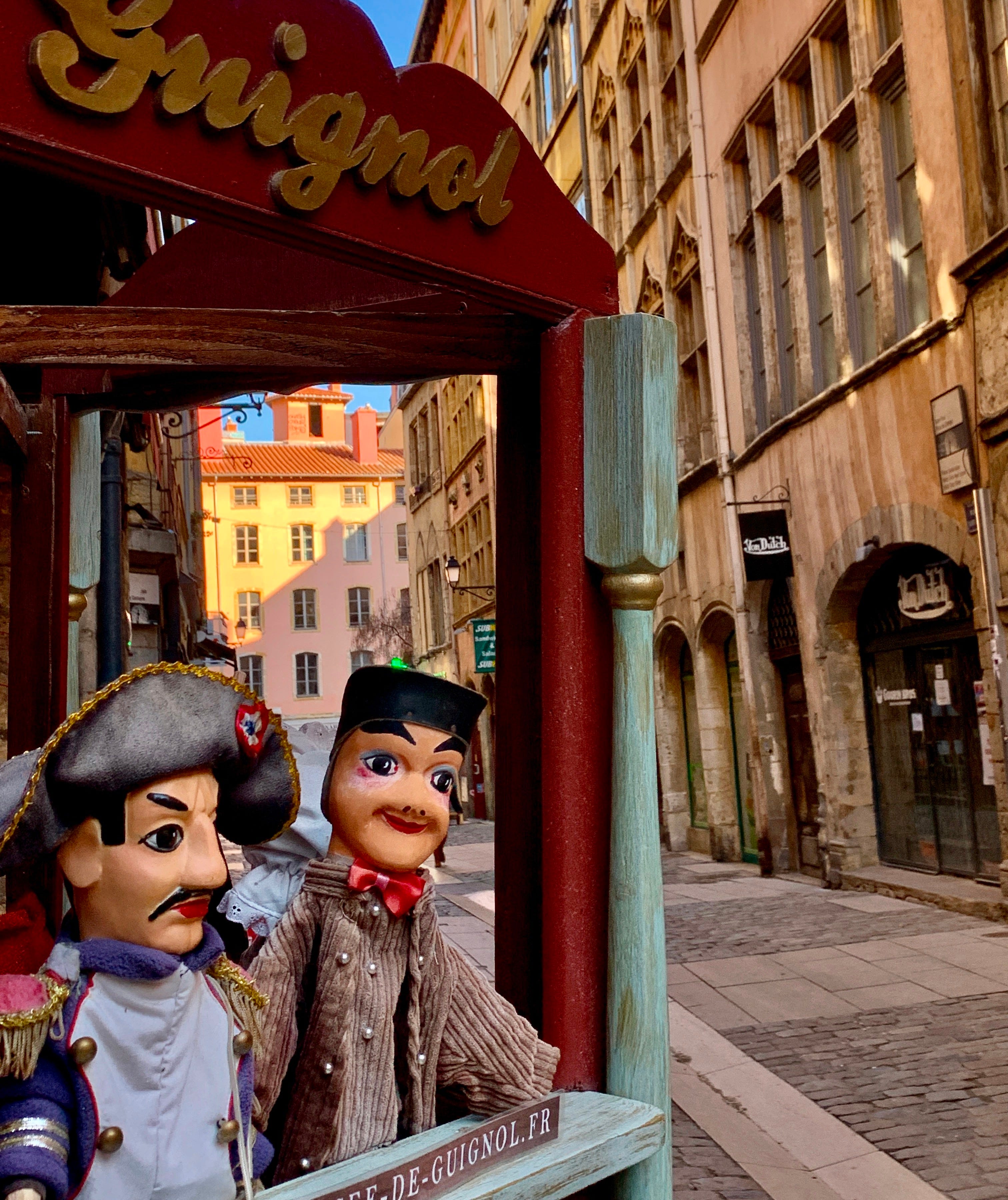
One of our French friends calls this “the delinquent side” of France. Indeed, French literature and popular culture are stocked with picaresque characters who mock the law and its representatives and ridicule the establishment. The most famous of these is perhaps Guignol, a cocky, cunning puppet created in 1808 by Laurent Mourguet. Guignol is famous for trying to beat up French gendarmes and other “villains” with a stick. Although attendance has steadily declined over the last decades, French parents still take their kids to watch Guignol shows in parks throughout the country. In the same vein, there is the famous character Scapin, in Molière’s plays, a scheming servant who humiliates his boss. The street urchin Gavroche, in Les Misérables, is famous for his sassy comebacks to grown-ups and the police. One great standard of French vaudeville is to present cuckolds as the villains while adulterers, sinners and other homewreckers are the heroes. And then there is Maurice Leblanc’s Arsène Lupin, the gentleman cambrioleur (burglar) who pulls off his heists with pure panache.
It might seem paradoxical that the French glorify the spirit of defiance while at the same time willingly submitting themselves to an extremely centralized, authoritarian state run by a technocratic elite. But French irreverence for the law is probably one of the things that make centralized authoritarianism palatable. Much of the puzzle—like many other things about the French, for that matter—boils down to what they openly embrace and what they downplay. The French are a law-abiding lot who don’t openly champion the value of the law. Most of our French friends have bragged a little about flouting the law at some point, even if they didn’t break it.
The law exists, and law is the authority, but challenging it in France is a sign of spirit.
Jean-Benoît Nadeau and Julie Barlow are Canadian writers, journalists and leading explicators of French customs, whose books also include The Bonjour Effect. A former Institute of Current World Affairs fellow in France (1999-2001) accompanied by his wife Julie, Jean-Benoît has published more than 1,000 articles and columns for publications including L’actualité, The New York Times, The Toronto Star and The Wall Street Journal. His fellowship focused on the government’s response to globalization issues. He won the Quebec Writers’ Federation’s Mavis Gallant Prize for Non-Fiction in 2007.