


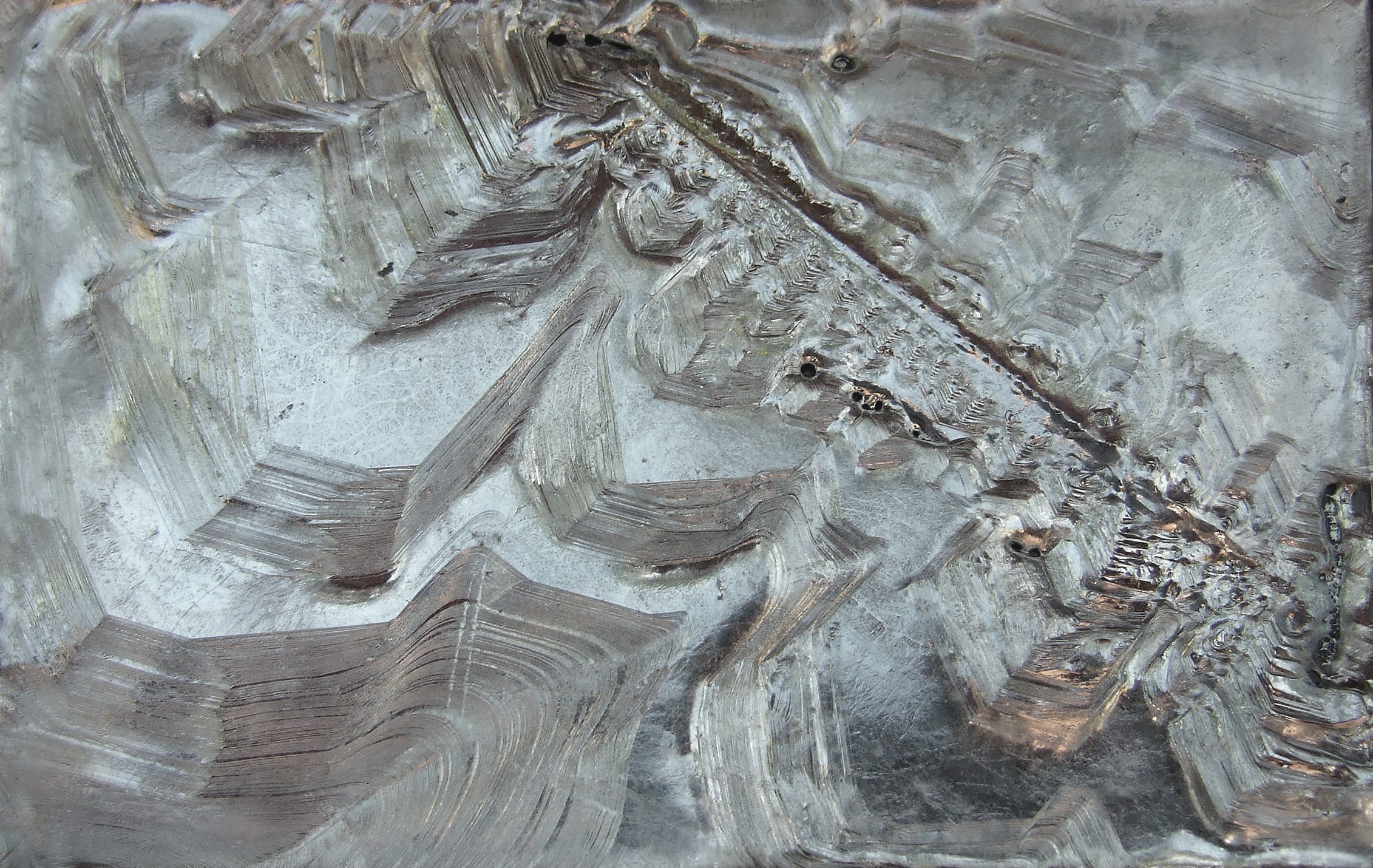
In 1875, a French chemist named Paul-Émile Lecoq discovered a fragile metal, silvery in color, with a faint blue tinge. In its liquid state, it becomes silvery white. He named it gallium in honor of his native country, from the Latin for the area including modern-day France.
Today, the rare chemical element is used in pacemakers, MRI devices, semiconductors and nuclear weapons.
In the first decade of this century, 30 percent of its production was in Europe, while its presence in China was entirely marginal. Then things changed.
Beijing invested heavily in gallium as a strategic resource, while weak industrial policies in Europe compounded the effects of widespread disdain for mining: The last continental plants, in Germany and Hungary, were closed between 2013 and 2015.
Today, almost all of the element known as Ga, atomic number 31, is processed and sold in the Land of the Dragon.
Now it’s clear that abandoning gallium was a strategic blunder, the consequence of a gross lack of vision, although perhaps unsurprising given the similar history with the element germanium (Ge, atomic number 32), revealed to the world in 1886 by Clemens Winkler, a German, of course. (He was not to be outdone by his French and Swedish predecessors: Scandium—Sc, atomic number 21—was discovered in Stockholm in 1879.)
Those strategically critical rare elements are now almost exclusively exploited by the Chinese. The former Celestial Empire controls over 70 percent of the global refining of 17 essential defense and technology resources. For the European Union’s 27 member states, that presents an immediate economic challenge and may be a matter of survival in a possible not-too-distant future.
The only good news is that we’re now aware of the self-inflicted setback. The EU has committed itself to stimulating domestic production of “critical” rare materials in an effort to ensure security of supply. Better late than never.
In 2024, the bloc enacted a measure called the Critical Raw Materials (CRM) Act, which set benchmarks for domestic capacities of extraction, processing and recycling along the strategic raw material supply chain. By 2030, the EU Commission warned, “no more than 65 percent of the EU’s annual needs of each strategic raw material at any relevant stage of processing should come from a single third country.”
More evidence came in a report last May by the Paris-based European Union Institute for Security Studies (EUISS), which exhorted the EU’s member countries to address China’s dominance “before these dependencies deepen further and cause even greater economic damage.” Titled “Beijing’s critical raw material weapon—And how to dismantle it,” the document prescribes “urgent steps to diversify supply, strengthen deterrence and regain leverage.”
Among others, Mario Draghi—former president of the European Central Bank, Italian prime minister and savior of the euro—has also urged reducing strategic dependence and decreasing external exposure, reminding that “we are alone, but together.”
There’s been movement on that front. Greece’s Interministerial Committee for Strategic Investments last month approved a 340-million-euro investment in Metlen, a global industrial and energy company in Athens engaged in critical raw material production. Its work “will enable Greece to produce enough gallium to meet 100 percent of the European Union’s needs,” the government said. But the ambitious task will need more investment in addition to time and patience.
Norway, not an EU member but part of the European Economic Area (EEA) and fully integrated in the single market, is on track, too. Oslo has announced a project to create an underground mine at the edge of the Arctic Repparfjord, below a reindeer calving ground. The site, called Nussir, also contains Norway’s largest known copper deposit, home to a 1970s open pit mine. The new project, mostly owned by Blue Moon Metals, a Canadian company, was granted an operating license in 2019.
Other member states are stepping up, too. Hungary announced a “National Exploration Program” in March to prospect for minerals, saying the number of elements considered critical has nearly doubled from 20 sought-after elements in the 1990s.
Still, the EUISS says, it will take up to 25 years to achieve adequate extraction flows on the continent and will have to include outsourcing. “An approach based solely on Europe is impossible,” its report says.
Forming coalitions with other countries also keen to balance Beijing’s power—such as Brazil, India, Vietnam, Malaysia and the Congo—could be part of a solution. They should form alliances for joint purchases and protection from below-cost selling, possibly with a smart tariff plan. At June’s G7 summit in France, Japanese Prime Minister Sanae Takaichi proposed a joint initiative to stockpile critical minerals.
Overall, achieving Europe’s goals will take a collectively funded drive for competitiveness that fosters research, business and employment with joint agreements and projects. For now, however, the EU’s actions remain a prime example of a promising industrial policy in need of significant development.
As the world is undergoing rapid transformation, individual European countries are forcing the EU to pace itself. That’s evident in the approach to another leading priority, collective defense. Efforts are underway but the estimated necessary investment has risen in the last two years from 800 billion euros to 1.2 trillion euros, a figure most governments are still having trouble digesting.
So far, we have been too slow and focused on the present, not the future, and slaves to old dogmas. When it comes to critical rare elements, Europe still needs a wake-up call.
Marco Zatterin spent 30 years at La Stampa as Brussels correspondent, head of the economic and financial editorial team, European editor and then deputy director. He is currently a columnist for the six newspapers of the Nem Group. He has covered and analyzed macro and monetary economics, banks, new technologies and the European integration process. He is the author of several books, including Trafalgar (Rizzoli, 2005) and Il Gigante del Nilo (Mondadori, 2019).