


Neil Silberman is an archaeologist and historian who was president of the International Council on Monuments and Sites (ICOMOS) International Scientific Committee on Interpretation and Presentation and a member of the ICOMOS International Advisory Committee and Scientific Council. He was a founder of the Center for Heritage and Society at the University of Massachusetts Amherst and awarded a Guggenheim fellowship in 1991. On his ICWA fellowship (1984–1986), Neil examined the political and cultural impact of archaeological research in the Middle East. He went on to write and co-author a dozen books, including The Bible Unearthed: Archaeology’s New Vision of Ancient Israel and the Origin of Its Sacred Texts, Archaeology and Society in the 21st Century, The Hidden Scrolls, and Digging for God and Country.

The year 1985 was a banner one for historical research in Israel, Neil reports in this October excerpt, with dozens of international expeditions excavating some of the country’s most important ancient sites. The period was also marked by a struggle over the country’s future direction, with Prime Minister Shimon Peres battling an economic crisis and confrontation abroad, including the hijacking of the Italian cruise ship Achille Lauro by Palestinian militants. The excavations in Jerusalem met with strong opposition from religious leaders. The stakes were high, Neil writes, because the “struggle was for political and spiritual power within modern Israel.”
Jerusalem (October 1985) — Four summers ago, chanting crowds of bearded, black-coated protesters tried everything in their power, including violence, to shut the City of David excavations down. Their contention was that the area was the site of a medieval Jewish cemetery and that the digging there was nothing less than the callous desecration of ancient Jewish graves. In response, a panel of the country’s most prominent archaeologists and historians proved convincingly that there was never a cemetery at the site of the excavations, but their opponents refused to accept the evidence. The Sephardi and Ashkenazi chief rabbis issued a demand for an immediate end to the excavations and even threatened to excommunicate the minister of education if he refused to carry out the order.
Naturally, the real issue at stake was more than just the few bone chips that the protesters claimed they found in the piles of earth dumped down the slope by the excavation team. The struggle was for political and spiritual power within modern Israel, for the exclusive religious prerogative to interpret Jewish history and the significance of the Biblical text. For centuries the rabbinical authorities had reserved for themselves the right to speak definitively about kings David and Solomon and about their glorious ancient city. But now they found themselves face-to-face with competing scholars trained in the subtleties of ancient pottery and architecture, not religious texts. And what was worse, the impious curiosity of the archaeologists was defended by barricades and riot police.
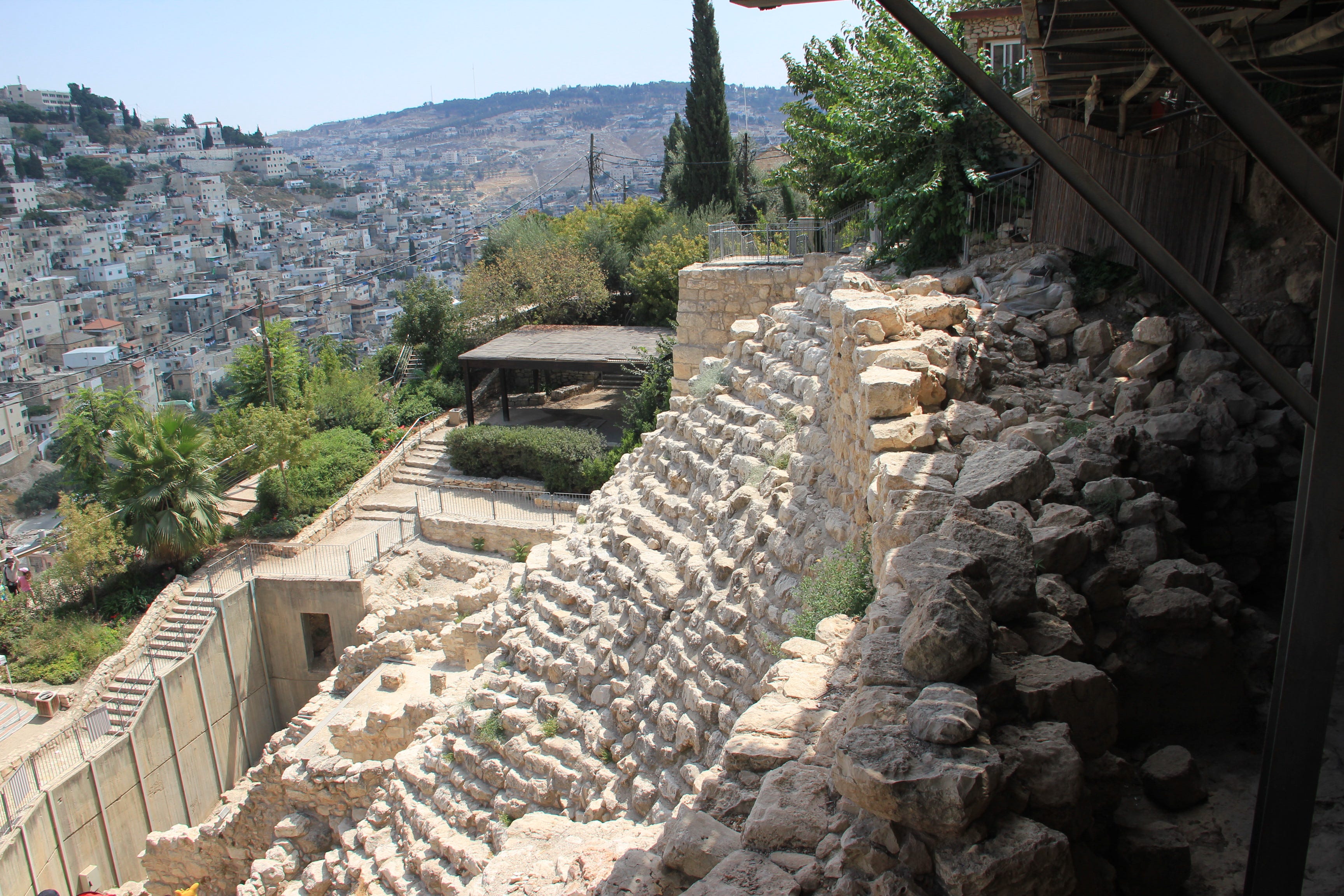
Professor Yigal Shiloh, the director of the excavations, emerged from the confrontation as the spokesman for academic freedom in the face of a religious attack. He and his colleagues at the Israel Exploration Society and the Hebrew University, having failed at their attempts at reason, obtained a Supreme Court ruling that overturned the initial rabbinical ban on the dig. In the atmosphere of an impending government crisis, Israel’s attorney general arranged a compromise between the opposing parties that permitted a resumption of work at the site. And even though not a single medieval Jewish grave was uncovered in the subsequent seasons of digging, the leaders of the protest—the ultra-orthodox faction that calls itself Neturei Karta, “The Guardians of the City”—were not satisfied. Their continuing vandalism, even now, at the City of David Archaeological Garden, serves as clear warning that they see the archaeologists as their spiritual enemies.
The conflict between religious fundamentalism and archaeology is underway in many Middle Eastern countries, but in Israel it has taken an uncharacteristic form. Throughout the Muslim world, religious opposition to excavations has been directed mainly against investigations of the Jahiliya, or pre-Islamic period; the excavation of Islamic remains (with the exception of cemeteries) is seen as commendable validation for the ancient splendor of the Faith.
In Israel, the problem is different, for the excavation of remains of the Biblical periods is seen as an insidious challenge to traditional religious authority. And in a sense, there is some logic to that viewpoint, for the City of David excavations, among many others, have subtly changed the historical scheme of things. By placing the remains from the time of David and Solomon in a continuum that extends from the Chalcolithic period to the present, they have robbed the Biblical period of its previous chronological sanctity.
Every visitor to the City of David Archaeological Garden can see the continuum clearly as he or she wanders through the carefully landscaped and labeled building remains. The ruins of every period of Jerusalem’s long history rise from those of their predecessors and form the foundations for the ruins above them. Taken together, these layers forge the separate cultures and historical periods into a single monument to the city’s continuity. Maybe there is good reason for the fundamentalists’ battle with archaeologists in Jerusalem. The impact of archaeology is to break down the barriers of sectarian interpretation and to link the country’s cultural development with ancient civilization everywhere else in the world.
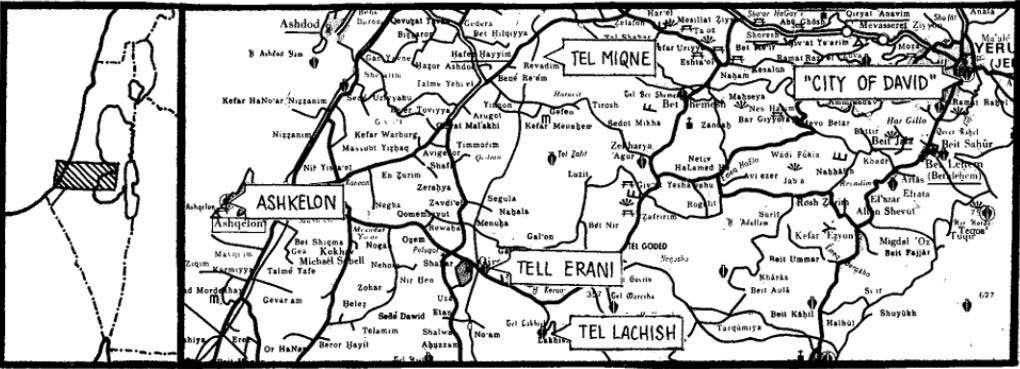
Each of the excavations I visited this summer represented a unique perspective on some of the most pressing problems facing Israeli archaeology—and society—today. Each excavation attacked more than a specific historical problem; its approach to the interpretation of artifacts and settlement levels reflected the new archaeological concern with understanding the mechanics of ancient societies rather than just historical events. The fact that the same problems of economics, military conquest, and ethnic interaction are facing the State of Israel holds out at least the possibility that archaeologists may be able to play a role in understanding the mechanics of modern society as well.
I don’t mean to say that archaeology can be a miraculous cure-all for a modern society’s problems. It’s just that there seemed to me to be the discussion of new ideas in at least some of the excavations in Israel this summer that contrasted with the general political atmosphere. The attempt at finding new solutions and understandings to age-old questions may not transfer easily from the Bronze or Iron Age to the present, but I think that it would be worthwhile for archaeologists in Israel—as elsewhere—to apply themselves to the practical application of their work. Otherwise, archaeology is in danger of becoming increasingly insulated and irrelevant, and the summer of 1985, like all the recent summers, will be remembered as just another season of digging in the ruins without having accomplished any lasting changes at all.