

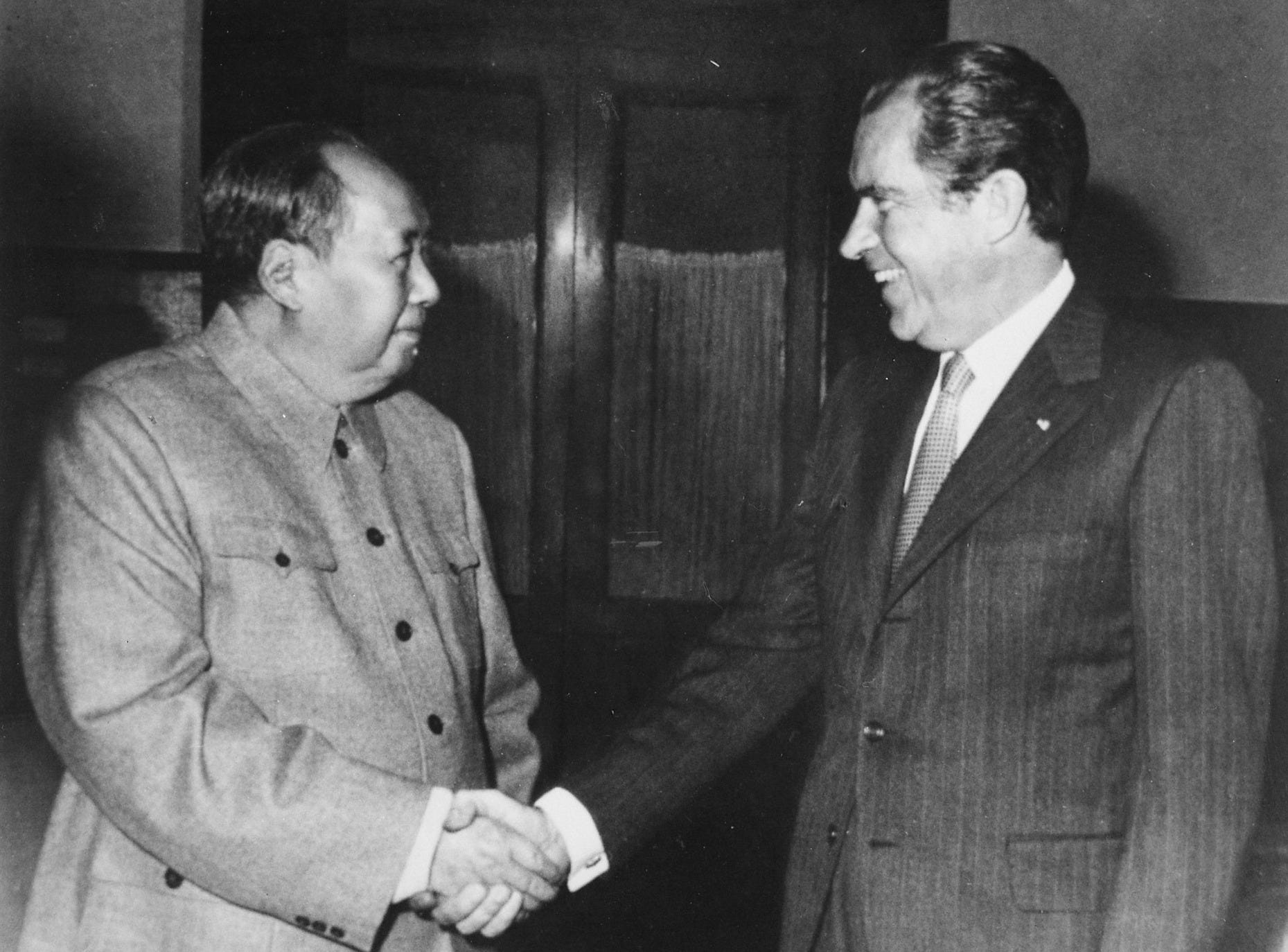
There is a world of difference between Richard Nixon’s history-making trip to China in February 1972 and Donald Trump’s two-day, in-and-out journey in May 2026. One shattered precedent, changing the world by opening a new, promising chapter in US-China relations; the other was routine, Air Force One crowded with tycoons eager, like the president, to strike a “deal,” as if a business deal, however defined, were the only possible outcome of a successful summit.
Fifty-four years ago, when Nixon landed in Beijing, it seemed for a moment as though everything stood still. It was that momentous an event. The United States had kept a cool, snarling distance from Beijing since 1949, when the Marxist leader Mao Zedong rose to power in China. No presidential visits since, no diplomatic representation, very little trade, only an occasional research trip by a scholar or writer, nothing more. China, home to one of every four people on Earth but now under communist control, was off limits.
Although he was an early cheerleader of the “Who Lost China?” crowd, Nixon privately hoped that one day there would be a warming in the icy relationship. After winning deserved plaudits for his handling of the headline-catching kitchen debate in Moscow with the Soviet leader Nikita Khrushchev in August 1959, Nixon allowed himself to dream of a possible visit to China and, maybe, a debate with the reclusive Mao, another hot if unrealistic goal for the ambitious American politician.
“If it worked once,” Nixon unabashedly told the columnist George Dixon, “it can work twice and…achieve a breakthrough into the forbidden country.” He wanted to be the US president who opened the door to China; and although ultimately his presidency was badly tarnished by the Watergate scandal, forcing his humiliating resignation from office in August 1974, he nevertheless left behind a lesson in global diplomacy worthy of serious study.
In 1967, when he launched his successful campaign for the presidency (he’d been unsuccessful in 1960), Nixon wrote in Foreign Affairs that “any American policy toward Asia…must come urgently to grips with the reality of China.” At the time, the US was deeply engaged in a costly, unpopular war in Vietnam, a complicating factor that poisoned national politics and frustrated any hope for a change in policy toward Hanoi’s communist backers. Still, following his triumph in the November 1968 elections, Nixon plunged into the fraught political thicket of Washington’s relations with Beijing.
Among his first steps was a long series of late-night conversations with Henry Kissinger, his new national security adviser. The Harvard professor was a serious, well-known student of global affairs but no expert on China. They discussed a range of subjects: How far could Nixon actually go? How could he link the Vietnam War to a change in China policy? When should he start this process? Whom could he trust? Kissinger helped mightily in conceptualizing and implementing the change but it was Nixon himself, step by cautious step, who led the controversial change in America’s relations with China.
From day one, Nixon and Kissinger both appreciated the link between China policy and the Vietnam War. They understood the United States couldn’t open the door to China while fighting a war in neighboring Vietnam. Besides, they already believed the US couldn’t win the war and ought to withdraw. The question was how.
Initiating a broad change in America’s attitude toward all of Asia would be an important first step. The key was a slow, steady demilitarization of the American presence in Southeast Asia, starting with a controversial series of troop withdrawals from Vietnam. Nixon also tried to cool his administration’s hot anti-communist rhetoric. He hinted at a revision of US policy toward Taiwan: what would have been an almost unimaginable diplomatic shift at the time for a country locked into a one-China policy—meaning US recognition of Taiwan, not mainland China. No matter the difficulties, Nixon’s overall strategy, his bottom line, remained fixed on opening a dialogue with his traditional Asian adversary.
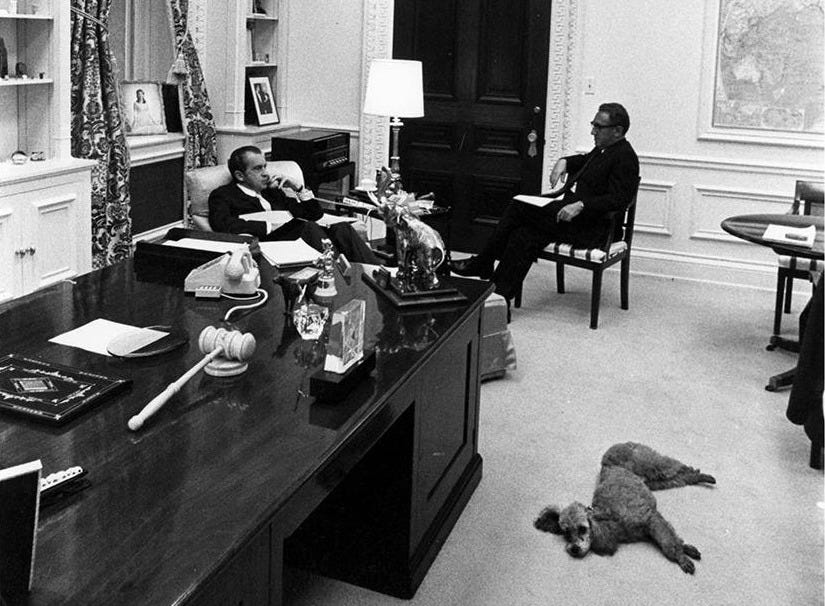
Everything, he soon learned, would take time, each step usually accompanied by an anguished denial that improving relations with China had anything to do with gaining leverage over the Kremlin. “We don’t play the game of pitting Russia against China,” Kissinger argued with a straight face. That would be a “very dangerous game.”
Nixon confided his intent to change America’s policy with carefully selected foreign leaders and a few trusted Washington politicians. High among them was Mike Mansfield, the respected Democratic Senate majority leader, who had once been a young Marine on gunboat duty in China. During a one-on-one lunch, Nixon told him that in his judgment it was time for China to begin assuming a greater share of “global responsibility,” if for no other reason than to head off a Sino-Soviet war, a chronic Nixon nightmare. “When the door is open, Mike,” Nixon told Mansfield, “I want you to be the first high-level American to visit China.” The senator was flattered, later admitting to also being stunned when Nixon unexpectedly added, “I’d like to go myself, but that doesn’t seem quite feasible for the moment.”
When he first swung his gaze overseas, Nixon fastened on an unlikely target, France’s stubbornly independent president, Charles de Gaulle. In late February 1969, a mere six weeks after moving into the Oval Office, Nixon flew to Paris, determined, among other things, to enlist de Gaulle’s help. The French leader was deeply suspicious of Nixon’s aims at first, wondering whether he was really serious about changing China policy or playing a mischievous Russia card or both.
Their relationship was raw. A few years earlier, Nixon had been mercilessly critical of de Gaulle’s drive to bring Communist China into the United Nations, replacing Taiwan. But during his Paris visit, Nixon played the role of the patient diplomat, pleading with de Gaulle not only for his help but also his understanding. The past was past, he argued, let’s focus on the future.
Finally, de Gaulle yielded, promising to dispatch Etienne Manac’h, his top China expert, to Beijing to inform the Chinese “at the highest level” of Nixon’s “serious desire” to open a new page in America’s relations with China, including a possible change in Taiwan policy. Manac’h spent most of his time speaking with the premier, Zhou Enlai. The shrewd, experienced Chinese leader seemed interested in the Frenchman’s report but offered no official response.
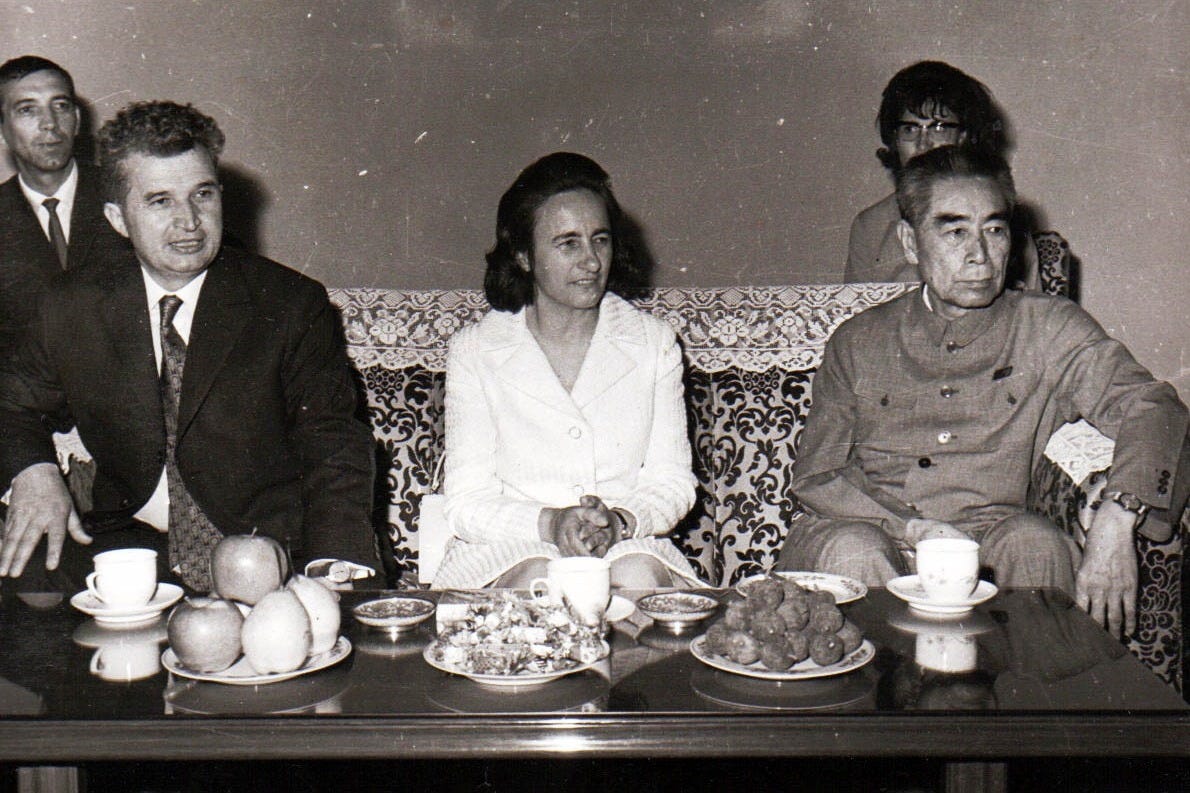
Months passed. During the summer of ’69, Nixon was again airborne, spreading his China message in places he thought progress was possible. Two stops on his round-the-world journey seemed especially enticing, one in Islamabad, Pakistan, where General Yahya Khan, approving of Nixon’s strategy, promised to talk to the Chinese, and the other in Bucharest, Romania, where the Communist President Nicolae Ceausescu, stuck in a bitter ideological argument with the Soviet Union, happily embraced a middleman role between Nixon and Mao.
With each stop, Nixon’s eagerness to visit China became a hushed topic of conversation even among his closest advisers. H.R. Haldeman, his chief of staff, once whispered to Kissinger that “the boss seemed to have it in his mind that he might be visiting Peking before another year was out.” Kissinger, whose admiration for Haldeman rivaled only the feuding Appalachian Hatfields’ for the McCoys, scoffed at the timetable, predicting Nixon would be lucky to get there by the end of his second term.
But Nixon wanted the Chinese to see he meant business. So:
On July 21, American passports were suddenly validated for travel to China. For scholars, journalists and businessmen, the door was opening.
On August 8, Secretary of State William Rogers, up to that point only peripherally involved in the president’s China diplomacy, officially expressed hope that on-again, off-again US-China talks that had been taking place in Warsaw could soon be resumed on a more regular basis.
On November 7, the United States suspended naval patrols in the Taiwan Straits, ending a military practice dating back 19 years to the Korean War.
On December 15, the US announced it would remove all nuclear weapons from Okinawa by the end of the year, producing a quiet sigh of relief in Beijing.
On December 19, Washington lifted the $100 ceiling on the purchase of Chinese goods, a symbolic but important step toward resuming bilateral trade.
And on February 18, 1970, Nixon changed his China rhetoric. A special report to Congress, called “New Strategy for Peace,” caught the eye of those who followed the twists and turns of diplomacy. Overnight, in official prose, the Chinese people, who had once been routinely ignored, were now suddenly discovered, described as “the great and vital people,” “the gifted and cultured people,” and, one step further, linking the US government to the “historic ties of friendship with the Chinese people.”
Still, despite those unmistakable overtures to China, month after anxious month passed in 1970 without any meaningful Chinese response. Kissinger wondered whether the leaders were so absorbed with their internal political squabbles, so suspicious of Nixon’s intentions, that they refused to agree on an acceptable response, one all factions of the Chinese Communist Party could buy. In Washington, no one really knew.
Then, on October 1, China’s National Day, as tens, possibly hundreds of thousands of cheering people crowded into Beijing’s vast Tiananmen Square, the Chinese finally flashed a signal of understanding and possible accommodation. High above the Gate of Heavenly Peace stood a smiling 76-year-old Chairman Mao, and, next to him, grinning from ear to ear, Edgar Snow, the American writer, who’d first met Mao in the mid-1930s during the Chinese Revolution. Snow went on to write his best-selling Red Star Over China, a book on Mao’s eventual triumph.
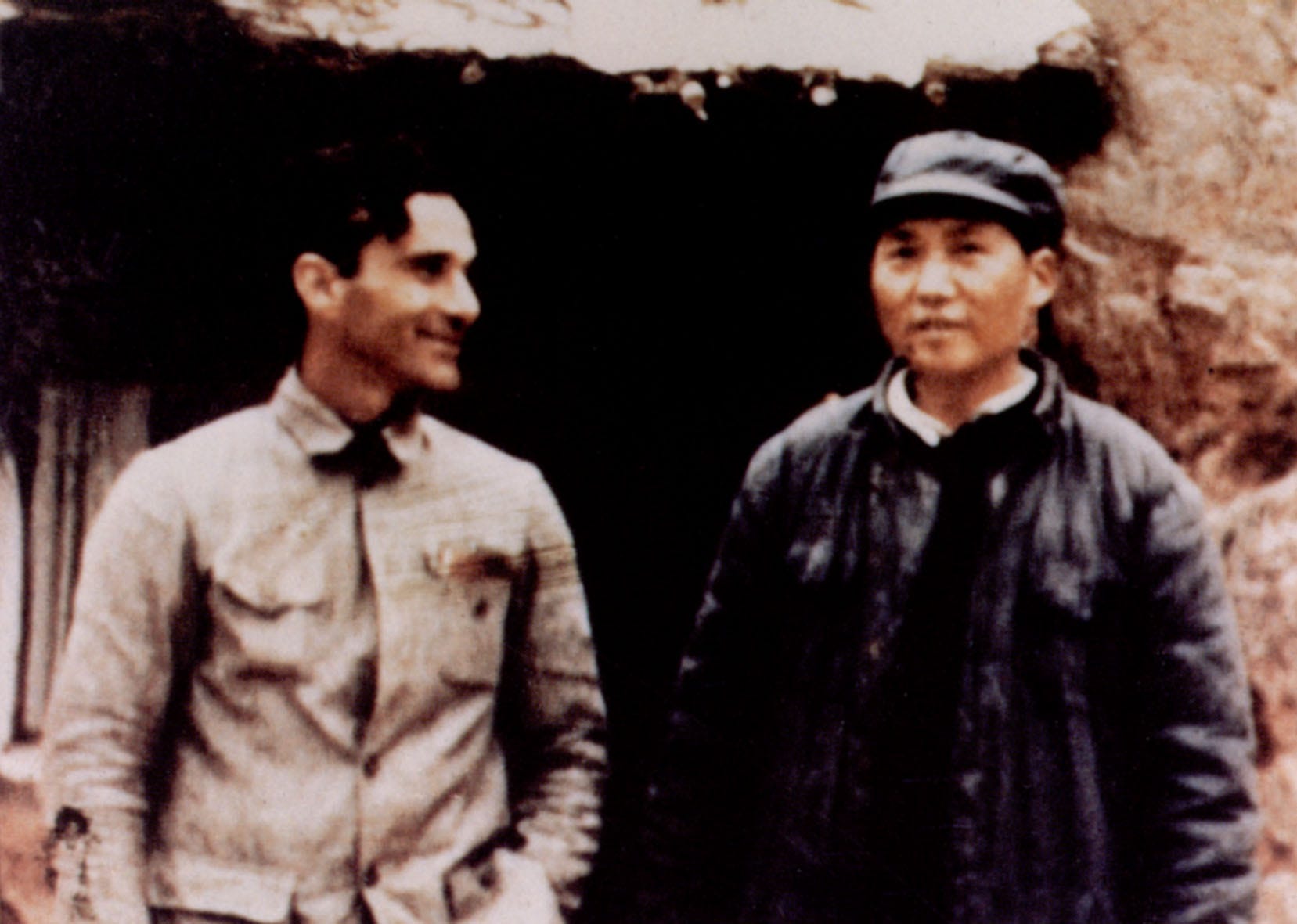
Official photographers on that day snapped photos of the heroic Chinese leader and visiting American writer. Later, according to official news sources, when the two discussed a wide range of subjects, Mao was described as “not satisfied with the present situation,” presumably China’s tense relations with the USSR, which he considered “irreconcilable.” But when he talked about America, his tone definitely softened. He seemed warm and hopeful. His message was clear: Mao looked kindly on Nixon’s overtures. The question was how to proceed with neither nation looking too eager. Their suspicions of each other persisted, however, even though their official rhetoric softened, with diplomatic doors now left slightly ajar.
In late October, as though in direct response to the Mao-Snow reports, Nixon changed America’s China policy at the United Nations, a significant step. No longer would the US officially recognize Taiwan as the sole representative of China. Now, the United States also began to extend a form of recognition to Communist China “but not at the expense of the expulsion of the Republic of China.” That evolved into a “two-China policy,” and, for the first time in official US handouts, China was referred to as “the People’s Republic of China.” Henceforth, according to Washington, two Chinas would be represented at the UN, an awkward formula Taiwan fought and Beijing reluctantly accepted.
Shortly thereafter, the US and China took another step toward the normalization of relations. Their diplomats had been occasionally meeting in Warsaw, their key point of contact, but one day, the Chinese recommended that next time they should meet in Beijing—and, they proposed, talk more frequently. The White House agreed, then added an intriguing wrinkle of its own: The meetings should be conducted “at a high level.” That phrase was left deliberately vague, leaving several possibilities open. Would the US representative be just another ambassador, a regional assistant secretary, perhaps a deputy secretary, or the actual secretary, or perhaps even the national security adviser, who worked in the White House, or…the president himself?
Much was left for later discussion but the tempo of diplomacy quickened and the tone of their exchanges, Kissinger said, grew “warmer and warmer.” On occasion, Washington was represented by Pakistani and Romanian diplomats who served as secret emissaries.
On one trip in November, Yahya Khan traveled to China but decided to stop in Washington (not exactly en route), where he conferred with Kissinger. When Pakistan’s president finally reached Beijing a day later, with a Kissinger letter to Mao conveniently tucked away in his inner jacket pocket, he was promptly driven to a political hideaway, where Mao welcomed him. A Chinese reply was drafted that night and slipped into the same jacket pocket. Twenty hours later, at a White House stopover, it was handed to Kissinger.
On similar trips to Beijing, Romanian diplomats, sometimes Ceausescu himself, performed the same function, the secret routine rarely changing: a quick stop in Washington, a letter from Kissinger, the flight to Beijing, a meeting with Mao or Zhou, the drafting of a Chinese reply, the return journey home with an intermediate stop in Washington.
After a while during these exchanges, Kissinger risked raising a key question. Would Nixon be welcomed in China—“properly,” he wanted to know. Mao offered a quick and surprising response, according to Snow. “Yes, Nixon could just get on a plane and come,” Mao was quoted as saying. “If he were willing to come,” Snow added, “the chairman would be willing to talk to him…whether he came as a tourist or a president.”
But then, seemingly out of the blue, the bonding came to an abrupt six-week stop, a puzzling disruption caused by what Nixon later explained as “the Laotian operation.” American and South Vietnamese troops had invaded Laos as part of a broader plan to stop North Vietnamese troops from slipping into South Vietnam. Protectively, Chinese troops rushed to their own border with Laos, posing the frightening possibility of a direct conflict between the United States and China.
Finally, on February 19, 1971, Nixon decided enough was enough. He did not want to endanger his diplomatic opening to China. During a quick roundup of White House reporters, he stressed that the “Laotian operation” should not be interpreted as a “threat” to China, adding that he remained “fully committed” to his goal of improving relations with Communist China.
Apparently, news reports of his assurance quickly made their way to Beijing. Mao, although still absorbed with the Soviet military threat on his northern border, decided that diplomacy with America made more sense than war with Russia. He needed a summit with the American president in Beijing.
The diplomatic exchange resumed and whereas its tone had been somewhat fuzzy and non-committal before the diplomatic freeze, now it became quite specific. Kissinger reckoned there was now a “70 percent chance” that some “high-ranking American” would be on his way to Beijing by March 1972.
Late one night in the spring of 1971, the Pakistani ambassador to Washington, a skilled diplomat named Agha Hilaly, handed Kissinger a note. It was an odd message, containing no signature, no salutation but a specific invitation for an “American envoy” to come to Beijing for “high level talks” with Chinese leaders. It suggested two names—Rogers and Kissinger.
Kissinger was in heaven, assuming correctly that Nixon would choose him. From the beginning of the effort with China, he had always been the one who worked most closely with the president and Rogers, who had been kept at arm’s length. Kissinger had also heard from Snow that Zhou had once whispered to an Indian ambassador that he looked forward to “crossing verbal swords with such a worthy adversary.”
The prospect tickled Kissinger’s already monumental ego: Imagine a verbal duel with Zhou! In that regard, Nixon’s temperament was also helpful. He was unpredictable in many ways but not in his effort to resume relations with China. He depended on Kissinger, and, without much thought, selected him for the special assignment.
“Richard Nixon sends me alone, cut off from communications,” Kissinger later joked. “For all he knew, I was going to sell Alaska!”
As it turned out, Kissinger was to visit China twice, his first trip in early July, his second planned for fall, depending on events. Both sides wanted to be sure everything was properly planned for a presidential journey to China designed to advance Nixon’s diplomatic and political interests and at the same time strengthen Mao’s position in his ideological struggle with Moscow. It was a journey both sides needed and had to be globally acknowledged as a roaring success.
On April 6, a news story broke like a thunderstorm over the White House, delivered not by some mysterious emissary but a ping pong tournament in Nagoya, Japan. The American team had been invited to tour China! Nixon was stunned—and delighted. It was, TIME magazine proclaimed, “the ping heard round the world.”
Allowing for no possibility of a change of mind, the US government immediately issued China visas to nine American ping pong players, four officials, two wives and three journalists. Three days later, they crossed the Lo Wu bridge from Hong Kong into mainland China, representing the first American delegation to enter the country since the communist victory in 1949.
On April 14, proving China’s top leaders wanted a breakthrough in relations as much as Nixon, Zhou himself hosted a dinner party for the visiting ping pong delegation in the Great Hall of the People, where he boldly pronounced the “opening of a new page in the relations of the Chinese and American peoples.”
A strange, uncomfortable pause followed his comment. Puzzled, Zhou asked, “Don’t you agree with me?”
The Americans laughed, bursting into loud applause, and extended a reciprocal invitation to the Chinese ping pong team to tour the United States, which it promptly accepted.
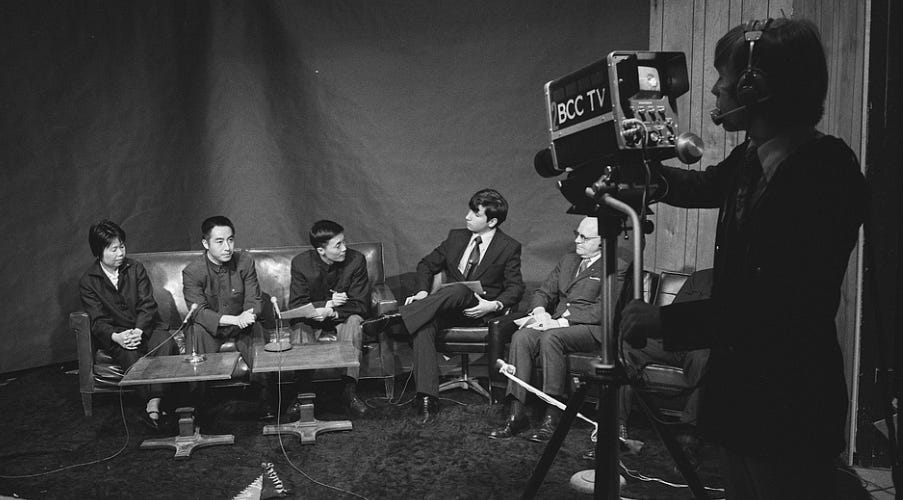
At the White House, Nixon was amazed by the speed of ping pong diplomacy. He immediately liberalized many restrictive anti-Chinese measures in trade, travel, commerce and sports. “What we have done,” he boasted to reporters, “has broken the ice.” Then he dropped a tantalizing hint the reporters should have picked up but didn’t. “I hope, and as a matter of fact,” he said, “I expect to visit mainland China sometime and in some capacity.” The suggestion was left dangling, unexplored by the press, waiting for history to clarify his goal, which it did a few months down the road.
Once again, Nixon and Kissinger retreated late in the day to a quiet corner of the Lincoln Sitting Room, where they meticulously reviewed their political and diplomatic options, knowing the critical importance of Kissinger’s upcoming trip to China. If it were to fail for whatever reason, so too, most likely, would Nixon’s goal of opening a new chapter in US-China relations. Possible, too, would have been a serious worsening of the military situation along the Chinese-Soviet border, where there had been clashes between the two sides for many months. Nixon’s opening to China proved to be a profitable example of “triangular diplomacy,” which helped advance US interests toward both the USSR and China.
So very little was left to chance. The two men went so far as to draft a version of the opening statement Kissinger would read to Zhou, then redrafted it several times. They also wrote 10 hypothetical communiqués, any one of which could have been the final summation of their first meeting, depending of course on what would transpire. Those various versions served as guardrails for Kissinger’s negotiation—how far he could go, what latitude he would enjoy.
Kissinger’s preparation included an exhaustive boning up on Chinese history, as though he were again a graduate student all-nighting for his PhD oral exams. For his files—no other reason, he explained to the CIA—he also needed a detailed biography of both Zhou and Mao. He wanted even US intelligence to be kept in the dark about his upcoming trip. He had focused for much of his life on Europe and such historical statesmen as Metternich and Bismarck, but now he had to know about Chinese leaders, too. In any case, if the CIA librarian happened to wonder why Kissinger suddenly needed all that information about China, he knew better than to ask.
On July 1, Kissinger took off in a presidential jet from Andrews Air Force Base near Washington on his most important trip as a government official; indeed, it would soon be regarded as historic. He was to make several stops before reaching China. He first flew to Saigon, where he hurriedly conferred with President Nguyen Van Thieu and US Ambassador Ellsworth Bunker. The press corps, large and eager, stalked Kissinger’s every move. The war was raging on endlessly, it seemed, and his negotiation with Thieu was a frontpage story in the Times and led CBS’s Evening News with Walter Cronkite.
On July 4, Kissinger stopped in nearby Bangkok, where there were fewer reporters and the story was less meaningful. Privately, he was pleased, although he usually adored coverage. On July 6, New Delhi provided a moment of press excitement when anti-war protesters trapped him, wanting to know if he was going to meet Hanoi’s Le Duc Tho in Paris. Kissinger fibbed, replying “No,” resulting in a slight four-paragraph AP story. On July 8, Kissinger flew on to Islamabad, where he was essentially ignored by the press. Although reporters there expected nothing of moment, they were soon to be unwitting participants in the greatest disappearing act in modern diplomatic history.
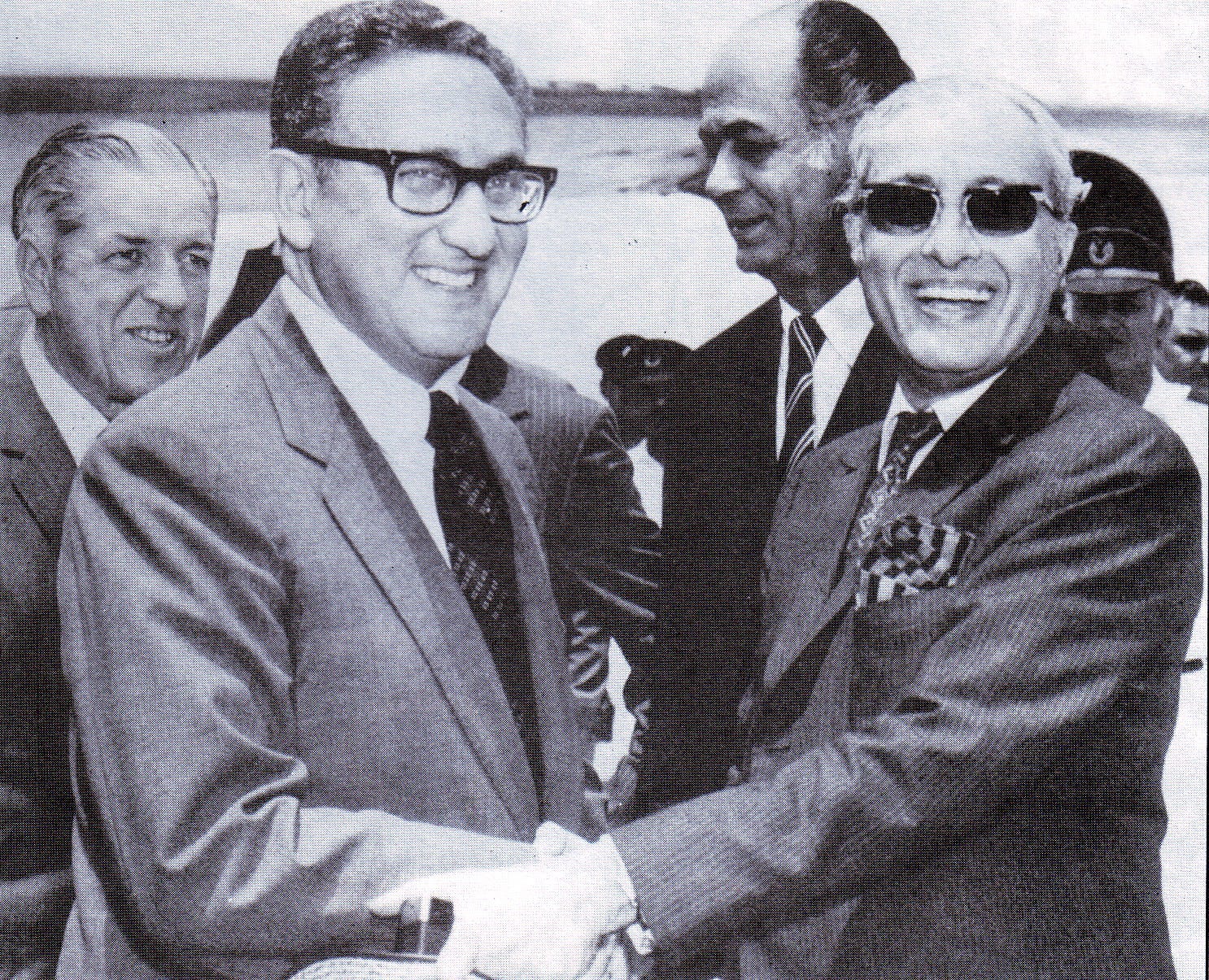
In the role of lead actor, Kissinger paid a 90-minute courtesy call on Pakistani President Yahya Khan, who was part of the deception from the start. Very few reporters covered the meeting. Shortly thereafter, Khan let it be known that Kissinger, “exhausted,” suffering from “Delhi belly,” as it was called, could not attend the state dinner that evening. He was being taken to Nathia Gali, a cluster of suburban hilltop bungalows, where he would rest. How long? No one knew, a few days certainly. The cover story seemed credible—people did get sick visiting India’s capital—although no one remembered the well-traveled Kissinger getting sick anywhere.
He never visited Nathia Gali. After his meeting with Yahya Khan, Kissinger was whisked off to a guest house, where he had a few hours to review Nixon’s marching orders with the three aides traveling with him—Winston Lord, John Holdridge and Richard Smyser, all Asia specialists. At 2:30 a.m., through quiet, deserted streets, they were driven to Islamabad International Airport, where they boarded a Pakistani passenger jet. No one saw them except M.F.H. Beg, a stringer for The Daily Telegraph in London. Why he was at the airport in the dead of night, no one knew, but he happened to spot Kissinger and was burning with journalistic curiosity.
“Isn’t that Kissinger?” he asked an informed Pakistani official standing nearby.
“Yes,” the man replied mindlessly, not realizing he was to say nothing about Kissinger, a state secret.
“Where’s he going?”
“China,” the official replied.
“Why’s he going there?”
“I don’t know.”
Beg quickly returned to his office and filed an urgent story to London saying Kissinger was on his way to China. His editor read Beg’s story, read it a second time, then a third before deciding to spike it.
“Damn fool Beg,” he mumbled, according to Fleet Street legend. “That bloke must be drunk. Really, Kissinger going to China. Ridiculous!”
Ridiculous or not, shortly after 3 a.m. Islamabad time, wheels up! Kissinger was on his way to China. His secret remained a secret.
At high noon July 9, Nixon’s national security adviser and his three aides landed, unobserved, at a deserted military airfield near Beijing, where he was greeted by Marshal Ye Jianying, who had fought in the revolution, and Huang Hua, an English-speaking diplomat soon to be dispatched as ambassador to Canada. In long black limousines with veiled windows (Kissinger could look out but no one look in), they were driven to a suburban guesthouse. He was now on his own, unable to communicate with Nixon. He was excited but totally self-confident. The secrecy around him was absolute.
At 4 p.m., Zhou arrived, shattering protocol. He was both prime minister and foreign minister. But there he was, paying an official visit to a foreigner with no rank in state-to-state protocol.
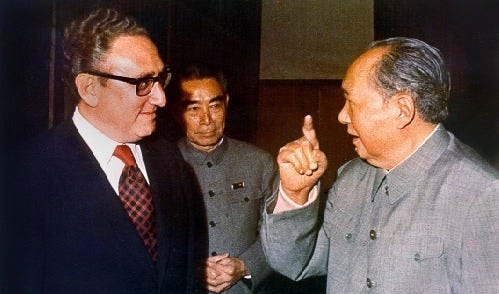
Very casually, Zhou and Kissinger sat down on opposite sides of a long rectangular table in the guesthouse as they opened a historic attempt at diplomatic reconciliation. They spoke for eight hours, through dinner, well into the night. There was no fixed agenda. Zhou started by beckoning for Kissinger to start, and he did, reading the formal opening statement co-authored with Nixon, outlining the president’s reasons for wanting to improve relations with China. It took 10 minutes to read but more than six hours for him and Nixon to compose it, ending with a word that caught Zhou’s attention.
“So, here we are,” Kissinger said, wrapping up, “after 22 years of separation, in this, for us, mysterious land.”
“Mysterious?” Zhou interrupted. “Why mysterious?”
The question triggered an exchange of impromptu impressions—why Kissinger (and Nixon) thought China was “mysterious,” and why Zhou considered America to be, he implied, restless and naïve. In their fascinating negotiating exchange, they ranged easily over reflections about their own histories, leaders they knew and political systems they studied—and the differences between the Chinese and American revolutions. They chose for the moment not to delve into specifics such as the Vietnam War or America’s Taiwan policy but rather to limit themselves to gentle probing into areas of possible understanding. After midnight, Zhou suggested they take a break and resume the next day, July 10, again at 4 p.m. The location would change, Zhou said, from Kissinger’s suburban guesthouse to Zhou’s downtown office in the Great Hall of the People.
In the morning, the American delegation toured the Forbidden City, where Chinese emperors once lived, and at 4 p.m., after a sumptuous 12-course lunch at the guesthouse, Kissinger and his three associates were taken to Zhou’s office for another eight-hour negotiating session. Although no formal agreements could be reached (only Nixon and Mao could make final decisions), they did elegantly settle on three “principles,” as they called them, which absorbed most of their time together.
The first concerned Taiwan, where the Chinese nationalist leader Chiang Kai-Shek had retreated in defeat after the victorious Mao brought communism to China in 1949. Washington’s diplomatic relations with the island, as if it were a substitute for all of China, were obviously unacceptable to Beijing. Zhou made it clear that few issues were more important to Mao—Taiwan, he stressed, was part of China and it had to be returned, preferably without violence. Kissinger accepted Chinese ownership of Taiwan during his talks with Zhou but argued that this major concession should be kept secret for the time being.
The second principle focused on Vietnam. Reflecting Nixon’s latest proposal to North Vietnam, still secret, the United States and China would both agree that South Vietnam’s political future would be solved by North and South Vietnam alone, no one else, meaning Washington would be excluded from the negotiation. Both Vietnams should first agree on a ceasefire, a return of political prisoners and the withdrawal of all American troops. These, too, were significant US concessions that both sides agreed to keep secret for the time being.
And, finally, the third principle was the general proposition that all Asian disputes, hostilities or wars should be settled by peaceful means, a Chinese way of saying that America should stay out of Asia and mind its own business. Kissinger accepted that principle too, although reluctantly, not wishing to disrupt the easy flow of his negotiation with Zhou. His mandate was to arrange a Nixon visit to China in early 1972, a presidential election year. He was to go no further.
Kissinger and Zhou reassembled after a dinner break, and Zhou, having safely pocketed Kissinger’s concessions, was now able to formally invite Nixon to visit China. It was what Kissinger had anticipated, and Zhou delivered. Kissinger happily accepted on Nixon’s behalf but stressed the importance of careful preparation, meaning clarity of agenda, newspaper and television coverage and, if necessary, additional advance trips by government officials and television technicians to make sure everything would proceed smoothly.
Kissinger and Zhou met for two additional hours on Sunday morning, July 11, and agreed that communication between the two countries henceforth would be conducted directly through their embassies. No longer was there a need for secret third party go-betweens. And they settled on the wording of the final communiqué, which was to be released simultaneously in the US and China at 10 p.m. Eastern Daylight Time on July 15, giving Kissinger just enough time to return to Islamabad (fully recovered, the press was told, from “Delhi belly”), fly to Paris for a quick negotiating session with North Vietnam’s Le Duc Tho before proceeding to San Clemente for a jubilant report to an ecstatic Nixon. Mission accomplished!
But not quite!
Although agreement had been reached about a Nixon visit to Communist China, his diplomatic dream soon to be realized, there was still a key question awaiting resolution, and it prompted anxiety. When exactly would Nixon visit China? Early in 1972, yes; but when? The answer required a second Kissinger journey to China, which provided him the opportunity to play a game of diplomatic signals.
The trip was announced on October 5, coincidentally (or was it?) during the buildup to an important UN vote on China. The trip was to last “a maximum of four days” so both sides would have enough time “to make concrete arrangements” for the Nixon visit. Kissinger arrived in Beijing on October 20; he was to stay until October 23 or 24. He actually stayed until October 26, a day after the highly anticipated China vote at the UN, when, by an overwhelming majority, Communist China replaced Taiwan as the legitimate representative of China at the UN.
The signal, clear for all to see, was Kissinger’s concluding a crucial agreement in Beijing at the same time as Secretary Rogers was arguing Taiwan’s losing cause at the UN, introducing everyone to America’s new two-China policy. “The ultimate relationship of Taiwan to the People’s Republic of China,” Rogers stated, “should be settled by direct negotiations between Taiwan and the People’s Republic of China.” Word for word, what Rogers was arguing at the UN mirrored Kissinger’s agreement with Zhou reached during his secret visit to China in July. All that was left was the official announcement by China and the United States on November 30 that Nixon would be visiting China from February 21 to 28, “the week,” as Nixon would later describe his trip, “that changed the world.”
With Kissinger’s skillful negotiating, Nixon accomplished a dramatic and historic change in American policy toward China. The price was high. On occasion, the concessions were considerable, also duplicitous and unprincipled; but the president had a vision in mind—a new relationship with China, beneficial to America, he believed—and he achieved a diplomatic breakthrough that might not have changed the world but certainly altered Washington’s relationship with Beijing and Moscow, giving the nuclear-armed troika time to contain national ambitions and try to negotiate a better tomorrow for themselves and the world, if possible.
Marvin Kalb is Murrow professor emeritus at Harvard University, once on Nixon’s “enemies list,” former network diplomatic correspondent at CBS and NBC and author of 18 books, including The Year I Was Peter the Great, Kissinger, and, most recently, A Different Russia.