


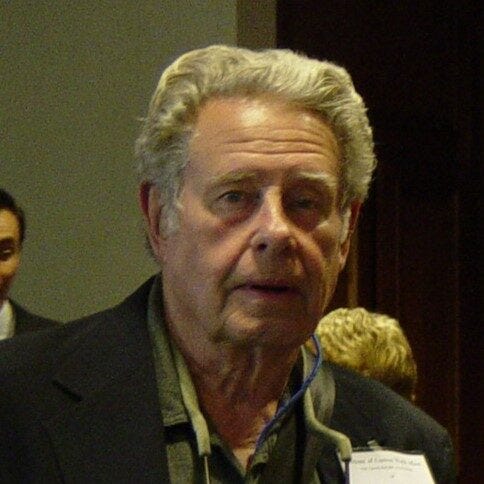
A writer and editor, David Hapgood was the author of seven books about a remarkable range of topics, from Africa from Independence to Tomorrow to The Murder of Napoleon. He also wrote the definitive biography of ICWA’s founder: Charles R. Crane: The Man Who Bet on People. David served as the editor of Washington Monthly and Focus, the magazine of the American Geographical Society. He was an evaluator for the Peace Corps of its programs in West Africa, India and Costa Rica. His father, the writer and editor Norman Hapgood, was a close associate of Institute of Current World Affairs founder Charles Crane and an early institute adviser.
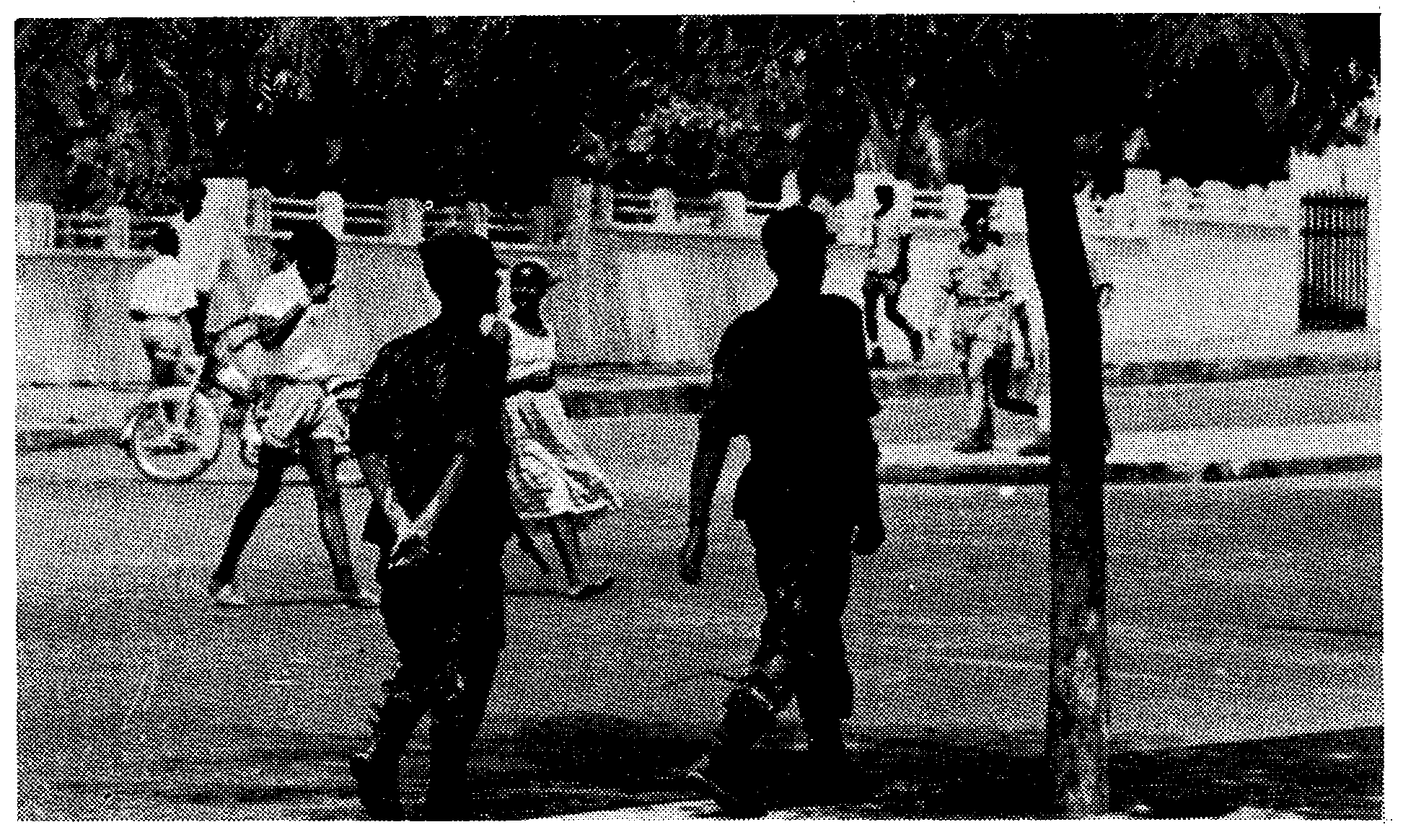
David was a fellow in West Africa from 1961 to 1963, chronicling events in newly independent Senegal such as early problems with governance and the emergence of labor unions. In the country David knew as Portuguese Guinea, which later became Guinea-Bissau, he witnessed the last stages of colonial power. In this 1962 dispatch, he joins Portuguese colonists in musing about the legacy they will leave this part of the continent. However, independence didn’t take place for another decade.
Portuguese Guinea (March 1962) — “If only they would give us a little more time,” a Portuguese official said wistfully of the rising tide of nationalism in his nation’s African colonies. The Portuguese have been in Portuguese Guinea for five centuries, which is quite a while, but now time is running out.
What sort of heritage will the Portuguese leave here? This is the essential background information about Portuguese Guinea: area, 13,944 square miles; population, about 550,000. The people are divided into 17 tribes, none of them constituting anywhere near a majority; 40 percent are Moslem. The country is ruled by 10,000 Portuguese and Cape Verdians. Now they are in an ambiguous position: they are instruments of Portuguese rule, but some of them have been touched by African nationalism. The land is in African hands; there are virtually no European settlers. The economy is almost entirely agricultural; the country is self-sufficient in food; peanuts are the major export.
Guinea is now under what amounts to military rule.
But everyone I talked to who was not committed to [Portuguese dictator António de Oliveira] Salazar—Africans, missionaries and other foreign residents—agreed that there has been a great spread of nationalist feeling, a sudden awareness of the world outside in the past decade.
Nationalism has spread from the two adjoining countries, Senegal and ex-French Guinea, that became independent in recent years. Each country shelters one or more Portuguese Guinean and Cape Verdian nationalist organization, evanescent groups that are constantly forming new “fronts” for unity. Both the Dakar and the Conakry radios beam daily radio programs to Portuguese Guinea. Thanks to the cheap transistor, there has been a great increase in the number of radios in the bush.
The Cold War, of course, is in the background. The resistance leader Amílcar Cabral’s group in Conakry is said in Dakar and in Bissau to be getting Russian money. Last fall the United States Embassy in Dakar achieved what it considered a coup. It rescued a young Guinean named Gil Fernandes from the possible clutches of Patrice Lumumba Friendship University in Moscow. Fernandes had been offered a full scholarship to Lumumba U.; the embassy produced a counter-offer from an American university that Fernandes chose. Then the embassy quickly got him on a plane before his fellow students at the University of Dakar could talk him out of his decision.
In politics, the saving grace of the Salazar police at least in Guinea is its inefficiency. Everyone talked about the secret police—but they talked. One man I went to see, having been told he was not entirely sympathetic to the regime, said with rare sharpness after I had introduced myself: “What I want to know is who sent you to this building and more particularly who sent you to my office?” He excused himself and phoned a government official and said: “There’s an American here asking questions. What should I tell him?” Yet after a while this man talked freely: It was he who told me about his phone call.
At first the Portuguese must quote the official line, though I did not hear its most extreme form more than once. In that case a young civilian told me: “We are Portuguese. We will stay here until we are all dead. If we had had an airbase between Lisbon and India, we would not have lost Goa.” Of course, this is pure opera. The Portuguese did not fight to the last man in Goa, and there is no reason to think they will here either. Most administrators I talked to dropped sooner or later a remark that showed they did not take seriously Salazar’s view that this corner of Africa must remain forever Portugal.
I strolled around both downtown Bissau and the African quarter; nobody gave me more than a glance, and nothing seemed to be happening. Meanwhile, Governor Peixoto Correia went on performing his extraordinary evening rite. From nine to 11 or midnight, he strolled alone in front of his palace, talking with anyone who approached him. No guards were visible when I went up to him, and in his resplendent white uniform the governor made an excellent target.
There is of course a world of difference between nationalist opinions and active rebellion. In the British and French colonies in West Africa, independence was granted rather than won. The colonial power simply left when nationalism became a nuisance. So far, the Portuguese have shown that they are willing to use their military strength to stay in Guinea, and it seems unlikely that any armed rebellion can succeed in this tiny country. Everyone in Bissau seemed to be waiting. “We are waiting,” an African said, “for independence to drop like a ripe fruit from a tree.” Salazar will not rule forever and, if Portuguese attitudes in Bissau are any criterion, it seems fair to guess that independence will come rapidly after the dictator is off the scene.