

Who would want to kill a pope?
The question raced through my mind on May 13, 1981 when I learned that a Turkish gunman named Mehmet Ali Agca had just shot Pope John Paul II in St. Peter’s Square. This was electrifying news, certain to plunge the Catholic world into gloomy uncertainty and diplomatic chanceries around the globe into a frantic search for answers. One reason for the international tumult was that John Paul II was no ordinary pope.
I was NBC’s diplomatic correspondent at the time, based in Washington. Immediately, I threw myself into the story, calling a number of key sources in the US government, wondering what they knew. Not very much, as it turned out. At the time, everyone in Washington seemed preoccupied with another attempted assassination: Only six weeks earlier, the new American president, Ronald Reagan, had been shot by John Hinckley, Jr. near the Washington Hilton Hotel. Fortunately, Reagan survived but now faced troubling questions about the attempt on John Paul II’s life. Was there a connection? Did this story contain hidden mysteries? Who would want to kill a pope?
In the Vatican, the seriously wounded pope was rushed to the nearby Gemelli Clinic. Five hours of emergency surgery followed and his doctors were still uncertain whether he’d survive. The gunman, who had been seized by startled worshippers, was handed over to Vatican police. The many hundreds in St. Peter’s Square suddenly felt lost, robbed of their spiritual leader.
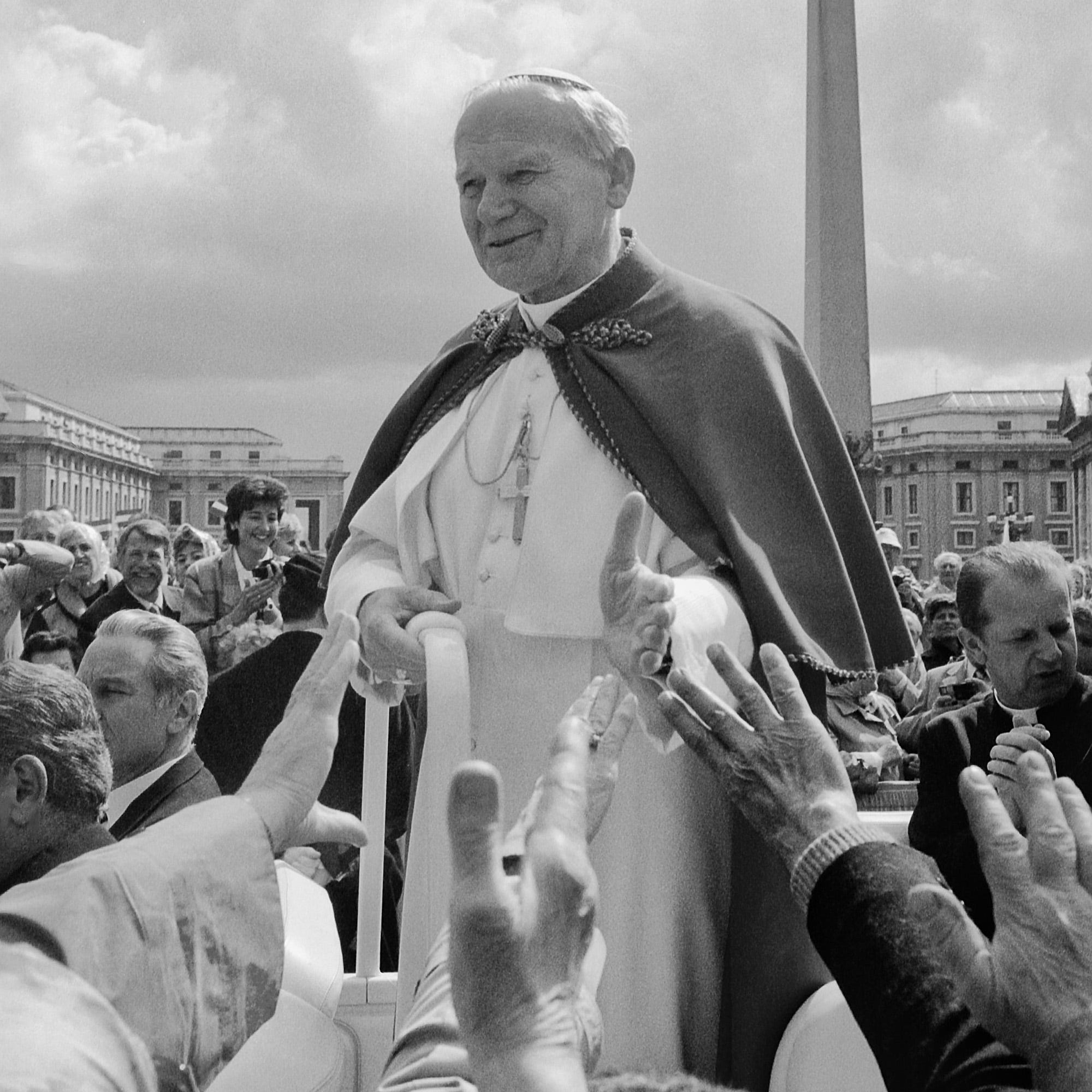
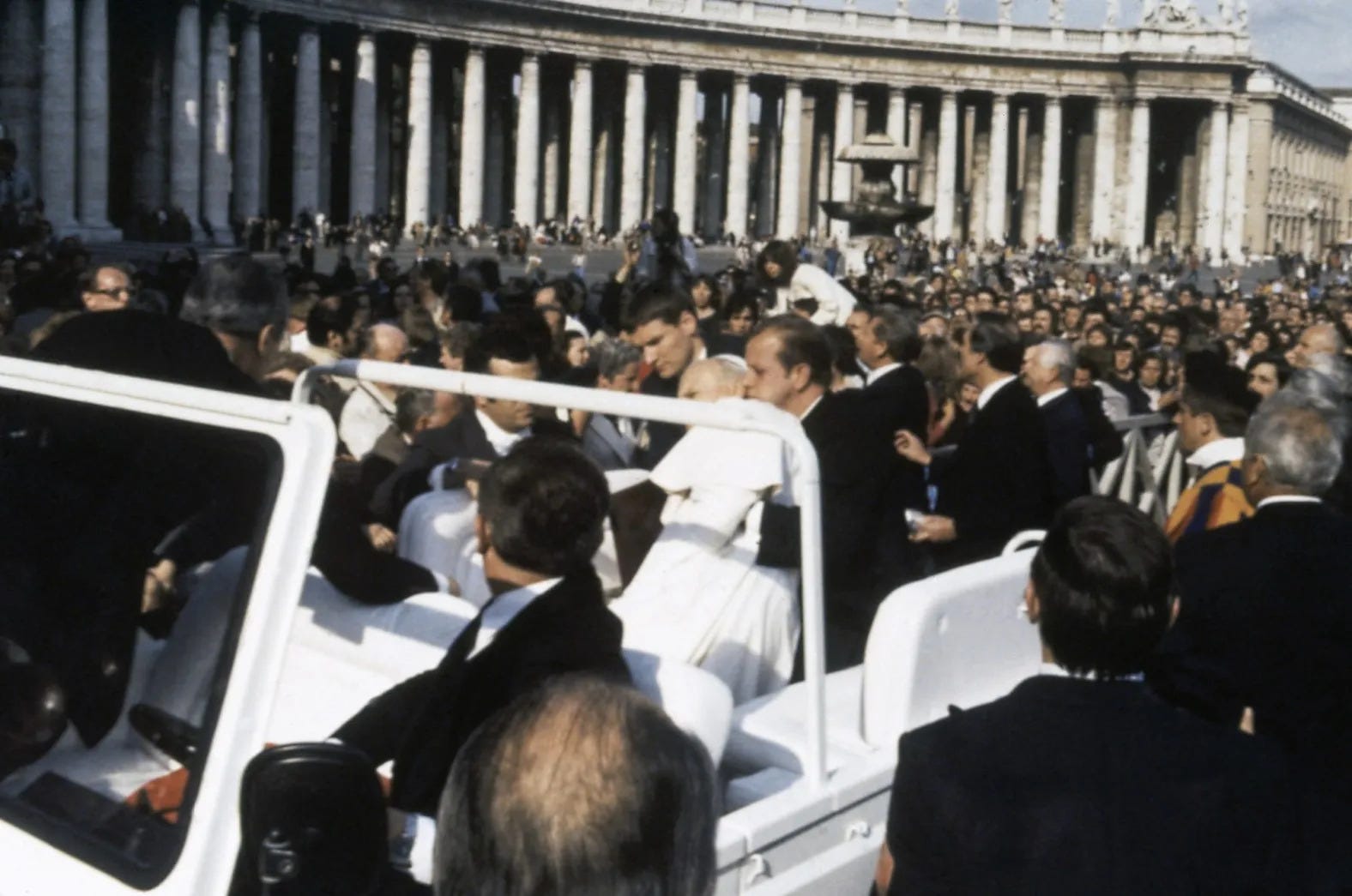
Initial news reports, rocketing around the world, mirrored television’s live coverage. The pontiff had been standing in his white Popemobile, riding through the crowded square, mingling on this Wednesday afternoon with his adoring flock, considering each person to be a special gift from God. With a smile on his face, he would occasionally stop his cavalcade of faith to chat with an old woman, touch an ecstatic teenager, offer a simple prayer, even joke with his Hallelujah people.
Everyone in St. Peter’s Square knew this pope was different. John Paul II was the first non-Italian pontiff in 455 years, the first Polish-born successor to St. Peter, conservative in his theology, daring in his defense of Poland, the communist country nestled uncomfortably alongside an insecure Soviet Union. His nationalism was indistinguishable from his Catholicism, a dangerous combination for anyone, certainly a Polish-born pope, at the height of the Cold War.
At 5:17 p.m., a hand with a gun rose above the crowd and fired three bullets at the passing pope, hitting him with two of them, one creasing his left hand and shoulder, the other entering his upper abdomen, close to his heart, causing massive lesions and loss of blood. The third bullet wounded two bystanders, American tourists unlikely ever to forget their May 13 visit to the Vatican.
Agca, the 23-year-old Turkish assassin, already wanted for murder in Turkey, seemed under the circumstances to be remarkably casual about the seriousness of his crime, telling reporters that he meant only to “hurt” the pope, not kill him, and that he was “very sorry for [shooting] the tourists.” He identified himself as an “international terrorist,” who made “no distinction between fascists or communists.” Almost from the moment of his arrest, Agca tried to create the image of a professional killer operating on his own, linked to no specific national or ideological crusade.
But his effort defied belief, quickly losing credibility. Most observers wondered, more logically, whether he might have been part of a dark conspiracy involving Iranian or Palestinian extremists, neo-fascists in Turkey or certain communist leaders in Eastern Europe thrown by the sudden emergence of a Polish pope.
The story of John Paul II had already fascinated me. I’d been covering Eastern Europe for a long time. I was familiar with recent developments in Poland. I’d heard about the remarkable career of Karol Josef Vojtyle, the talented archbishop of Krakow who, although ambitious, probably never imagined that one day he’d become a pope. When he was selected in October 1978, I was astounded. Why choose a Pole when all of Eastern Europe was already aflame with danger and uncertainty?
As the first non-Italian pontiff in more than 400 years, he naturally attracted more than his share of attention. He was brilliant and controversial, balancing his fierce commitment to Catholicism with a powerful sense of Polish nationalism. He also attracted critics who later came to believe that despite his important role in fighting Soviet communism, his traditionalist views—including opposition to birth control and the ordination of women—served as a brake on social progress and helped conceal child sexual abuse within the Church.
After only eight months as pope, John Paul II decided to visit his homeland. While in Poland, he electrified crowds, bringing hope of freedom and promises of better times, a modern-day Beckett challenging the archaic rules of Soviet communism. He prophesized “some changes are coming. You can feel it.”
In August 1980, workers in Gdansk, inspired by the pope’s message, organized crippling strikes, demanding an independent trade union (later called Solidarity) and unfettered access to their Catholic church. In the communist world, those demands were unprecedented, and a crackdown seemed imminent, either by Polish security forces or the Soviet army, which had earlier crushed uprisings in East Germany, Hungary and Czechoslovakia.
But that’s not what happened. I learned that while tensions were dramatically rising in Poland, it was not the Russians who intervened; it was the pope himself. He secretly dispatched a personal envoy to the Kremlin with a handwritten letter in Russian to Soviet leader Leonid Brezhnev, stressing that although he was the head of the Catholic Church, he was also a Polish patriot deeply concerned about the possibility of Soviet intervention. He hoped that intervention would not occur. But if it did, the pope warned, he would return to Poland and stand shoulder-to-shoulder with his people. Given the impact of his recent visit to Poland, it was a warning Brezhnev had to take seriously.
An American-born priest and Vatican insider, Hillary Franco, told me at the time that “even though the pope belongs to the world, he’s human, right? A man who loves his own country, I am sure the pope will try, and would have tried, everything possible to stop an invasion of his homeland.”
Throughout this dangerous period, the Soviets conducted military maneuvers on the Polish border, suggesting an invasion could be just around the corner. In late February 1981, while addressing a Communist Party congress in Moscow, Brezhnev thundered menacingly that “the pillars of the socialist state were crumbling in Poland” and “strong action was required.” Surely it would not have surprised any serious observer if he were seen late at night wandering alone through the Kremlin corridors mumbling the Russian equivalent of “will no one rid me of this meddlesome priest?” Several months later, Agca attempted to assassinate John Paul II.
My interest in the papal plot only deepened with time. Agca had close ties to a violent ultranationalist organization in Turkey called the Grey Wolves, which played a key role in the illicit smuggling of drugs and arms between Turkey and Bulgaria. The more I learned, the more I believed that Agca was part of a conspiracy managed by Bulgaria, a Soviet puppet state at the time.
Normally in the early 1980s, I would have been in a competitive war with other journalists, each struggling to uncover a new nugget of information about Agca’s attempt to kill the pope. But after an initial outburst of coverage, most reporters seemed to lose interest, their focus shifting to other stories of note. As a consequence, the assassination attempt fell off the front pages. For a time, it seemed as if I were the only reporter, aside from Claire Sterling of Reader’s Digest, who displayed any interest in the story. At NBC, I continued to broadcast radio and television reports about the papal plot, and NBC producer Anthony Potter invited me to help research and write a documentary about the event. Thrilled, I accepted, and off we went on an exciting adventure that lasted several months and opened my eyes to the hidden worlds of Vatican politics and global terrorism.
A few days before I left for Rome, I received an intriguing call from a friend who worked at the Central Intelligence Agency. “Can we meet tonight?” he asked. Strange, I thought, he rarely volunteered any information. Even a weather forecast seemed too sensitive.
“Sure. Where? When?”
“At the Watergate,” he whispered. “Outside, near the taxi stand. At 7:00 p.m.”
We met and he steered me toward a walk along the Potomac. “You’re going to Rome, I hear.”
“Yes.” How did he know?
“At the agency we got word today, not sure how reliable it is, but I wanted you to know there’s a hit job out on you, coming from somewhere in Eastern Europe.”
“What?” I was puzzled.
“A hit job,” he repeated. “I’m not certain the report’s accurate but it does seem somebody wants to kill you.” Why would anyone want to kill me? My mind raced over details of the papal story.
“You’re doing stories about shooting the pope, right?” my friend said, as if reading my mind. “The Bulgarians don’t like those stories and neither do the Russians. They’ve both denied time and again that they had anything to do with the shooting, but you keep linking them to the story.”
“Yes?”
“So they may want to frighten you. They may want to stop you from tying them to this story.” It all seemed too far-fetched, I told him.
“Well, you never know. Most of these threats do end up only as warnings, but…”
“I’m going to Rome anyway.”
“Good luck,” he said, patting me on the back. “I just wanted you to know, that’s all.”
We returned to the Watergate. “Good luck,” he repeated.
On my way home, I decided not to tell my wife about my friend’s warning. I didn’t really believe it; nor did I believe the Russians, who knew me well, would decide one day to kill me for something I had broadcast.
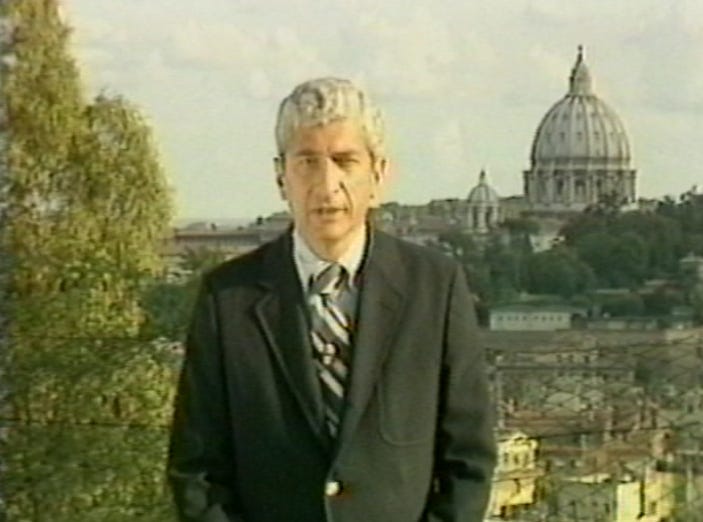
Rome proved to be a delightful destination as always, sunny, beautiful, splendidly historic. I arrived just as stories broke in the Italian press that John Paul II had recuperated from the attempted assassination and was back at work in the Vatican.
The NBC office was located downtown, a few busy blocks from the Coliseum and only a short taxi ride from the Vatican. On most days, I was busy talking to knowledgeable sources. I tried arranging meetings at historic sites, which, of course, included restaurants in a country where lunch or dinner was special, not just a meal but a culinary work of art. Which restaurant? There’d be a debate. What kind of food? From northern Italy or the boot? Would we sit inside or out?
Italian friends, diplomats, businessmen and priests soon helped open a few Vatican doors for me. I met cardinals willing to discuss the attempted assassination, and to do so on camera. In time, I also met a handful of attorneys with superb contacts in the slow-moving universe of Italian jurisprudence. Under pressure, key prosecutors had actually begun to crank into action, investigating Agca’s background in Turkey and, more meaningfully, Bulgaria, where he had spent two months.
The prosecutors organized Agca’s trials, the first starting in July 1981, the second five years later. Although one headline writer described the first as “the trial of the century,” it was unusually brief, lasting only three days. Agca opened his defense proclaiming he did not need a lawyer but the state provided one anyway. Instead he read a written statement, pockmarked with hyperbole, misdirection and blatant lies. Against heavy headwinds suggesting conspiracy, he kept emphasizing that he had acted alone, which few lawyers and fewer journalists believed. He was, he kept repeating, an “international killer.”
One lawyer at the first trial was the experienced Severino Santiapichi, an expert on global terrorism who marveled at Agca’s rhetorical jujitsu. He had “an exceptional ability,” he said, “to mislead the investigations.” Later, Santiapichi told me, “I believe there was a plot behind Agca’s crime, a plot hatched in other places, hatched by other brains.” Agca struck him as one of the central figures in the international conspiracy.
I also met Francesco Mazzola, at the time the skilled attorney charged with Italian state security. He took Santiapichi’s judgment two steps further. “Other places,” he believed, were Poland and the Soviet Union; “other brains,” he thought, were anxious communist leaders in Russia. After reviewing the evidence, Mazzola was convinced that Brezhnev, who had recently dispatched Soviet troops to Afghanistan, was considering the same option for Poland. Did he have proof of the Kremlin’s plans? No, he did not, he acknowledged, but believed the circumstantial evidence was becoming increasingly persuasive.
Covering the Vatican was an absorbing challenge, especially when the subject was a papal plot. In my experience, knowledgeable bishops and cardinals were gracious but reluctant to share information, partly because they did not want to damage their delicate dialogue with the Soviets, a strategy the Germans called Ostpolitik. According to Polish Cardinal Stefan Wyszynski, there had been, thanks to the example of John Paul II, “an awakening…a spiritual mobilization” of millions of Catholics in different parts of the Soviet empire, but their political and religious position there was vulnerable. I thought the Vatican was actually trapped between a growing desire to publicly incriminate the Russians in the papal plot and a more compelling need to protect its flock living under communist domination.
During a long interview with Cardinal Silvio Oddi—a well-informed Vatican official with considerable diplomatic experience—marked on his part by caution and evasion, I asked bluntly, “Then what secret service did this job?”
Oddi squirmed. “What do you suspect? I’ve gone too far.”
“Alright,” I continued, “what possible motive could there be behind the attempt to kill a pope?”
“It could be almost anything. It could be fanaticism. Material self-interest. And perhaps,” Oddi paused, struggling for the words to camouflage what he really wanted to say, “and probably more to the point, international political strategy.”
“Spell that out for me,” I pressed.
“What the words mean, political international strategy. You understand well what I mean… This man was not a fool. There’s proof he is an intelligent man. He is a killer, a real professional. He was certainly acting in the name of others.”
Oddi tried to be helpful. He came as close as any Vatican official to publicly incriminating Moscow but left it to me to point the finger.
That night, proud of our Oddi interview, Potter invited the NBC News team to dinner in a restaurant not too far from the Vatican. The weather cooperated and we gathered around a large table, one among many on the crowded sidewalk fronting the restaurant. Looking inside, I couldn’t help but notice there was only one man sitting by himself at a small table in the rear. Everyone else was outside. Throughout the meal, more delicious with each course, the man, dark complexion, glasses, neatly dressed, kept staring at me. After a while he approached, apologized and asked in heavily accented English, “Are you Marvin Kalb?” Instantly, my CIA friend’s hit-job warning flashed through my mind. Did he have a gun? Was this to be my last supper?
“Yes,” I replied, not knowing what else to say, “and who are you?”
The man handed me a card. “I’m a travel agent,” he said. “I have been for years, but this visit to Rome is purely personal. I’ve always wanted to visit the Vatican.”
I cast a quick glance at his card. His name was there, likewise his travel agency’s, both located in San Jose, Costa Rica. “So what did you think of the Vatican?” I asked, playing for time. Our conversation widened into polite generalities about travel in Europe. Soon I rose, shook his hand, wished him a pleasant journey and promised to call him when next I was in Costa Rica.
“There is so much to see there,” he smiled, backing away and slowly returning to his table.
Potter, aware of the CIA warning, asked, “What do you make of that?”
In truth, I didn’t know. I told him that when I got back to my hotel room, I’d call NBC in New York and ask someone on the foreign desk to check the travel agent’s story. Was there a name and agency in San Jose such as those on his card? An NBC stringer in the capital checked and double-checked. An hour later, he called back. There was no such travel agency in San Jose, he reported; nor was there any such name.
“What do we do now?” Potter wanted to know.
“We finish our story and go home,” I told him.
For me, that meant spending a lot more time in the Vatican learning about a possible conspiracy. For my NBC colleague Bill McLaughlin, who had joined our team, it meant a reporting trip to Turkey, where he lifted the lid on Agca’s life—where he was born, his family, education and, most important to us, his critically important ties to the radical right-wing Gray Wolves.
Although we tried, neither one of us could get into Bulgaria, an inaccessible place for us NBC reporters at that time, but we spent another month exploring the story still further in Rome and Ankara. I then returned to Washington and Potter, McLaughlin and the camera crew flew back to New York, where the job of pulling all the pieces together began, including writing the documentary, which had always been my responsibility.
We had discovered a lot. By the time Agca reached St. Peter’s Square on May 13, 1981, he had already proven his value to the Grey Wolves. He was a trusted gunman, had robbed two banks, for which he was handsomely paid, and he’d murdered Abdi Ipekci, a well-known, liberal newspaper editor critical of the Grey Wolves, for which Agca earned thousands of dollars and front-page coverage. He seemed ready for a major assignment.
The first two stops on his memorable journey to Rome, secretly organized by the Grey Wolves, were Teheran, then in the grip of the Islamic revolution, and Sofia, the capital of communist Bulgaria, where Agca stayed for seven weeks of intensive preparation. Was he told there that he was on a mission to kill John Paul II? Possible but unlikely. He was then only in the opening round of an international conspiracy that was to mushroom over the next nine months into an historic crime.
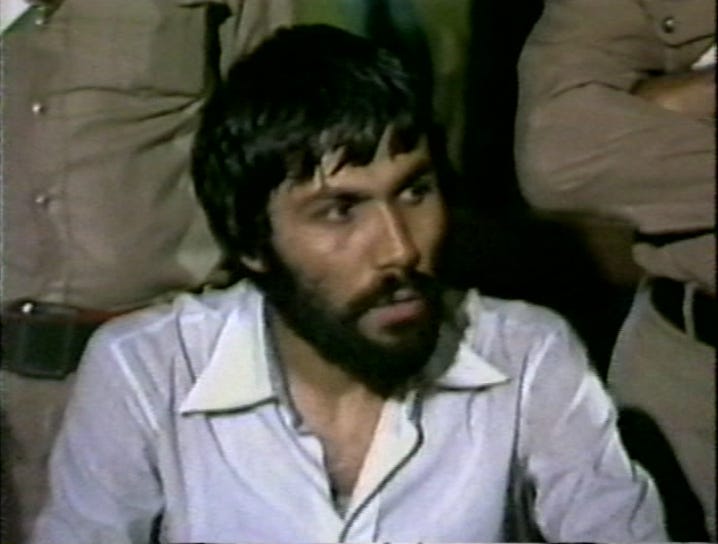
It was curious that Agca made no effort to hide during his time in the Bulgarian capital, even though he was a known killer who’d only recently escaped from a Turkish prison. While in Sofia, he lived the life of a footloose tourist, for whom money, liquor and women were never in short supply. Helping him was Omer Mersan, a key Turkish intermediary between Bulgaria and the Grey Wolves who booked room 911 for him at the fashionable Hotel Vitosha and secured him a Turkish passport in the name of Farouk Ozgun, the same passport Agca had in his pocket when he was arrested in St. Peter’s Square.
Collaborating with Bulgarian intelligence, the Grey Wolves had arranged for him to slip into tightly controlled Bulgaria without a passport. Such cross-border collaboration was common in the illicit drug-smuggling and gun-running operations both sides had been conducting for years. Could this lucrative backdoor arrangement have taken place without the Soviet KGB knowing about it and, possibly, demanding a slice of the action? Only if you believe in fairy tales. Vladimir Sakharov, a former KGB official who had defected to the West, told me the KGB “knew everything” that Bulgarian intelligence knew, and then some. “Everything,” he stressed.
In September 1980, with Sofia now behind him, Agca began an extraordinary nine-month odyssey through 12 different European countries without once being arrested, proof of his care and craftiness and police ineffectiveness. From Sofia, carrying $50,000 given to him by Mersan, he journeyed to West Berlin, where he tried melting into the crowds of Turkish “guest workers,” cheap immigrant labor allowed into West Germany to fuel its expanding economy. There were 1.6 million such workers. Several times, Agca was recognized. His photo as a killer on the loose had appeared in the German-language edition of the popular Turkish newspaper Milliyet on October 3, November 6, December 11 and December 29. Four times, the German police were informed of Agca’s presence. Four times, the Germans tried to catch him; four times they failed.
Assisted by “branch offices” of the Grey Wolves, located all over Western Europe, Agca slipped into Switzerland. While he was in Oldham, a Zurich suburb favored by Turks, the Grey Wolves purchased a Browning 9 mm revolver with serial number 76C23953 from Horst Grillmeier, a trusted Austrian collaborator, and hid it in a railroad luggage department in Milan. It was the gun Agca used in St. Peter’s Square on May 13.
In April 1981, after crisscrossing the continent, he finally reached Italy. He went directly to Perugia, a university town, where he enrolled in the University for Foreigners and, as a student, acquired a three-month visa, which he needed for his travel in Italy. He attended only one class, but he had his visa.
On April 13, Agca went to Rome and checked into the Hotel Torino, where he called a Grey Wolf contact in Hanover, West Germany, presumably for final instructions. While there, he met and conferred with members of the Bulgarian embassy and other Turkish gunmen. Together, they cased St. Peter’s Square, deciding where Agca would stand when he tried to kill the pope. Then, after brief stops in Germany and Switzerland, Agca traveled to Milan, where he checked on the revolver hidden in the railroad luggage department. He then purchased a two-week trip to Mallorca, eager, as much as possible, to avoid detection by the Italian police. He stayed at the Spanish island’s luxurious Hotel Flamboyant but kept to himself. Every morning, he jogged for two hours on the beach. One day, according to Italian prosecutors, he met with a Grey Wolf emissary who confirmed he would be paid 3 million German marks, roughly $1.75 million, to kill a very prominent European.
On May 9, Agca returned to Milan, where he went to the railroad luggage department to pick up his revolver. He stuffed it into his suitcase and spent the next two days touring the city, meeting no one.
Early on May 12, he boarded a train to Rome and checked into the Pension Isa, a 15-minute walk from St. Peter’s Square. The room clerk remembered Agca. “He came and went, ‘Good morning, good evening,’ he’d say, and that’s all.” In fact, Agca again met with Bulgarian and Turkish collaborators. They again walked through St. Peter’s Square, took photos, checked the angle of the sun at a certain hour so Agca could get a better shot. As usual, the Bulgarians gave the final orders. The Turks agreed. Everything seemed set.
On May 13, Agca got up at 7 a.m. and, after breakfast, took a long walk through Rome. In his pocket was a handwritten note of “things to do”—“Careful with food” was one cautionary reminder; “Wear a cross” was another. At 4 p.m., he approached St. Peter’s Square, already jammed with hundreds of people excitedly waiting for the pope’s Wednesday afternoon appearance. Again, Agca was joined by his Bulgarian and Turkish collaborators. They gathered with hundreds of others, waiting patiently for the pope to pass in his white Popemobile. At 5:17 p.m., as planned, Agca shot John Paul II.
The documentary I wrote told an exciting and important story. Called “The Man Who Shot the Pope,” it was broadcast on NBC in primetime on September 25, 1982. It received generally excellent reviews, and I was delighted, especially after learning that NBC, gratified by the popular reaction, intended to run an updated version of the program in January 1983, a rare tribute at a network.
Although the documentary pointed to the Bulgarians and therefore the Soviets as prime movers in the plot to kill the pope, one reviewer stressed that though my “evidence was powerful and convincing,” it was also “circumstantial,” lacking the “hard documentation” needed to prove Brezhnev ordered the papal assassination, or if not Brezhnev himself then one of his deputies, Yuri Andropov, the KGB chief, whose antipathy toward John Paul II was well-known in the communist world. According to this line of reasoning, shared by many US officials, one or the other would have had to order the killing, and a written record of this order would have to be somewhere in the Soviet archives and clearly referenced in the documentary. I did not have, nor did I reference, a written record of the order to kill the pope, and I did not believe such a written order ever existed. I still don’t.
Soviet defectors who had served in the KGB and veteran Western diplomats who had been stationed in Moscow during Soviet rule advised me that it was “highly unlikely” such an order would ever have been written. Or if one had been written, that it would ever have been put in a folder and saved for the historical record. No one would want to have his name officially associated with the order to kill a foreign leader, particularly a spiritual authority such as a pope, even though assassination had been widely practiced by both democratic and authoritarian governments for a long time. Without a written order, an experienced subordinate could still notice a nod, a phrase, a gesture, and then, without fuss, set the train of assassination in motion. In this particular case, it would have been from Moscow to Sofia and from the Grey Wolves to Agca, a secret journey shrouded in lies, cutouts and confusion, laced with heavy doses of duplicity and denials.
Recently, the pattern of putting carefully calculated distance between, say, a Brezhnev and an Agca has changed. Now it no longer seems startling to hear a president announce on television or social media that he had ordered the assassination of a foreign leader as a first step toward war. Now assassination has become an open act of war. Forty-plus years ago, it was still an embarrassment.
By January 1983, when NBC ran my documentary a second time, the story of the attempted assassination rarely made news, and there seemed to be two reasons. First, the pope had survived the attempt and thrived, his clerical tenure filled with important, eye-catching contributions to Catholicism and East European history until his death in April 2005. While in office, he privately met with Agca and then publicly pardoned him, suggesting to many “case closed.” Second, the Soviet Union and Bulgaria both vigorously denied playing any role in Agca’s plot, and no other nation appeared to want to challenge their chorus of denials. Why rock the boat in the midst of a dangerous period of the Cold War? An Italian judge noted, “We all remember that World War I began with shots fired in Sarajevo. No one wanted the third world war to begin with shots fired in St. Peter’s Square.”
Over the ensuing decades, stories about the papal plot did occasionally appear in major media. There’d be a spark of interest but nothing more. In Washington, several senators and congressmen demanded the Reagan White House produce a better explanation of the Soviet role in the papal plot than its series of awkward handoffs: “It’s an Italian investigation,” Reagan told a reporter, “and I have great confidence in their abilities.”
Italian magistrates did indeed preside over a series of trials and investigations, focusing on Agca, whose self-justifications varied like the weather, and a handful of Bulgarian diplomats who hid behind the legal equivalent of “Who, me?” Exasperated, the judges echoed the CIA’s pathetically weak conclusion to its lengthy, still top-secret study of the papal plot. “The event that has been touted as ‘the trial of the century,’” pronounced the CIA’s senior Soviet experts in September 2000, “produced more questions than it did answers. In so doing, it affirmed the view of many that the truth surrounding the attack against the pope may never be known.”
Only in 2006, a year after the pope died, was there some progress when three Polish scholars launched what became an exhaustive eight-year study of the papal plot, inspired by their own curiosity, an Italian newspaper article and the judgment of a prominent Italian magistrate. The article appeared in the March 30, 2005 edition of the respected newspaper Corriere della Sera, disclosing that East German Stasi intelligence documents proved there was a “plot orchestrated by the Bulgarians and the KGB, and the East German role (was) to cover their tracks.” The magistrate was the experienced Ferdinando Imposimato, who, after examining the records of the 1986 trial of Agca and a key Bulgarian diplomat, declared he had “no doubts the assassination attempt was ordered by the KGB, who tasked the Bulgarians with it, and they in turn hired the gunman.”
The three historians were Ewa Koj and Michal Skwara of the Polish Institute of National Remembrance and Andrzej Grajewski, also an editor of Gosc Niedzielny, a Catholic magazine.
Their research included the exploration of literally thousands of Soviet, Bulgarian, East German and Polish intelligence files, the interviewing of major participants in the plot and the cooperation of many European judiciaries. But, amazingly, even their study, which advanced popular understanding of the assassination attempt, raised few eyebrows.
The report’s highlights were later reported in two books, Skwara’s Agca Was Not Alone and Grajewski’s The Pope Had to Die. Both contain fascinating and persuasive insights into the papal plot but, as the critic of my documentary had put it, no “hard documentation” definitively linking either Brezhnev or Andropov to the assassination order.
The authors had undoubtedly dug diligently into the data year after year but could not find the order that put the papal plot in motion. Why? Because, in their judgment, too, it never existed in written form. However, their impressive research and rich reservoir of information led to one unmistakable conclusion: It was the Kremlin’s idea to kill the pope. Try as the Russians might to point the finger of guilt at the Grey Wolves, placing the ultimate responsibility for Agca’s crime on the right-wing Turkish Mafia, their effort failed.
The reasoning also appeared clear. The Russians saw the Polish pope as an unmanageable irritant, a direct threat to communist interests and Soviet security, and he had to be eliminated. Too much was at stake, starting with Brezhnev’s East European empire. Challenging the Soviet Bloc in many different ways, John Paul II had boldly revived the Greek Catholic Church in Ukraine; he’d also stimulated religious fervor throughout Eastern Europe, terrifying the USSR’s leaders with his electrifying visit to Poland, which had ignited Solidarity opposition to communist rule in his home country.
It wasn’t the first time Russia’s rulers believed a Pole was an existential threat. Anti-Catholic and Polish prejudice has been a recurring curse among Russians at least since the Time of Troubles in the early 17th century, a period of political crisis and chaos that saw the rise of foreign pretenders to the throne and Moscow’s occupation by King Sigismund III Vasa of Poland.
Toward the end of his life in 2005, John Paul II hoped to reconcile theocratic differences between the Vatican and the Russian Orthodox Church. It had become a priority for the failing pontiff. But, even at this time, the Kremlin’s Vladimir Putin stood in his way, claiming all the Vatican really wanted was the chance to proselytize ordinary Russians. Thus, Putin poured cold water on the pontiff’s hope to become the first pope ever to visit Russia.
In November 1979, a year after John Paul II had helped light the fuse of dramatic change in his homeland, the Kremlin distributed a warning through the communist establishment that the new pope represented “an enemy of peace” and had to be fought, undermined and removed. At the same time, Andropov was reported to have sent an urgent cable to KGB operatives in Eastern Europe “to obtain all the information possible on how to get physically close to the pope.” It was then left to the former KGB defector Viktor Sheymov to translate the odd Andropov cable into a meaningful, relevant order. “Everyone knew what it meant,” he explained matter-of-factly; “it meant they wanted to assassinate the pope.”
Not for the first time, the Kremlin had planned the killing of a political opponent. Such directives have surfaced all too frequently in Russian history like embarrassing bloodstains. Putin’s shameful ordering of the opposition leader Alexei Navalny’s poisoning in 2024—as top experts believe—was only the latest example.
During the Teheran Conference of World War II Allies in 1943, the usually cynical Soviet leader Joseph Stalin supposedly turned to British Prime Minister Winston Churchill at one point and asked a strange question: “How many divisions has the pope?” Whether true or not, the question might more appropriately have been asked by Brezhnev, who could have imagined in a passing nightmare that John Paul II commanded so many divisions he would be able to actually topple his vast communist empire. More than anything, it seemed, Brezhnev feared the power of freedom and faith, represented in this case by a determined religious leader who was supported militarily only by a small contingent of Swiss Guards.
Marvin Kalb, the Murrow professor emeritus at Harvard, was for 30 years the Moscow and then diplomatic correspondent for CBS News and NBC News. He is also the author of 18 books, most recently A Different Russia: Kennedy and Khrushchev on a Collision Course.
Former CIA Director Richard Helms told me that the attempted murder of Pope John Paul II “had all the markings of a KGB operation.” That is not proof, but Helms was a very perceptive observer. I had worked for him in Tehran when he was our ambassador there.