


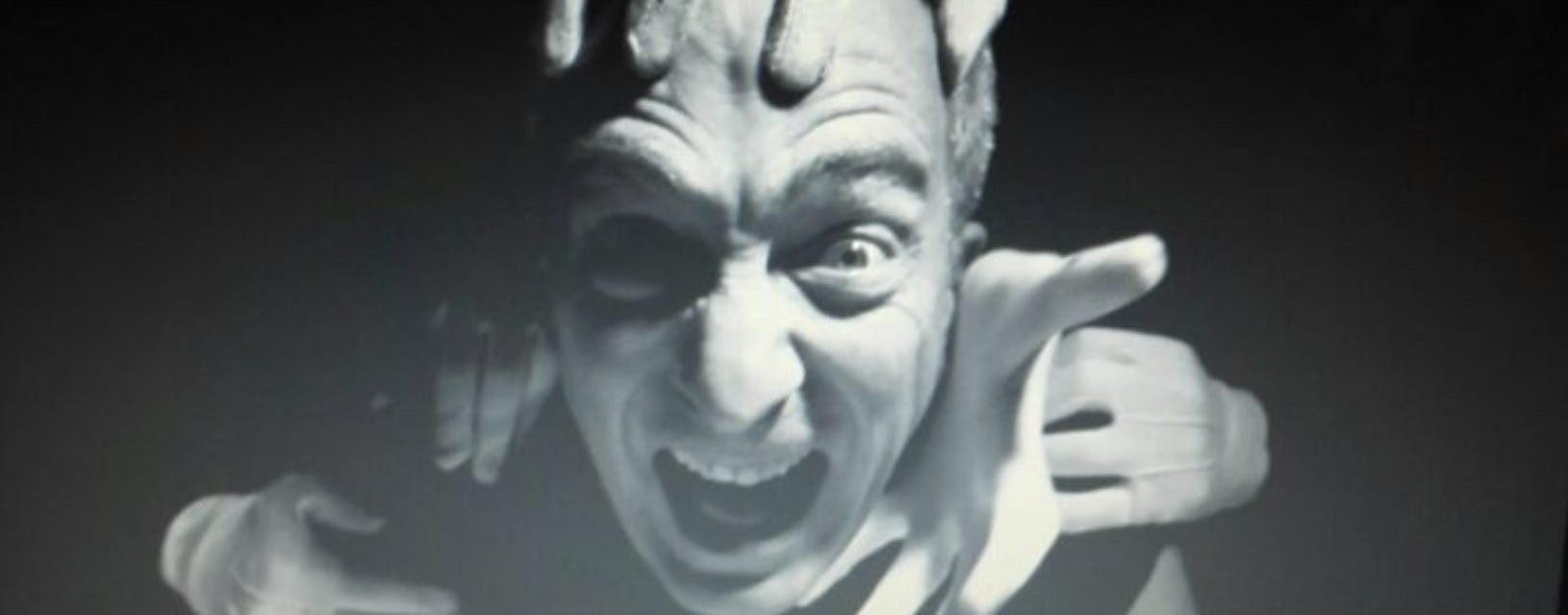
“Fuck you, Ruby,” David said.
“Cut!” said Khalid, squinting at the monitor. “That’s better, sir. Let’s try it again, with more hostility.”
“Landlord,” Omar said, “scene eight, take five.”
“Annnnnd… Action!”
“Fuck You, Ruby!” David said, glowering into the lens.
“Cut!”
“Can I get some water?” David asked. “We’ve been at this for hours. I had a full day of teaching, you know.”
“Sorry sir, we’re out of water. Just one more time. We’ve almost got it.”
David sighed.
“Landlord, scene eight, take six.”
“Again, but with more menace. And… action!”
“Fuck. You. Ruby.”
“Good, good. Perfect, in fact. That’s a wrap for today.”
David was the high school drama teacher at American International School Kuwait. Khalid, an Egyptian, and Omar, a Kuwaiti, were freshly minted AIS graduates and the country’s wannabe Coen Brothers. Or to be more precise, since Khalid and Omar were interested in horror, the Duplass Brothers. Or considering their nonstop insult banter and Keystone Cops antics, perhaps the Marx Brothers. Khalid was tall, thin and dark, with wavy, movie-star hair. Omar was also tall, also thin, with Irish-light skin and hair cropped close to the scalp. They had been home movie-making pals since elementary school. They were obsessed with American films. Both spoke English with eerily American accents and slang.
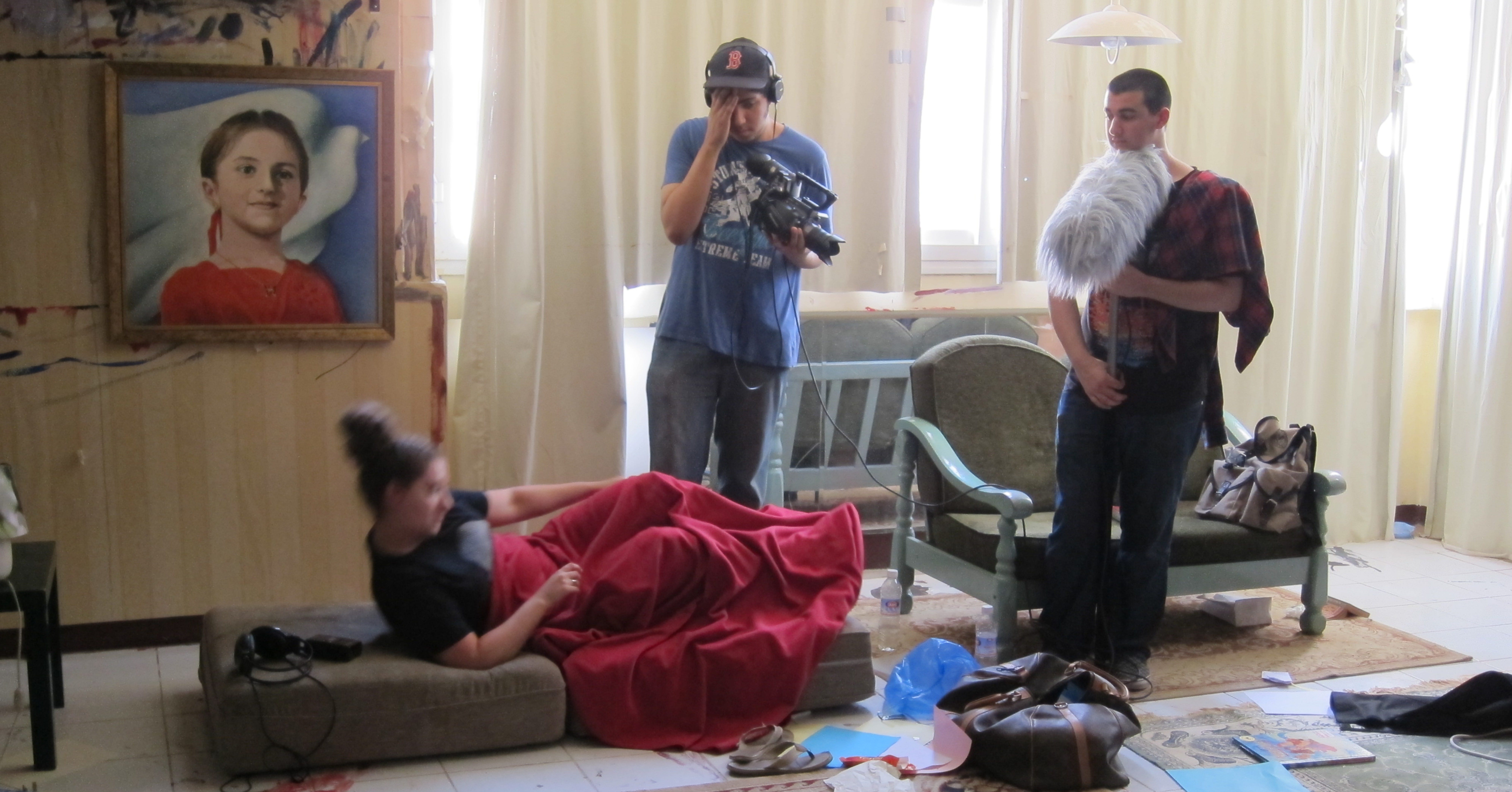
“Landlord,” written by Khalid, was their first feature effort, being made with a professional suite of equipment courtesy of Farouq, Khalid’s dad, a TV celebrity and documentary filmmaker. The film was set in his family’s former apartment building, now empty of residents and awaiting demolition to make way for a bigger, taller apartment building.
It was the story of Ruby, a washed-up children’s book illustrator and crumbling tenement manager who single-handedly defeats a coven of vampires. Ruby was to be played by Sharon, a middle school drama teacher. David played one of the apartment dwellers, late on his rent. I was another apartment deadbeat. So was Amber, another middle school teacher, of Individuals and Societies, the International Baccalaureate version of social studies. Khalid’s older brother (who, confusingly for the purposes of this story, is also named Omar) played the vampire king. He and his followers take over the building, step one in their plan for world conquest. Ruby defeats them in a battle royal, saving civilization, then goes back to being a washed-up children’s book illustrator. Or would have, if, on the day following our long series of fuck-you-Ruby takes, a demolition company hadn’t cut the electricity and begun smashing our set into a pile of rebar and rubble. Khalid saw it as a bad sign and shelved the production. “Landlord” never got much beyond David’s three-word rant.
For four of my five years teaching art in Kuwait, 2011-16, Khalid and Omar struggled to make a feature film using AIS teaching staff meeting after school in the last few weeks of each school year. The year following the shuttering of “Landlord,” Khalid wrote a second vampire movie, “Sidney Bloom Lives,” this one set in a fictional Great Lakes town, starring me as a washed-up writer sent to interview the mayor, a vampire king, again played by Khalid’s older brother. After months of fruitless negotiations with Kuwait’s media bureaucracy to secure locations, Khalid found an unrented apartment in his new building, where he and Omar managed to shoot a few scenes before the building manager shut us down. The next year, Omar wrote his own film, “In Bloom,” about the same washed-up writer, now a washed-up talk show host, again in vampire town. We shot several scenes of circular dialog in Omar’s apartment living room against a makeshift green screen before he declared himself in over his head and ended the project. By this time, all the teachers in my cohort had left Kuwait. Their replacements were uninterested in volunteer acting.
Khalid and Omar’s false starts weren’t emblematic of Kuwait’s professional film industry. Indeed, the country is the beating heart of Arab movies and television and boasts one of the most prominent and influential live theatrical traditions in the Gulf. Legitimate theater provides a deep pool of talent from which screen productions have benefited. Khalid and Omar had been marinating in one of the Arab world’s richest performing art traditions.
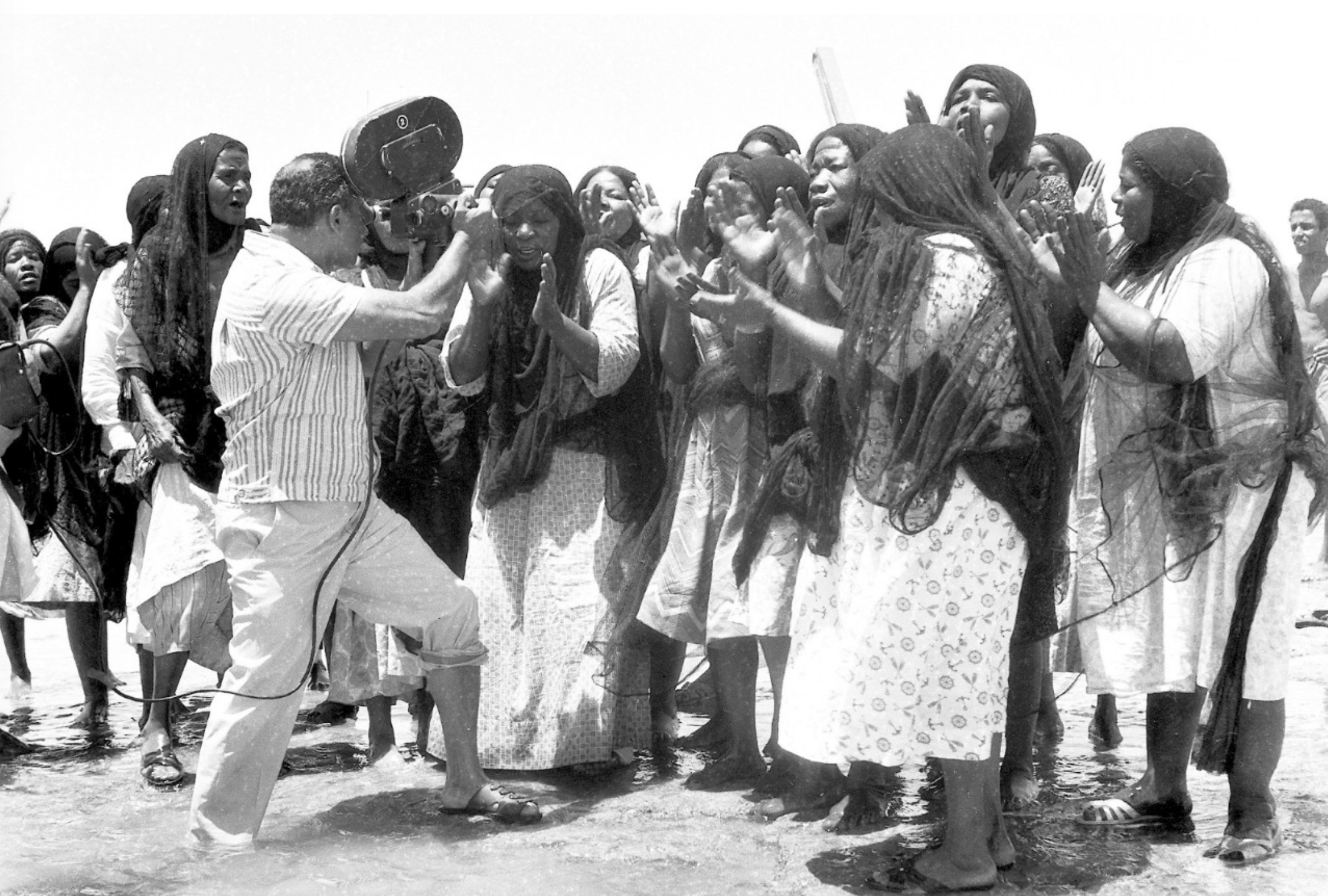
Filmmaking in Kuwait goes back to 1932, when a tourist named Allen Flood shot film of the Kuwait City seaport. In 1939, an Australian, Alan Flippers, produced “Sons of Sinbad,” a documentary about Kuwait’s pearling industry. In 1946, after the discovery of oil, the Kuwait Oil Company produced “Oil in Kuwait,” followed in 1959 by the much-anticipated sequel, “Oil and Life in Kuwait.” By 1950, the government had started a cinema department. It produced 60 films for the public’s edification about health, marriage and other subjects. The Public Affairs Ministry established a film unit that produced 25 films about the arts. The government also invested in theatrical films. In all, between 1971 and the mid-1980s, Kuwait directors made over 40 of them.
The best-known Kuwaiti director from that period was Khalid Al-Sediq. His 1971 film “Bas ya Bahar” (“The Cruel Sea”) won awards in the Chicago, Venice and Tehran film festivals, followed by “Ers Al-Zein” (“Zein’s Wedding”) in 1976 and “Shaheen” (“Falcon”) in 1984.
In keeping with Kuwait’s conservative public culture, the government has strict movie censorship rules about the depiction of gender, romance and religion. No gays. No kissing. No Jews. Some movies are banned to “protect public ethics and social traditions.” That was the reasoning behind the prohibition of “Barbie” in 2023.
Some movies are trimmed to appease the censors. Others are cut so that theaters can schedule more screenings per day. In 2014, at the Avenues Imax Cinema, I watched “Pompei 3D.” In the final scene, seconds before Kit Harrington and Emily Browning are burned to cinders by the Vesuvian pyroclastic flow, they embrace. As the credits roll and ashes float across the screen like Korean snow, the camera pans up their pumiced corpses until just before the credits reach their ossified heads. Jump cut. Even in death, smooching was forbidden.
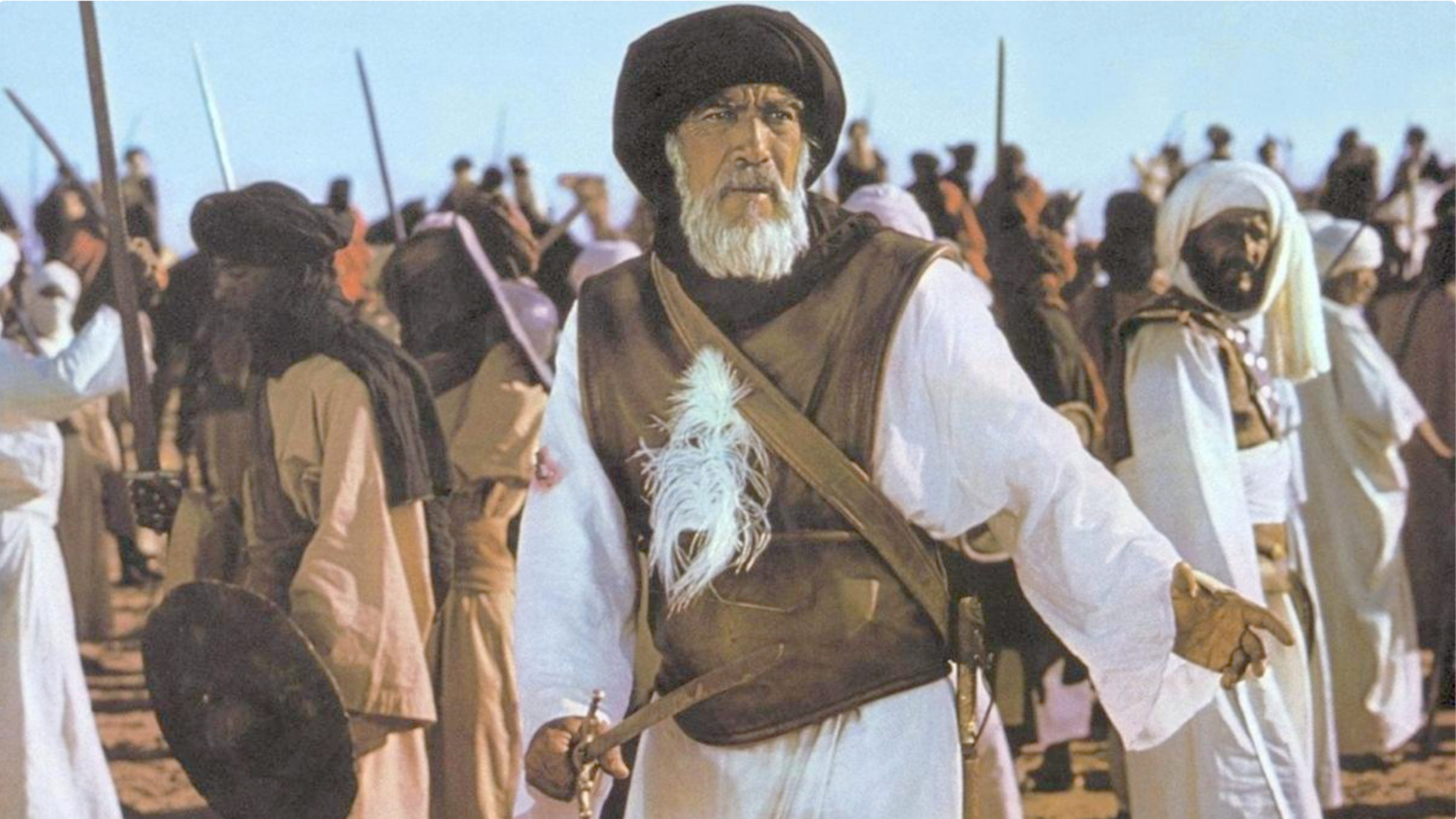
By the mid 1980s, government cinema funding began to dry up and in the year 2000, the Information Ministry disbanded its cinema division. That may have been because of two big films Kuwait helped bankroll: Moustapha Akkad’s 1976 epic, “Ar-Risalah” (“The Message”) about the life of the Prophet Muhammad, and “Lion of the Desert,” a 1981 epic about the Libyan tribal leader Omar Mukhtar. Although hugely popular in Libya (where both movies were shot), internationally they rank as two of film history’s biggest box office flops.
Kuwait’s interest now turned to television as the country developed its musalsalat industry. Today, some 90 percent of all Gulf Arab television drama programming originates in Kuwait. Musalsalat means “chained” or “continuous” in Arabic. These are television dramas, similar in style to American daytime soap operas. Ramadan musalsalat are unique to the Islamic soap opera genre: a 30-episode dramatic arc, broadcast one per night during the Muslim fasting month, meant for family viewing after the iftar fast-breaking meal. Because satellite viewing is now nearly universal in the Middle East and North Africa (MENA) region, the audience for musalsalat is enormous and competition between musalsalat-producing countries fierce. They include Kuwait, Syria and Egypt, and more recently the UAE and Saudi Arabia. Audiences also have access to dubbed Indian serials, Korean K-dramas and Latin American telenovelas. With a few exceptions, Iranian seriyal have not found a wide Arab audience. Turkish dizileri (“series”), however, dubbed into Arabic, are hugely popular. “Muhteşem Yüzyılis” (“Magnificent Century”) is a lavish historical drama about the life and reign of Sultan Suleiman the Magnificent. “Diriliş: Ertuğrul” (“Resurrection: Ertuğrul”) is a historical and action series about the foundation of the Ottoman Empire. I watched every episode.
In Kuwait, the signing of big-name actors is important for attracting advertisers. Kuwaiti stars are among the highest-paid in the Gulf and their lives are followed with intense interest. The 2026 death of Hayat Al-Fahad, whose nearly 60-year career made her “The Lady of the Gulf Screen” and “The Dean of Gulf Drama,” was mourned across the MENA region.
Kuwait goes to great lengths to keep musalsalat viewers’ attention. Sets are lavish. Character growth and change are crucial. Long scenes spread across eight or more interwoven narratives are common, to ensure stars get continuing exposure as another way of maintaining audience interest. Betrayal, amnesia, hidden lineages, family secrets and dark pasts are common tropes. But because Kuwait’s Information Ministry sees musalsalat as vehicles for reinforcing and improving public morality, censorship regulations forbid the kind of evil characters and immoral behavior that are the bedrock of American network soap operas. In musalsalat, adulterous male protagonists are allowed but only if their womanizing leads to a second or third marriage. Married female protagonists are forbidden from philandering. In this way, musasalat serve the state’s Islamic identity, which allows polygamy but not polyandry.
The Egyptian film critic Joseph Fahim doesn’t think much of those regulations. He calls Kuwait “a society and culture that has been isolated for more than 30 years… Any critical thinking, any spark that could stir social or political debate, has been instantly extinguished.” He warns about the “hermeticism of a society enveloping further unto itself: a society that is no longer tolerant of criticism or capable of self-reflection.”
To support his contention, Fahim points to government intolerance of the depiction of hot-button issues in musasalat. “Saq Al Bamboo” (a serial about the illegitimate child of a mixed Kuwaiti-Filipino coupling) and “Oum Haroun” (another serial, about Kuwait’s former Jewish community), were both subjects of intense criticism.
Satellite television gives viewers occasional glimpses of alternatives. In reruns of Egyptian movies from the 1930s, actors like the revered Egyptian chanteuse Oum Kalthoum sometimes dress in drag. Contemporary Lebanese television offers the antics of Majdi and Wajdi, two flamboyantly gay characters on the popular Beirut MTV show “Ma Fi Metlo” (“There’s No One Like Him”). Majdi and Wajdi are played by Adel Karam and Abbas Chahine, both straight. Actual queer Arabs bemoan those absurd caricatures, which feed the region’s notorious homophobia.
As with so many things in Kuwait, however, all is not as it seems. Khalid and Omar introduced me to Cinemagic, Kuwait’s free indie movie club, located on the rooftop of an electronics shop in Salmiya’s Salem Al-Mubarak Street, a dusty thoroughfare referred to in tourist brochures, without irony, as the Champs-Elysées of Kuwait. (The only similarity I could discern is that both roads are paved, both lined with shops and both have trees). Cinemagic is a film production company located on the top floor, reached by a discreet elevator. Twice a week, the company would inflate a large screen, set out rows of blow-up chairs and couches and show a free movie, often accompanied by free drinks, kebabs and other fare. Anyone and everyone were welcome. The genders mixed freely. Abayas and dishdashas squeezed onto couches side by side with ripped jeans and shorts.
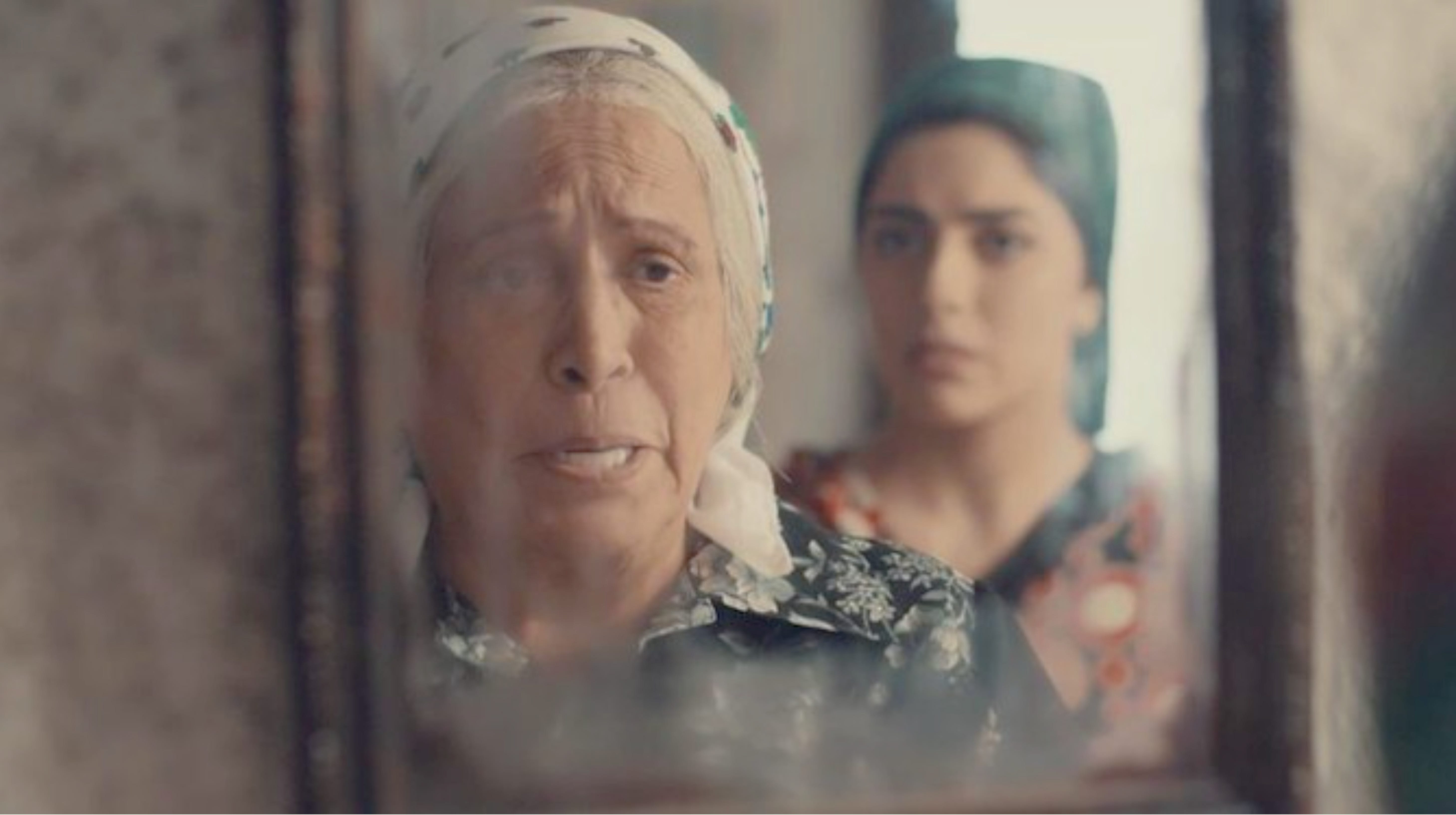
Rumor was that the Cinemagicians had serious wasta, protection from a high-ranking member of the royal family, which allowed them to skirt censorship rules. They were serious cinephiles and screened serious French, Italian and Chinese films: Louis Malle’s “Au Revoir Les Enfants,” Paolo Sorrentino’s “The Great Beauty,” Wang Kar-Wai’s “Chungking Express.” They screened “Tiny Furniture,” Lena Dunham’s steamy 2010 film that was the inspiration for the HBO series “Girls.” More shockingly, they screened Darren Aronofsky’s 1998 sci-fi thriller “Pi,” in which an unemployed mathematician discovers a 216-digit number that can predict patterns in both the stock market and the Torah. He spends much of the film being pursued by Wall Street agents and Hasidic Jews.
Below, at street level, a censorious public world of black abayas and nikabs. Above, on the rooftop, Sex and the Hasidim. Few do cognitive dissonance like the Kuwaitis.
Farouq, Khalid’s dad, provided me entrée to pro-level Kuwaiti filmmaking. A balding bespeckled man of many connections, he invited me to write copy for the Kuwait Oil Company website and the script for a company safety film. Through him I met Wael, a TV director and moonlighting advertising and documentary filmmaker.
Wael was big and tall, with strong Semitic features, formidable eyebrows, a penetrating gaze, a full, jet-black beard and a shaggy head of graying hair. He spoke impeccable English with a strong Kuwaiti accent. He favored frayed jeans and rumpled, open shirts that showed off his chest hair. Wael asked me to write the script for the narration of a promotional film. He liked what I wrote and suggested I be the narrator. So, a week after our first meeting, he picked me up in his black, tinted-window SUV and drove me to a neighborhood I’d never visited, to a building I’d never seen and an apartment I’d never entered. After several hours of coffee drinking, storytelling and admiring his astonishing collection of American comic book action figures—including a life-size statue of Superman—he invited me into a foam-padded soundproof closet to voice my script. When the US Embassy advised Americans to avoid strangers and strange situations, this probably wasn’t the envisioned scenario.
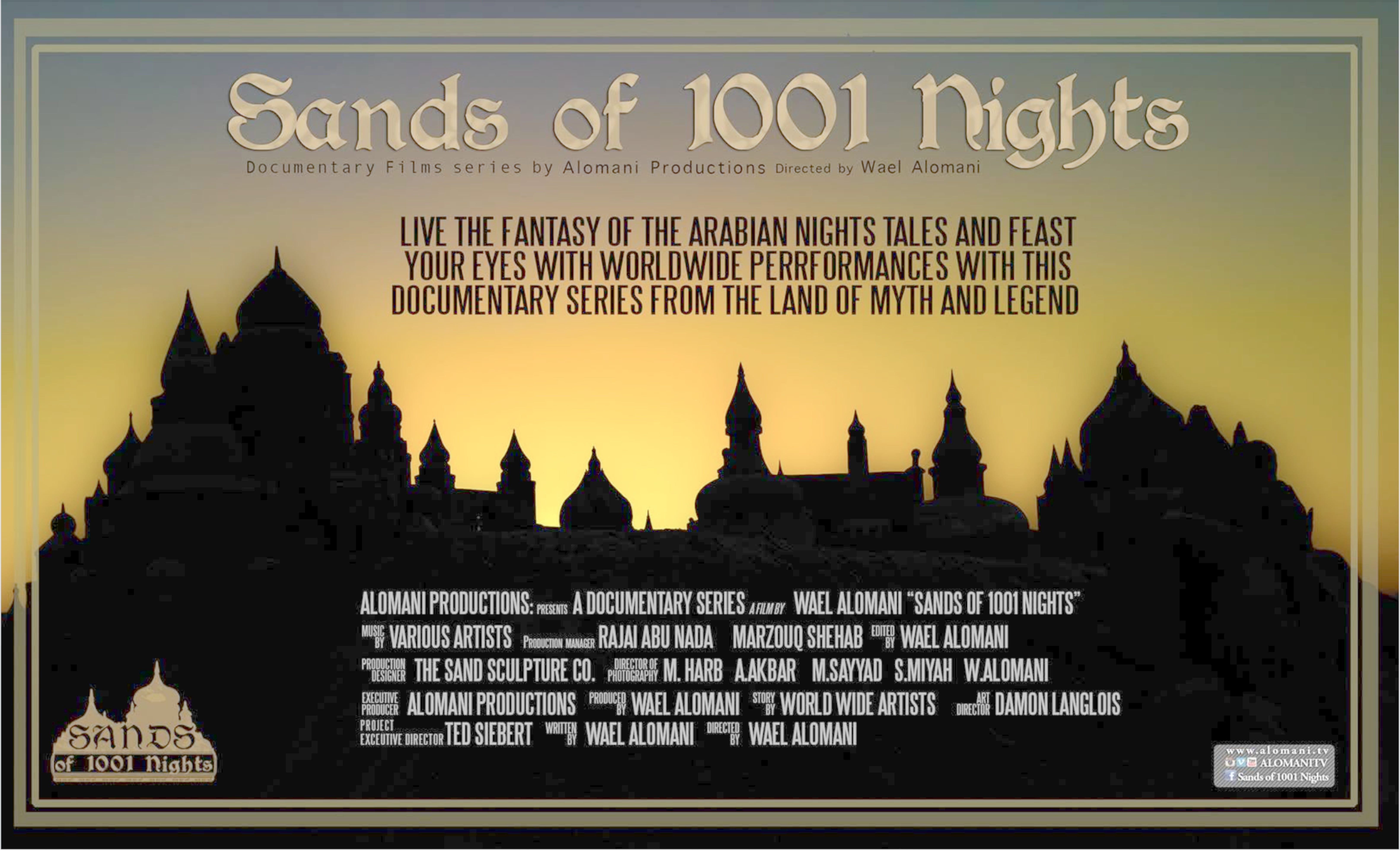
Wael’s magnum opus was to be a 13-part documentary about one of Kuwait’s many efforts to earn a place in the Guinness Book of World Records, in this case, the construction of the largest sand sculpture on earth. The project was called the “Remal International Sand and Light Festival,” a money-making scheme hatched in 2013 by two Palestinian impresarios and the founder of Proud to Be Kuwaiti (P2BK), a sort of Junior Chamber of Commerce.
“Remal” would cover six football fields. The artists would try to set the record for a sculpture using the greatest amount (by weight) of sand, 30,000 tons. The Kuwaiti-Palestinian team contracted the renowned American sand sculptors Ted Seibert and Damon Langlois. Langlois already held the Guinness Book record for the world’s tallest sandcastle. They assembled a team of 73 top sand artists from around the world, mostly Europe and North America. For the unifying theme, the team agreed on “Elf Layla wa Layla” (“One Thousand Nights and a Night”) aka “The Arabian Nights.” They chose a compilation of greatest hits, 32 stories including “Aladdin and the Wonderful Lamp,” “Ali Baba and the Forty Thieves” and all seven voyages of Sinbad, plus lesser-known tales. The stories would flow, one into the next into the next, and include a walk-on, walk-through “Scheherazade” sandcastle.
The “Elf Layla wa Layla” sculptures depicted living people, animals, jinn and zombies in a variety of styles, from Disney to Cubist. Such images were offensive to conservative Kuwaitis, who view human and animal imagery as idolatry. Almost as soon as the carving started, so did the death and bomb threats. Even members of parliament began criticizing the project. It took a statement by the emir himself to stop the vandalizing chatter. When a freak three-day rainstorm washed away much of the sculpture, including faces of the most provocative images, critics opined that it was God’s judgement on artistic blasphemy. In a heroic effort worthy of the Arabian Nights, the team managed to repair the damage and open the show on time. In all, they spent 20,000 hours creating and repairing the world’s greatest sand sculpture park.
Instead of the planned-for 30,000 people a day, however, the average attendance was a disappointing 800. The producers lost about a million dinar (over $3 million). To cut their losses, they refused to pay the team its final fees. And, since the producers had not completed the paperwork with Guinness, no record-breaking effort was recorded. Plans for subsequent sand sculpture festivals were shelved.
Wael had documented the entire story arc, from conception to betrayal, with time-lapse capture of the construction and interviews with the artists and promoters. Now he was torn. He was reluctant to complete the film, which could only add to Kuwait’s already awful reputation when it came to the treatment of foreign workers. But being an artist himself, his natural sympathies were with the sculptors. Undecided, he has yet to finish his magnum opus. Langlois, by contrast, produced a handsome coffee table book about the misadventure.
But back to Khalid and Omar. In the final weeks of my final year at AIS, they finally found their cinematic groove, this time without vampires. Instead of an epic feature, Khalid wrote a nine-minute short starring me as an aging, washed-up Bruce Wayne. My career as Batman now an alcoholic memory, I battle to maintain my sanity as the ghost of the Joker, played by Khalid’s ever-obliging brother, drags me to Hell. Khalid’s parents donated their spare room for the set, kept us supplied with food and drink for the multi-day shoot, and expressed concern that all those blood-curdling screams might be overtaxing the old, overacting American. This time, we persevered, day after day, scene after scene, finally reaching the martini shot. A year later, after meticulous editing and post-production, Khalid uploaded “The Batman Kills” to YouTube.
They were launched.
Bryn Barnard is an artist, teacher and former ICWA fellow. He has worked with Far Eastern Economic Review, Asiaweek, National Geographic and NASA, and also with schools and universities in Kuwait, Korea, Singapore, the US, Europe, the Middle East and Asia. His books include Dangerous Planet: Natural Disasters That Changed History, Outbreak: Plagues That Changed History, The Genius of Islam: How Muslims Made the Modern World and The New Ocean: The Fate of Life in a Changing Sea.
Another outstanding read!