


Editor’s note: This is an excerpt of writing by Institute of Current World Affairs fellow Rowland Robinson. Read his full dispatch here.
Rowland is wrapping up two years investigating integrative health care approaches to problem substance use in the Netherlands, Portugal and Brazil. He’ll report on his findings and their lessons for the United States on Friday, June 12 in Washington DC. Register here to attend his talk in person or on Zoom.
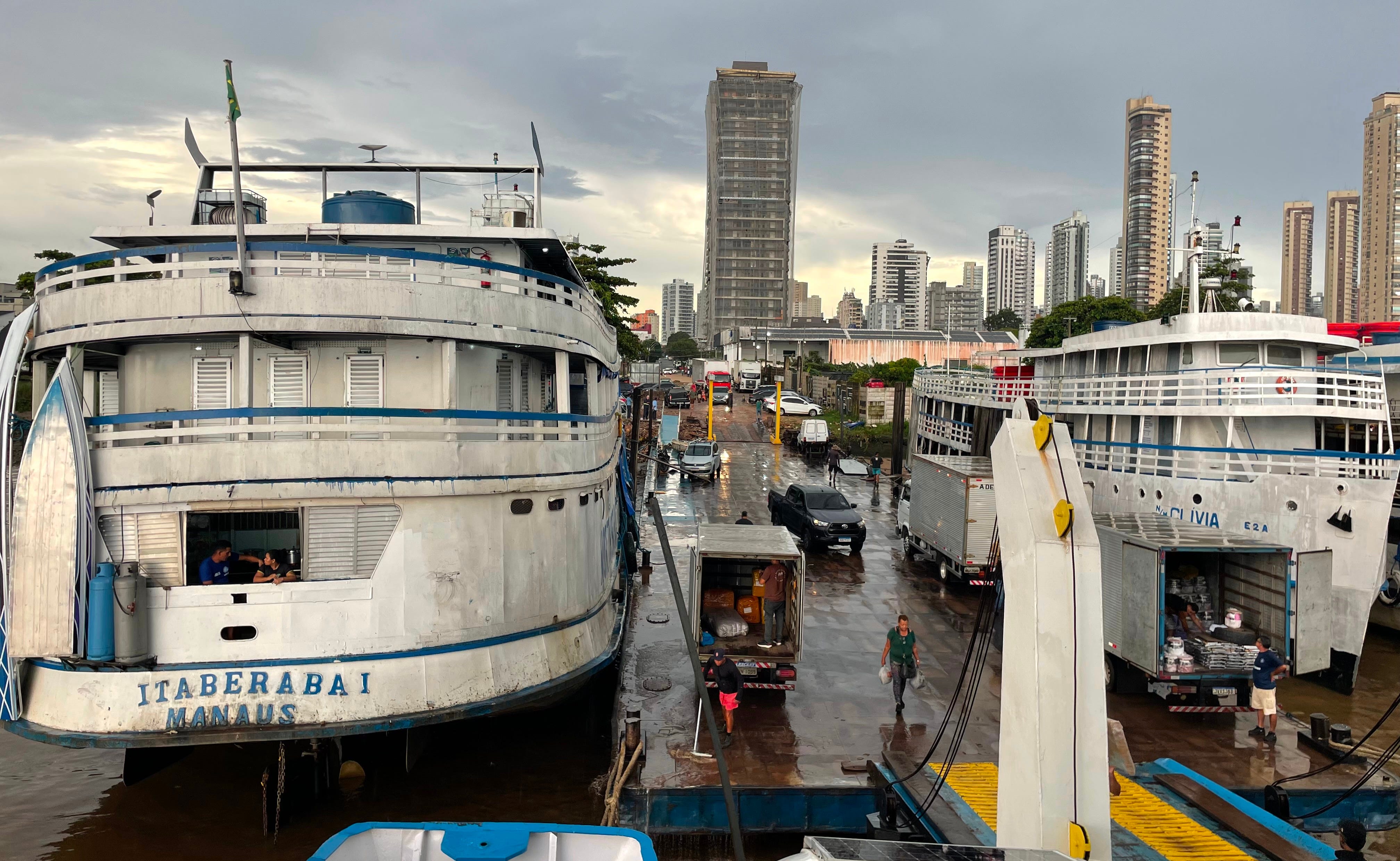
BELÉM, Brazil — The lights of exclusive condominiums flickered faintly in the quick-settling dusk as the Rondônia set sail from this bustling port city 60 miles upriver from the Atlantic Ocean, gateway to the Amazon for more than 400 years. The late departure was surprising only for its relative shortness, a mere 45 minutes as dock workers stuffed the ferry’s bay with frozen chicken, new Toyota pick-ups, desk chairs, melons, oranges, electronics and other goods.
Passing the working waterfront of fishing boats and ramshackle neighborhoods to the city’s east, the ship soon turned westward toward the darkness of the rainforest under a starless sky. I was setting off to explore the river that bears its name, heading for Manaus, the jungle capital at the heart of the Amazon 1,000 miles away, a five-day trip.
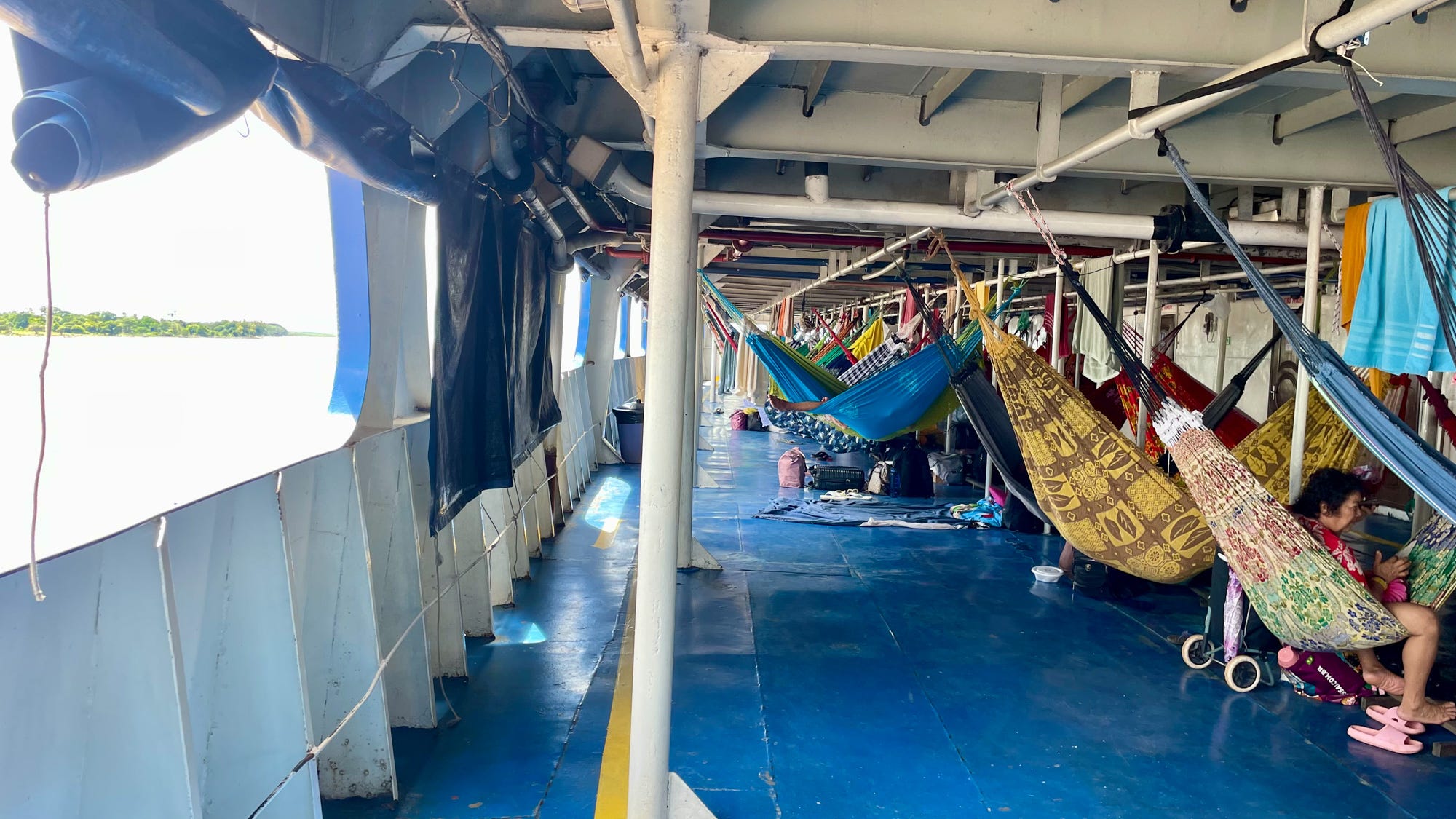
By dawn, the three-deck, 210-foot vessel, unsettlingly called a gaiola, or cage, had made its way into one of the narrow tidal channels that connect the Bay of Marajó, which opens to the Atlantic, with the Amazon River’s main artery. Men, women and children who had spent the night in colorful hammocks on the first and second levels looked at their phones or observed the forest from the boat’s railing. There were 125 passengers in total, a fraction of the 500-1,000 people who make the trip in the tourist-heavy dry season. “We’d fit 2,000 if it weren’t for government inspectors,” a crew member said. A shuddering thought.
Nothing from my visits to photography exhibitions or nature documentaries about the virgin rainforest and its recluse indigenous tribes had prepared me for the view from the ferry’s top deck: teeming human activity.
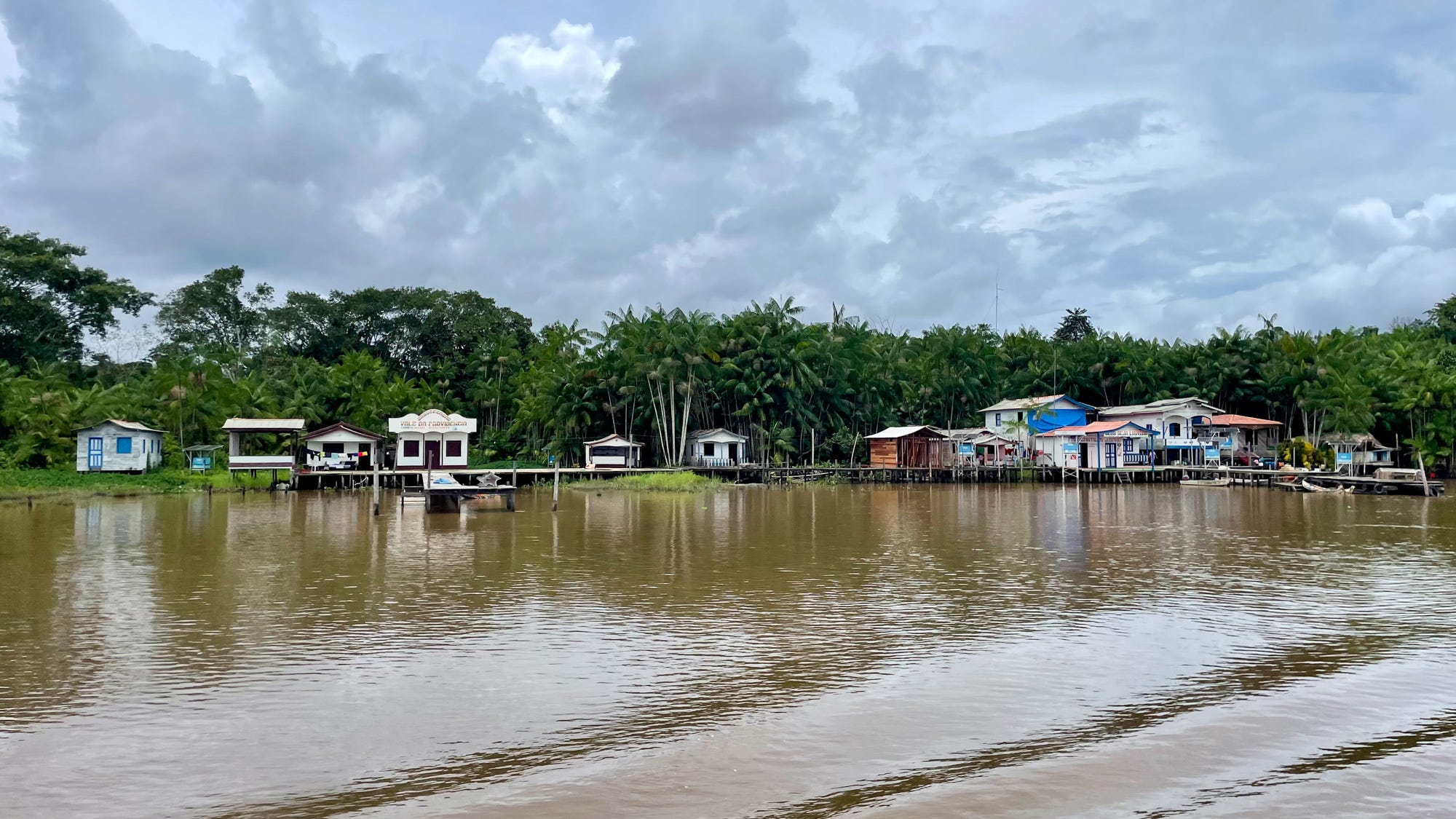
Wooden stilt houses cut into the jungle’s edge lined the banks of the narrow channel. Some were mere shacks while others boasted several rooms with painted façades and decorative woodwork on their roofs and porches. Açai trees and government-financed solar powered generators surrounded the houses. Some sported TV antennae and others were even connected to the internet through Starlink satellites.
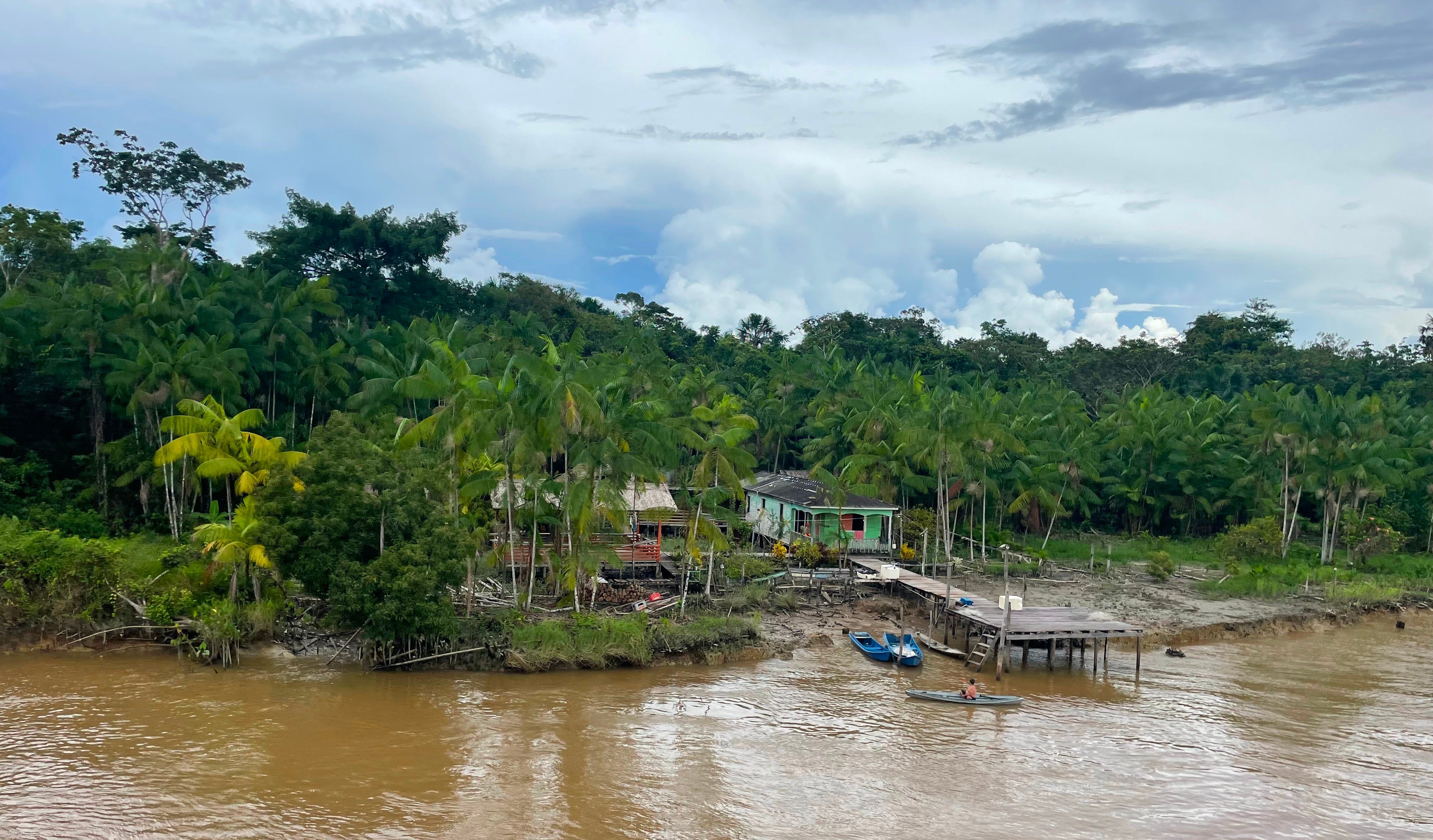
From the long, protruding docks, prosperity was also measured in the size of the boats: from traditional wooden canoes to brightly painted motorized launches known as popopos for the sound of their motors, with long drive shafts that locals steer from between their legs, to slightly larger covered craft that reminded me of Maine’s island-hopping water taxis.
As the ferry passed, young children ran from their houses and paddled out toward us. They giggled and shrieked as the waves rocked their canoes. A girl threw her arms up in the air in celebration after grabbing a floating plastic bag, her younger brother cheering from the back of the boat. “Those are donations of food and clothes,” said Maximus, who ran the upper deck’s snack bar. “Things are difficult for these families because we are outside both the açai fruit harvest and the fishing season.” Most locals survive on sustenance fishing and government assistance with the exception of a few local merchants. Spiking fuel prices and the accompanying inflation caused by the US-Israeli war against Iran have hit the already vulnerable population hard.
The plastic bag chase, a fun game for some children, seemed a heartbreaking disappointment for others as they returned empty-handed. A young girl who had paddled out alone from an unpainted shack hauntingly stared at the passersby and empty water separating her from the ferry. Those further upriver were also less fortunate as donations ran out.
Punctuating those unfamiliar scenes were innumerable churches. For every 10 houses, there seemed to be a congregation to serve them. Primarily evangelical, the Assembly de Deus denomination is most prominent, with a few Catholic parishes mixed in. The buildingds stood out for their fresh paint and electric lights. Over the past 40 years, evangelicals have quintupled from around 6 percent of Brazil’s population to nearly 30 percent, a seismic societal shift in a historically Catholic country that also extends to the ribeirinhos, river people, of the Amazon.
The abundant presence of religion has not ensured the safety of the most vulnerable, however. Many young children are forced by desperate parents into prostitution. The issue was widespread enough to prompt a national parliamentary inquiry in the late 2000s after a Catholic bishop accused parents of forcing young girls and boys to take part for food and diesel fuel, while other children completely disappeared. Continuing investigations by Brazil’s Commission on Human Rights in 2025 show that abuses are still occurring, adding another dark undertone to the scene of the children who so readily paddled out to the ferry.
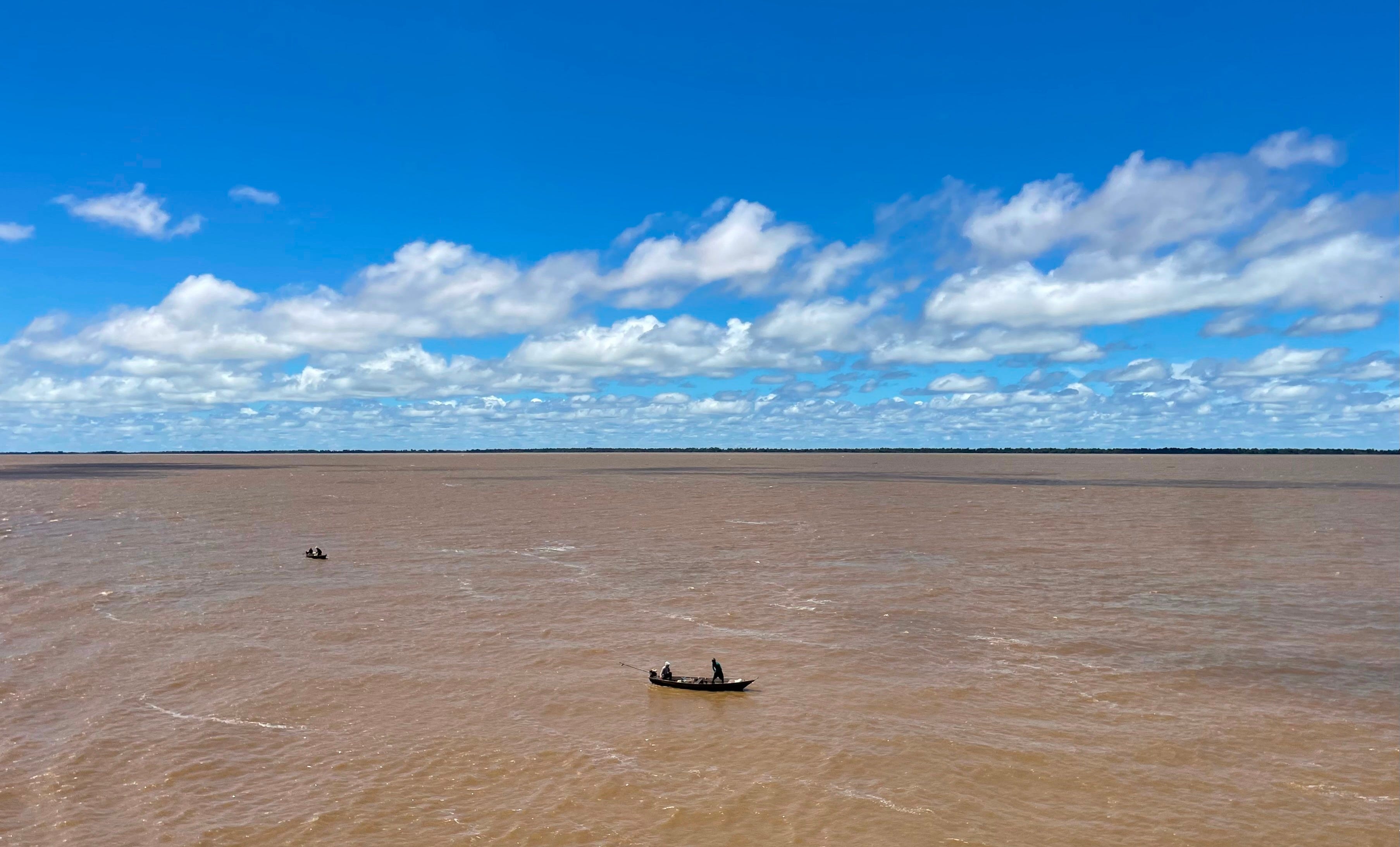
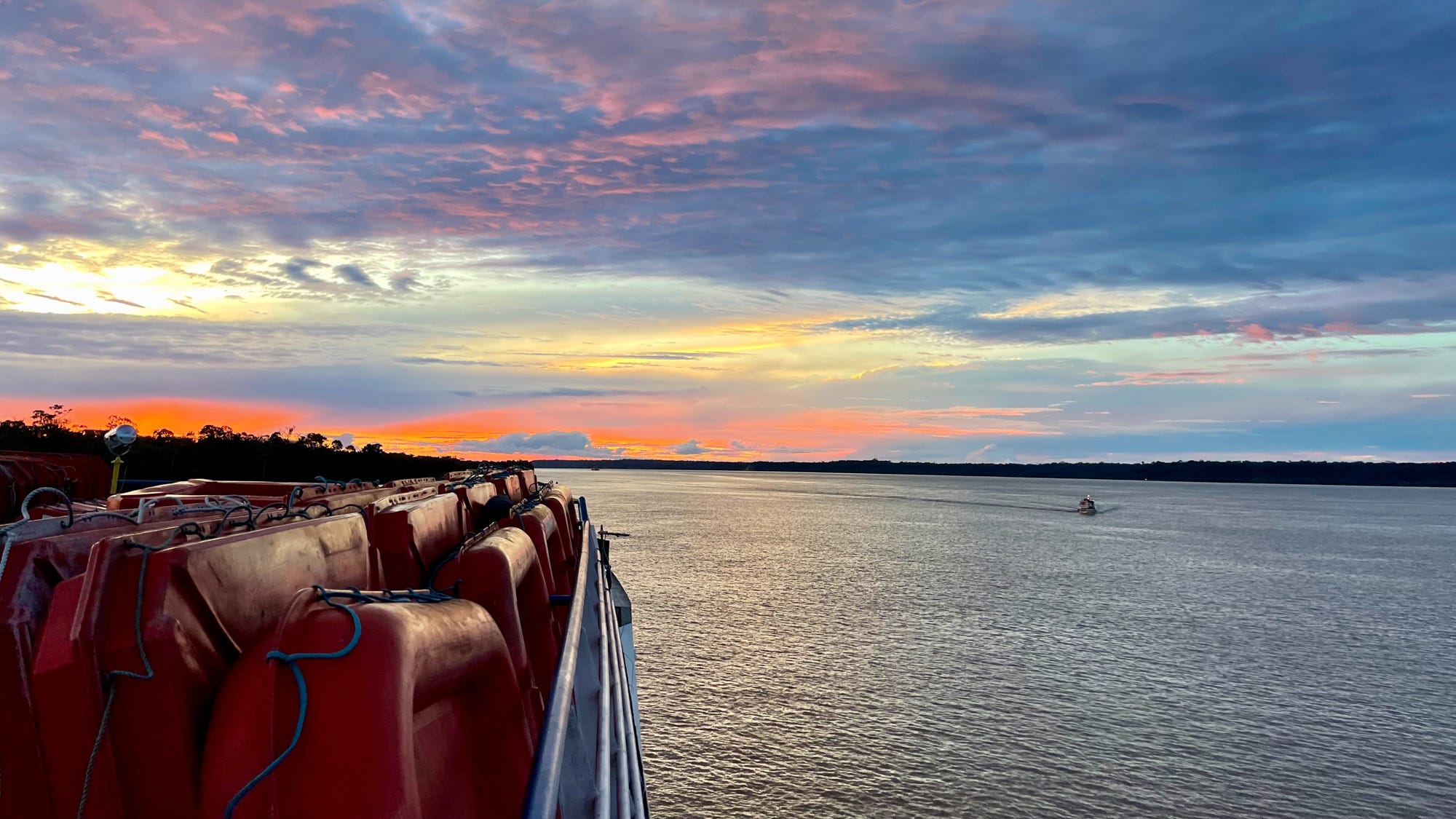
As the sun began to set, the boat veered to port and the cappuccino-colored expanse of water stretched to the horizon. A distant bank was the only sign that we had finally arrived at the main artery of the great Amazon River, and not, by accident, the sea. Stretching from the Peruvian Andes to Brazil’s Atlantic Coast, the river and its 1,100-plus tributaries move around 1,600 square miles of water per year. That’s five times more than the Ganges, 12 times more than the Mississippi, 70 times more than the Rhine. Under its murky surface, it hosts more than 3,000 species of fish. The Congo River, the second-most diverse, counts fewer than 800.
The Amazon basin, 60 percent of which is in Brazil and which itself accounts for 60 percent of Brazil, is only slightly smaller than Australia by territory. Its tens of thousands of plant species, thousands of animal species and millions of insects make it the world’s most diverse ecological area. From the ferry, the wall of trees looked like an impenetrable labyrinth of green. Or so it seemed.
As the sun sank in pink, orange and red hues over the unbroken horizon of jungle, the ferry snack bar’s TV played a movie about the crucifixion of Jesus Christ, while a speaker loudly played sertanejo, Brazil’s version of country music. Next to the light of a full moon, stars twinkled brightly. From the darkness came another unexpected twinkle, this one much nearer.
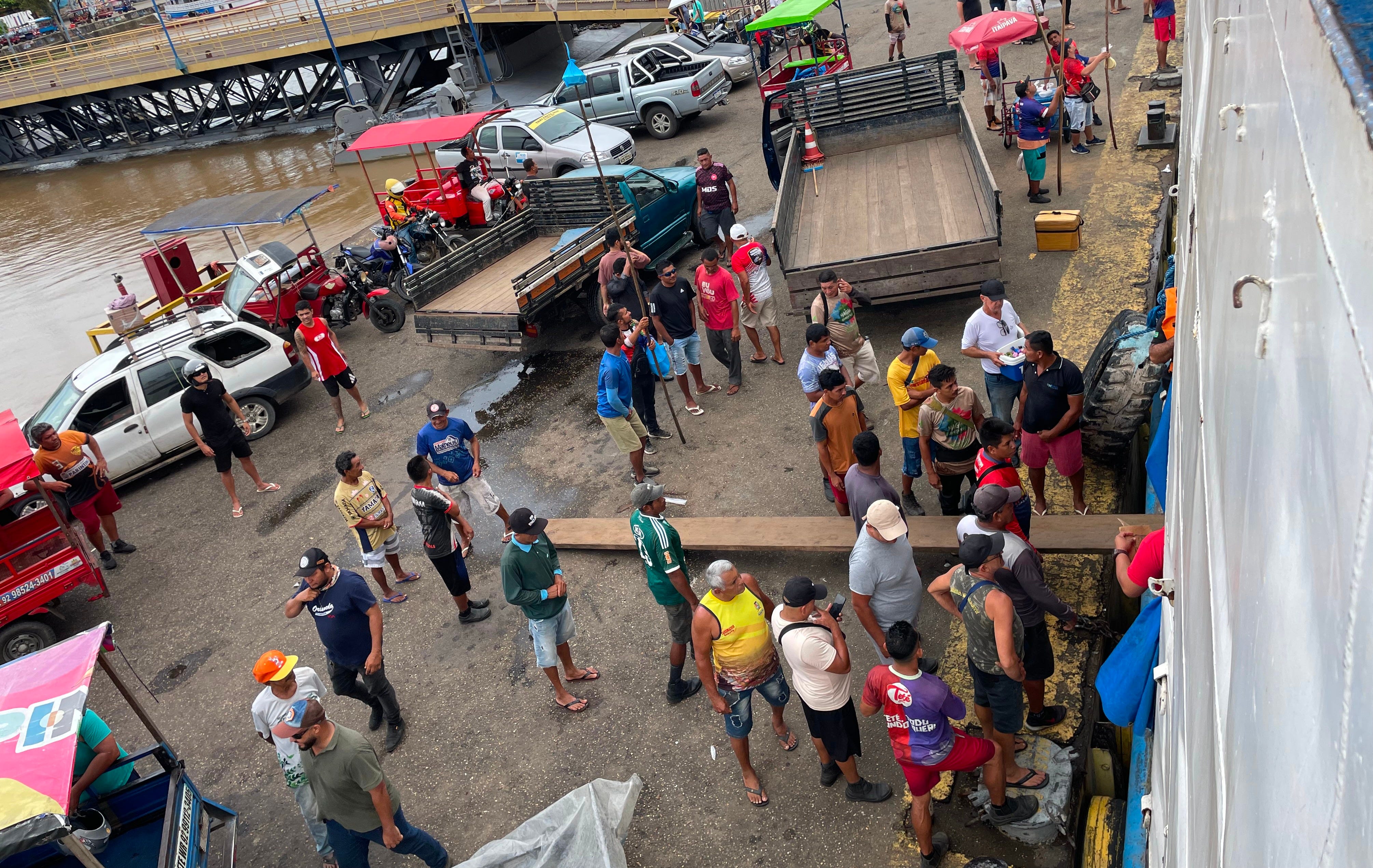
Local vendors on Mount Alegre’s docks were full of energy as they clamored for attention. While the ferry’s crew threw out two wooden gangplanks with which they loaded and unloaded passengers and cargo, these port hustlers reached passengers on the upper decks by pegging plastic bags stuffed with homemade snacks and juices to long wooden poles. At the top were plastic bottles cut in half where eager customers, sick of the mess hall’s monotonous menu of rice, beans and a protein, paid cash or used a QR code to pay in PIX, Brazil’s state-backed instant money transfer system. As the shouts subsided, the crew packed up and the ferry headed back into the river’s dark waters.
Each of the Rondônia’s 10 stops was memorable in its own way. From the railings, travelers laid inquisitive eyes on cities ranging from bustling Santarém with its 360,000 souls to Parantins, host of a renowned folkloric ox festival. Seeing them reinforced my dawning realization that beyond the virgin rainforest and 450 or so Indigenous tribes highlighted in environmental advocacy campaigns, the Brazilian Amazon is home to 28 million people. The stilt houses of the first day were an exception, not the rule, with as many as 80 percent of the jungle’s inhabitants living in urban areas along the river’s many tributaries and inlets.
New arrivals continue to search for economic improvement. “It is hard for the family but this is where the opportunity is,” a passenger named Milton told me. In his early 50s, he had a steadfast yet preoccupied look behind his tinted glasses. His wife and four sons, aged six to 17, lay in hammocks as we talked, their life’s possessions packed in bags on wooden pallets to avoid getting wet.
Having bought a plot of land a day’s boat ride from Santárem, he was relocating his entire family to farm guarana, a local fruit used as a source of caffeine in supplements and energy drinks. “Guarana won’t pay off for four years, so I will start by planting and selling bananas, melons and other fruit to bring in some money,” he told me. Next to him, his eldest son looked nervous.
Institute of Current World Affairs Andrew Weil Fellow Rowland Robinson is examining progressive policy and integrative health care approaches to problem substance use and addiction in the Netherlands, Portugal and Brazil. He’s spent time with people who use drugs as well as harm reduction workers on the streets and in care facilities, and speaking to policymakers and international experts with the aim of learning lessons for the United States. Previously, he was was a legislative assistant for US Senator Angus King and an opioid response project manager for the state of Maine.