


With the New START Treaty—the last strategic nuclear arms control agreement between the major powers—now defunct, the fact that the United States and Russia are unleashed and free to enter a new arms race, with China hot on their heels, might have been expected to finally send the world into a new bout of apocalypse angst, Cold-War style. But it’s no secret that the threat of instant annihilation doesn’t seem to be registering on any disaster scale in the collective psyche.
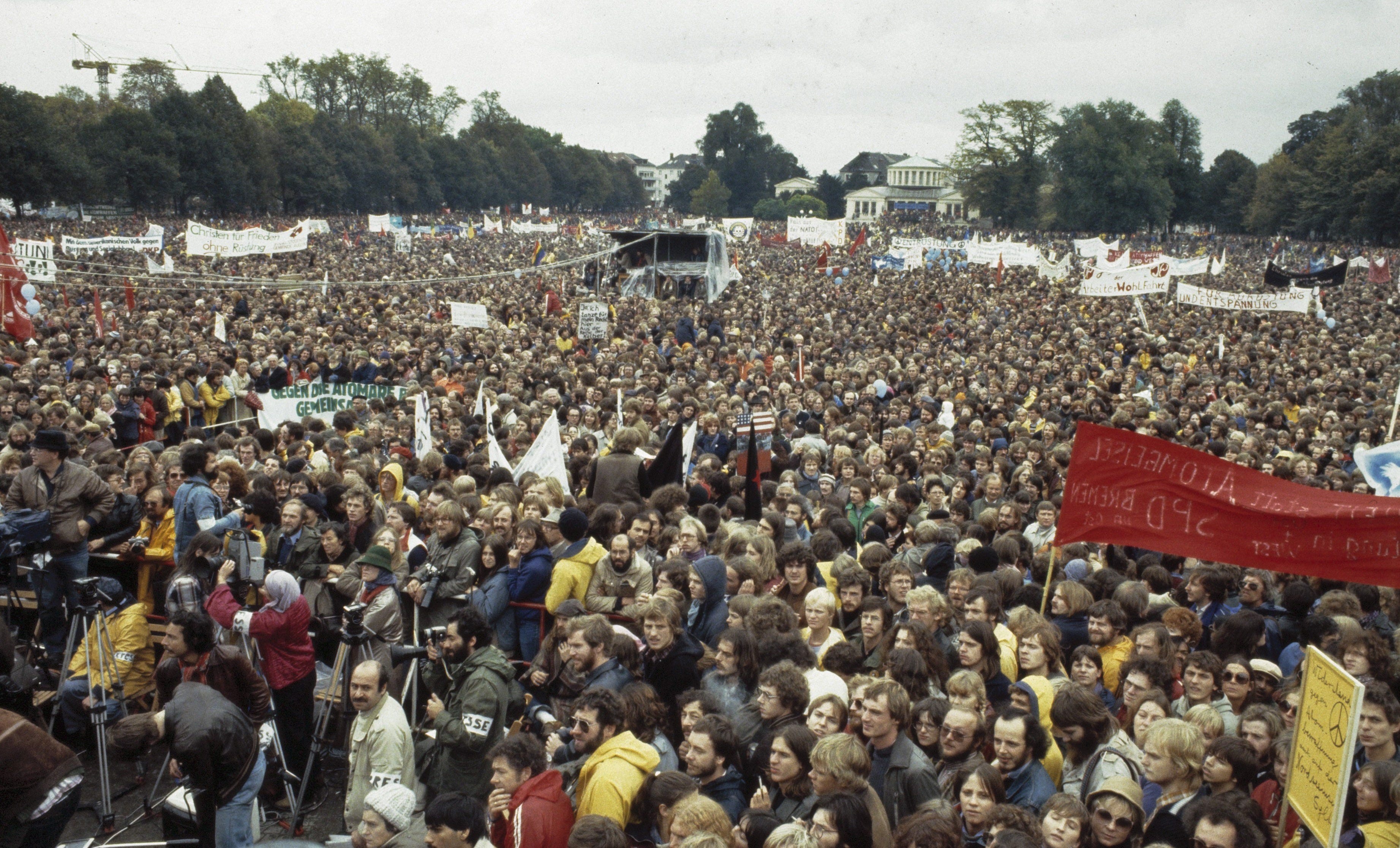
That was not the case in the 1980s, when the Reagan Administration’s decision to deploy Pershing II nuclear ballistic missiles to Europe to counter Soviet SS20s helped prompt the Nuclear Freeze movement. Some 300,000 protesters assembled in Bonn in October 1981, nearly a million gathered in New York in 1982, and in 1983, 200,000 Germans formed a 65-mile human chain from the US Army headquarters in Stuttgart to the gates of Wiley Barracks in Neu-Ulm, the site of one of the Pershing battalions. They were joined by a million protestors in Bonn and thousands of others in capitals across Europe. Greta Thunberg would be envious: The scale and longevity of anti-nuke protests eclipsed the size of today’s climate protests.
It may be that the threat of global warming has pushed nuclear fear out of the collective imagination. Especially with the Trump Administration gutting the Environmental Protection Agency, the global population may feel it has more pressing worries than being vaporized were someone to push a red button in Washington, Moscow, Beijing, Paris or Tel-Aviv.
But the nuclear threat is only growing. Since the signing of the first strategic arms limitation treaty (SALT) in 1972, cooperation had enabled Washington and Moscow to reduce their nuclear stockpiles from some 70,000 warheads at the height of the Cold War to a “mere” 12,000 today, according to the national security analyst Joseph Cirincione in a recent op-ed for the French daily Le Monde. While that number is still high enough to prompt an apocalypse, the downward trend is now reversing with the development of new weapons, unless presidents Donald Trump and Vladimir Putin negotiate a fresh nuclear weapons limitation treaty, an option they don’t seem ready to discuss. Cirincione also points out that 96 percent of the world’s nuclear warheads is currently in the hands of authoritarian regimes—among which he counts the current US administration.
That stark description, along with Trump’s comments last October that the United States would resume nuclear testing, are cause for serious worry. But even last year’s release of “A House of Dynamite,” a major Hollywood film about nuclear apocalypse, failed to do much more than generate comparisons to the Cold War.
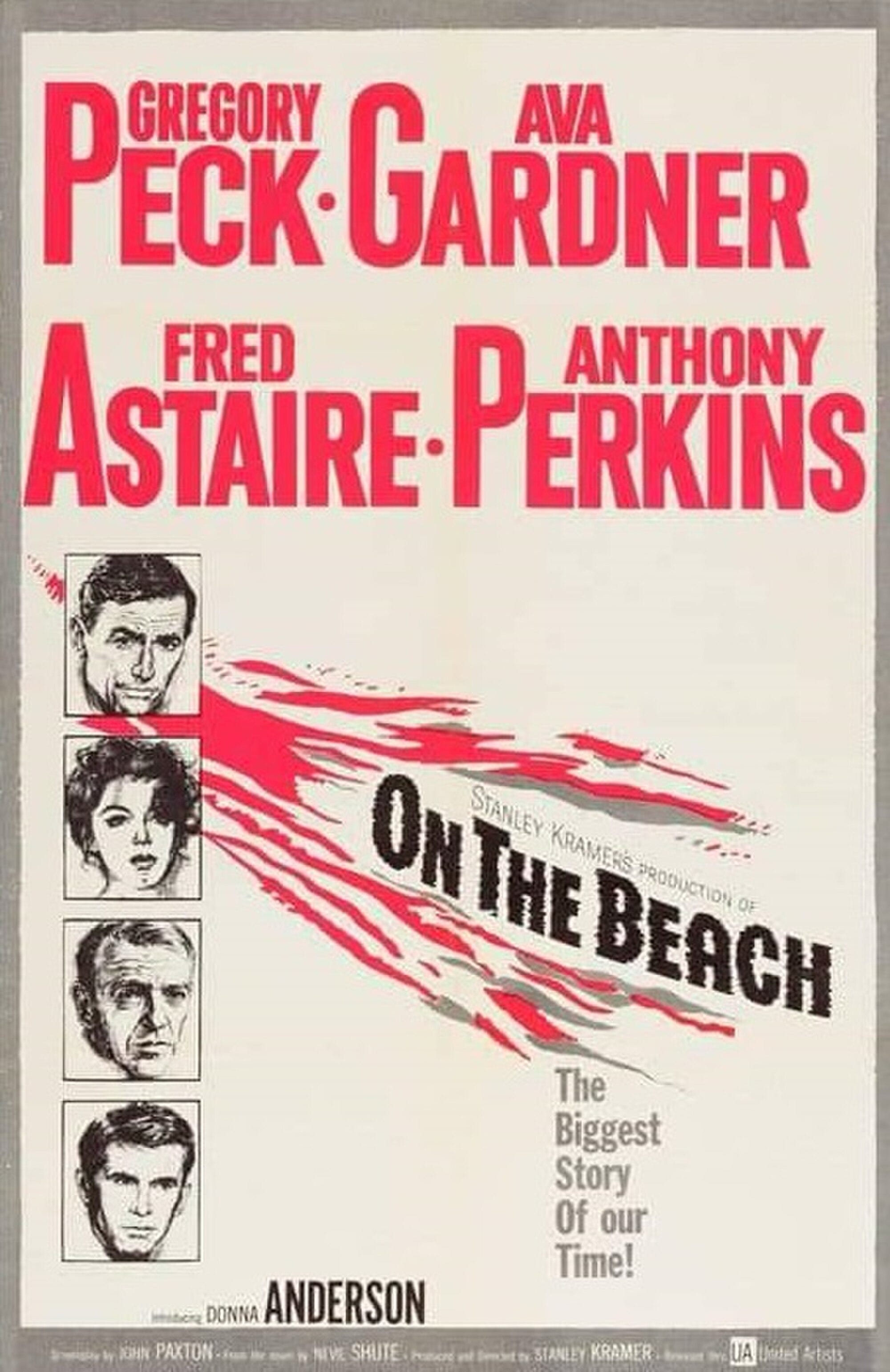
It was a different story seven decades ago, when Fred Astaire and Ava Gardner made history together in Stanley Kramer’s 1959 film “On the Beach” (although they never danced together onscreen). Now forgotten by all but a few movie buffs, the film was testimony to the angst that seized a world confronted with the prospect of total annihilation were World War III to break out.
Adapted from the eponymous novel by the British author Nevil Shute—who’s also slipped into the dustbin of history—it’s required viewing to better understand the path that led the Americans and Soviets to negotiate the first nuclear arms control treaties.
Shot on location in Melbourne (“the perfect place to make a film about the end of the world,” Gardner quipped at the time to the dismay of her Australian hosts), “On the Beach” tells the story of a US submarine captain, Commander Dwight Lionel Towers (Gregory Peck as his most tenebrious self), docking in Australia after the rest of the planet’s population has been wiped out by nuclear war. The Aussies are the last to survive due to the remoteness of their continent island but will soon suffer the same fate.
Although Towers knows his wife and children must have died in the holocaust back home, he’s in full denial, which helps him resist the fully deployed charms of an alcoholic woman he meets named Moira Davidson (Ava Gardner).
Entrusted with a mission to return to California to seek the source of a series of persistent, garbled Morse code messages, Towers departs with his crew and an Australian nuclear scientist named Julian Osborn—Fred Astaire—in charge of monitoring radioactivity levels along the journey.
Finding San Francisco a ghost town, Towers, his crew and Osborn return to Melbourne to await certain death. They’re given just enough time to find love (Towers and Davidson) and, Osborn, a car enthusiast, to drive a Ferrari to victory in the last Australian Grand Prix (don’t ask…).
The incredulous plot might raise chuckles today, but the film’s reception in 1959 was serious business. Asked for help with props during the filming, the US Defense Department wanted nothing to do with it and refused any collaboration. The production was carried out on a British sub instead, and the Australian Navy generously provided access to an aircraft carrier. The movie was simultaneously released in Hollywood and 18 cities worldwide, including Moscow, the first time an American movie premiered in the USSR.
Peck and his wife attended the screening along with 1,200 foreign dignitaries. The New York Times called it “the most elaborate international premiere in movie history…because the film is of such international interest.” I was born two days later, and the first 25 years of my conscious life were spent awaiting imminent nuclear doom before I was relieved of my angst by the fall of the Berlin Wall.
How much the film’s wide distribution and publicity prevented an “On the Beach” scenario from becoming reality is open to debate, but the story did have some impact on world peace: John F. Kennedy read the novel and remembered it some three years later during the Cuban missile crisis.
Gone are the days when an American president might read a book and draw lessons. In that regard, “On the Beach” may tell us more about the evolution of the US presidency than protest movements or the respective popularity of Fred Astaire or Greta Thunberg. In any case, it helps illustrate the change in public concerns and priorities.
It appears, as Osborn (Astaire) says in the film, that “people [have] accepted the idiotic principle that peace can be maintained by arranging to defend themselves with weapons they couldn’t possibly use without committing suicide.”
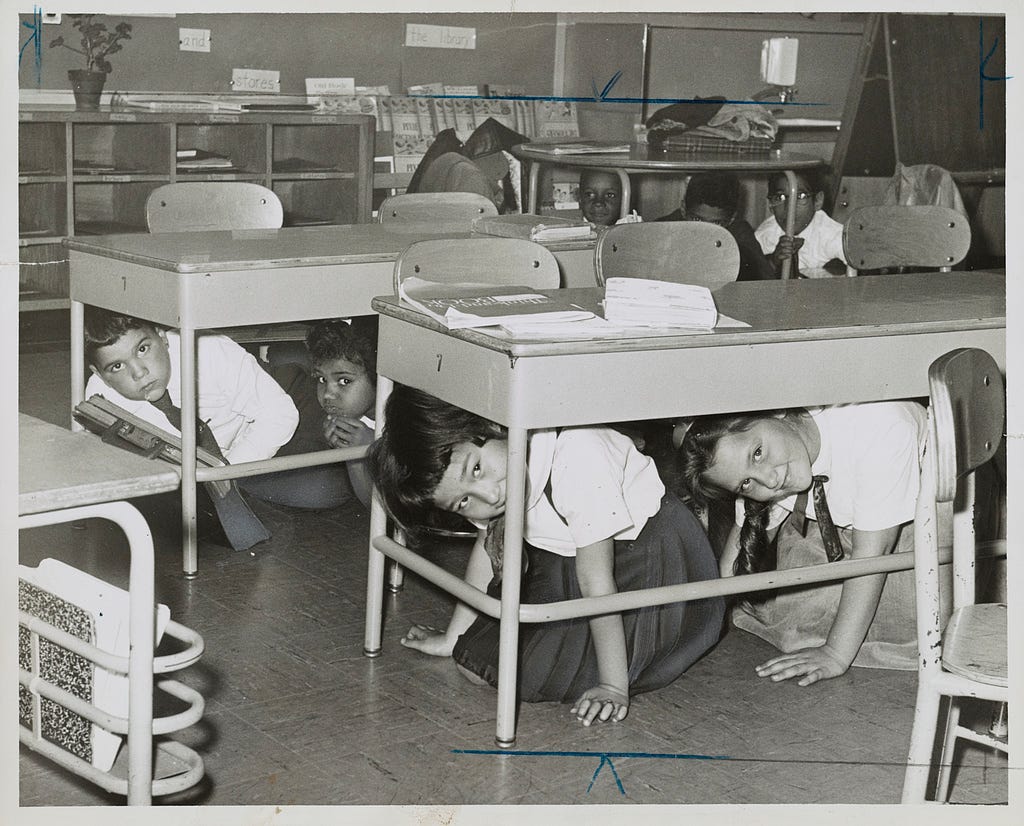
Anyone suffering apocalyptic nuclear war angst today, just duck and cover.
Jean-Louis Doublet was a US correspondent for French media and a White House reporter during the George W. Bush Administration.