


Throughout American history, successive governments have opened and closed doors to immigration. During periods of strength and confidence, the doors are open. During periods of weakness and insecurity, they close. The Trump administration’s violent campaign to round up and remove undocumented immigrants from the United States, led by Deputy Chief of Staff Stephen Miller, reflects national worries about American imperial and economic decline and the replacement of white Americans with Black and brown ones. Following the blueprint laid out in the Heritage Foundation’s Project 2025, immigrant removal is just the first step in a purification program that intends to reshape what it means to be American. Project 2025 recommends transforming the United States from a secular multiethnic republic into a white Christian theocracy ruled by Biblical principles. Depending on your politics, these moves are viewed with either shock or approval.
On the other side of the globe, one of America’s closest allies is also in the midst of another purification campaign, even more sweeping in scope but with very different outcomes in mind: to make the country less conservative, more moderate and more open to the world. To that end, Kuwait is stripping tens of thousands of its inhabitants of citizenship.
Kuwait is a tiny ethno-nationalist state, about the size of New Jersey, with a relatively small number of citizens, about 1.5 million. It is also a constitutional monarchy, the Gulf’s only democracy, led by an emir, in consultation with the Majlis or National Assembly. The parliament has the power to reject government-backed legislation, interrogate ministers and pass votes of no-confidence. The emir can dissolve the assembly and temporarily rule by decree.
The issue of citizenship is a central one. It gives Kuwaitis access to a sweeping menu of benefits: free health care and education, subsidies, grants and pensions, all tax-free, all funded by the country’s sole export: oil. Kuwaitis are guaranteed employment in government sinecures. It’s the migrant worker population of 3.5 million that does the economic heavy lifting: sanitation, construction, retail, education and management. But migrants—called expats in Kuwait—are denied the benefits of citizenship.
Within Kuwaiti society, citizens self-identify as either hadhar or badu. Hadhar are Sunni Arab members of the ruling family and others who, starting in the 18th century, moved from Iraq and the Arabian Peninsula to the head of the Persian Gulf and built the mud-brick walls of Al-Qut. (“the little fort”). The hadhar also include traders, teachers, fishermen and doctors who arrived in Kuwait before independence in 1961 and were granted citizenship. They were Shia Arabs and Persians from Iran, Sunni Arabs from Iraq and a tiny minority of Christian Arabs from Iraq and Palestine. The hadhar see themselves as the “real Kuwaitis,” who built the nation. Although the walls are long gone, they refer to themselves as ahl al-sur: “the people from within the wall.”
Although both Sunni and Shia can be hadhar, Shia Kuwaitis, most of whom are of Persian descent (referred to as ajam), face discrimination in jobs and education. Sensitive positions in the government are reserved for Sunnis.
The badu are Sunni Muslim Bedouins: camel-herding desert-dwelling nomads who immigrated to Kuwait from Saudi Arabia mostly after 1961. They became naturalized citizens and settled into government-provided housing. At the time, their immigration was encouraged by the Kuwaiti government to counter threats of annexation by Iraq and create a loyal pro-government citizenry that would counterbalance the entitled hadhar merchant class.
Many ordinary Kuwaitis see the process differently. “My people have worked for 300 years to build this society,” a male hadhar once complained, “only to have these badu come and enjoy the fruits of their labor!”
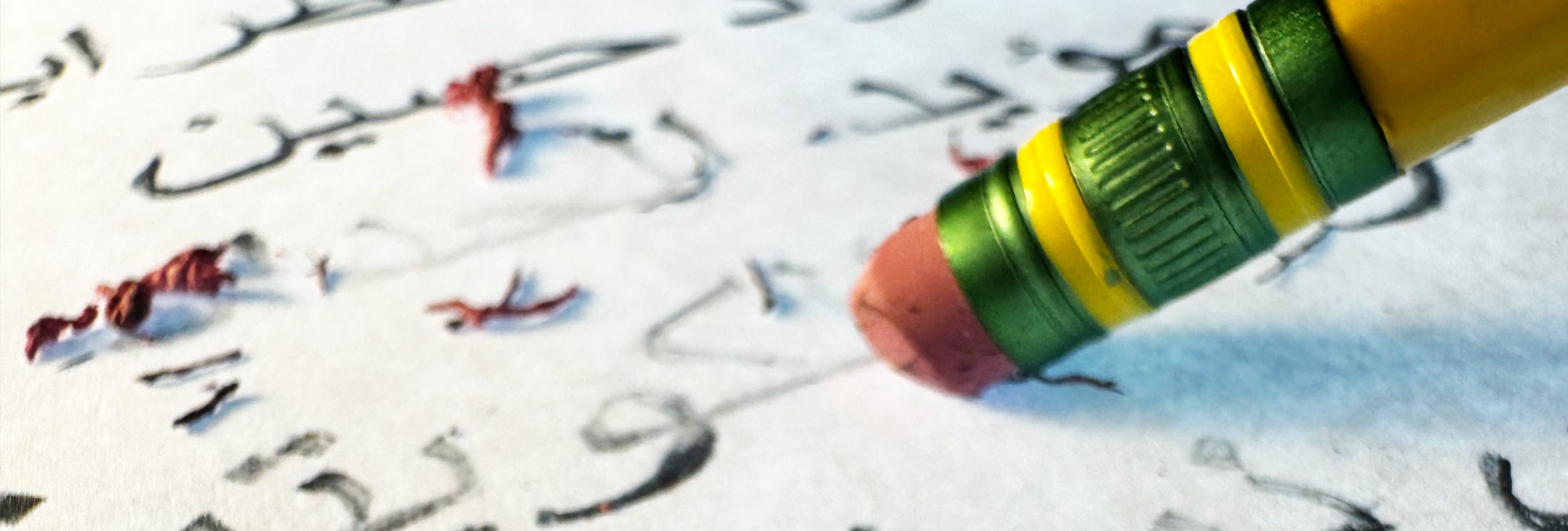
A third group, the bidoon, are stateless inhabitants of Kuwait, mostly badu who for various reasons have been denied citizenship. Like legal expats, stateless bidoon are part of Kuwait’s workforce. At one time, 80 percent of the country’s enlisted military was bidoon. But they have no rights. As Kuwait’s former Interior Minister Yousif al-Kharafi put it, “A bidoon’s name is written in pencil; it can be easily erased.”
During the years I lived in Kuwait as an art teacher, from 2011 to 2016, one of my hadhar friends referred to badu Kuwaitis as ajnabi, the Arabic term for foreigner. He complained that the ajnabi were tribal and backward. Their women were veiled, their children uneducated. They manipulated the state for welfare benefits and only helped members of their own tribe. They imported their culture of wasta (connections) and nepotism that undermined the rule of law and, in the National Assembly, tried to impose their conservative culture on the whole nation.
Hadhar wanted better desalinization plants, more air conditioning, fancier malls, improved schools and universities, nicer roads and freeways, an upgraded port, a new airport, extravagant skyscrapers to rival those popping up like desert mushrooms in Qatar, Bahrain, the United Arab Emirates and Saudi Arabia, and a 160-kilometer, 68-station rapid transit system, the Kuwait Metro. The badu, by contrast, wanted changes to Kuwait’s legal system to comply with Sharia law: no dancing, no music, gender-segregated classrooms, mandatory hijab and abaya, and the death penalty for anyone who insulted the Prophet or his family. The result has been decades of almost total deadlock in the National Assembly. Successive emirs have repeatedly dissolved the legislature hoping fresh elections would change the political balance, with little impact. During my five years in Kuwait, I experienced five elections.
Kuwait’s 83-year-old emir, Sheikh Mishal Al-Ahmad Al-Jaber Al-Sabah, came to power in April 2023 after the death of the former emir, his half-brother Sheikh Nawaf Al-Ahmad Al-Jaber Al-Sabah. Born in 1940, two years after the discovery of Kuwait’s massive Burgan oil field and six years before its commercial exploitation, Mishal is old enough to have witnessed the entirety of Kuwait’s improbable journey from impoverished pearl entrepot to glittering petrostate to dysfunctional kleptocracy.
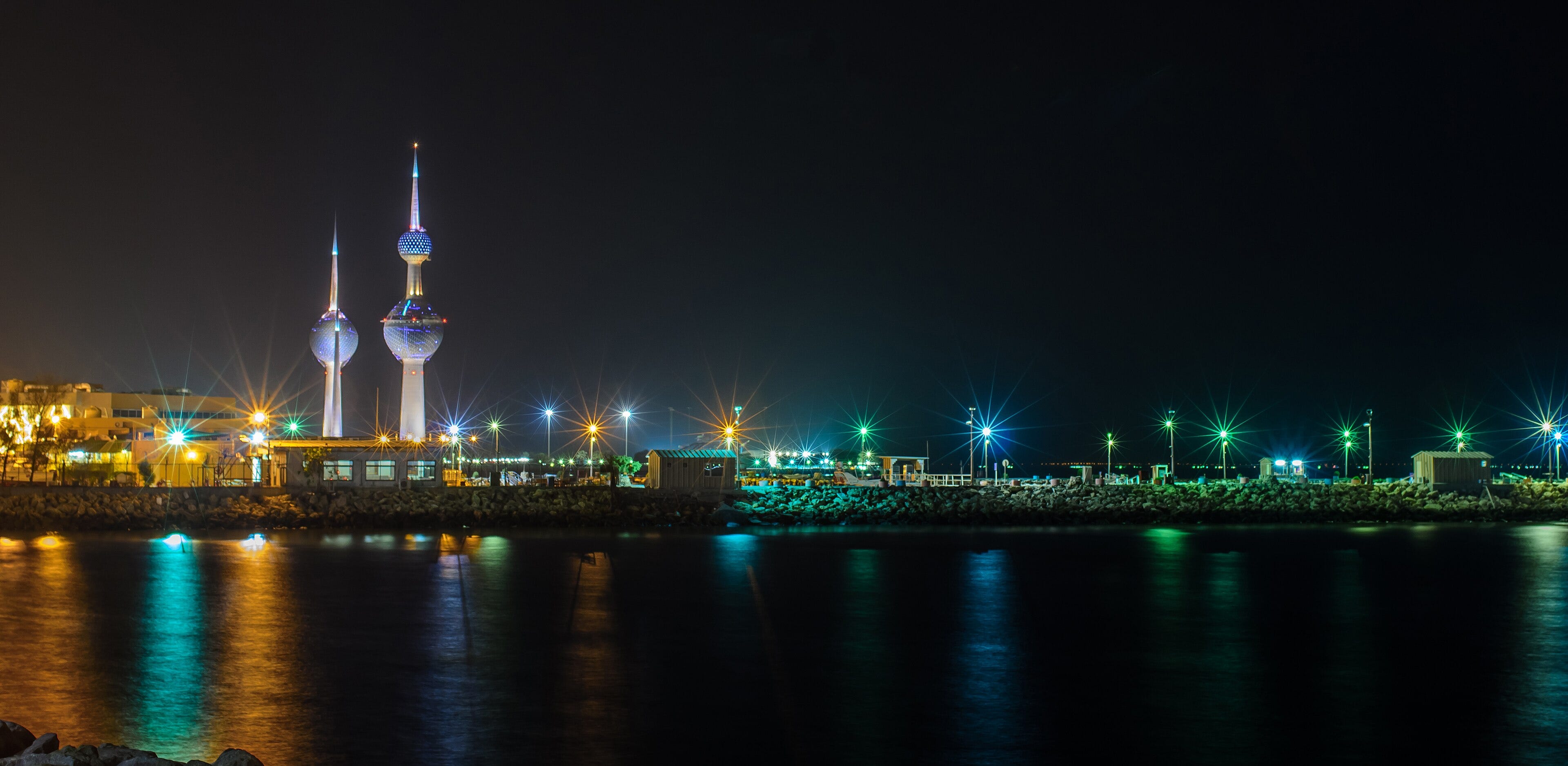
In 1951, when he was 11, Kuwait became the first nation on earth to commission a desalinization water plant, ending the need for water dhows to fill their holds in Iraq’s Euphrates River. In 1957, when he was 17, the mud-brick city walls were torn down. In 1960, when he was 20, Kuwait gained its independence from Britain. In 1971, when he was 31, the futuristic Kuwait Towers were completed. High above the desert, women in miniskirts and go-go boots danced in the complex’s Starship Enterprise-themed discotheque. In 1972, when Mishal was 42, Jørn Utzon of Sydney Opera House fame designed Kuwait’s new parliament. In 1977, when Mishal was 47, Andy Warhol had a solo exhibition at Kuwait’s Sultan Gallery. The future was bright.
Then came the horrific 1980s, the decade of the Iran-Iraq war. Kuwait bankrolled Iraq, which led to Kuwait bombings in 1983, oil tanker attacks in 1984, attempted assassinations in 1985, an oil installation attack in 1986, Kuwait City bombings and missile attacks in 1987, the hijackings of Kuwait Airways Flight 221 and 422 and TWA flight 847, culminating in 1990 with Iraq’s invasion and occupation. In the aftermath, Kuwait rebuilt, but megaprojects like the Kuwait Metro stalled. Corruption soared. In the Doha airport, a mocking sign read, “Kuwait Yesterday, Dubai Today, Qatar Tomorrow.”
In the following decades, as the cost of extracting oil from Kuwaiti petroleum fields grew by 1,200 percent and oil prices fluctuated closer and closer to the industry’s breakeven point, successive emirs tried to renegotiate Kuwait’s generous social contract, principally by a “Kuwaitization” policy: expelling a portion of the migrant labor force so that expat workers could be replaced by Kuwaitis. Starting in the year 2000 and intensifying in 2013-14, an average of 30,000 expats were deported each year. (In 2015, I was also slated for deportation. Wasta saved me.) The expulsions have reduced the worker population by about 1 to 2 percent a year. But Kuwaitis like their Indian drivers, Filipino nannies and Ethiopian maids. They like being able to hire an Egyptian to sit at their government desk. They have no intention of becoming schoolteachers, hotel desk clerks, movie ticket takers, taxi drivers or, la sama Allah, street sweepers. The main impact of the expulsions has been to raise the cost of labor.
Now the new emir is attempting something novel and radical to balance Kuwait’s social and economic books: He is shrinking the size of Kuwait’s citizenry so that fewer people can draw on the nation’s financial resources. He’s also reshaping the citizenry’s composition to break the badu obstruction of progressive legislation. In 2024, the emir asserted that he would not allow democracy to be exploited to “destroy the state,” suspended the National Assembly and began ruling by decree. Starting in March 2024, he began a national citizenship revocation campaign with the stated goals of purifying and reshaping national identity, reducing government spending, ensuring political and electoral control, combating corruption and strengthening state security. The emir seeks to “return Kuwait to its original people, free from the blemishes that have clung to it.”
Inheritance in Kuwait is patrilineal with bilateral inheritance, passed down from fathers to sons and daughters. Although Kuwaiti women receive all the benefits of citizenship, they can’t pass them on. If a Kuwaiti woman marries an ajnabi, she keeps her Kuwaiti benefits but the foreigner gains none. Their children will not be Kuwaiti citizens. None will have access to Kuwaiti benefits. By contrast, if a Kuwaiti man marries an ajnabi, she gains “citizenship by dependency,” a status guaranteed by the constitution’s Article 8. Their children will be Kuwaiti. Consequently, few Kuwaiti women marry foreigners. Many Kuwaiti men do. Or did. For a time, it was chic to marry ajnabi. Syrians were desired for their beauty and fair skin. Some Kuwaitis of a certain age, like the artist Shurooq Amin, proudly identify as Syrian-Kuwaiti. In today’s less generous atmosphere, muwalladin (mixed ancestry) Kuwaitis are less fashionable. It’s better to identify as an asil (pure blood), a “full Kuwaiti.”
Once upon a time, it was not uncommon for a Kuwaiti man to graduate from high school, get married and use a generous Kuwait government scholarship at an expensive American university to get one’s degrees and have one’s babies. Under the American birthright system, those children would be American citizens. The US passport was Plan B if things went south in Kuwait (i.e. economic collapse, another invasion) they could simply move to the United States without the bother of a visa. Under the emir’s new rules, such disaster planning has backfired, and Kuwaiti Americans, some of whom have not visited the US since infancy, have to decide—quickly—which citizenship they’re willing to lose.
Revoking citizenship is not new in Kuwait but the current campaign is unprecedented in its sweep and scope. Under the emir’s new rules, Article 8 of the constitution, allowing citizenship by dependency, was suspended. In a stroke, the foreign wives of Kuwaiti men had to turn in their passports. People granted citizenship due to exceptional services to the state as well as those holding multiple passports were also stripped of their nationality. My former employers at the American International School, the descendants of Dr. Kamil Al Rayes, who had saved the life of a previous emir and been granted Kuwait citizenship, had to give up their Kuwaiti passports. So did the actor Dawood Hussein, singer Nawal Al-Kuwaitia, influencer Noha Nabil, Kuwaiti footballers Ahmed Al-Tarabulsi and 1982 World Cup team member Muayad Al-Haddad. So did the renowned playwright Abdul Aziz Al-Surayie, who died after getting the news. Any ajnabi woman who had married a Kuwaiti and, following the law, given up her previous citizenship, was out of luck. She was now a stateless bidoon, unable to travel, unable to legally work, cut off from the government benefits. Indigent. The government is considering some provision for these newly stateless women such as allowing them to access state pensions.
The revocation project is not without merit. As the campaign has expanded and gained momentum, astonishing cases of citizenship forgery have been uncovered, documented day after day like true crime dramas in the Arab Times. Using DNA analysis, the authorities have uncovered multiple forgery networks of unrelated individuals all claiming citizenship through descent from a fake Kuwaiti father. In one case, a Syrian man using a fictious name claimed to have been born in Kuwait in 1928. He obtained Kuwaiti citizenship in 1965 and spun a web of fraud: three fictious brothers and seven forged sons. DNA proved they were Syrian, not Kuwaiti. In all, 87 people lost their citizenship. In another case, a man born in the 1930s claimed citizenship in 1965. He had six wives who produced 44 children. In all, 1,200 people claimed Kuwaiti citizenship. DNA testing found that many of the children were unrelated, and 978 descendants were stripped of their citizenship. Some of these fake Kuwaitis had risen to important positions within the government.
As an American wag put it, “At home, DNA is used to prove who your daddy is, while here it’s used to prove who your daddy isn’t.”
Unlike Operation Metro Surge, Operation Midway Blitz, and similar ICE operations across the US, which have mostly created chaos, Kuwait’s citizenship revocation campaign is achieving its intended results. Since the campaign began, the Higher Committee for Kuwaiti Citizenship Investigation has stripped an estimated 60,000 people of their citizenship (if the same proportion of the US population were denaturalized, the number would be 14 million). The emir shows no signs of stopping and intends to review every single naturalization since 1965. With the revocation of citizenship of prominent Islamist figures such as the cleric Tareq Al-Suwaidan, the Muslim Brotherhood has been weakened. By defenestrating badu opposition figures, political dissidence has been quashed. By removing clandestine Syrians from the government, security has been strengthened. By reducing the total number of Kuwaitis, government expenditures have been reduced. And by changing the composition of the electorate perhaps, at last, Kuwait may get a metro.
Bryn Barnard is an artist, teacher and former ICWA fellow. He has worked with Far Eastern Economic Review, Asiaweek, National Geographic and NASA, and also with schools and universities in Kuwait, Korea, Singapore, the US, Europe, the Middle East and Asia. His books include Dangerous Planet: Natural Disasters That Changed History, Outbreak: Plagues That Changed History, The Genius of Islam: How Muslims Made the Modern World and The New Ocean: The Fate of Life in a Changing Sea.