


The World Cup has descended on North America. In New York, it’s the talk of the town. But those with a team to cheer for the first time ever may be among the most excited.
The tournament’s expansion from 32 to 48 squads has opened the door for countries that rarely appear, and some, like Uzbekistan, are making their debut. Its team will play its first World Cup match on June 17.
Nowhere on the continent will the former Soviet republic’s entrance make more waves than here. Nearly half the country’s 60,000 global immigrants live in the New York metro area. Some will watch matches in person, many others in the city’s restaurants and bars.
Abdulla Kwaja, president of the Turkestan American Association who left Uzbekistan’s lush Fergana Valley in 1974, when it was still part of the Soviet Union, greeted the national team on its arrival at John F. Kennedy Airport.
“We are so excited!” he said. “Uzbekistan, now an independent country, will be in the World Cup!” He’ll travel with the team to Mexico, Houston and Atlanta for each of the group stage matches. “I will wear my Uzbek hat and carry our flag into the stadium.”
Before independence following the Soviet collapse in 1991, players had to compete under the Soviet Union’s flag. Later, the national team, called the White Wolves, just missed qualifying for three World Cup championships. But last year in Abu Dhabi, its hard work paid off with a victory over the United Arab Emirates. Uzbekistan is the first Central Asian country to participate.
It has only recently begun opening to the world. Former President Islam Karimov, the country’s onetime Communist boss who retained power after independence in 1991 until his death in 2016, was said to be paranoid on top of highly repressive. He saw enemies everywhere, not least in those who emigrated, whom he called “lazy people” who “disgrace all of us.”
New York’s Uzbekistani diaspora is very far from a single community, however. It’s split across religions, language, class and migration waves. Many Jews whose ancestors lived in the once powerful Silk Road city Bukhara arrived during the late Soviet period and built lives in Queens. Newer Muslim migrants concentrated in southern Brooklyn, many working long hours in the city’s service economy.
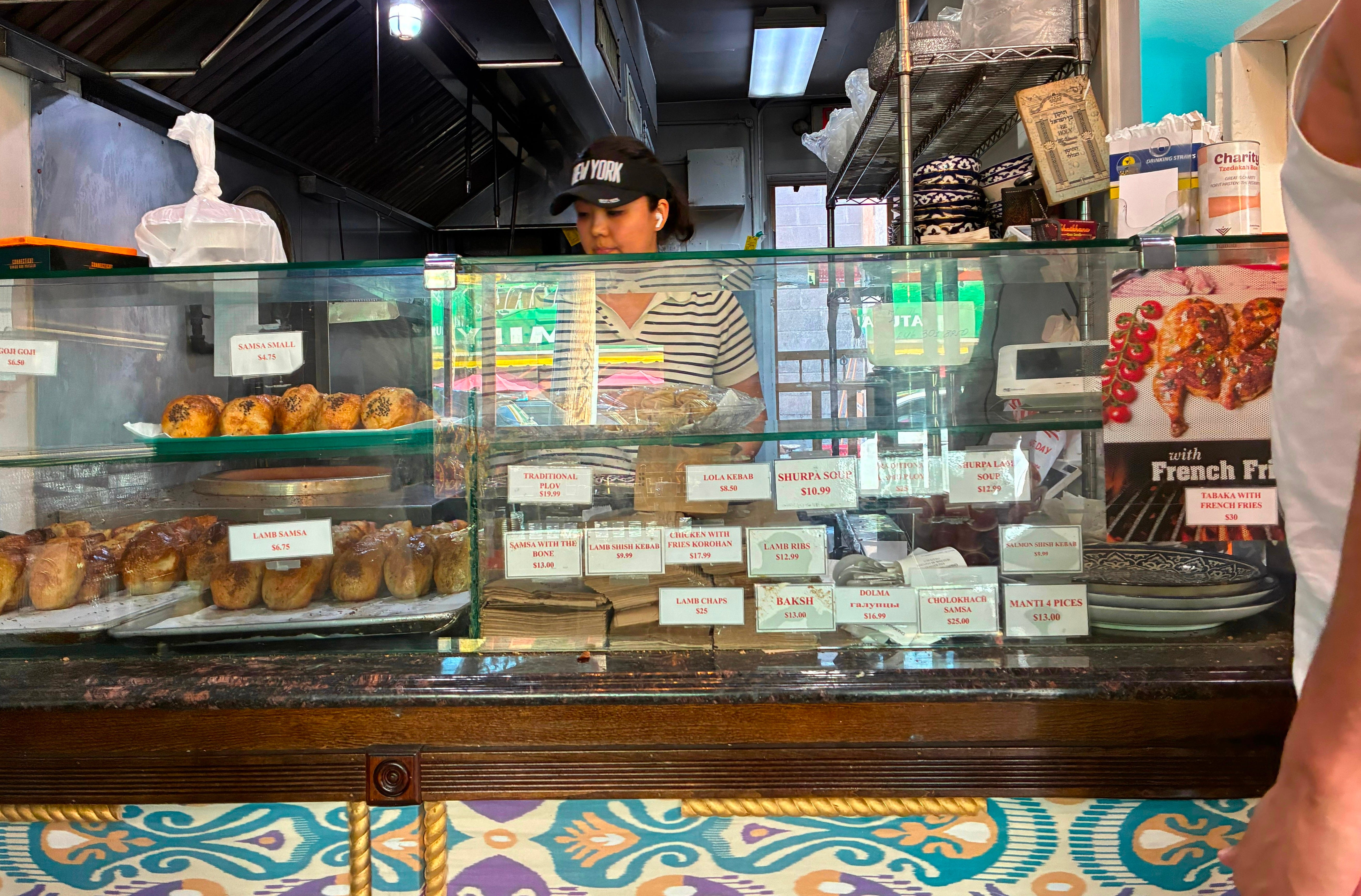
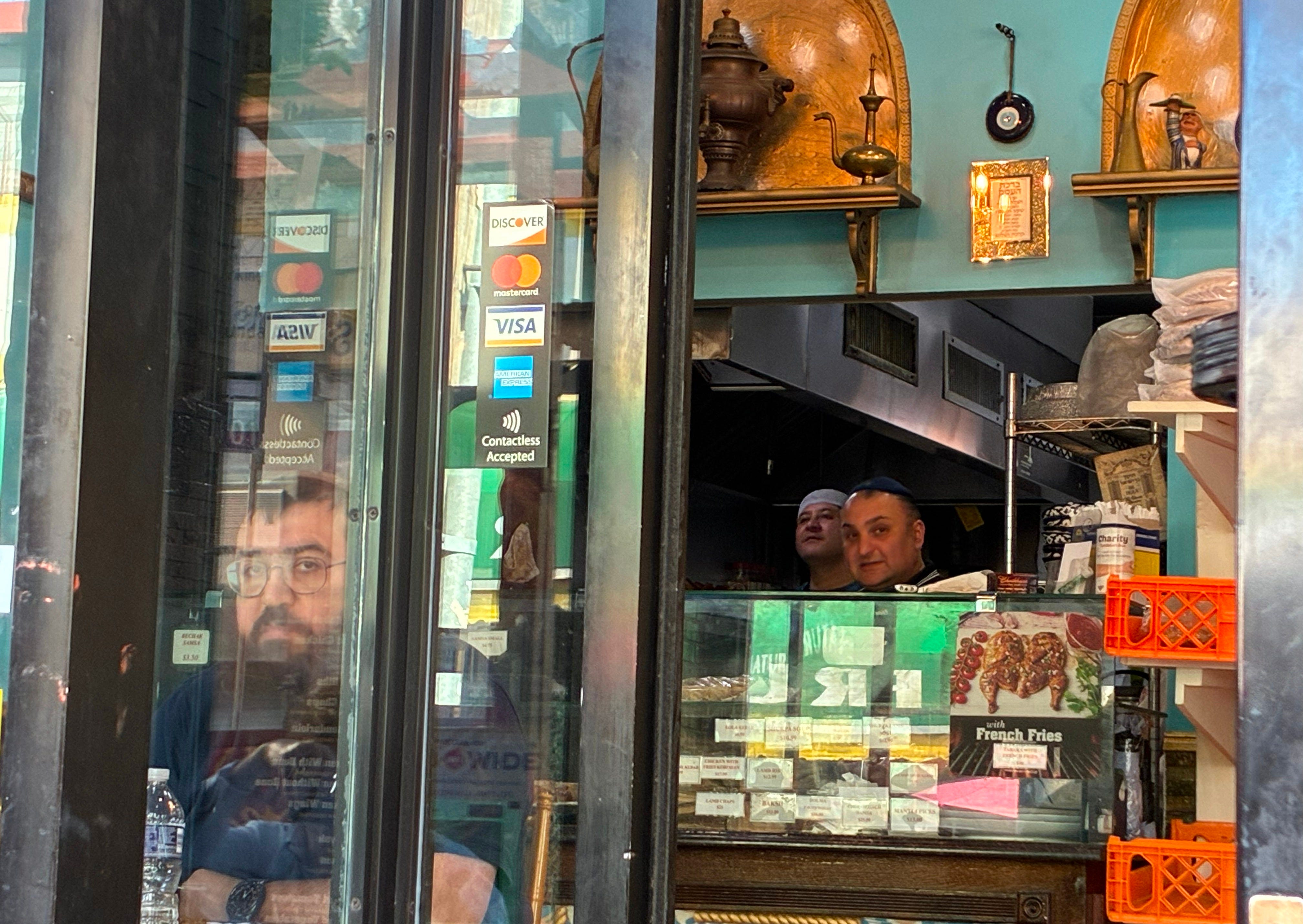
The borough’s Coney Island Avenue hums late into the night, sustained by delivery workers, rideshare drivers and recent arrivals finishing long shifts. The 24-hour kebab joint Urgut Osh Markazi is full of cantankerous taxi drivers and delivery workers switching between Uzbek, Tajik and Russian amid the beeping sounds of delivery apps as they wait to pick up mixed grill platters and large portions of plov, Uzbekistan’s national dish: rice often cooked with lamb, onions, carrots and cumin seeds.
Mirshod Rashidob, tall, slender and bespectacled, handed me a samsa, a flaky turnover baked in tandoor oven. Only 18 years old, he moved to the United States last year with plans to study mechanical engineering in the fall. “I’ve been so busy” since relocating to New York, he said. “Everyone here is so busy.”
Still, he hopes to catch his home team’s matches as well as the tournament’s championship at one of the FIFA fan zones near Rockefeller Center.
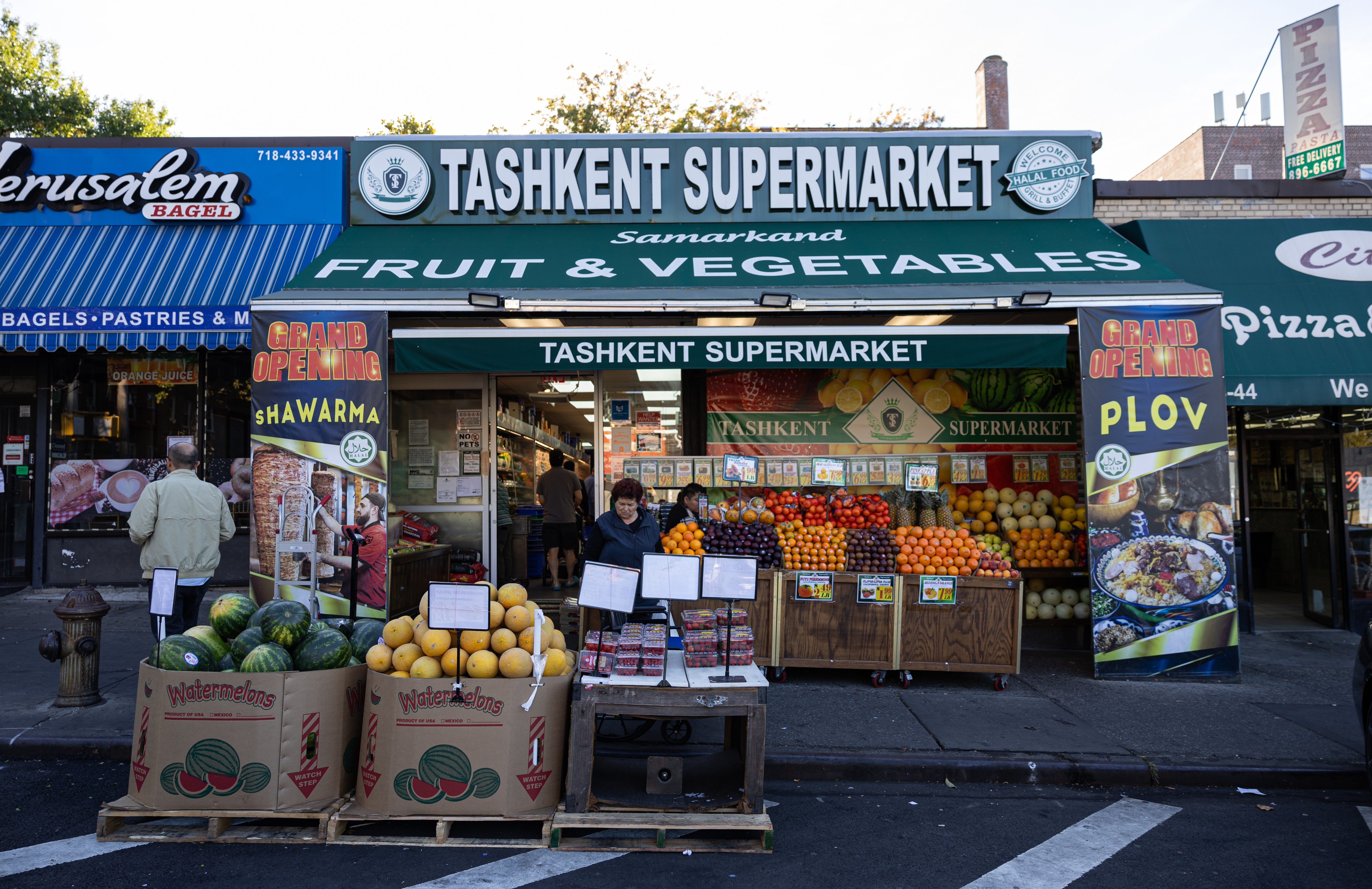
In leafy Rego Park, off Queens Boulevard in the eponymous borough, life is quieter. Mezuzahs line jewelry stores, groceries and real estate offices tucked beneath glass office towers and faded shopping arcades. Ilya Schumilkhay, a Bukharan Jew, moved from his native Samarkand—another storied Silk Road city—in 1994 to study fashion in Manhattan and now makes costumes for Broadway and films.
“They aren’t necessarily my favorite team,” he confessed of Uzbekistan’s team. (That would be Argentina, especially during the Maradona years.) “But I am proud of them.”
Separate migration waves reshaped the diaspora over decades. Some Muslim refugees arrived during the final Soviet years, but the largest post-independence influx came in the 2000s. They were aided by the United States Diversity Immigrant Visa Program, a lottery launched in 1995 to facilitate immigration from places underrepresented in the US.
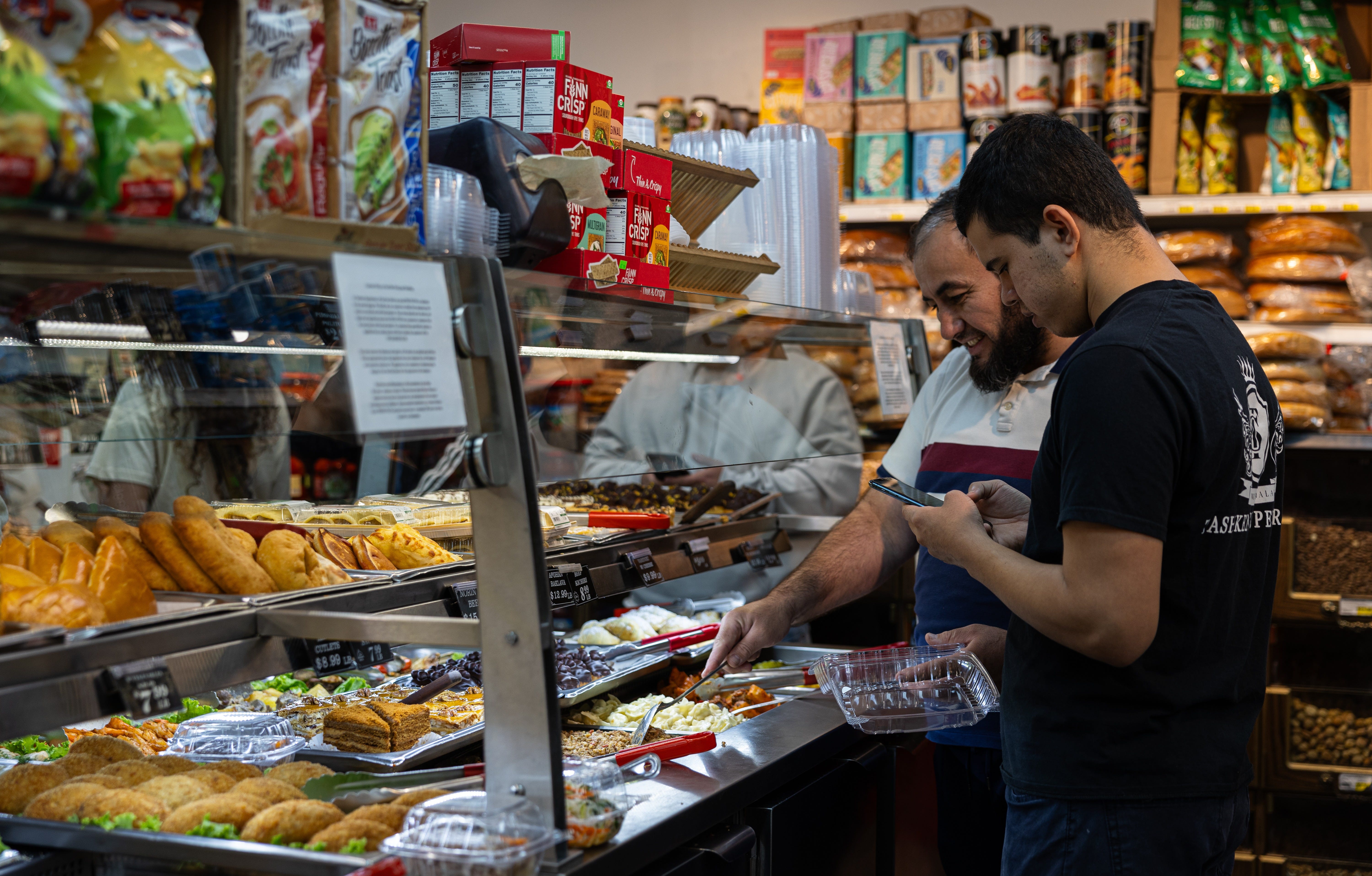
“I hire them at my shop,” Schumilkhay said of newer immigrants from Uzbekistan. “They work in restaurants, drive trucks, take care of our parents. They work very hard,” he said. But other older Bukharan Jews remain wary and insular decades after arriving in New York, their attitudes shaped by memories of antisemitism and upheaval.
Bukharan Jews tend to associate more with the Soviet Union or with their religion than any feelings of Uzbekistani nationalism, says Central Asia expert Alexander Cooley, a professor of political science at Barnard College, especially after Karimov was replaced by the current leader Shavkat Mirziyoyev in 2016.
As Uzbekistan prepares for its inaugural World Cup appearance, several stars have aligned for the country, Cooley said. It is opening under Mirziyoyev, who’s leveraging tourism, technology and stronger ties with the diaspora to help make it a leader in Central Asia.
“Uzbekistan has become a national, regional and now a global player,” he said, adding that the tournament may have a galvanizing effect.
Diaspora communities are indeed rallying around the national team. After years suffering the agonizingly close chances, many Uzbekistani soccer fans in New York feel they’re finally being rewarded for their resilience.
But the going will be difficult. Currently ranked 50th, the team will face stiff competition in the group stage, first playing Colombia, ranked 13th, on June 17, and then Portugal, ranked fifth.
“We have tough teams to play,” Amir Huseini acknowledged standing below the bright white lights of his restaurant Afsona in Brooklyn’s Kensington neighborhood. “But we have tough players, too, and we have a great coach.”
Sharing plates of shashlyk and round flatbread, flanked by geometric and floral motifs, fans at Afsona spoke about the White Wolves coach Fabio Cannavaro in almost mythical terms. The Italian national, nicknamed “The Berlin Wall,” led Italy to victory in the 2006 World Cup.
The national team would rely on a disciplined defense, they said, with its back line including the team’s star, Abdukodir Khusanov, the first Uzbekistani national to play in the English Premier League. The plan will be to rely on the strong fullbacks and make quick counterattacks.
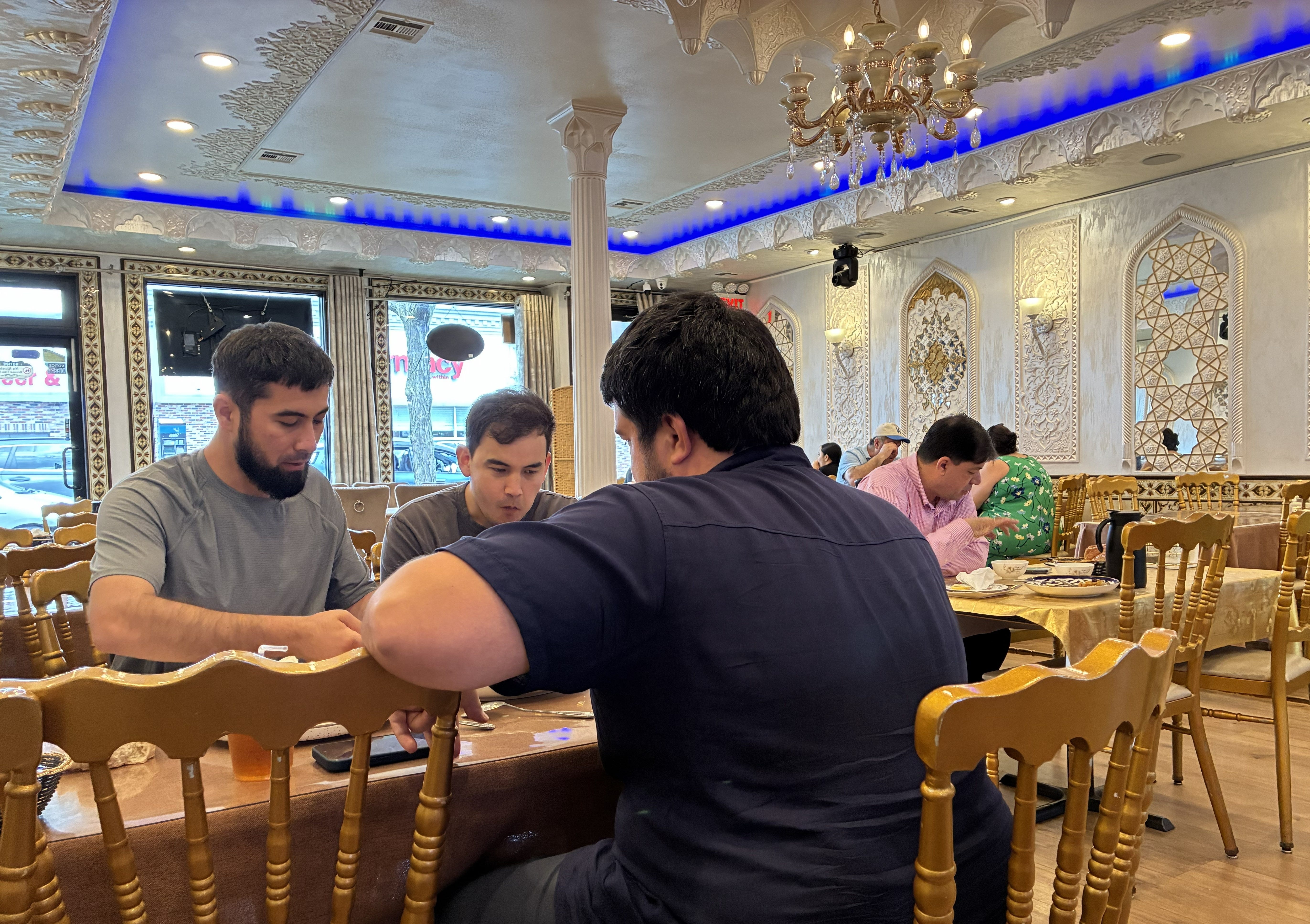
“All we can do is hope,” said Ashraf Zakirov, drinking green tea from a small bowl in his office nearby off Ditmas Avenue. He moved here in 2001 from Samarkand, like many in the area. He now works as a lawyer, realtor and head of the Central Asian Foundation.
Uzbekistan’s participation in the World Cup will raise the country’s profile regardless of the results, he said, adding that many people have trouble placing the country on a map, often confusing it with Pakistan.
But Zakirov told me he’s frustrated by the tough travel restrictions around the tournament. “Everyone got the ticket but most did not get visas,” he said, adding that family and friends won’t be reunited to join the World Cup festivities.
Nevertheless, he hopes to go to the game in Houston—where the team will play Portugal on June 23—or watch from down the road at Emir Palace, a dazzlingly white marble hall owned by another friend from Samarkand. The restaurant will show the first two games on a big screen but has scheduled a private party for the team’s third game against the Democratic Republic of the Congo.
Steven Benjamin left Uzbekistan in 1992 as part of the mass Jewish exodus. Now he manages a barbershop near Brooklyn’s tony Prospect Park—far from other, more insular Uzbek enclaves—and still closely follows the national team.
“I couldn’t believe they made it that far,” he said of the squad. Working in a neighborhood shaped much more by West Indian families and young professionals than post-Soviet immigrants, Benjamin said the team’s World Cup appearance has unexpectedly become a source of pride not only for older members of the community but also his own American-born children.
“My kids understand everything,” he said about his ability to speak Russian, Uzbek and Tajik, “but they always answer in English.”
Joshua Levkowitz was an ICWA fellow from 2021-2023 in Turkey, where he wrote about issues related to migration and identity.
Go 🇺🇿 !
Great story!