


DAVAO, Philippines — At 5 a.m. during the Kadayawan Festival, I woke to the sound of local drum ensembles marching down central Roxas Avenue, their percussive and rhythmic beats filtering up to my hotel room on the 30th floor.
The Philippines hosts hundreds of local festivals each year but among them, Kadayawan is unique in that it doesn’t focus on the veneration of a specific Catholic saint or narrative of religious mythology. Instead, the aim of the week-long celebration is to showcase the cultural diversity of the Davao area’s 11 different ethnic Indigenous groups, divided into Lumad (Native) and Moro (Muslim) groups of tribes.
As a first-timer to the city, on the Mindanao region’s mainland, I was visiting for Kadayawan’s closing weekend, during which I watched 32 different drum squads and singers performing in the Pamulak (grand parade), and witnessed tribe members competing in the Dula (traditional Indigenous games) of wooden stilt-racing and spear-throwing. Annually hosted at the end of August, Kadayawan also coincides with the peak season for buying durian—a notoriously odorous, spiky fruit popular throughout Southeast Asia—and mangosteen fruits—small, deep purple globes with bright white flesh inside (they resemble baby eggplants).
In addition to visiting Kadayawan, I flew down to sunny Davao seeking a respite from the apocalyptic flooding throughout the capital Metro Manila resulting from a combination of habagat (the seasonal monsoon that sweeps through the Philippines from June to September) and back-to-back typhoons.
But my trip had another, more subtle purpose: I wanted to learn more from groups working with victims of the war on drugs based in the Davao area, the seat of former President Rodrigo Duterte’s influence and power. Much of my previous reporting was drawn from the experiences of communities in Manila and surrounding provinces, but urban poor communities in Davao City had experienced extrajudicial killings under then-Mayor Duterte for decades before he became president and launched a national drug war.
Between breaks during the Kadayawan festivities, I met furtively with several Davao-based victims’ rights groups. I expected to hear that the sensitive nature of their work requires basic security protocols, and, frankly, common sense caution of the sort I already heard described by Manila-based organizations. What I found instead was something much more sinister: an overwhelming sense that those groups in Davao are working from within the belly of the beast.
Davao is the third-most populous city in the Philippines (1.8 million residents) and the largest on Mindanao, a rugged and mountainous island almost as large as Luzon (where Manila is located). Home to the tallest peak in the Philippines, Mt. Apo, the region is a hub for the Philippines’ burgeoning eco-tourism industry, with whitewater rapids and scenic mountain ranges for paragliders and hikers alike to enjoy throughout its northern provinces of Cagayan de Oro and Bukidnon.
Distinct from the landscape and geography of Luzon, Mindanao’s incomparable natural beauty gives it an air of being the southern “frontier” of the country—a reputation further amplified by its political and social history of military conflict, insurgency and unrest. Among other groups, the separatist Moro Islamic Liberation Front (MILF) fought for autonomous rule from the Philippines’ central government for decades, at one point resulting in active sieges of the Mindanaoan cities Zamboanga and Marawi in 2013 and 2017, respectively. A Zamboangan friend who relocated to Manila from the southwestern port city once told me that “I’d love for you to visit but I couldn’t guarantee your safety.” Her mother was once hit by shrapnel from an improvised explosive device detonated in the local airport.
Mindanao is also the site of one of the world’s worst incidents of violence against journalists and press workers, which I described in a previous piece. Known as the 2009 Maguindanao massacre (named for the western province in which it occurred), the politically motivated attack originated from a local clan rivalry over the region’s governorship. As the wife of the challenging gubernatorial candidate traveled in a convoy to file her husband’s certificate of candidacy, groups of armed men allied with the reigning Ampatuan clan ambushed and killed all those traveling in the party—a total of 58 people, 32 of whom were journalists covering the electoral event.
Although the massacre happened 17 years ago, it remains a flashpoint in the decades of political violence that have plagued Mindanao. In August, I attended the Cinemalaya Independent Film Festival in Manila for the premiere of “58,” a documentary about the 58th victim, the photojournalist Reynaldo Momay. His family reported him missing after the ambush but his body was never found after the authorities’ excavations of the victims’ burial site. The lack of physical evidence prompted a Manila court to dismiss Momay as a complainant of the criminal case against the Ampatuan clan, and the film explores the ensuing impact on his family members and their own independent search for his remains. Walking out of the film with a heavy heart, I ruminated over the parallel themes of impunity in Momay’s case and those of victims killed in the more recent drug war.
Despite that history, there’s reason to hope for a more peaceful future in Mindanao and constructive outcomes from ongoing negotiations with MILF and other groups. The Bangsamoro Autonomous Region in Muslim Mindanao, for one—made up of Maguindanao and three other provinces (including the formerly besieged city of Marawi)—held its first parliamentary elections in September 2026, with a voter turnout of approximately 2 million (84 percent of the electorate). The election was not without security concerns (including reports of voter intimidation and compromised ballots) but for now, it’s a cautious step forward to durable and lasting peace in a region wracked by instability and election-related violence.
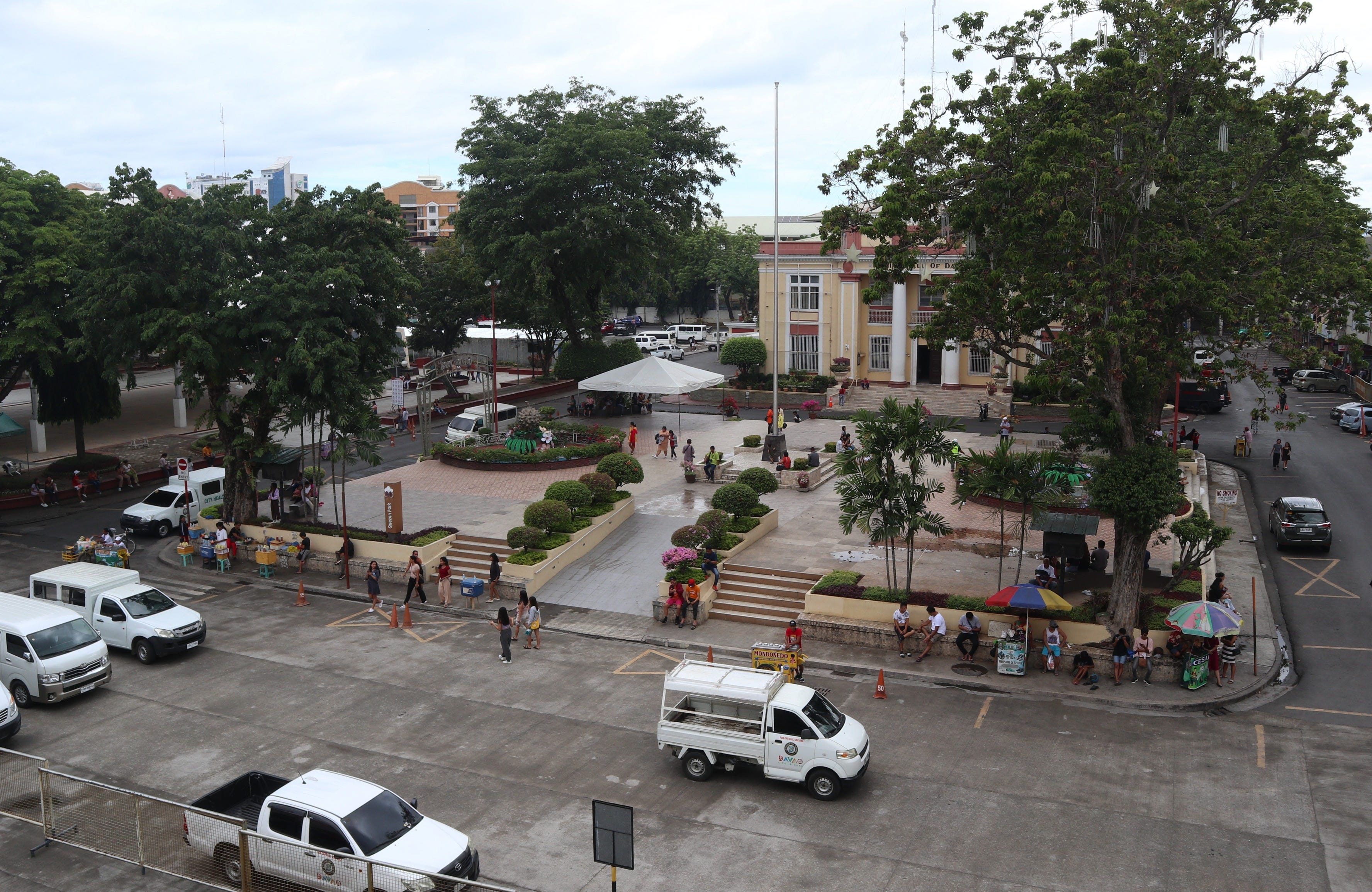
While clashes with MILF have largely taken place in Mindanao’s remote provinces, highly urbanized Davao City has primarily weathered civil conflict between the central government and militant communist groups such as the New People’s Army (NPA), going as far back as the 1970s. During the administration of Ferdinand Marcos, Sr. (father of the current president), he imposed martial law under the pretext of suppressing the NPA and its chapters throughout the Philippines, although the proclamation was later used to more broadly suppress political dissent and consolidate Marcos Sr.’s dictatorial control over the country for almost 10 years.
In Davao specifically, the government’s approach to the NPA’s guerilla tactics has included both direct military action and paramilitary operations, the latter involving civilian-formed death squads. Former ICWA fellow Erik Guyot wrote in 1988 about Davao’s history of death squads, covering Alsa Masa, a vigilante group whose name translates to “Uprising of the Masses.” Davao’s municipal government formally designated Alsa Masa as a civilian-volunteer organization, deemed necessary for the fight against communist insurgents.
Guyot interviewed Rodrigo Duterte himself, then-mayor of Davao, calling him “young, friendly, easygoing.” Duterte publicly praised Alsa Masa at the time for improving law and order in Davao by targeting and killing suspected NPA members, saying, “It’s hard to duplicate this success in other places” in the Philippines.
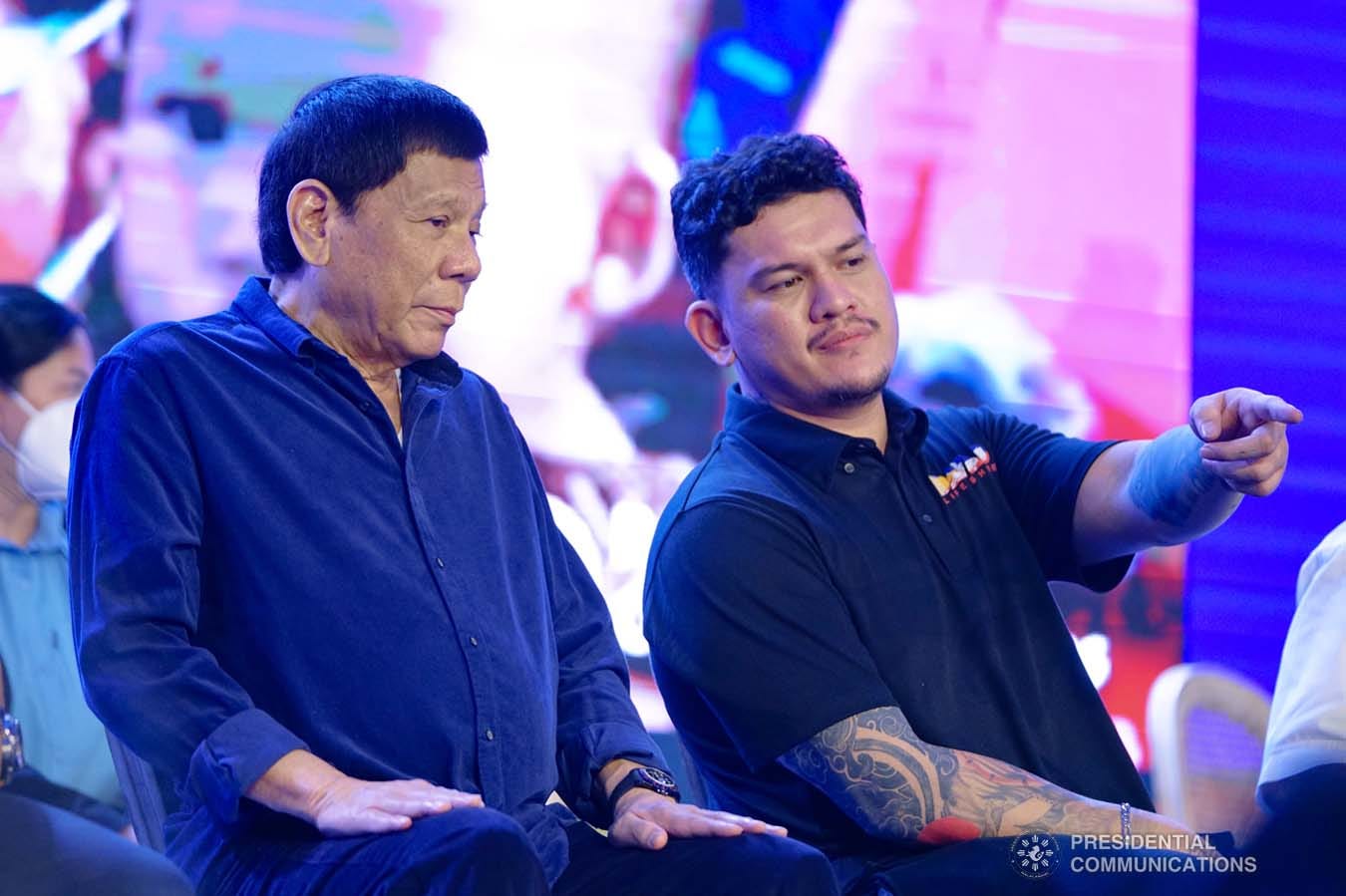
While much has changed since Guyot’s fellowship—including the relative accessibility of an interview with Duterte, now imprisoned in Scheveningen prison in The Hague—there are clear throughlines of his approach to law and order. Duterte’s praise of Davao vigilantes in the 1980s rings similar to his presidential speech inaugurating his drug war in 2016, when he urged the public to “go ahead and kill [drug addicts] yourselves, as getting their parents to do it would be too painful.” In the face of the country’s perceived major social ills—either communism or drug use—Duterte’s cure has consistently been violence.
Before he ran for president, Human Rights Watch called him the “death squad mayor,” in reference to his longstanding association with the group that succeeded Alsa Masa in the 1990s: the Davao Death Squad (DDS). Duterte’s well-documented and publicized leadership of DDS as mayor forms a core part of the ongoing International Criminal Court (ICC) case against him. The prosecution argues that Duterte perfected a “Davao model” of extrajudicial killing that later provided the blueprint for the nationwide drug war implemented by the Philippine National Police.
In 1999, the Davao-based Coalition Against Summary Executions (CASE) formed as a group of NGOs dedicated to documenting such killings, which had begun to spike with the active operations of DDS under Duterte’s rule, as explained by Rommel*, my main contact in Davao. (*Throughout this piece, I’ve used asterisks to show where I provided pseudonyms for interviewees due to the security risks they face and in order not to compromise their ongoing work with communities targeted by extrajudicial killings.) I initially met him in Manila in 2025 at a University of the Philippines event about the ICC investigation. An active member of the human rights community in Mindanao for decades, Rommel has been involved in legal advocacy through the regional chapter of the national Free Legal Assistance Group and the Mindanao branch of the National Union of People’s Lawyers.
After navigating through crowds of people visiting Davao for Kadayawan, I traveled to meet Rommel in a nondescript room of a secure location. Ahead of time, my physical description was given to the onsite guards and I bypassed the normal protocol of giving my ID card for entry to the building—a level of caution to which I was unused, but Rommel quickly reminded me I wasn’t in proverbial Kansas anymore. “We can’t discuss these topics out in the open,” he said. “You can do that when you’re in Manila, not in Davao.”
Years of documentation work led Rommel to the case of Clarita Alia, a mother whose four children were killed over the course of several years for alleged involvement in petty crimes, all by DDS. “We tried to protect Clarita’s youngest son by sending him out of Davao after his brothers were murdered,” Rommel said. But when the son returned, he was eventually stabbed to death by assailants suspected to be DDS members. The group had previously threatened both Alia and her son; police later claimed the violence was gang-related.
On September 25, Alia testified about her sons’ killings before the Philippine Truth and Reconciliation Commission (which I covered in my last dispatch). Now 72 years old, she continues to receive online threats from supporters of the former president. But her case is outside the ICC’s jurisdiction—which covers only cases that occurred during the period in which the Philippines was a party to the ICC. Her youngest son’s killing took place in 2007, four years before the Philippines joined the court.
DDS had gained notoriety outside Davao by 2007, when Philip Alston, then-UN Special Rapporteur on Extrajudicial, Summary or Arbitrary Executions found evidence of 500 deaths attributable to the group. Notably, while the ICC prosecution’s witnesses are currently kept confidential, statements made in the ICC’s September case conference heavily imply that Alston will be called to testify about his investigation at the trial’s start in November.
Two years after Alston’s investigation, Human Rights Watch released a 2009 report titled “You Can Die Any Time,” publishing further evidence of hundreds of targeted killings by death squad members in Davao City and surrounding areas such as Digos and General Santos City. The report heavily relied on CASE’s near-decade of documentation, as Human Rights Watch had no Philippines-based researchers at the time, and on an investigation by Tambayan, a children’s rights NGO that focuses on documenting killings of minors in Davao.
In Davao, I also spoke with Isabel*, who described Tambayan as an explicitly feminist organization, given that she works with many adolescent girls who live on the street or are teen mothers who need reproductive health care.
“Many of the girls are the ‘girlfriends’ of gang members, often minors themselves,” Isabel told me. The girls are referred to as buntog, the Bisayan name for a small quail found throughout the Philippines. The pejorative comparison implies that they are flighty or loose, since some are engaged in sex work in order to survive. Many of their partners have died in circumstances that match patterns of extrajudicial killings, while police write off the murders as gang violence—narratives that echo the deaths of Clarita Alia’s four sons.
When Duterte became president in 2016, CASE and Tambayan continued to document extrajudicial killings, although there were noticeably fewer after he left the mayor’s office. At the same time, international groups that first investigated the Davao area killings began to take notice of the nationwide deaths of the drug war.
In 2017, the attorney Jude Sabio filed a complaint with the ICC to address killings committed during the first year of the drug war; by 2020, he had withdrawn and recanted his complaint for contested reasons. But in that first ICC submission, he cited CASE’s reporting, forcing the organization into the national limelight and, significantly, into a position of regularly cooperating with the ICC in an environment increasingly hostile to the court during Duterte’s presidency.
After his arrest and detention in The Hague in 2025, the atmosphere in Davao shifted. “It was like a breath of fresh air for us in Davao,” Rommel said.
But that relief was temporary. The former president’s arrest warrant of March 2025 contained only a brief outline of the criminal charges. But when the ICC prosecution released further detailed information about the extrajudicial killings underlying the charges—in particular, designating that nine incidents were from Davao—municipal and barangay (neighborhood) government entities stepped up their surveillance of victims in the city.
“Some barangays are directly asking families affected by extrajudicial killings, ‘Who are the NGOs regularly assisting you?’” said Francis*, another contact I met in Davao who is involved in the CASE-affiliated organization, Amaya Lay.
The increased surveillance is meant to help identify victims who cooperated with ICC investigators and provided information to support the Davao-specific charges against Duterte, under the suspicion that NGOs are the main facilitators of contact between victims and the court. Isabel says the ongoing scrutiny of interactions between NGOs and families has a chilling effect on their work. In one instance, Tambayan organized a legal aid clinic for families of extrajudicial killings victims. Organizers went house-to-house the previous day, confirming the families’ attendance. The next day, no one showed up at the event.
“They were afraid of being ‘red-tagged,’ through association with us,” Isabel said. “If their neighbors knew they were going to our clinic, everyone would assume they either use or sell drugs, just because Tambayan advocates against extrajudicial killings.”
Isabel believes Tambayan itself had been “red-tagged” as an organization—meaning it was labeled “communist” with no credible evidence as a means to repress its work through heightened surveillance and harassment. Red-tagging has often been used against critics of Duterte’s drug war despite the lack of any necessary correlation between opposing extrajudicial killings or violence in general and belonging to the militant communist NPA.
In Davao, a red tag is especially dangerous given the city’s historically violent response to communist groups. In a 2018 executive order, Duterte also formed the National Task Force to End Local Communist Armed Conflict, which provides budgets for cities and barangays to act locally and investigate alleged “fronts” for the NPA. It’s still in place. Tambayan members reported that the local barangay captain has regularly interrogated them about their funding, seeking alleged financial ties to the NPA.
Thus, the line between NGOs and the communities they serve is blurring, with dangerous implications for those based in Davao, working in a political climate where the interim mayor, Sebastian Duterte, is following in the footsteps of his detained father.
Tambayan advocates for street children, who are often described as pasaway (nuisances, troublemakers). According to a Tambayan member, when children are disappeared or killed by DDS, the public in Davao tends to accept their deaths, assuming they’re criminals anyway. If Tambayan were shuttered under claims of affiliation with the NPA, no doubt there would be little outcry, too; Davaoeños would assume it was a criminal organization anyway.
“In Davao, you can’t trust anyone,” Ana* told me once I had arrived back in Manila. We met at the Cafe Siriusdan, an artsy hole-in-the-wall in the residential area of Mandaluyong. After a week in Davao with Rommel and others, I eyed the cafe patrons next to us with slightly heightened suspicion; they were high school students, wearing uniforms and loudly scrolling TikTok. Feeling silly, I resolved to let my guard down a bit.
Ana wears a lot of hats, but she primarily represents the national Network Against Killings (NAK), although like Rommel, she’s been documenting extrajudicial killings in Davao since Duterte was mayor—long enough to watch him become president and his national fanbase coalesce into Diehard Duterte Supporters. The group uses the same abbreviation as the death squad.
“I get a chill when I hear common people describe themselves as DDS,” Ana told me. “Before [Duterte was president], you would be afraid to even say those three letters and to invoke the death squad,” she said. “Now, people say it proudly: ‘I’m DDS.’” Ana believes the association has helped sanitize the death squad’s public image from cold-blooded killers to the larger everyman movement that voted Duterte into national office and supported the drug war.
Diehard Duterte Supporters call for Duterte to be brought home from The Hague, while Facebook profiles labeled “DDS” attack and harass public figures advocating for drug war victims, blaming them for Duterte’s detention. Working and traveling between Manila and Davao on behalf of different victims’ groups therefore requires a heightened level of security. “We have to compartmentalize victims,” Ana said. “We don’t let groups from Mindanao and Manila mix even if they have similar interests, as those still living in Mindanao need heightened confidentiality and protection of their anonymity.”
Sometimes NAK is forced to get creative to keep its work discreet. “When we want to have a meeting with a group of victims, we’ll ask, ‘Who among you has the most recent birthday?’ and then book a karaoke room under the pretense we’re celebrating,” Ana said, explaining that, in Davao, omnipresent CCTV is also audio-enabled to pick up sound. Karaoke rooms are sufficiently noisy to obscure their discussions.
Ana’s Davao-based NAK counterpart Gloria* also supports victims of the war on drugs by helping them set up direct video-link meetings with ICC staff. “When the ICC has hearings, we gather the families of the victims and use a codename, calling it instead a ‘movie marathon,’” she told me.
That has the dual purpose of both empowering families to be active participants in the ICC process by sharing their real-time reactions to developments in The Hague and also countering the spread of misinformation about the Duterte trial with actual up-to-date information. “Fake news really affects the mindset of the victims,” Gloria said, an additional burden while the families are already grappling with fears that Duterte’s daughter, Sara, will be elected president in 2028 and retaliate against them. “With the power and resources of the Duterte family, victims are afraid that their identities will be revealed and they’ll be targeted for killings next.”
The fear is not unfounded. Back in 2009, the Philippines’ Commission on Human Rights (CHR) launched a public inquiry into the Davao area killings, led by then-commissioner Leila de Lima. Although the commission found evidence of official involvement in the DDS killings by Duterte’s administration, its report was never published. Decades later, during Duterte’s presidency, now-Senator de Lima was jailed on spurious drug charges, which many consider politically motivated as retaliation for her criticism of the war on drugs and legacy of her opposition to the violence in Davao.
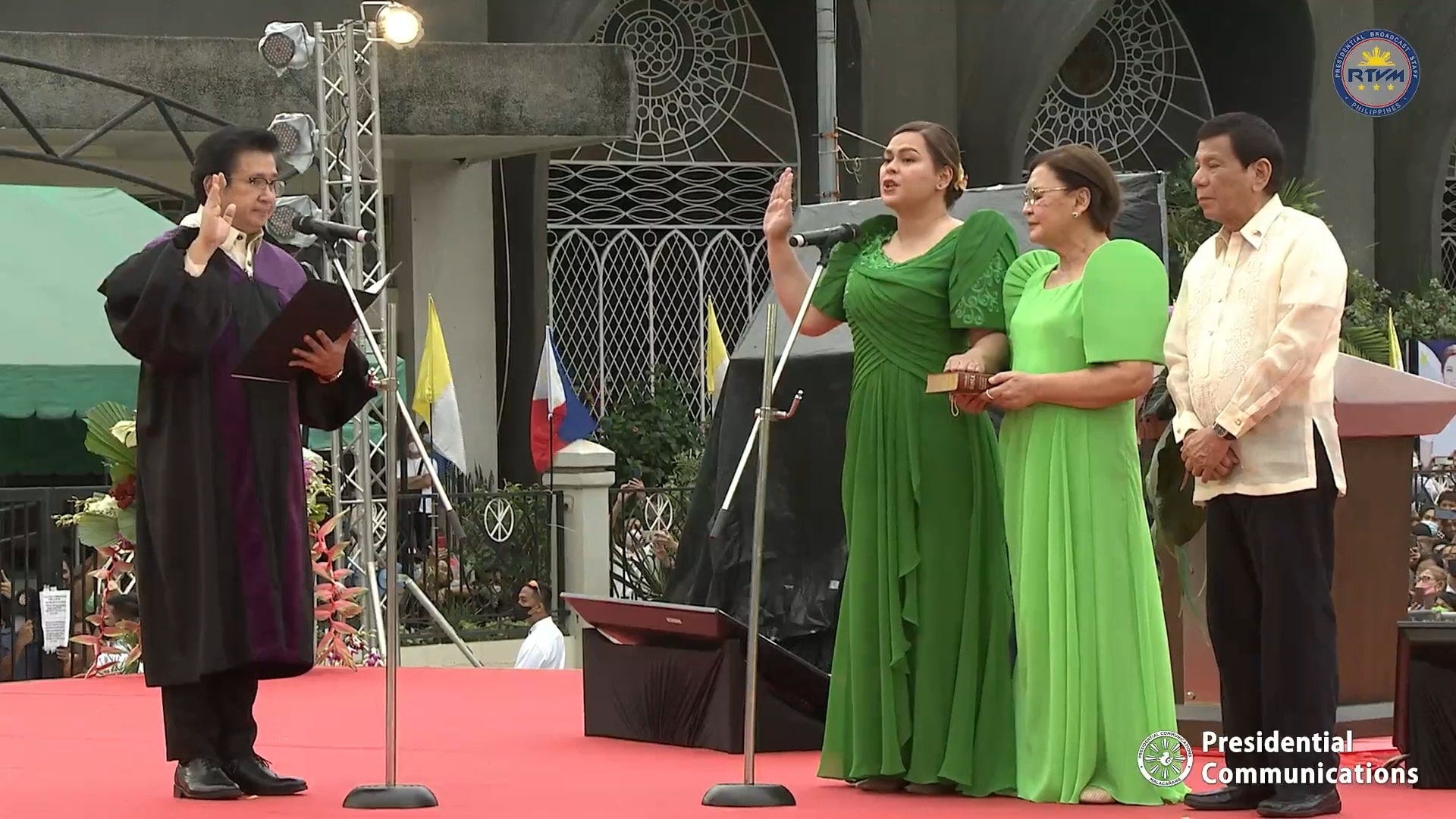
“The Dutertes do not forget their enemies,” Ana said. “Sara is as fierce as her father, and much younger. She would follow through on her threats.” The depiction of Sara Duterte as more vicious or retributive than Duterte is oft-repeated in conversations I’ve had with different victims’ groups. At first, it smacked of latent misogyny to me: an uncomfortable reaction to a woman in male-dominated politics who has adopted a masculine image in order to be taken seriously. How could Sara be more vengeful than the former president who, on his own admission, used to ride his motorbike around Davao looking for criminals to kill?
But a notorious 2011 incident holds clues as to why so many in Davao fear her ascent to the presidency. As mayor of Davao, Sara Duterte punched a city sheriff for defying her request that he postpone the scheduled demolition of a building. The confrontation was captured live by news cameras as she hit the cowering man four times while cheers and clapping from the crowd could be heard in the background. The sheriff was hospitalized, and in later interviews, the mayor refused to apologize for her actions. Her father publicly approved.
It’s illustrative of what Ana, Gloria and others have described to me as Davao’s punitive social norms and culture, which have facilitated the widespread embrace by Davaoeños of Duterte’s ruthless model of governance through vigilante justice. That environment—pro-Duterte, pro-punishment, pro-street justice—makes it difficult to call for law enforcement to respect human rights. “I’ve felt very stifled because of the overwhelming support for Duterte’s policies, even among some members of CASE,” Ana told me, disbelief playing out on her face. Those members have since left the coalition but remain part of the larger social fabric of Davao.
“Look at DDS,” she said, “They don’t just kill criminals and street kids, there’s physical evidence that they torture their victims before killing them. But ask them about it, and they have no remorse because they think it’s a righteous thing to do. It’s their ‘job’ to protect Davao.”
Two of the insider witnesses whose accounts form a substantial basis of the ICC prosecution’s evidence of the Davao killings—Arturo Lascañas and Edgar Matobato—are former DDS members. Their testimonies describe in great detail numerous incidents of torture, rape and murder by the squad over the years in which the Dutertes ruled Davao. Lascañas’s affidavit, informed by his high position within DDS, specifically claims that Duterte and his daughter personally ordered him and other squad members to carry out politically motivated killings. It’s a chilling image: a former president and a potential one, somewhere inside City Hall, greenlighting hundreds of murders.
On my final day in Davao, I perused a local market to buy some pasalubong (souvenirs) for friends back in Manila, trying to find a portable snack that tasted like durian without the oppressive smell. As I ambled around the market’s open-air lanes, I soon realized I was being followed by a man in a lime-green shirt—the exact color sported by self-identified Diehard Duterte Supporters, the equivalent of a firetruck-red MAGA hat.
For a tail, he was quite ineffective and ill-prepared to avoid notice. When I turned around to confrontationally look into his eyes, the man sheepishly scratched his head, fumbled around with his bag and tried to scurry backward through the narrow market lane. My reaction was automatic, honed from years of traveling by myself, and I returned to the market’s entrance where a kindly security guard stood watch over the comings and goings of customers and pedestrians of the nearby street. I waited next to him, observing the nearby exit, as my shadow left the market and made his way onto the busy sidewalk. He loitered a bit, looking back over his shoulder periodically to see that I was still staring at him, unsmiling, my arms crossed. Eventually, he weaved through the traffic and turned into a nearby alleyway, finally out of my sight.
I stood there silently for a few minutes more, expecting to see his bright shirt pop back around the corner at any moment but it never did. Unsettled and empty-handed, I took the long way home.
Editor’s note: This is a version of a dispatch for the Institute of Current World Affairs published here.
Sabrina Ochoa is a lawyer and Institute of Current World Affairs fellow specializing in international law and human rights. Based in the Philippines and The Hague, she is investigating the impact of the International Criminal Court’s prosecution of crimes against humanity committed during the Philippines’ “war on drugs,” with a focus on the victims of atrocity crimes and their communities.